Genre

"And now I wish to present an entertainment which has given pleasure to many of the crowned heads of Europe. Ladies and gentlemen, tonight for your eyes alone..."

In the 1950's and 1960's Hammer picked up where Universal had left off. They became the studio for the very best in horror films. With names like Lugosi, Karloff and Chaney finally reaching the end of their reign, Hammer offered up the likes of Christopher Lee and Peter Cushing. They resurrected all of the famous Universal monsters in their own image. Now we had a new cycle of Dracula, Frankenstein, The Wolf Man and The Mummy. While the films were somewhat low-budget and released mostly through the drive-in circuit, these films made a bloody splash with horror fans all over the world. But by the time the 1970's had begun, the studio was falling behind in the horror genre. Anthony Hinds had left the studio, and with him went some of the passion for the horror films that made Hammer famous. The studio heads became more interested in other kinds of films, and the horror department languished for a time.

Written by Diane Tillis

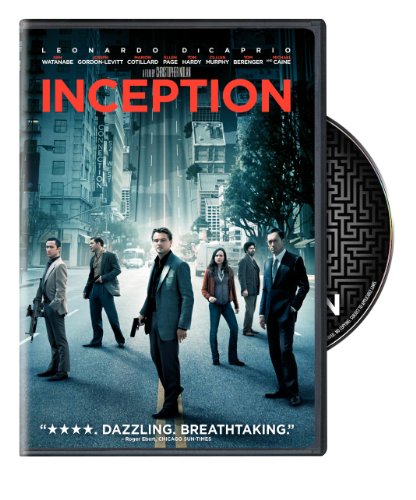
It is hard to talk about Inception without spoiling something. It is also hard to read any review and get a full feel for the film. Inception truly needs to be seen to understand why it is so amazing. On one level, it is an incredible action film that revolves around the heist scenario set in exotic locations such as France and Japan. On another level, the core purpose of the film is a complex discovery into dreams and the subconscious, and the consequences that come with manipulating the mind of another person. Inception is packed with inventive action, high drama, ideas and emotion. It is a masterpiece; whether it makes a billion dollars or not, it is a triumph for mainstream cinema. As the complexities of the film unravel themselves on the screen, Inception stands as a reminder that there is more to mainstream cinema than mindless entertainment. It forces the audience to think and question everything they are experiencing. If you give Inception the opportunity, I promise you will not be disappointed. In fact, you will want to talk more and more about the film once the credits roll to figure out what it all means. This is a sign of great cinema! Just for precaution, possible spoilers ahead!!

Written by Dave Younger

This is an entertaining and informative biopic of the American icon.  Starting with a $600 loan from the bank, he parlays his good fortune of coming across Marilyn Monroe pay-the-rent nudes into an I-gotta-see-this magazine.  Along the way he publishes some great fiction – Ray Bradbury says nobody wanted his Fahrenheit 451, so he sells it to Hef for $400 – and non-fiction: groundbreaking interviews with Jimmy Carter, Miles Davis and John Lennon.  His road was filled with battles, because America in the 50s was staunchly conservative. And racist, so imagine the shock of seeing blacks and whites mingle on his TV show Playboy’s Penthouse.  (Sammy Davis Jr. is given a puppy for Christmas by the eternally suave Hef – “Oh, hi, I didn’t see you come in.”)

Michael McDonald has been around for a very long time. In fact, with his white hair and beard McDonald makes a perfect little musical Santa. The man began his career as a backup singer for Steely Dan but made his real fame when he became part of The Doobie Brothers in the 1970's. But by 1982 it was already all over for the super-group. After about 5 years of wall-to-wall hits the group disbanded, and McDonald went out on his own. His first solo album was an almost instant hit. Unfortunately for McDonald and his many fans, he wasn't the most prolific artist and took 9 years to follow up that album. By then times had changed, and he never has quite captured the fame that started with The Doobie Brothers and continued through his early solo career.

While McDonald's solo career hasn't exactly been soaring in the last 20 years, he has found ways to stay in touch with the loyal fan base. Christmas has been kind to the rocker. He has released a couple of Christmas albums with some level of success. He also continues to do Christmas concerts, a tradition that began in his Doobie Brothers days.

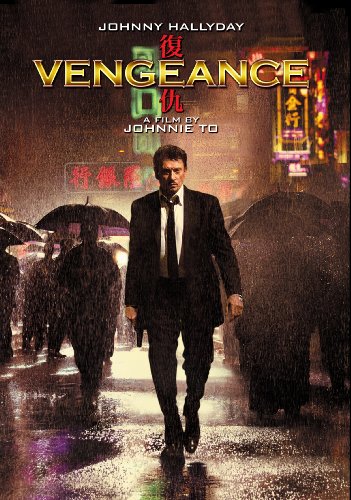
In Macao, a trio of gunmen butcher a family. Only the mother survives (barely), and her father (aging French rocker Johnny Hallyday, looking as hardboiled and grotesque as Mickey Rourke), a restaurateur who knows altogether too much about how to get by in the violent underworld, comes to town and sets out on a mission of vengeance. He hires a trio of hit men, and works with them in tracking down his enemies. They have to do so quickly, though, because Hallyday has been shot before, and the bullet lodged in his brain is gradually stealing his memory away. He wants his revenge while he can still remember why it is necessary.

Johnnie To's crime thriller is as stylized as anything John Woo did in his prime, and shows, post-Woo, that there are still new ways of choreographing violent shoot-outs. A massive showdown in a junkyard is a set-piece of such visual beauty as to be worth the price of admission in and of itself. The mix of gangster film, revenge saga, Memento, and fable will understandably be a bit rich for some palates, but taken in the right spirit, this is intense, deliriously excessive entertainment.

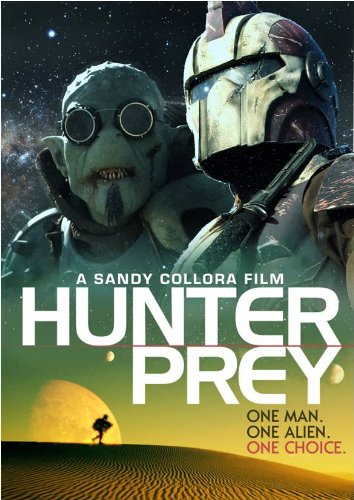
One man. One alien. One choice.

That’s the tag line for Hunter Prey, the latest project from Sandy Collora, idol to fanboys everywhere thanks to his 2003 short film, Batman: Dead End, believed by many to be the best fan film ever made. Well, after a long wait, he has finally made his first full-length feature film, and though it’s clearly hovering around the bottom rung of the budget ladder, there is much to admire here.


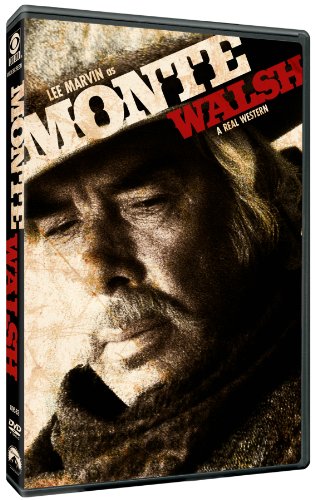
Monte Walsh and Chet Rollins (Lee Marvin and Jack Palance) are two cowboys in an era where their kind is becoming extinct. After a hard winter in the mountains, they discover that most of the ranches they knew have vanished, the land being bought up by Eastern corporations. They find work on the ranch once owned by Jim Davis, though he now answers to accountants back East. And though life, at first, seems all right, bit by bit they witness the end of their era, as a way of life dies, and the men who lived it are pushed to suicide, desperation, robbery and worse.

There were numerous “death of the west” movies in the late 1960s and early 1970s, films whose subjects also reflected the fact that the Western itself, as a genre, was entering a near-terminal decline from which it has never fully recovered (these days, if one Western per year comes out, that's doing pretty well, and yet there was a time when there were more Westerns pumped out than any other genre). Unlike the blaze of glory tales of Sam Peckinpah (The Wild Bunch being the best example), Monte Walsh is more of a tone poem. There is very little plot. We watch a few seasons in Monte's life, see him at work and play, see the tentative romance between him and prostitute Jeanne Moreau, see his sadness over a vanishing world and disappearing friends. Then, an almost subterranean thread involving the increasingly desperate straights of Mitch Ryan rises to the foreground in the final act as tragedy descends.

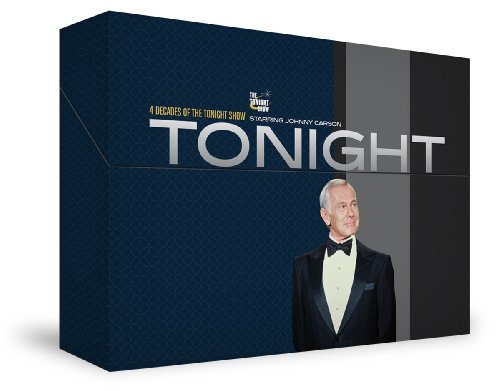
He's been called the King Of Late-Night. Today when there are so many talk shows on at pretty much every hour of the day, that might not appear to be such a huge distinction. There were talk shows on before Johnny Carson, but there can be no doubt that he invented the modern late-night show. For 30 years Johnny Carson was like a member of the family for millions of Americans. He was a friendly face at the end of a long, stressful day. He was that dependable routine that you could set your biological clock by. You would lie back in bed and let Johnny bring the world to you. You could count on a wide assortment of entertainment experiences. Johnny would deliver a monolog that often touched on the hot topics of the day. The news programs might be depressing, but Johnny always gave you a reason to crack a smile at the worst of times. There were characters like Aunt Blabby and Carnac who became comfortable old friends. The top names in show business competed for precious minutes on his stage, and if you were very lucky you spent some time on the couch and some face time with Johnny and his faithful sidekick Ed McMahon. Johnny could make or break your career in three minutes. He brought you the best of the new comics and musicians while delivering the big stars just as well. When you made it to The Tonight Show, you really made it.

There will never be a complete season or complete series set for Johnny Carson. There are several problems that present themselves almost immediately. Johnny was on nearly every night for thirty years. Do the math and you'll realize there have been thousands of episodes. The sad fact is that many of these moments are lost forever. Footage has either been lost completely or is in such bad shape as to be almost unwatchable. The was so much variety that having a full season would be a logistic nightmare to find those favorite moments. No, there just isn't ever going to be a complete anything when it comes to Johnny Carson. But Respond2 Entertainment has come about as close as I would have believed possible with the extraordinary release of 4 Decades Of The Tonight Show. Now, I hesitate to even call this a comprehensive collection. Again, I'm just convinced that wouldn't be possible. This comes as close as it gets.

The setting for Gunsmoke was the by-now-famous Dodge City, circa 1870’s. Phrases like “get out of Dodge” would enter the popular lexicon as a result of this resilient series. Marshall Dillon (Arness) was charged with keeping the peace in Dodge City. The only other character to see the entire 20-year run was kindly Doc Adams (Stone). Star Trek’s own Doc, Leonard McCoy, took many of his traits from Doc Adams. He was the humanitarian of the city, always looking to help someone. Like McCoy, he had a taste for bourbon and a soft heart underneath a rather gruff exterior and was always ready with free advice. Dillon’s love interest throughout most of the series was Miss Kitty Russell (Blake). While there were certainly a few romantic undercurrents, the romance never came to fruition. Miss Kitty was a prostitute on the radio and was likely one here as well, but CBS chose to underplay that aspect of her character as a “saloon girl”. Finally Dillon’s faithful sidekick deputy was Chester (Weaver). Chester often found himself in trouble and was the naïve son figure to Dillon.

Gunsmoke is the longest running scripted live action television show in history. The series ran from 1955 to 1975. At first it was a half-hour black-and-white show that evolved into a color hour by 1967. It actually started before the days of television, premiering on radio in 1952. Then it was William Conrad as the tough-as-nails Marshall Matt Dillon. When television came into its own, Gunsmoke made the jump to the bright living room box and made history. Westerns would ride across our small square screens for the next three decades, making it the most successful genre of that time, and it was Gunsmoke that started it all. The television version of Gunsmoke was originally conceived as a vehicle for John Wayne, who opted to remain in movies. Yet it was Wayne himself who suggested James Arness, and it turned out to be a career for the one-time “carrot” monster from The Thing. Gunsmoke started before all of the big westerns and was around when most of them had departed.

This was Lucille Ball’s follow-up to I Love Lucy. Here Ball is a widowed mother of two, sharing her home with best friend Vivian Vance, who is a divorced mother of one. All the other members of household are, of course, faced with the disasters triggered by Lucy. I screened this set immediately after viewing its close contemporary, Petticoat Junction, and the difference between the two was instructive. There are plenty of hokey gags and situations on The Lucy Show, but there is an enormous difference between the shows, thanks to the comic genius of Lucille Ball. Her energy fills each episode, her timing is spot-on, but there is also her commitment to a type of physical comedy that to this day remains pretty much the exclusive domain of male performers. Not only does she make this style her own, she grounds it in a female reality. There is a reason she was so beloved a performer, and why her work still stands up today.

The third season offers up even more laughs. Some highlights of the season include: