Genre

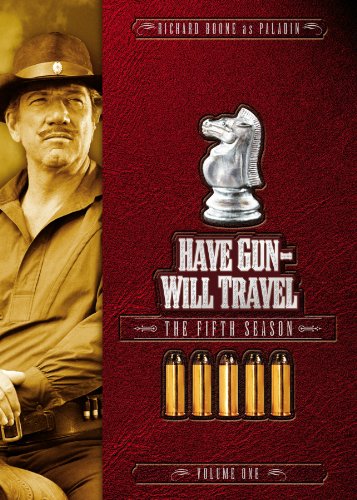
“’Have gun, will travel’ reads the card of a man. A knight without armor in a savage land…”. Those words ended every episode of Have Gun Will Travel, sung by Johnny Western in a time that such words could be sung without irony. Outside of Richard Boone’s black-clad, craggy Rhett Butler gone-to-seed gunfighter, that song was all I could really recall about this venerable Western from television’s golden age.

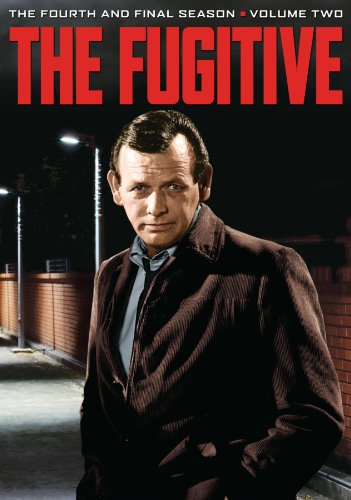
“The man is Richard Kimble and, not surprisingly, the man is tired. Tired of looking over his shoulder, the ready lie of the buses and freight trains. Richard Kimble is tired of running…”

The elusive “one-armed man” is one of the best known television icons of all time. The plight of Dr. Richard Kimball has been the subject of numerous imitations and even a feature film staring Harrison Ford as Kimball and Tommy Lee Jones as his pursuer. Tim Daly left the ranks of comedy to fill the shoes of Kimball in a very short-lived revival series.

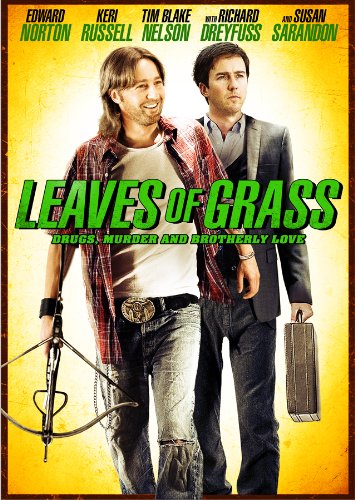
Leaves of Grass, the latest film from writer/director/actor Tim Blake Nelson, is one of those rare films that defies both description and expectation. While marketed as a violent stoner comedy along the lines of Pineapple Express, Leaves of Grass is far more difficult to categorize. Yes, there is comedy, though not as much or of the type one would expect. And yes, there is violence, but a far more realistic and less cartoony variety than you would think. But there is much more to this little film - there is thought and reflection and philosophy and poetry behind every piece of dialogue, and you get drawn into it so that, halfway through the film, it doesn’t even strike you as odd that you just watched Keri Russell recite Walt Whitman while gutting a catfish.


Supergroups generally don’t last very long. In one album and out the next, it is usually a case of too many egos trying to co-exist. A favorite band of mine can certainly be described as a supergroup: Velvet Revolver. The lineup is made up of powerhouses from such great bands as Guns n Roses and Stone Temple Pilots. It is grandiose power rock and a whole lot of awesomeness.

Truth is I don’t do very well with Christmas movies. Most of them reek of bad acting and a whole mess of clichés. One of my least favorite movies of all time is A Christmas Story, a masterpiece of absolutely awful movie making. So, needless to say when I received Thomas Kinkade’s Christmas Cottage, I wasn’t exactly abundant with anticipation. Let’s just hope that we don’t want to shoot our eye out over it or anything.

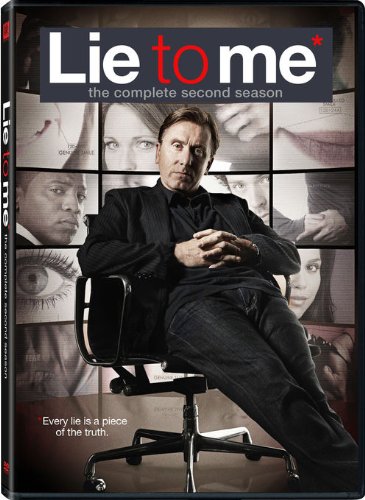
"Cal Lightman sees the truth. It's written all over your face. It's also in your voice, your posture, the words you choose. Give him five minutes and 20 questions and he'll know whether you went off to Argentina to cheat on your wife, lied about a well-timed stock sale, or murdered a one-night stand."

I spent quite a few years as a detective. My specialty turned out to be in the interview room. When some of my fellow detectives had a suspect they couldn't break, they often called me in.

"Well when you gettin' "got" and somebody done "got" you and you go "get" them, when you get 'em everybody's gon' get got."

When Tyler Perry started writing his small plays, he probably never had a clue just how far it might all go from there. The plays had a solid audience, but there was always concern that the appeal would be too narrow. That didn't stop Perry from putting together a few relatively low-budget films located in his adopted film hometown of Atlanta. For the most part the studio got pretty much what it expected.

Written by Diane Tillis

Vogue magazine editor Juliette (Patricia Clarkson) travels to Cairo to attend a UN function where she will meet up with her UN-official husband Mark (Tom McCamus). Mark is unavoidably delayed in Gaza, but sends a trusted friend and former UN official Tareq (Alexander Siddig) to keep Juliette company. Tareq and Juliette have known of each other for years, but this is the first time they have met face to face.

Most of the huge names of Broadway are gone. Certainly there are young talents that have created some memorable shows. Perhaps one day they will build up the mountain of classics that we received from the likes of Rodgers, Hammerstein, Bernstein, and others. There are even a couple of writers out there that have amassed that kind of a career. Andrew Lloyd Weber absolutely comes to mind as a fine example. But Stephen Sondheim is the last of a dying breed.

The axiom in Hollywood these days is that more is better. Every year we get inundated with blockbuster films sporting $200 million budgets, groundbreaking f/x, epic journeys and casts of thousands. Enter first-time director J. Blakeson and his intimate and quite claustrophobic thriller, The Disappearance Of Alice Creed. Right from the start we know that we're in for something completely different. There are no opening credits of any kind. There isn't even a title screen.