Genre

We begin in Vietnam, where the unit of which Jacob Singer (Tim Robbins) is a member comes under attack. Jacob is bayonetted, and as he struggles with his wounds, the film flashes forward to his post-Vietnam life in New York City. He works for the post office, is divorced, is still grieving over the death of his youngest son (Macauley Culkin), and is living with his new girlfriend (Elizabeth Pena). He is also being tormented by visions of demonic figures. And then suddenly this life turns out to be a dream, and he's at home with his wife and all of his kids are alive. Or is that a dream? And what really happened in Vietnam?

I'm going to assume that most people who are interested in this film have, in fact, already seen it. But in case you haven't, spoilers follow, and should you wish to avoid them, skip to the Video evaluation. Now I'm going to waste another sentence just in case your eyes drift. You're all gone? Good. The last time I saw this film was twenty years ago, during its initial theatrical run, and I was left feeling bitterly disappointed: after all the build-up of conspiracy and mystery, we're left with the he-was-dying-all-along gambit? In other words, my sense was of a horror film that was compellingly original and frightening for most of its running time, and then squandered that good will by a hackneyed conclusion.

Manchuria, the 1930s. The Japanese army has just acquired a treasure map, and are transporting it across the desert wastes by train. But the man who sold the map wants it back, and engages a snappily dressed killer (Byung-hun Lee) to steal it back. He is, of course, the Bad. He stages a spectacular (and spectacularly violent) train robbery. As fate would have it, at precisely the same moment, the Weird (Kang-ho Song) is also robbing the train, and the Good, in the form of a bounty hunter (Woo-sung Jung) is on board, too. The Weird makes off with the map, and what follows is a series of chases as the various factions scramble to get that map.


Director Ji-woon Kim's tribute to Serio Leone's The Good, the Bad and the Ugly follows its model's characterization, with the leads' cold-eyed killer, wacky scoundrel and cold-eyed hero clearly standing in for Lee Van Cleef, Eli Wallach and Clint Eastwood, only much prettier. The financial motivation and the setting of a country in chaos is similar, too. But while the film was a huge hit in Korea (outgrossing, it seems, the likes of The Dark Knight), it lacks the heart and brilliance of Leone's film. There are some wonderful moments during the train robbery and other set pieces, but the film gets draggy in between. The tone is a little uneven, too – the intent seems to be entertaining, cartoonish violence, but the dismissive ways in which women are killed smacks rather uncomfortably of genuine misogyny. There's a lot of visual pleasure to had here, but to ultimately mixed effect.

Most people are aware that I don’t care for romantic comedies but nothing gets under my skin more than a horrible prison movie. My attempts to forget the movie are usually successful until the next time a similar movie appears in my review pile. Maybe it is the cliché plot, the contrived and stereo-typed characters, or the male on male forced action. How would a movie fare where it simulates the jail experience in a behavioral experiment? I dare to find out.

Travis (played by Adrien Brody is just another drifter trying to get through life. He works part-time at the retirement home until the state cuts back and lays him off. As he considers his options, he attends a peace protest where he meets a rather attractive girl named Bay (played by Maggie Grace) who is also demonstrating. Bay wants to go to India for spiritual enlightenment and wants Travis to join her. Travis however needs some money to make the journey.

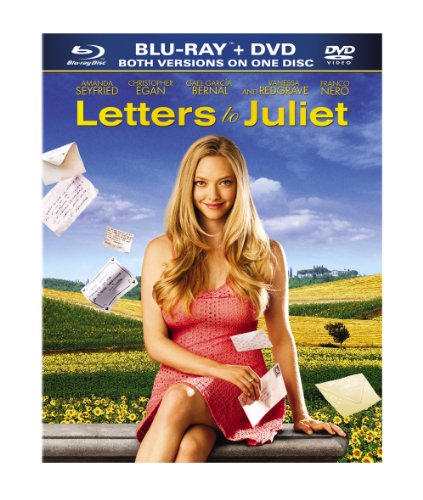
When I met my husband, and found out he wrote reviews, I never pictured myself writing as well. I had never really played with the concept, other than some short stories. But here I sit, once again, in front of my computer screen with another disc in front of me. And what do we have this time? A romantic comedy. Yes folks, I love the torture. I was asked to do Letters to Juliet as a favor for my busy husband who is adjusting to his busy new job. This has to land me home made waffles in bed sometime in the near future. But was this one really that bad? Could there be a decent romantic comedy out there? Meh, we shall see. And away we go!

We open the movie with a scene of busy New York (A very nice skyline picture I might add). We meet Sophie Hall (Amanda Seyfried), a fact checker for the New Yorker, on her way around town. She stops in at her office to turn in a piece of work on the famous “V-J Day in Times Square” picture (The sailor kissing the nurse), and that's where we find out she is on her way to Verona for a pre-honeymoon. She leaves the office and heads over to a restaurant that looks to be in progress. Meet Victor (Gael Garcia Bernal), Sophie's very Italian fiance, who is in the kitchen surrounded by pasta hanging everywhere. And when I say everywhere, I mean it. A little bit of chatter, and away to Verona!

Tennessee Williams was both a prolific writer and celebrated personality in his day. His plays are still making the rounds of community theaters and even more than a few higher- end performance halls around the country. Songs have been written about the guy, and he's quite honestly become a bit of a mythic legend over the years. A lot of that owes, in no small part, to his huge hit A Streetcar Named Desire. The 1947 play was a huge hit on its own. The thing even snagged a Pulitzer. There hadn't been a bigger play before it, and few have reached the popularity and classic status since. Then director Elia Kazan got his hands on the material. And while another writer worked on the screen adaptation, Kazan was smart enough to have Williams himself write the screenplay. A couple of things happened with that 1951 film. While this was actually his second screenplay, it would catapult him into the film and television side of life. His career ... and our screens … would never be the same.

A Streetcar Named Desire is still huge today. But is it the material from Williams or the amazing performances of Marlon Brando, Karl Malden, Kim Hunter, and Vivian Leigh that stand out after all of those years? Isn't it Kazan's inspired direction and his unique eye for cinematography that make the film so memorable? I guess the argument could be made for any of those things. Likely, it was the fortunate combination of these elements that made that film what it remains today. There's been a kind of rediscovery of Williams of late. There's also Hollywood's penchant for "lost" material. All of these things combined to bring actress and first-time feature director Jodie Markell and one of Williams' "lost" screenplays together for the 2010 Loss Of A Teardrop Diamond.

"There is a fifth dimension beyond that which is known to man. It is a dimension as vast as space and as timeless as infinity. It is the middle ground between light and shadow, between science and superstition, and it lies between the pit of man's fears and the summit of his knowledge. This is the dimension of imagination. It is an area which we call the Twilight Zone."

"It is said some lives are linked across time. Connected by an ancient calling that echoes through the ages. Destiny."

The Prince Of Persia is not some new phenomenon sweeping the country. The original video game goes back quite some time to the pre-high-definition consoles of the late 1980's. Over the years the title has had some major staying power and has continued to flourish across several platforms and generations of graphics and game play. Today video games are more and more like movies themselves. Many of these games carry budgets as high as blockbuster effects-laden tent-pole films. It's big business. The technology has nearly merged between film and video game. And while Prince Of Persia is not the first game to be turned into one of these mega-movies, it just might be the closest thing to bridging that gap yet.

I did not see Tyler Perry's moderately successful 2007 film, Why Did I Get Married. I never thought that would present much of a problem with his recent Why Did I Get Married, Too. I've seen plenty of Perry's films and think that I have a pretty good grasp of where he's coming from. Early this year I watched and reviewed I Can Do Bad All By Myself. It was a new direction for Perry and, while he did include his famous Madea character, the film wasn't really about her usual antics. I guess I expected this film to follow in the footsteps of that rather impressive effort. Unfortunately, I may have misjudged my ability to follow this film without having seen the first. Either that, or Perry has gone terribly wrong somewhere along the way.

This is the story of four couples who have obviously been friends for a long time. As the film opens they are about to attend a marriage retreat, at least that's what the dialog leads us to believe. What they are really doing is gathering at a time-share condo in the Bahamas for a week of hanging out together. The only resemblance to a retreat is a tradition they share on their final night together. They gather on the beach around a campfire and take turns telling the story of why they got married. I suspect they should all know these stories by now, but this year the trip certainly threw in a few surprises. The most stalwart marriage is apparently ending.

Shonda Rhimes had a big hit on her hands with Grey’s Anatomy, so after five years she did what comes naturally in her situation. You spin the success off in the hope that the fans can’t get enough in just one night. At first it appeared to me she had chosen the wrong character to put out on her own. I mean, I never considered Kate Walsh as Addison to be one of the show’s more compelling characters. The show was presented as what the business calls an imbedded episode on Grey’s. What that means is that the situation is set up during one of the original show’s episodes. In this case a two parter called The Other Side Of Life. The idea is that you want to be sure that your existing show’s fans at least watch the pilot in the hope that they will consider it a part of their beloved series. I got to watch that episode when I was called upon to review the fifth season of Grey’s.

Dr. Addison Montgomery (Walsh) is looking for a change. She’s feeling a little burned out in Seattle at Grace Memorial Hospital, where she carries a ton of baggage. She heads down to L.A. to visit a friend who has his own clinic in the sunny city. The clinic practices something called co-op medicine. Specialists from various fields come together to treat their patients in a more holistic manner. Dr. Naomi Bennett (McDonald), specializing in fertility, and her ex-husband Dr. Sam Bennett (Diggs) run the place. Dr. Violet Turner (Brennemen) is the clinic’s shrink. I guess you could call her a shrinking violet. Dr. Cooper Freedman (Adelstein) is the pediatrician. Dr. Peter Wilder (Daley) is the herbal medicine specialist. He’s also got a rep for sleeping with all of the other women and even running some out of the clinic. Dr. Charlotte King (Strickland) is a troubled soul who can’t sleep and has an apparent addiction to pills. Finally there is Dell (Lowell),the office assistant and “pretty boy”.

Grey’s Anatomy follows the life and tribulations of a group of doctors and interns at Seattle Grace Hospital. There’s certainly nothing original about the premise, except that the story is told by one of the more unlikely characters, Dr. Meredith Grey (Pompeo). As a lead she’s really not all that remarkable, but the show doesn’t put everything on her narrow shoulders. The series is populated by a solid supporting cast, giving it all a far more ensemble feel despite the title. James Pickens, Jr. is perhaps the most extraordinary actor in the show. He’s underused, but steals every scene he’s in. His Dr. Webber is a powerfully serious voice in an otherwise often frivolous world. Chandra Wilson as the intern teacher Dr. Baily is another standout performance, offering tremendous range. Her character, often referred to as a Nazi by her interns, is capable of outstanding empathy just when it’s required. Too many of the characters serve as eye candy, but I can’t say that any of them don’t have some good acting chops.

The 6th season at Seattle Grace is filled with the type of drama and stories you've come to expect. Jessica Capshaw becomes a regular as Arizona Robbins. T.R. Knight leaves the show, and it is a huge loss. As much as I was getting sick of the on-and-off-again relationship between his George character and Katherine Heigl's Izzie, they were both wonderful characters that I'm sure most of the fans will miss. Izzie is also gone but makes a few appearances throughout the season. The season begins with the two-hour event Good Mourning. It's the show's chance to deal with the loss of the George character. Perhaps the biggest change in the show isn't in the cast. Seattle Grace merges with long-time rival Mercy West, and it will bring a shake-up to how the hospital operates, if you'll excuse the pun. The staffs of the two hospitals will still be fierce rivals, only now they are working out of the same building. They'll be a lot of jockeying for position and to keep their jobs. There's another cross-over with Private Practice, bringing Addison back to Seattle Grace for another traumatic visit. Of course, it all ends with a two-hour finale that places yet another tragedy on the staff of the hospital. The show ends with a lot of action and destruction. We'll just have to wait for season 7 to see how it all plays out.