Genre

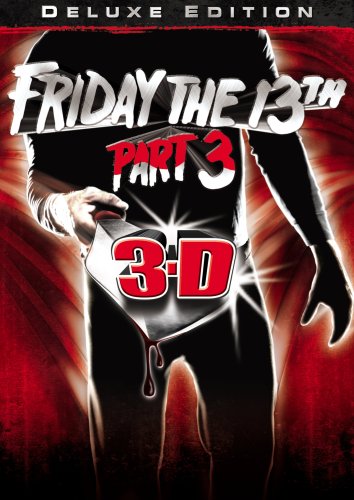
It didn’t take the Friday The 13th film series long to reach down into the gimmick bag. The sad thing is that the franchise didn’t really need a gimmick. Steve Miner returned to the director’s chair, and he delivered an important, if not great entry into the franchise’s history. Jason would, for the first time, don the hockey mask that would make his image the iconic horror visage it remains today. This was also an important film because a young makeup artist from this staff would break out to become one of the best in the business. Stan Winston was an uncredited artist on this film. Of course, I have no way of knowing what was his, but can there be any doubt that he left his mark throughout the film? Winston didn’t often talk about the film at all. It’s almost as if he never considered it a part of his resume, but he’s likely the biggest thing to come out of the movie.

There’s nothing new at all in the story. A fresh group of teens converge on another section of the banks of Crystal Lake. This time we’re on a farm that just so happens to border the bloody lake. Jason sets about doing what Jason does, and soon there are less and less of the teens going around. In 2D the film looks silly at times. There are so many obvious scenes intended strictly for the quick 3D effect. These moments include a wash pole, an eyeball in the hands of a Crazy Ralph clone, a snake, and a passed joint. Unfortunately these stretches make this the slowest of the Jason films. Still, there’s plenty of killing to go around, and while the effects don’t quite catch up to Tom Savini’s work in the first film, there are more creative moments here than the second film. With a new system in place, the MPAA didn’t feel the need to go crazy in chopping the film, so it benefits from a smoother edit than the second film had.

“You may only see it once but that will be enough”

That was the marketing slogan for the first Friday The 13th film in 1980. Apparently they couldn’t have been more wrong, because most of us have seen the film countless times, and no, it was never enough. The franchise would thrive with over 10 sequels or affiliated films, taking us right up to the present remake/reboot of that very first outing at Camp Crystal Lake. No, my friends, once was never going to be enough.


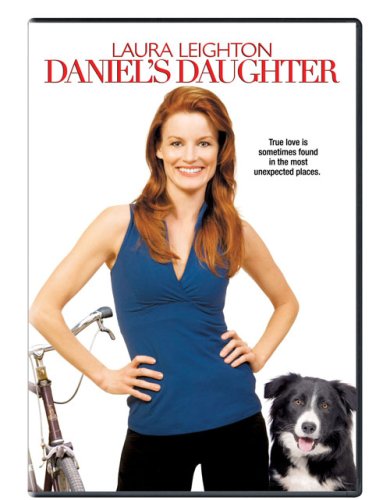
Daniel’s Daughter comes to DVD with star Laura Leighton back in the spotlight. Unfortunately, it’s a pretty dim spotlight. Fans of Melrose Place may be happy to see her, but that happiness will be short-lived when they also realize what a flat-lined EKG her film turns out to be.It seems as though the emotional pulses of this film never rise above comatose, relating a love story that doesn’t deliver and characters that were dead on arrival with the first page of the script. Something feels off about the whole affair. The sets are gorgeous. The actors are capable. The story appears heartfelt. But that’s before it’s all set in motion. Overly melodramatic and flatly rendered, Daniel’s Daughter is a made-for-television movie in the worst sense of the term, whether it wants to be or not.


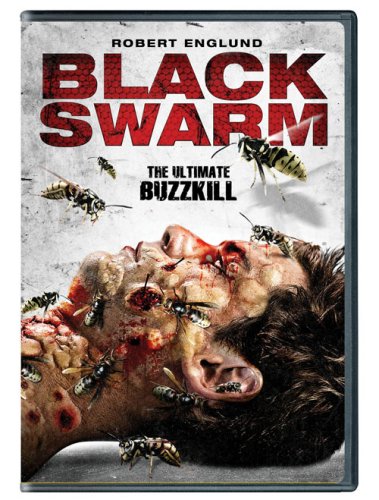
My Grandfather used to tell me if you can’t find something nice to say, don’t say anything at all. Still, Grandpop never had to watch and then review a film like Black Swarm. This is another one of those Sci-Fi Channel original films that just can’t seem to find the quality bottle when mixing ingredients. Can someone please tell me how a network that could bring us Farscape and the Stargate franchise can’t seem to give us even one good original film? They must have produced a hundred films by now, and I can’t honestly say I’ve seen even a halfway decent movie yet.

Remember the killer bees scare back in the late 1970’s? While there were some legitimate threats, Hollywood seems to have been the only place where clouds of Africanized honey bees amass over some innocent remote town and start knocking off the local inhabitants. The latest entry in the “Swarm mentality” comes from The Sci-Fi channel, and on DVD courtesy of RHI Entertainment. In this case it’s not the old killer bees we have to worry about. Here we’ve got genetically altered wasps that cause all the damage. The idea is pretty much the same, however, and maybe somebody needs to have these guys wake up and smell the 21st Century.

When a film is successful enough, it’s a relatively natural assumption today that a sequel will follow. In that sequel we expect more of the same and hopefully something new as well. Unfortunately there is a disturbing sideline for the animation sequel. Because the actors aren’t really on camera at all, there is the temptation to replace them so that you can do a much cheaper, often direct to video sequel. The folks who did Madagascar didn’t go that route, but the folks who did Open Season did. Gone are the likes of Martin Lawrence, Gary Sinise, Ashton Kutcher, and Debra Messing. These voices are replaced by Joel McHale, Mike Epps, and Jane Krakowski. Who? You might ask. That’s the problem. In an attempt to bridge the two films, Billy Connolly remains as the voice of McSquizzy. Crispin Glover is the biggest name actor in the new voice cast, playing the somewhat villainous Fifi. The result is a decidedly inferior film that was relegated to the Wal-Mart bins instead of the box office.

Just as Elliot and Giselle are about to get hitched, Weenie is discovered by his former masters and taken away. When Elliot sees the event he decides that Weenie has been captured and is being tortured. So the wedding is suspended and the gang sets off to rescue Weenie. They arrive at a pet campground where pets and their owners are pampered in a resort community for a week or two vacation. There is a prejudice among the domesticated pets against the animals of the wild. Our forest friends must infiltrate the resort compound and face down the domesticated pets in order to pull off their rescue. The pets are led by a conniving poodle named Fifi who is particularly hateful of the wilds. After a few slightly amusing sight gags and a predictable story and outcome, the wilds defeat Fifi and find that they and the pets have more in common than not. “Why can’t we just all get along” is the message of the day.

In my life, I have been married and divorced once. Quite simply, I made my share of mistakes and in my opinion, my ex-wife made some mistakes as well. It just never worked like one thinks a marriage should work. Instead, it left me broken but more importantly it left me a lot smarter and a better person. So naturally, I felt some connection to the broken marriage plot of the movie Fireproof. However, would my experience or failure in the art of marriage provide a bias to this film? We will just have to find out.

Caleb Holt (played by Kirk Cameron) works as a fire captain and manages a fire station. He’s a hero among the community and has saved many lives. However, at home he has a troubled marriage with Catherine (played by Erin Bethea) for a number of reasons including internet pornography and simply lack of love. During a particularly heated argument, Caleb gets in Catherine’s face and she declares she wants out of the marriage.

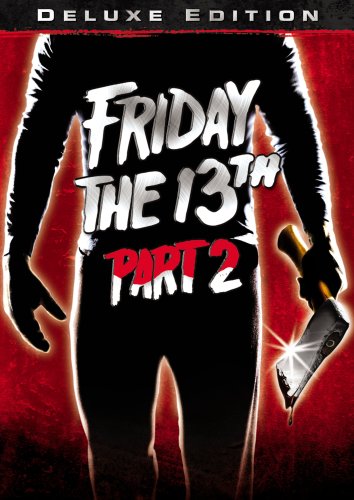
What a great time it was to be a teen in the late 1970’s. No, I’m not referring to disco music. It was a great time to go to the movies. It was the culmination of the perfect date, and Hollywood was riding the beginning of a trend that remains alive and healthy today. I’m talking, of course, about the slasher film. You could argue that Hitchcock started the ball rolling in 1961 with Psycho, but it would be decades before that film would find its true audience and plethora of imitators. Although The Texas Chainsaw Massacre and Halloween came before Friday The 13th, can it be argued that any horror film franchise is as widely known? The truth is that even the man behind the film, Sean Cunningham, never really knew what it was that he had. It was never his intent to follow the film with a barrage of sequels. He also scoffed at the idea that Jason could become the centerpiece for future films. By now Jason has become such an iconic character that there is an entire generation out there that doesn’t know that Jason wasn’t the culprit in the first film. Jason’s stature has reached the heights of the classic monsters of the Universal days. While some of us hesitate to put his name and hockey mask up there with the likes of Frankenstein, The Wolf Man, Dracula, and The Mummy, the recognition and sheer dollars generated make it difficult not to. By the beginning of the 1980’s names like Jason, Freddy, and Michael Myers would be scaring audiences around the world, rendering the classics somewhat silly in the eyes of a more visceral generation of teens.

It’s hard to believe, but in 1980 the slasher formula had yet to be born. And while Halloween laid down the foundation, this was the house that Jason built. By now it’s all old hat. You know exactly how it’s supposed to happen. There have been spoofs like the Scream series where these rules and expectations have been lampooned. It’s a shame, really, if you never got to see Friday The 13th before this style was so bloodily ingrained in your head. A group of teens gather at a lakeside campground in remote New Jersey. The camp was the scene of a horrific accident and subsequent murder rampage some 5 years earlier. Now someone wants to reopen the place the locals refer to as Camp Blood, but which moviegoers would long remember as Camp Crystal Lake. Despite warnings from the townsfolk, the teens gather to whip the place in shape for a summer filled with kids and fun. But on a stormy first night these teens would be eliminated one by one in “Ten Little Indians” fashion at the hands of a brutal killer. Victims would meet their ends under the most bizarre of circumstances. They would find themselves axed, skewered, and slashed. And as you know by now, but didn’t then, one will survive. The film would end with one of the most clever and effective jump scenes in movie history. No one knew then that a short epilogue intended only to deliver one final kick in the spine would give birth to one of the most infamous monsters in screen history.

“Once upon a time in New York City…”

Walt Disney might well have been the storyteller of more than one generation of kids. Is it any wonder that when we think of such characters as Winnie The Pooh or Peter Pan our minds conjure the images wrought by Disney animators and not necessarily the classic literature descriptions? That might not be the case with this Charles Dickens story, retold through Disney’s trademark animal point of view. Oliver & Company doesn’t appear to have had the staying power of films both before and after its time. After watching the film again, perhaps for the first time since its 20 years ago release, I can’t imagine why it has never quite caught on. From a popular culture standpoint the film has all of the elements that have led to other more beloved Disney classics. The Dickens story is a familiar one, read by most literature students as a matter of course. Many of the era’s biggest names lent their voice talents to the characters, including Billy Joel and Bette Midler. The songs are about as catchy as anyone might have hoped for. Just what was it that relegated this little seen Disney adventure to the bargain bin of animation classics?

Athena, here again sub “woofin’” for Gino. For those who don’t remember me, I’m a 13 year old Siberian Husky, and Gino lets me watch and review some of the movies for you guys. Times like these you need a dog’s eye view, and I happen to have two of them, a blue one and a brown one. Who says dogs are colorblind? I don’t get to go into the theater here a whole lot, something about fur in the equipment. I thought I was bein’ helpful because Gino’s always saying he doesn’t get enough software for his PS3. Hey, I got the softest wear around here. Well, Gino let me in again a couple of nights ago to watch the latest in the “Buddies” films. You might remember that I told you about Snow Buddies about 7 years ago. (That’s 1 year in human years). That was the first “Buddies” films I got to see, and I liked it a lot. Of course, that might have something to do with the star, Shasta, who’s about the cutest dog this side of…well…me. She was a cute little Siberian Husky puppy. I’m sorry to say that Shasta isn’t in this one. But before you start to decide you don’t want to watch this movie, let me give you my rulin’.


Night Court appeared on the scene at NBC in 1984 and was to last 8 seasons. If you thought it looked and sounded a lot like Barney Miller, you won’t be surprised to learn that a number of key people, including creator Reinhold Weege, came from that classic cop comedy. Several key elements of Miller can be found in Night Court. The themes are almost identical with both beginning with an easily identifiable bass run. The most important imported element from Miller was the constant parade of the kookiest and craziest criminals this side of the Cuckoo’s Nest.From a hick farmer played by then beginner Brent Spiner to hookers with hearts, Night Court relied heavily on the eccentric character to provide most of its laughs.

Harry Stone (Anderson) is a young hip judge who almost blunders into a judgeship of a Manhattan evening session courtroom. The role appears tailor fit for Anderson’s style of humor. The character even retained Anderson’s flair for amateur magic. He was always trying to bring levity to even the most dire of circumstances. Joining him in his courtroom was prosecutor Dan Fielding, played by the extremely funny John Larroquette. He was a material man with an overactive lust for the ladies. He was self centered and always looking to gain from someone else’s misfortune. He would often find himself having to suck up to the young judge who he found too footloose with the law. His groveling always brought the judge a perverse pleasure. The court was presided over by two bailiffs. Bull was played by Richard Moll. He was a mountain of a man with a bald head. While he might look and act like a monster who would eat little babies, he was in fact, a gentle and often childish character with an IQ lower than his shoe size. His partner and mentor was Selma, played by the raspy voiced Selma Diamond. Selma was a no nonsense, say what she wanted to, chain smoking authority in the courtroom. Unfortunately, Diamond would pass away after this second season, and this is your last chance to catch the character. Charles Robinson joined the cast in the second year as the court’s new clerk. He was likely the most “normal” member of the cast. Throughout its run there were a rather large number of actresses to play the public defender role in the series. Eventually that role went to Markie Post who kept it for the longest time. In season two it was Billy Young playing a very awkward Ellen Foley. The character never clicks with any of the others, and she will also be gone at the season’s conclusion.