Genre

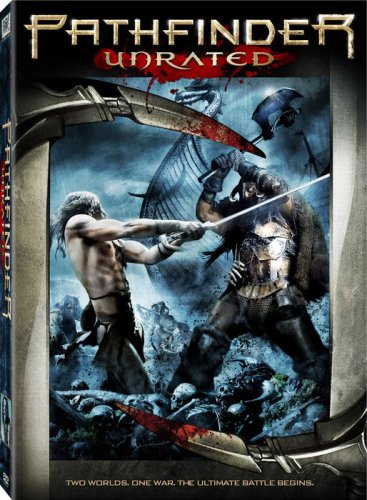
There is a certain audience that really gets into what I call "mythic combat". Zena and Hercules on TV, and movies like Reign of Fire, Conan and Dragonslayer all fit into this category for me. While I typically don't enjoy this type of faire, I am a sucker for the more popular versions, such as the Lord of the Rings trilogy and 300. After seeing a very promising trailer in the theater, I had high hopes for Pathfinder. Unfortunately, the final film did not live up to the potential of its marketing.

Pathfinder tells a story set in North America, 300 years before Columbus "discovered" the new world. When a band of ruthless Vikings attacks a small native village, a Viking boy shows his true colors, and refuses to kill a defenseless family. Disgraced, the boy is left to die. The natives, however, take him in and raise them as one of their own. When the boy is grown, the Vikings return, and the boy must fight his original kinsmen to defend the only family he has ever known.

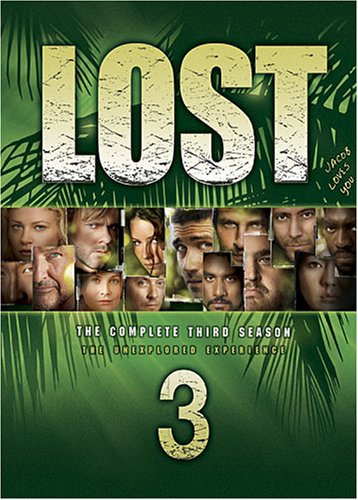
When Lost began its third season last fall I was beginning to feel a lot like the castaways must have felt; namely I was getting pretty lost watching Lost. There’s been a lot of mostly fair criticism about how ABC has handled the show last year. The first mistake was to air a small portion of episodes in the first couple of months and finish the season after the New Year. While this broken season plan works well for some cable shows like Monk, it does a serious disservice to Lost. I was so confused and burned out with the show after these first episodes, I never did return in February to see how it all played out. After reviewing the ratings numbers for the show, it seems I was not alone in leaving the island. Now with the release of the complete third season on DVD, there was renewed hope that I might be able to piece something coherent together by watching episodes in large chunks of marathon sittings. The result was the show was a little easier to follow but not much. Now don’t get me wrong. I appreciate the complicated plots and long detailed stories the show has been able to tell. Like the rest of the show’s fans, I enjoyed following the sparse trail of breadcrumbs and reveled in each new discovery in spite of the fact that each new answer also brought along five new questions as companions. Still, the third season of Lost was arguably its worst.

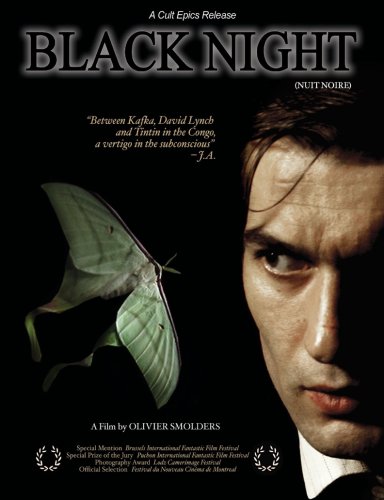
Belgian filmmaker Olivier Smolders, after a successful run of gorgeous and disturbing shorts, here makes a feature debut that is just as gorgeous and disturbing. Strongly reminiscent of the works of David Lynch, but far darker overall, the film is set at a time when the world is shrouded in the night of a perpetual eclipse. Day only comes for 15 seconds at 12:23 pm each day. Oscar (Fabrice Rodriguez) is a museum entomologist haunted by traumatic dreams involving the death of a sister who might or might not have every existed. He returns home one night to find a dying and pregnant African woman in his bed, a woman who is somehow linked to his father’s colonial past.

Trying to summarize the film’s plot is like trying to describe a dream: either case involves imposing linearity where none exists. Don’t try to figure out exactly what is going on here. Think of it as fevered nightmare inflected by guilt of Belgium’s gruesome colonial history, served up as a stunningly beautiful meditation on death, sex and insects.

So in a summer where a film directed by Judd Apatow and starring Seth Rogen made a truckload of money, another film released a couple months later where Apatow produced and Rogen co-wrote made almost the same truckload of money, yet both films were funny for different reasons.

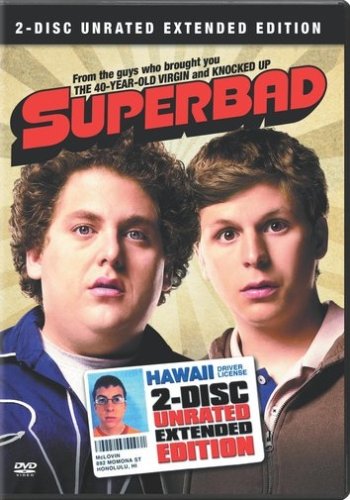
In Superbad, Rogen and Evan Goldberg (Da Ali G Show) wrote the script that Greg Mottola (Undeclared) directed, and the film’s premise is simple enough. Seth (Jonah Hill, Knocked Up) and Evan (Michael Cera, Arrested Development) are high school seniors who are attending one last party, with the help of their friend Fogell (Christopher Mintz-Plasse) and his fake ID and subsequent new name ‘McLovin’. The trio’s night takes a dramatic turn, as Fogell is assaulted at the liquor store and Seth and Evan presume that he’s been taken to jail for the fake ID. So Seth and Evan try to get liquor for a party that Seth’s friend Jules (Emma Stone, Drive) is throwing, and Evan wants to get some vodka for Becca (Martha MacIssac, Ice Princess), and the boys desperately want to get with the girls before the boys go to their respective colleges. In the meantime, Fogell isn’t taken to jail, but is taken on a wild ride and a wild night by Officers Slater (Bill Hader, You, Me and Dupree) and Michaels (Rogen), who take him through various twists and turns in the city.

Will Ferrell, arguably the last funny member of Saturday Night Live has picked some strange movies to be in since leaving the sketch comedy show. Appearing first as a co-star in Old School and then later in the kid-friendly (but cute) Elf, Ferrell took his time in getting to what fans wanted, a good PG-13 or better comedy for him to stretch his comedic talent.

By and large, Anchorman delivers on that, though occasionally Ferrell himself isn’t the one causing the laughs. As 1970s San Diego newsman Ron Burgundy, Ferrell is the one everyone in town trusts, along with his newsteam. The chemistry is broken when female newscaster Veronica Corningstone (Christina Applegate, Married With Children) is hired. Ron has to resolve the conflicts between himself, his team and his new interest in Veronica…

I must be one of the few people who despite hearing positive things, did not see Transformers in the theatre this past summer. The main reason being I’m just not interested in transformers, but then again so were most of the people I know who loved the movie. Regardless, here I find myself holding a copy of this summer blockbuster on HD DVD, I’m sure it’s going to blow me away, but only time will tell.

I couldn’t tell you how the film compares to the original cartoon, but from what I have gathered the premise is quite similar. I’ll give you the simplistic version; Cybertron is a very distant planet which is home to the transformers, but like all living beings war has erupted. The planet is eventually destroyed at the hands of Megatron who wanted to use the power of the All Spark for evil and domination. Meanwhile his main opposition Optimus Prime wants to use the All Spark for good. At the end of the day the All Spark end up on Earth, where Megatron followed it, but crash landed and became frozen in the Arctic Circle. Here explorer Captain Archibald Witwicky stumbles upon his body in 1897 and accidentally has the coordinates of the All Spark embedded into his glasses. Over a hundred years later Archibald’s great grandson Sam Witwicky (Shia LaBeouf, Disturbia) is in possession of these glasses, not knowing the power it holds, trying to sell them on eBay. After his 1976 Camaro comes alive before his eyes, he learns that there are a group of transformers called the Decepticons that are out to get the glasses from him. Sam allies with the good group of transformers called Autobots and eventually fights to save the world.

Dr. Mark Sloan first appeared in The It Never Entered My Mind episode of Jake And The Fat Man. In that episode Sloan was accused of a murder, and it was up to Jake and Jason to prove his innocence. The character had a certain charm that appeared to carry with audiences, and two years later Sloan had his own show, Diagnosis Murder. Dick Van Dyke did for doctors what his good friend Andy Griffith did for lawyers as Matlock. Both traded on their earlier careers in trademark comedies to reimagine dramatic roles in their twilight years. For Dick Van Dyke, Diagnosis Murder was more like a family affair. Almost every member of the Van Dyke clan arrived to play characters on the show that mirrored their real life connections. Jerry Van Dyke made numerous appearances as Sloan’s brother, while all of his children at one time or another played children of Sloan’s. Most notable, of course, was Barry Van Dyke, who costarred along with father. He played an L.A. Detective who often went to his father with his vast medical knowledge to solve crimes. Dr. Sloan had his own group of helpers who often either helped solve the crime or got themselves into danger, requiring doctor and son to rescue them, of course, just in the nick of time. Charlie Schlatter played Dr. Jesse Travis. Travis was a young ambitious resident who looked up to Sloan and would do almost anything for him. Victoria Rowell was Dr. Amanda Bentley who played the hospital’s real-life Quincy. She was the resident medical examiner and an important cog in Sloan’s crime fighting machine. Sloan was a combination Quincy and Columbo. Like Quincy, he had a knack for making medical discoveries no one else could find. His Columbo personality was brought out in his innocent simple nature that he relied on to lure criminals into a false sense of security.


Olivier Smolders is a Belgian filmmaker with a sensibility as distinctive and challenging as his artistry is developed. Cult Epics has done North American audiences a huge service by bringing his films to Region 1 DVD release. This disc has ten short films. Each piece has its own distinct identity, yet they are all very clearly the work of a singular creative talent. The frequently disturbing shorts range from a tale of murder and cannibalism in “Adoration” (previously available on the Cinema of Death collection), to the heartbreaking “Mort à Vignole” (where Smolders narrates a family tragedy filtered through home movies made by his and his wife’s parents, along with his own family footage), to an extended yet elegantly filmed practical joke (“Point de Fuite”) to a most unusual adaptation of Sade with “La Philosophie dans le Boudoir.” The films are invariably gorgeous and clinical in the precision of their observations. The blurbs on the case invoke Lynch, Greenaway and Bergman, and the comparisons are apt, though Smolders is also very much his own man.

Audio

Come with me, gentle viewer, back to the state of horror on TV, Anno Domini 1973. After her long-absent mother dies in mysterious circumstances, Belinda Montgomery attends the funeral where she meets Shelley Winters, an old friend of the family, or so she claims. Winters takes Montgomery into her home, and there our young heroine meets all sorts of strange people, and gradually realizes she is in the clutches of a Satanic cult who believe she is Satan’s daughter.

Televised horror has made great strides since this Movie-of-the-Week era, though even the likes of Masters of Horror still has to work, on its best days, to reach the level of a decent theatrical release. But The Devil’s Daughter is eye-witness to an era where mediocrity was, with very rare exceptions, the best one could hope for. Awful as it is, this pick is awful in entertaining ways. So here we have Shelley Winters teasing us with the promise that she might not take the volume to 11, and then spectacularly breaking that promise; Abe Vigoda channelling the spirit of Boris Karloff; Jonathan Frid stuck with a mute character of unclear motivations; Montgomery’s character portrayed as such an incurious wallflower (she’s only mildly interested in the Rather Big Clue that is the portrait of a cloven-hoofed Satan hanging over Winters’ fireplace) that sympathy is very difficult to muster; Robert Foxworth showing up late in the day as a plot device only the dullest of viewers will fail to see coming; Joseph Cotten doing ditto; and such treasures as a photo album complete with a picture of all the Satanists, in full black regalia, happily posing for a group shot. In other words, the camp comes thick and fast, and that kind of entertainment value is what accounts for this terrible movie’s star rating.

Malcolm McDowell’s second collaboration with director Lindsay Anderson, after their triumph with If..., sees McDowell as an enthusiastic new coffee salesmen sent off to make his company’s fortune in an ever widening area of the Britain. In true picaresque style, he has one strange adventure and encounter after another, each more bizarre than the last, and the whole is intercut with studio performances of Alan Price’s songs that comment on the whole enterprise.

Picaresque narratives are, by their nature, sprawling, episodic tales, and that is certainly true of O Lucky Man, which clocks in at just under three hours. They can, however, also have plots that only appear to be random, but are in fact as tight as wound watch, as is the case with Henry Fielding’s Tom Jones. This is less the case with Anderson’s film, which feels considerably more scattershot in approach. The episodes can be amusing, and McDowell is excellent throughout, but the satirical broadsides feel more obvious than pointed. Viewers will likely be divided over how they feel about the same actors (including Ralph Richardson and Helen Mirren) popping up in multiple roles, a convention rarely seen except in theatre. An interestingly messy work.