Genre

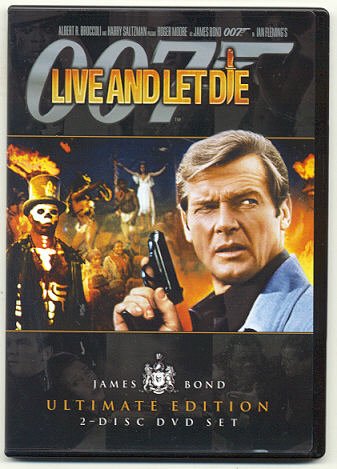
As a relatively topical fan of the James Bond franchise (though not so topical that I'd buy all of the films on DVD), I had a cursory knowledge of the actors who played Bond and the times that they had been cast. Little did I know however that by the time Roger Moore had signed onto the role in Live and Let Die that this was the third attempt to bring him aboard, and that maybe producers Harry Saltzman and Albert Broccoli were hoping that the third attempt brought the proverbial charm. Moore had been approached for the role as early as the Dr. No days, but was in the midst of doing The Saint television show, and Connery was chosen. Connery left and the opportunity came to Moore again, however he was not available and George Lazenby came on to do On Her Majesty's Secret Service. He left, Connery did one more and then finally, Moore was available to take the reigns.

And he came aboard to a Bond film that is probably his best and one of the best Bond films in the franchise. In Live and Let Die, James has to go to America (and subsequently, the Caribbean) to research the deaths of several British agents. He goes into Harlem to try and find out the whereabouts and criminal motivations of a mysterious boss named Mr. Big, and eventually makes his way to a fictional island called San Monique, where a United Nations delegate named Kananga (Yaphet Kotto, Homicide: Life on the Street) is waiting for his arrival, and using the results from a tarot card reader named Solitaire (a very young Jane Seymour, Dr. Quinn, Medicine Woman), he plans for the demise of Bond.

There's definitely no doubt in my mind that the Superman films, particularly the first two, will always be remembered as excellent pieces of film not only because they introduced the world to the late, great Christopher Reeve but also because they're simply great films. When word first came around that Superman director Richard Donner had filmed an ENTIRE version of the 2nd film only to have it scrapped at the last second, the interest of fans immediately piqued. What was so risqué about the Donner cut that made Warner Brothers basically shelve the film for some 20+ years? Well thanks to renewed interest in the Superman stories via Superman Returns, Warner has finally decided to let fans see for themselves what Donner's visionary ideas were all about by showing us his cut of Superman II.

A bit of back-story for those of you interested. Originally hired to film both Superman and Superman II back-to-back, Donner was soon fired by the Salkinds over a stupid dispute they were having with actual Superman II director Richard Lester over some films he shot for them. Instead of actually working out an agreement between all parties, the Salkinds decided to fire Donner and bring in Lester to film the story. The end result is a film that's good in its own right but seemingly was missing a big part that made the original so great. Laughs seemed force, the romance seemed out of place, and the climatic battles seemed kind of dull in retrospect.

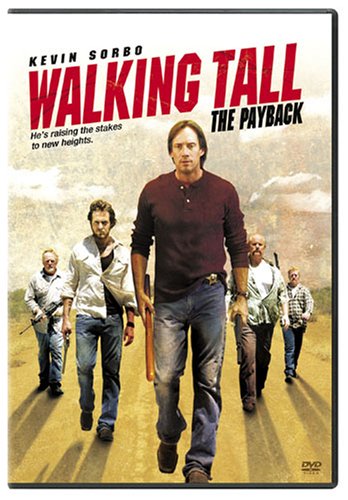
A small town is being terrorized by a gang of thugs who use extortion and violence to buy up all the businesses. The only person who tries to stand up to the gang is the sheriff, but then he meets a violent end. His son (Kevin Sorbo), who, one gathers from vague references, has military training, shucks his apathy, dons his father’s badge, and sets out to clean up the town.

The cover art is hilariously misleading, in that it shows what appears to be Sorbo leading his posse for the titular payback. But those folks behind him are actually the villains. Whatever. At any rate, this follow-up to the remake starring The Rock is mildly entertaining, but no more. Sorbo has little of Dwayne Johnson’s screen presence or sense of humour, and the storyline is utterly by-the-numbers. So routine is it, that the lack of action set-pieces really makes itself felt. On the upside, AJ Buckley is so completely unpleasant as the primary villain that he kicks the film to a semblance of life.

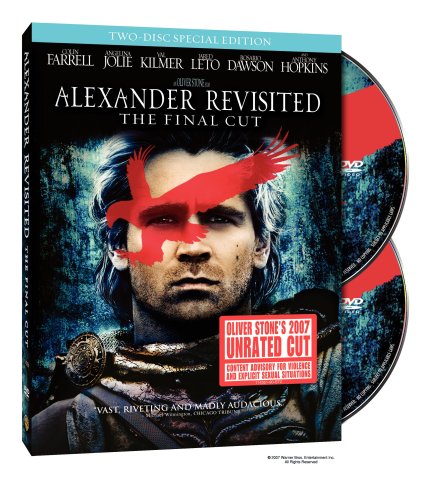
The return of the historical epic hit Hollywood hard in 2005/2006. Troy, Kingdom of Heaven, King Arthur and the two Colin Farrell vehicles, The New World and Alexander, all hit theaters pretty close to each other... and all flopped. The basic complaint was the same about all these films; they were too long, the pace was too slow and they were hard to follow. As much as these huge pictures cost, the studios quickly looked to the DVD cash cow to try to recoup some of the production co...ts. The first to hit was King Arthur, which was released in the theatrical PG-13 format (full screen only), and the director's preferred extended unrated cut (presented in widescreen). Antione Fuqua's fighting with the studio over the final cut of the film was widely known, so it was nice to get to see the director's original, more violent, vision. Audiences were pleased too, as this new cut was widely regarded as superior to the original.

A very similar thing happened with Ridley Scott's Kingdom of Heaven. The theatrical release was regarded as average, as it was on DVD. When Scott re-cut the film and released it as a four-disc special edition, however, consumers and critics went wild, declaring this new extended cut far superior to the original theatrical version. In fact, this new vision was named the DVD of the year last year by many critics. Scott has since said that this new cut represented more of his original vision for the story, but that the studio feared that it was far too long for theater audiences. (Remember, these are the same audiences who had complained that the film was too long to begin with, proving that filmmakers' would be best served creating their films on their own terms, without the input of the general public.)

If you've seen any of Terry Gilliam's other films, you can probably guess that this one is pretty bizarre. Based on the novel of the same name by Mitch Cullen, Tideland is an eccentric, grotesque and imaginative tale of a child's resilience.

I'm going to say right off the top, I wanted to like Tideland, and for two reasons. One, Gilliam has made some incredible films in his career, from Monty Python and the Holy Grail to Twelve Monkeys and Fear and Loathing in Las Vegas. Other than the flawed Brothers Grimm, it's been seven years since a Gilliam-helmed film was released. So I wanted to like this one. I really did. Unfortunately, while I admired the creativity in Tideland, and was at times intrigued and repulsed, I ultimately found the film extremely unsatisfying.

The Prestige surprised me like no other film has since The Usual Suspects. The entire film plays out like a good bit of misdirection, slight of hand and illusion, with some pseudo-science thrown in for good measure.

Robert Angier (Hugh Jackman, X-Men) and Alfred Borden (Christian Bale, Batman Begins) are rival magicians, both inspiring to be the best the world has ever seen. They began as partners, working together as assistants to an established magician, but when a trick goes terribly wrong, their relationship is forever changed. When each man sets out on his own, their rivalry grows as fast as their individual careers, with each of them suspicious of the other, and always striving to learn the other's secrets. The question is, who will win in the end, and what will be the cost of victory?

As I right this review, the date is February 24th, 2007 one day before the Annual Academy Award Ceremony, which is a show that this film is nominated in the Best Picture category for. Numerous other reviewers, whether they're critical or simply just internet journalists like myself, have labeled this one as this year's Crash. A statement like that made me worry going into this one because simply put Crash isn't Best Picture material nor is it even close to Best Picture material. While I haven't seen every other Best Picture nominee, I wouldn't completely mind if the Academy did award Babel with the Oscar.

Babel tells the story of Richard (Brad Pitt) and Susan (Cate Blanchett), two rather wealthy Americans from San Diego who're vacationing in Morocco. Their two kids are back in San Diego with their Mexican housekeeper named Amelia. During their vacation in the country, a local herdsmans' young children find a rifle and, unknowingly, take aim and fire at passing spectators on a bus. Unfortunately Susan is hurt during the incident. At the same time we learn that a trip involving Richard, Amelia and Richard's two children has put these characters in a complex situation that may result in them not being able to return to America. And at the same time as that's occurring, another event is occurring in Tokyo involving a widower who just happens to be tied to the earlier mentioned rifle via an ownership right. But this widower also has to worry about the straining relationship he's having with his deaf daughter Chieko.

For the sake of full disclosure, I wrote this review while I was sitting in a meeting. For the sake of having a challenge, I wanted to start every sentence in this review with the name of the movie, for no discernible reason whatsoever. Feel free to call shenanigans on me at any time, as it helped me get through my meeting and to a larger extent, the film.

Crossover is a film that at least as of this writing, has no positive reviews on Rotten Tomatoes for some sort of reason, and I think that's because of the razor sharp casting that was employed. Crossover includes Anthony Mackie, who was more recently seen as the drug dealing Frank in the Ryan Gosling Oscar-nominated film Half Nelson, but that's the only praiseworthy casting decision in the film. Crossover includes a supporting performance by Wayne Brady (Whose Line is it Anyway?) who is supposed to be a greedy sports agent who is running an underground street basketball league involving several teams, however in playing a bad guy, he makes his appearance in Chappelle's Show look really smart, because he's simply not believable. Crossover has a female role played by Eva Pigford, who was more recently seen in America's Next Top Model, so I guess if you can impress the scrutinizing eye of Tyra Banks, there's nowhere to go but up. Crossover also features a few real life "streetballers", including one whose name is "hot sauce". Crossover doesn't explain why this nickname was given, but I think it's the second dumbest athletic nickname I've heard, save for those whose nickname is the first letter of their first name and the first three letters of the last, like A-Rod, T-Mac.

Comments on the supplemental material on this edition have been ported over from Brendan Surpless' excellent (and recent) review of the Blu-Ray disc, which also can be enjoyed on this site.

Now onto the review...

An epic is defined as an artistic work that celebrates the feats of a legendary figure. The film Cleopatra actually deals with many such figures, the title character being merely one of them. The truth is the film was never really about the Egyptian queen as much as it was about Rome and its relationship with Egypt.. Of course, Elizabeth Taylor's portrayal has achieved something of a classic status that is not completely deserved. Much has been made of the Richard Burton and Elizabeth Taylor pairing in this film. Certainly both delivered entertaining and even at times compelling performances. However, these efforts pale in comparison to the brilliance of Rex Harrison as Julius Caesar and Roddy McDowall as Octavian. Others like Martin Landau add considerable weight to often underused characters. It is doubtful much would have been made of this film at all, let alone Burton and Taylor's overrated contributions, without such help. Taylor in particular makes more use of her looks than any thespian grandeur here. Elaborate and frequent costume changes are designed to take full advantage of her more obvious attributes. She does appear a stark contrast to the unusual woman most notable in recent years for her staunch loyalty to Michael Jackson. The enormously grand cinematography also plays no small role in the film's ultimate success. This release is intended to pay homage to the Academy Awards taken by this film, which included statues for cinematography and visual effects.

Cleopatra runs over four hours and can be broken down into four distinct parts. Hour one is clearly a setup for things to come. Julius Caesar (Harrison) is close to a glorious victory over his rival Pompey Magnus in a Roman civil war. His quarry has fled to Egypt, where Caesar is in pursuit. Upon his arrival Pompey's head is presented by the boy king Ptolemy. Caesar inserts himself into Egypt's civil war in favor of the King's exiled sister, Cleopatra (Taylor). Upon his fathering a son with the Nile Queen, the hour ends with her safely back upon her throne.