Genre

Synopsis

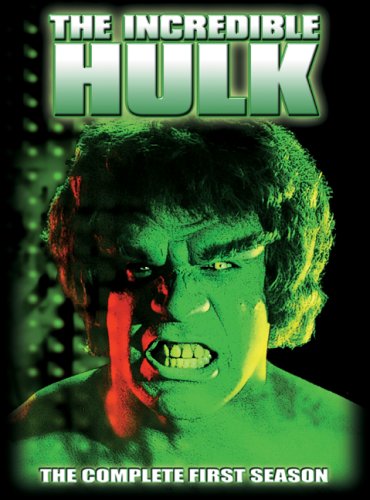
In 1985, Steven Spielberg backed this TV anthology series. It took its name from the very first SF magazine (which was briefly revived to coincide with the TV show), but have very little in common with that mag. It was almost purely fantasy-oriented, and its real model was the likes of The Twilight Zone (which itself was revived for TV the same year). Spielberg himself directed the pilot, and plenty of other big names singed on as well. So Harvey Keitel stars in an episode directed by...Clint Eastwood, for instance. Other directors of note include Joe Dante and Martin Scorsese.

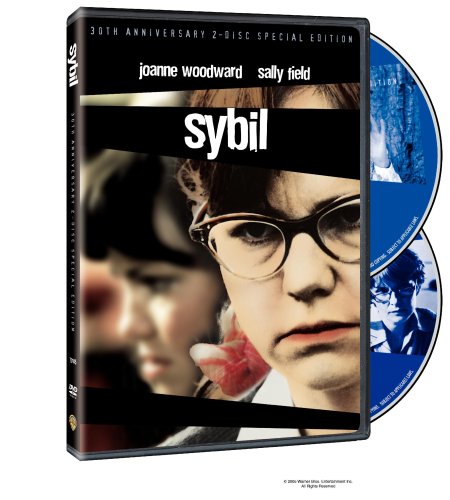
Sybil is one of those movies that has turned into something of a running joke. It certainly didn't start out that way, though. Probably no other made-for-TV movie is as famous as this one, based on a true story about a woman that had an astonishing 13 distinctly different personalities. Looking back on the film now, there are some definite cheesy moments. However, the vast majority of the film is really quite compelling, especially when the viewer reminds themselves that this is a true story.

Sa...ly Field, who plays the nut-job in question, won an Emmy for best actress for her work in the film. She really is extraordinary here, essentially playing thirteen different roles at once, many of them intertwined and overlapping. It is a role that would have made the film nothing more than a glorified After School Special in the hands of a lesser actress. Instead, Field plays the character(s) deftly and flawlessly, making the movie's three-hour running time fly by. This is an amazing film even by today's standards, and I hope this new edition brings an all-new audience to the film.

Keanu Reeves really really wants to break out of his pigeonholed role as the charismatic good guy in an action film, but sometimes he just can't help himself, and takes the easy paycheck (Chain Reaction may be a good indication of that). But in the action roles he's noted for, both as Neo in The Matrix trilogy and as John Constantine in Constantine, he's got the "protagonist with an internal conflict" down pat, that's for sure.

Written by Kevin Brodbin (who came up with the initial story) and directed by Francis Lawrence, who was previously well-reputed as a music video director (think Tarsem or David Fincher maybe), Reeves plays Constantine as a man with a conflict. While others may think that he has a gift in exorcising and deporting demons, he sees it as a burden, a duty he thinks he should get into heaven for. With the help of a grizzled priest (Pruitt Taylor Vince, Nobody's Fool) and an aspiring apprentice (Shia LaBeouf, IMDB), he plods along through the days and nights, doing his duty while battling an aggressive form of lung cancer which he doesn't make any better by chain-smoking.

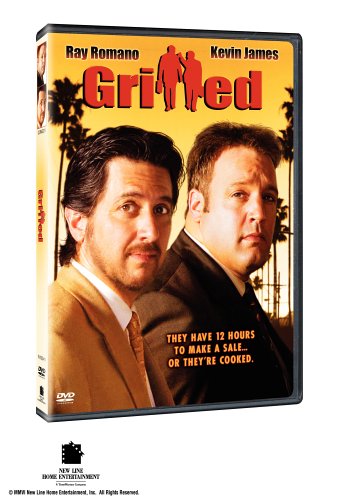
On Jerry Seinfeld's first comedy CD after his run on Seinfeld ended, he does a joke where he talks about why he hasn't done a movie yet. He talks about what a huge commitment it is to do a movie, and how he fears that when it is all over, he will be on the screen looking out at the audience saying, “this sucks, doesn't it? I didn't know. I really meant well.”

This movie is that punchline. Catching Ray Romano after his show's run and Kevin James just before the end of his sitcom, the two pair up as a co...ple of door to door meat salesmen who somehow get themselves involved in a situation between the mob, some killers... whatever. You know the drill. On the one hand, I can most certainly understand how someone could get talked into something that sounds better than it is actually going to be. On the other hand, surely they read the script before hand, didn't they?

The women on this show are easily the most selfish, self-centered, hateful, wretched wenches that I have ever seen. The fact that they would voluntarily put themselves on this show proves it. Who would ever watch this show (whose sole purpose is to show how horrible a person can be) and think to themselves, “I would really like to be on that show. I want the whole world to see me acting that way.”

Even so, here they are. The second season (!) of this show features eight episodes and eight brides-to-be at thei... absolute worst. It's all here, from flower problems to cake difficulties to the simple fact that somebody isn't paying the bride enough attention 24-hours a day. I can't imagine why anyone would voluntarily purchase this title on DVD. The women here are absolutely horrible people, and it's generally my practice to steer clear of people who act in this way. However, if you are the kind of person that enjoys seeing people make asses out of themselves, then maybe you will enjoy watching this show. I most certainly did not.

Louis L’Amour has been synonymous with the modern Western novel for decades. His stylized depictions of the Old West are always populated with colorful characters. Foremost of these characters would have to be The Sackett Brothers. Two of L’Amour’s Sackett adventures contributed to this 1979 mini-series. “The Daybreakers” and “Sackett” combine to form this 3 hour presentation.

Fresh off the enormous success of such Western shows as Bonanza and Gunsmoke, his mini-series has all the earmarks of that traditional television western. But by 1979 the genre had pretty much run out of steam. The Sacketts feels a lot like a wonderful swan song to a bygone era both in American history and entertainment. A pre-Magnum Tom Selleck leads this dynamic cast as Orin Sackett. Sam Elliott and Jeff Osterhage play the remaining two brothers. Elliott’s portrayal is particularly inspired. Add to the mix Western veterans Glenn Ford and Ben Johnson and you have a mighty fine cast. Louis L’Amour introduces the piece.

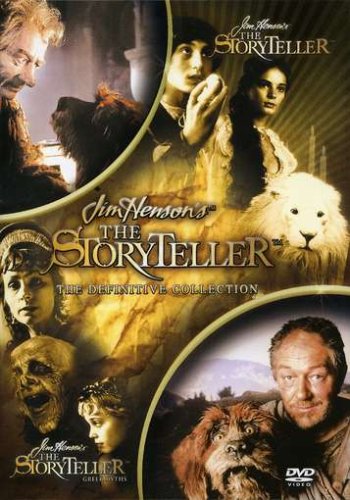
New from Sony Home Entertainment comes the complete series of Jim Henson's The Storyteller starring Mr. Elephant Man himself, John Hurt, and a slew of eye-popping creations from Jim Henson's Creature Shop. The series focuses on classic folk tales, fables, and legends, including "Fearnot," "The Heartless Giant," "The Three Ravens," and six other wonderful family-friendly tales on one disc. Also provided as part of the set is an additional disc entitled Greek Myths, which provides even more Henson-esque entertainment with the following four tales: "Daedalus and Icarus," "Orpheus and Eurydice," "Perseus and the Gorgon," and "Theseus and the Minotaur." There are thirteen episodes in all. Henson's typical production efficiency is present in each episode. His craftsmen always make the most of their miniscule budgets, and their work offers a refreshing break from these days of CGI-heavy effects.

What's so great about this series is its willingness to incorporate a myriad of cultural folk tales, many of which may be foreign to first-time viewers. Taking its selection from Greece, Russia, and Germany, the series never reached its full potential on account of the short run. However, it manages to educate and entertain children of all ages, and endures as a fine piece of family programming despite its brevity. Hurt is fabulous as usual, really sinking his teeth into the narrator role and telling each tale with an enthusiastic punch in his voice. Brian Henson also does a fine job voicing The Storyteller's cynically fearful dog. While effects may have advanced much since 1988, Creature Shop create a lovable character in the talking mutt, which is sure to enthrall younger viewers. Thankfully, these two characters are able to relate to that crowd without talking down to them. One last thing: watch for a minion of fine actors in early roles, including Gabrielle Anwar, Miranda Richardson, Joely Richardson, Alison Doody, and Jonathan Pryce.

I really enjoy stand-up DVDs, but they're pretty formulaic. The show starts, there is usually a short un-funny skit, and then the stand-up portion starts. The comic does his show, the credits roll, and that's it.

This is really something unique and innovative, however. This film is something of a musical comedy, skit, music video stand-up film. It's a lot to squeeze into a 72-minute film, but is is done surprisingly well. The transitions work out well, and it really shakes up the standard notions of what a co...edy DVD should be.

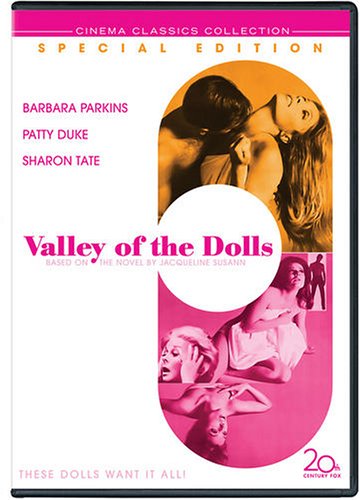
Valley of the Dolls is a musical that way way ahead of its time. Based on the novel by Jacqueline Susann, the film tells the story of three aspiring actresses and their attempts at becoming stars. Sure, this is an age old tale, but it had not been told as bluntly an honestly until now. The film starts Barbara Parkins, Patty Duke and Sharon Tate as the actresses in question. Audiences must have been shocked upon going to the theater, as they were much more used to rags to riches musicals such as A Star is Bo...n instead of the brutally honest vision that Dolls presented.

The actresses in this film are mean-spirited, nasty, drug-addicted women who will stop at nothing to get where they want to be, and they don't care what they have to do or who they have to step on to get there. As horrible as these women are, this Hollywood musical strips away all the glitz and glamor to bring the true story of what it takes to make it in show business. It is a groundbreaking film that was nominated for an Academy Award for its wonderful musical numbers. Both the beauty and the ugliness of the business are shown here, and the film completely took me by surprise.

Tommy Lee Jones makes his directorial debut with The Three Burials of Melquiades Estrada, a new take on the western genre. Set in modern times, this is a unique revenge picture with a more positive message than most. Jones also stars as Pete Perkins, an old cowboy, who embodies all the classic western ideals. Estrada (Julio Cesar Cedillo) is his Spanish-speaking friend and ranch hand, who falls victim to an unfortunate shooting at the barrel of trigger-happy border patrolman Mike Norton (Barry Pepper). After a...failed attempt at cover-up, spearheaded by crooked police officer Belmont - a masterful portrayal by country music star Dwight Yoakam - Estrada's body finds itself in Perkins' possession, and a journey for a proper burial begins. But Perkins isn't going back to Mexico alone. He kidnaps Norton and forces the man into the role of Estrada. Jones does a great job of walking that line between insanity and friendship, nowhere more apparent than the scene, where he proudly boasts of his triumph to slow his old friend's decomposition. (I'll never look at antifreeze the same way again.)

Shot from Guillermo Arriaga's literary script, Jones' interpretation of time and place is stunning. The film begins in a strange place and jumps around with great frequency. Pete and Estrada's relationship contains not a word of English. One minute, the title character is alive. The next, he's dead. Then, he's alive again. It would have been too easy for the film to crumble under its own structural weight, if not for Jones' seamless direction, which keeps the film's nomadic tendencies surprisingly clear. By excluding English (and subtitles) from the scenes with Pete and Estrada, the audience realizes just how special the young immigrant was to Perkins. Their relationship was something exclusive, and it seems as if it was the closest Pete ever came to loving another human being. Unfortunately, there will probably be a few snickers if I don't clarify; but for the record, it's a non-sexual love. It's friendship, plain and simple. And the fact the audience doesn't even get to invade that bond tells all the more what Estrada meant to Perkins.