Genre

Synopsis

I’ve long held the somewhat chauvinistic belief that female stand up comedians are simply not funny. I’ve given people like Ellen DeGeneres, Paula Poundstone and Margaret Cho as much unbiased time as I can give, and I just don’t laugh at them. Their sense of humor is softer than any comparable male comedians, and is far more subtle. Does that make me a cro-magnon male with a large forehead? Probably.

Synopsis

The film focuses on the life of a family of nomads in the Gobi Desert region of Mongolia. Their camels are vital to their well-being, and when a mother rejects her newborn white calf, this is a serious problem. Two sons set off to a distant village to summon a magician is summoned, who, it is to be hoped, can perform the necessary miracle to save the calf.

The Academy Awards ceremony continues to devalue itself by giving honors to films, which are mediocre at best, or films that try desperately to force a political agenda down the American people’s throats, while gems such as 2004’s Downfall linger in relative obscurity, and certainly do not receive the recognition they deserve. Director Oliver Hirschbiegel’s study of Hitler’s final days transcends the triviality of being considered a film and instead functions as a window into the past. And for a little more th...n two hours, it feels like we’re actually watching Hitler’s (and a country’s) downfall instead of a movie portraying the events. Part of this authenticity is due to the meticulous recreation of war-torn Berlin in the last ten days of the German dictator’s life. The filmmakers’ painstaking research, which consisted of hours-upon-hours interviewing several of the still-living participants, as well as taking a healthy dose of its story from the memoirs of Traudl Junge, Hitler’s secretary, succeeds in placing us right in the middle of the drama. But the proceedings would be nothing without the criminally overlooked performance of Bruno Ganz, who doesn’t just play Hitler; he becomes him. If Ganz cannot win a Best Actor Academy Award for what he does here, then the whole system no longer contains merit, and the little gold statue means nothing.

Of course, whenever Hitler’s involved in anything, there will always be a lot of controversy that surrounds him. It doesn’t help the film’s global acceptance that Ganz plays Hitler not as a two-dimensional dictator, but as a flesh-and-blood man with his own feelings of pride, uncertainty, and even warmth. But make no mistake. Any critic or viewer that tries to tell you Hitler is shown in a positive light did not even begin to watch the film closely enough. Thus, the only real controversy lay in the fact that Downfall de-poofs stereotypes of what a German under the Reich was… and more importantly, of what Hitler himself was. He is first and foremost a mentally unstable villain. But like all predators, he is not without his share of humanity which does invoke sympathy at times. All the while, the film never tries to justify Hitler. It just tries to understand him, and it is enormously successful in doing so.

This is the perfect time for Lion's Gate to release Made on UMD for the PSP. Not only does the film feature such trendy personalities as Faizon Love and Puff Daddy/Puffy/Sean "Puffy" Combs/P-Diddy/Diddy, but it also stars the current comedic genius of the week... Vince Vaughn. That's not to say that I don't like Vince Vaughn, it's just that he is riding such a high wave since his hilarious work in Wedding Crashers that this is the perfect time for the studio to cash in on some of his lesser known films ...s well. In fact, I have been a fan of Vaughn's ever since Swingers.

Which brings me to my point. Made is one of those all-too-rare films that aren't really sequels, but are something of a reimagining of a couple of characters. Vaughn and writer/director/co-star Jon Favreau pretty much play the same two guys they did in Swingers, which I just can't get enough of. While the topic of that film was dating in Los Angeles, this one is about the dull life of lower-level gangsters trying to make it big. These two bumbling idiots decide that the best way to make a name for themselves (and earn some cash to boot) is to act as L.A. muscle for a NYC mob operation. As you can imagine, their failures are comic gold.

I think that the studio knew they had a problem with Godsend before it was released in theaters. Sometimes a film can look like a great idea on paper, but the final product is just a mess. The thing is, after the studio has invested millions in a bad property, they have to try to recoup the money somehow. In the case of Godsend, the strategy was to put a well made trailer for the property on every Lions Gate DVD product for months and months. In this way, the studio hoped to build up enough word-of-mouth through minimal promotion to have a big opening weekend; big enough to make back some of the film's budget before the word got out about how bad the thing was.

The plot sounds great. A married couple (Greg Kinnear and Rebecca Romijn-Stamos) have a wonderful son, but he is tragically killed when he is eight years old. Enter Robert De Niro as a doctor who has had a miracle breakthrough in the field of cloning. After some convincing, the three parties enter into an agreement to clone the couples deceased son. The boy is a perfect duplicate of the original until he reaches the age of eight, at which the original child died. That's when the crazy comes out.

Synopsis

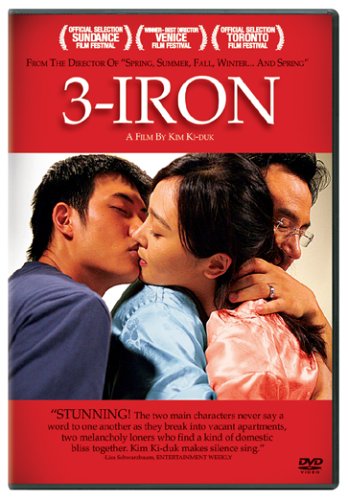
Tae-suk is a young man who breaks into people's home while they are away. He lives there in their absence, but doesn't steal anything, and fixes odds and ends while he's there. During one such break-in, it turns out that owner's wife is there, and a love affair begins between the two. When the abusive husband returns, Tae-suk winds up killing him with the title instrument, and the lovers flee.

It seems that every action movie that is being released out of Hollywood nowadays always has to feature out of this world stunts that no real human could ever do. Now this is not necessarily bad if the action is done in correspondence to the film in a skillful manner. When the original Transporter was released onto DVD, it quickly gained a reputation through many action fans that caused the film’s sales to skyrocket. The sales skyrocketed so high that Twentieth Century Fox quickly greenlit the sequel to a film...they had no interest in making a sequel to after the rather poor theatrical performance.

Quickly recapping the first film for those of you have not seen it. The Transporter starred actor Jason Statham (Cellular) as Frank Martin a.k.a The Transporter, a man who would transport anything at a price. He had three rules if you wanted to hire him. 1. Never change the deal. 2. No Names. 3. Never look in the package. Martin is hired to deliver a large duffel bag. The bag tends to complain and squirm. The bag contains a Chinese woman named Lai. Martin cuts a hole in the tape over her mouth, thus violating his third rule of never looking in the bag. What occurs next is a movie that tends to have too much action at some point that it brings the film to a near dead standstill.

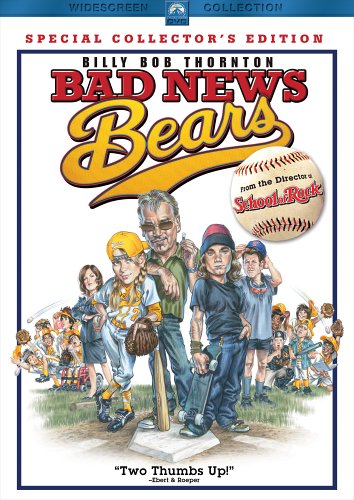
Bad News Bears is not necessarily a fine film, but it is a lot better than the host of other remakes Hollywood has thrown at us as of late. Billy Bob Thorton stars in the film, and I quote, “as a drunk who makes a living killing rats to live in a trailers.” The film seems to take his character from Bad Santa and the football coach in Friday Night Lights and seems to merge the two. However, neither of his tactics in either film are used in the film. This results in the audience liking his characte... more than he probably likes himself.

The original 1976 film starred the late Walter Matthau. Thorton’s performance in the film seems to be holding a candle to Matthau’s. Thorton just seems to find more of a sad tone in his character of Morris Buttermaker than Matthau did. His team is called the Bears, which is only around due to a lawsuit that feels the Little League discriminates. The attorney Liz Whitewood (Marcia Gay Harden) demands that the league except all players. This results in the typical sport film’s cliché. His team gets ALL of the terrible players including a black kid, two Spanish speakers, an Indian, a kid who seems to be too little to even hold the bat, and one kid who is in a motorized wheelchair. As you can possible assume from this cliché, is that NONE of these players can play the game.

Synopsis

Lenny Baker is a young Jewish lad (based on writer/director Paul Mazurksy himself) who dreams of being an actor. The time is the early 1950s, and Baker moves from Brooklyn to Greenwhich village to make a name for himself. Every conceivable element of Beat life in the Village is present, and Baker encounters all sorts of characters (including a young Christopher Walken and Jeff Goldblum). He must also deal with complications in his relationship with girlfriend Ellen Greene, and his domineerin... mother (Shelly Winters).

The Bad Sleep Well reminded me a lot of The Godfather. Both films begin with a large wedding, where the story behind the wedding is more fascinating than the event itself. Both films are also about corruption, what it means to be loyal, and what happens if you do favors for the wrong people. The Bad Sleep Well is particularly meaningful to our modern society, as instead of the subject of the film being gangsters, the focus is on the new heavies on the block... corrupt corporate heads. In the wake of the scandals at Tyco, Worldcom, Enron and others, this 1963 film carries new weight for American audiences.

Kurosowa was famous for his samurai films, and this modern film still carries some of those same themes. The Lords have moved from the countryside to the boardroom, but the pressure to perform and protect the organization at all costs remains. Those warriors in the support roles are compelled to defend the actions of the corporation even with their own lives, if it comes to that. This film is part film noir, part corporate drama, and yes, part samurai film.