Genre

Synopsis

An art-museum heist leads to the discovery of a map pointing the way to a treasure hiddenby Christopher Columbus. Two groups wind up on a remote island, racing each other and aferocious storm for the treasure. One group is a collection of criminals and crooked cops, eagerto kill our heroes in the second group (Stephen Baldwin, Nicolette Sheridan, and assorted comicrelief).

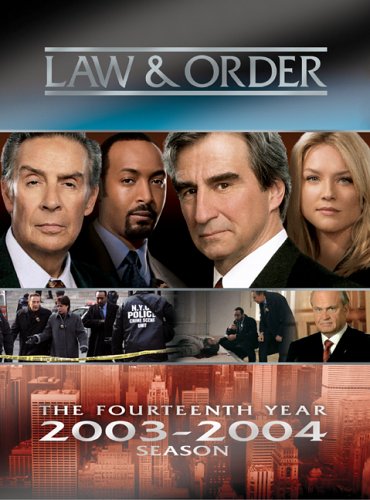
This box set has restored my faith in television. I actually don’t have cable or satellite or anything, and if you ask anyone that knows me, they’ll tell you that I’m a steadfast refusenik when it comes to watching TV. Law & Order, however, is intelligent, well-cast, and has very high production values – all the ingredients of a winning series, as its ridiculously long run (14+ years) is testament to. Each episode has a well thought-out plot, usually with some sort of twist – and generally without any glaring plot ho...es. The interplay between characters is fantastic too – the division between the police on the street and the prosecuting attorneys makes for great characterizations, and interesting interactions when the two halves are bought together. The other thing that struck me about the series was relevance - issues in each episode coincide with events actually taking place in the real-world (SARS, for instance, in the episode “Patient Zero”), which lends the entire series credibility and ratchets the interest level up one notch higher.

One thing that struck me while watching a few episodes was how different shows can have an impact on society, or not. Consider the original Star Trek for instance – a three year run with horrible production values that somehow spawned a subculture, many movies, and however many spin off series. Law & Order, despite all of its general greatness (11 Emmy nominations and one win) hasn’t quite penetrated society to the same degree – no one attends Law & Order conventions, and there aren’t any Law & Order fanzines. Perhaps is the day-to-day nature of the subject matter (culled from newspaper headlines) doesn’t lend itself to cult followings, or perhaps the fact that there isn’t much soap-opera to the show keeps the characters at arms length – hard to say. Or maybe I’m just off-base here – if you’re a member of a Law & Order fan club, by all means post a comment and correct me.

Synopsis

Katie Wright is an English art student studying in San Francisco. She is a bit of an odd duck,and after being disturbed by her inability to see a first date through, she avoids the boy who askedher out. She is having problems in class too, as she keeps sculpting not the model before her, butthe faces of the man we know is her neighbour: insane actor Jeff Fahey. Things get even worsewhen Wright winds up sculpting one of Fahey’s victims.

This box set has restored my faith in television. I actually don’t have cable or satellite or anything, and if you ask anyone that knows me, they’ll tell you that I’m a steadfast refusenik when it comes to watching TV. Law & Order, however, is intelligent, well-cast, and has very high production values – all the ingredients of a winning series, as its ridiculously long run (14+ years) is testament to. Each episode has a well thought-out plot, usually with some sort of twist – and generally without any glaring plot ho...es. The interplay between characters is fantastic too – the division between the police on the street and the prosecuting attorneys makes for great characterizations, and interesting interactions when the two halves are bought together. The other thing that struck me about the series was relevance - issues in each episode coincide with events actually taking place in the real-world (SARS, for instance, in the episode “Patient Zero”), which lends the entire series credibility and ratchets the interest level up one notch higher.

One thing that struck me while watching a few episodes was how different shows can have an impact on society, or not. Consider the original Star Trek for instance – a three year run with horrible production values that somehow spawned a subculture, many movies, and however many spin off series. Law & Order, despite all of its general greatness (11 Emmy nominations and one win) hasn’t quite penetrated society to the same degree – no one attends Law & Order conventions, and there aren’t any Law & Order fanzines. Perhaps is the day-to-day nature of the subject matter (culled from newspaper headlines) doesn’t lend itself to cult followings, or perhaps the fact that there isn’t much soap-opera to the show keeps the characters at arms length – hard to say. Or maybe I’m just off-base here – if you’re a member of a Law & Order fan club, by all means post a comment and correct me.

With the success of Star Trek as both a television and film franchise, it made perfect sense to eventually pass the baton from the Kirk era to the Next Generation. Generations had promise, but could and should have been a far better film. The f/x were for the most part inferior to previous Trek films. The destruction of the Enterprise D is the notable exception. Perhaps it was unwise to attempt to blend the established film environment with the too recently completed television series.

The film might have ...een better served by taking more time to create a better film version of the Enterprise D. It’s obvious that the ship’s destruction was written into this film to allow for the necessary redesign of the Enterprise for future films. A greater participation by the rest of the original cast, while costly, would have gone further to portray the changing of the Star Trek guard. I have heard Nimoy speak several times on the issue. He declined the role not because of money as many speculate, but because Spock’s role was too insignificant and out of character. How I would have loved to see Picard, Data, Spock, and Kirk work together toward the film’s climax. Still, Generations did bridge the two generations of Star Trek in an emotional if unsatisfying fashion.