Posted in: Disc Reviews by David Annandale on March 21st, 2009
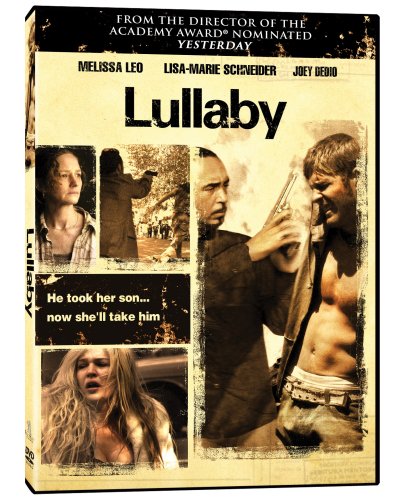
Melissa Leo is a hard-working café waitress in Tennessee who regularly sends what little extra cash she has to her adult son who, for reasons never explained, is a drug-addict in Johannesburg. A drug lord (Joey Dedio) kidnaps said son, and demands a ransom that, for Leo, is next to impossible. Nonetheless, a mother's love knows no obstacles, so she scrapes together the money to fly to South Africa. Once there, she connects with Tina (Lisa-Marie Schneider), her son's prostitute girlfriend, and is made to run the gauntlet by Dedio, who shows very little inclination to let his hostage go, no matter what demand is met.
This is an odd fish of a film, being a rather incongruous mix of gender-flipped Taken and gritty realism. Leo is called upon to do the impossible: be the grief-stricken mother and then terrified mother for the first part of the film, but transform by the end to an avenger whose strategy and vocabulary are worthy of Hannibal Lecter. All of her weepy moments are expertly performed, but so frequent they become tiresome. In other words, we have a first-rate actor being sandbagged by a silly script. And silly the whole thing very much is. Despite all kinds of gestures towards the Harsh Realities of Life, it is, in the end, no more a product of the real world than Transformers. What it is, though, is slick, quick and entertaining.
Posted in: Disc Reviews by Gino Sassani on February 25th, 2009
Posted in: Disc Reviews by David Annandale on January 12th, 2009
The giallo was never a genre that specialized in tight, coherent, logical storylines. But even by the bizarre standards of the form, In the Folds of the Flesh takes some kinda cake. Trying to summarize its plot is next to impossible, as the first two thirds of the plot are incomprehensible, and are cleared up only in the final third, which feels more like a play than a film, and where the revelations and twists pile up to such a degree that they don't induce whiplash – they torque your head clean off. So, for what it's worth, we have a castle (whose interiors look distinctly un-castle-like) where, thirteen years ago, a man was decapitated. His body was disposed of by the woman living there, and she and two children, now grown and thoroughly insane, dispose of anyone else foolish enough to come prying into their lives.

This is certainly no lost masterpiece. Its story is clumsily told, and would be offensive if it weren't so ridiculous. The murders vary from the delightfully cheesy (the decapitations) to the utterly WTF (death by cuckoo clock?? ). But the demented nature of the exercise makes it compelling in the nature of a train wreck (and speaking of trains, what's with the constant shots of one?). Lovers of the deranged will find much to feast upon here.
Posted in: Disc Reviews by Archive Authors on December 12th, 2008
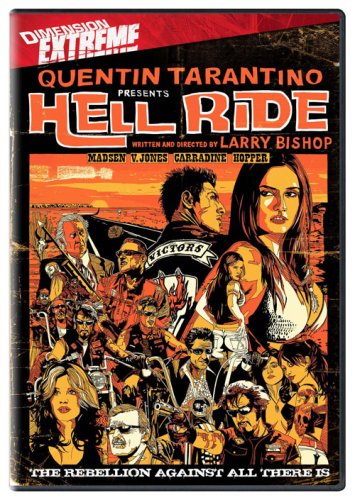
Larry Bishop’s Hell Ride plays like a childhood fantasy I might have had in the third grade had I known more about boobies and the joy they bring to my basest male desires. As a film, however, it’s terrible. It’s like Bishop set out to honor the bad movie genre by laying a turd so rancid the qualities of those other films shine brightly alongside it. Sitting down to watch Hell Ride a second time after having seen it in theaters and not really knowing what to think about it then, the benefit of time has taught me how awful this debut truly is.
Posted in: Disc Reviews by David Annandale on November 26th, 2008
No, this isn't the Patrick Swayze vehicle. Instead, it's another golden opportunity for Richard Widmark to unleash his patented psycho act. Here he plays Jefty, playboy owner of the titular establishment. His right-hand man is Pete (Cornel Wilde), who is the serious-minded half of the partnership. Said partnership is strained when Jefty brings back the latest singer for the club, one Lily (Ida Lupino, in superb hard-boiled form). Pete thinks she's bad news, and she is, only not in the way any of the three suspect. Jefty decides he's in love with her, but she only has eyes for Pete, and he, despite misgivings, reciprocates. Jefty doesn't take rejection well. Not well at all...
The cast is terrific, bouncing cynical zingers off each other with aplomb. Wilde does well as the world-weary Pete, but Lupino and Widmark own the field, and their final confrontation is one for the books. Enormous fun for noir fans, and especially for lovers of Widmark as a terrifying nutjob.
Posted in: Disc Reviews by David Annandale on November 24th, 2008
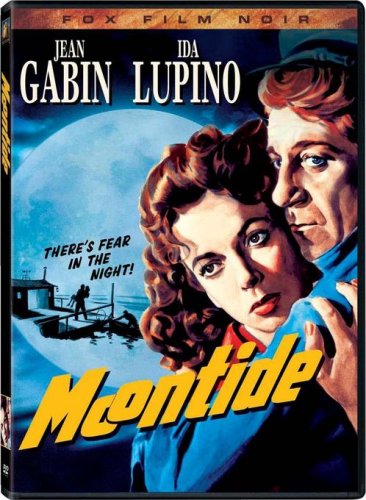
Jean Gabin, in his American debut, plays Bobo, a French sailor who has been knocking around the States for quite some time in the company of Tiny (Thomas Mitchell). Their wandering comes to a stop when, the day after a night of drunken excess that he cannot remember, Bobo sees Anna (Ida Lupino) wading into the waves to commit suicide. He rescues her, and before long the two are living together on the bait barge where he is working, and fall in love. Dark clouds are on the horizon, however. A local man was murdered, and Tiny, resentful that his meal ticket has been taken from him, darkly hints to Anna that Bobo might be responsible, even though he doesn't know it himself.
Moontide was originally a Fritz Lang project, and as the accompanying documentary demonstrates, his influence is still felt in the finished project, notably during the climactic stalking sequence. Gabin, though a masterful presence, nonetheless seems almost as much a fish out of water as his character, and it doesn't really come as a surprise that neither he nor Hollywood wound up caring much for the other, and he would return to the greener pastures of France. Claude Rains is on hand as a wisdom-dispensing night watchman – hardly a stretch for him, but it's always a pleasure to hear his mellifluous tones. The real stretch, and indeed revelation here, is Thomas Mitchell – the man whose speciality was the cuddly, avuncular Irishman here becomes a twisted monster of childish, violent rage, giving us a real nail-biter of a denouement.
Posted in: Disc Reviews by David Annandale on November 9th, 2008
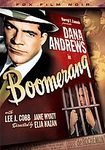
Small town Connecticut. A beloved priest is gunned down in the middle of a busy street, and the pressure is on for the police to find the killer. The new regime at city hall needs a conviction, and doesn't care too much about the niceties. When a suspect (Arthur Kennedy) is at last found, police chief Lee J. Cobb isn't entirely happy with the case, but he passes it on to DA Dana Andrews, who is under even more political pressure. At first pleased with the case, Andrews becomes uncertain the more he looks into it, and startles everyone (not least the defence attorney) by entering a plea of innocent at the beginning of the trial. Politicians and lynch mobs are soon baying at his door.
Elia Kazan's 1947 thriller is, as commentators Alain Silver and James Ursini point out, very much in the vein of the docu-noir. There is lots of procedural action going on here, and the voice-of-god narrator is frequently on hand to explain things to us. What is perhaps most interesting about the film, though, is that the case itself becomes of secondary importance to the political machinations. This isn't so much about the possible conviction of an innocent man, so much as it is about the mechanisms that make such a thing possible in the first place. Given what the future would hold for Kazan and his involvement with the HUAC hearings, the witch hunt scenes here take on additional, troubling, resonance.
Posted in: Disc Reviews by David Annandale on November 1st, 2008
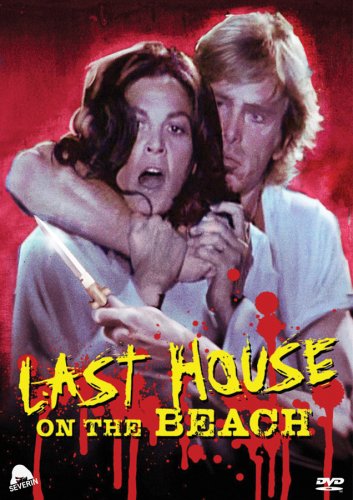
After a violent bank robbery, a trio of criminals descend upon the beach house retreat of a nun and her students. The bad guys take the women hostage, and make themselves at home, tormenting, raping and abusing to their hearts’ content, pushing their victims ever further over the edge.
At the level of plot, not a lot goes on here. The villains are ensconced at the beach house within the first ten minutes, and then story does little more than go through variations of torment until the inevitable retaliation. Nonetheless, there is a fair bit of interest here. The assaults, though very unpleasant and extremely nasty in their content, are, however, filmed with a certain restraint, with the camera concentrating on the faces of attackers and victims rather than on their bodies. Ray Lovelock’s gang leader is a deceptively pleasant pretty boy, and his character arc consistently plays out against expectations. And then there’s the climax, which turns up again almost beat for beat at the end of Quentin Tarantino’s Death Proof.
Posted in: Disc Reviews by Gino Sassani on August 20th, 2008
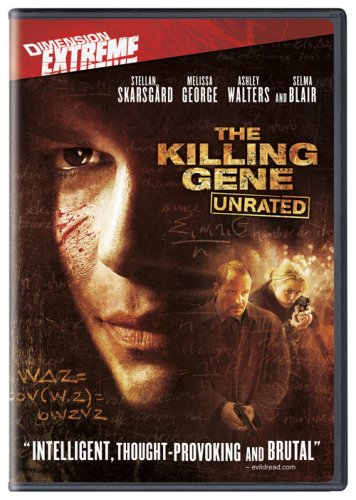
What is love worth? How much pain would you endure before you would murder someone you loved to end it? In The Killing Gene our serial killer seeks these answers, reducing it all down to an algebraic equation. The film is actually the American DVD release titles for the British film WAZ or W Δ Z depending on the source. This title refers to the killers equation which translates to roughly W Δ Z = COV. It’s a rather odd indy looking piece, filmed in
Posted in: Disc Reviews by Archive Authors on August 8th, 2008
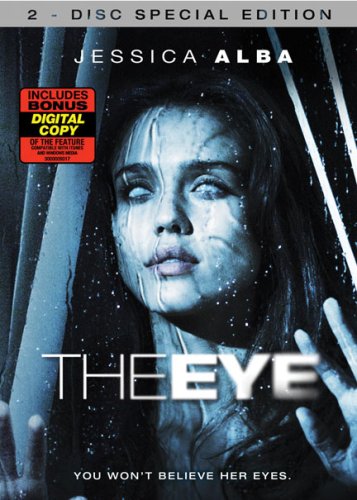
Why god must you do this? Why does Hollywood in all its limited wisdom try to remake any and everything with the hopes that it will be good, when it just winds up becoming another EPIC FAIL? They’ve done it with The Grudge, they’ve done it with The Eye, and now I hear they might be remaking Oldboy and The Host. We’re coming up on sacred cow territory here, and quite frankly, I don’t know why these films have to be “Americanized” to appeal to the unwashed masses; I thought the whole point of them was to be appreciated on their own merits. But sure enough, the horror film genre is guilty of cannibalizing product like anyone else. See what I did there?
Moving on, The Eye is based on the 2002 Hong Kong film Gin gwai, but Tom Cruise’s CW Production studio bought the American rights, and Sebastian Gutierrez (Snakes on a Plane) adapted the screenplay for American audiences, in a film that David Moreau and Xavier Palud (Them) directed. Sydney Wells (Jessica Alba, The Love Guru) is a classically trained violinist who has been blind most of her life. Upon receiving a corneal transplant (the eyes people, work with me here), she starts to see visions that shock and terrify her. Her sister Helen (Parker Posey, Best In Show) doesn’t know what to do for her, and her doctor (Alessandro Nivola, Grace is Gone) thinks she’s crazy, even though she walks around with strange markings on her hands and arms. So she tries to find out where her donor eyes came from, and the person who had them before saw unimaginable horror, and those visions are transferred to Sydney.