Suspense / Thriller

The people at Warner Bros recently decided to adopt a new strategy when dealing with some of their back catalog. They would propose a printing on demand option or what they would dub the “Archive Collection”. This would allow collectors to own classics of long forgotten films and keep costs at a minimal to Warner Bros. One such movie was named Lightning Strikes Twice which came out in 1951 with Ruth Roman. Hopefully this one was a gem and not something that should be long forgotten back in the vault.

Richard Trevelyan (played by Richard Todd) has been convicted for murder of his wife. He is about to be executed when the jury becomes dead-locked and no decision can be made. He is then released where he decides to hide out at a Texas ranch where nobody can find him. Everybody is convinced that he did it and nobody seems that willing to stand by his side.

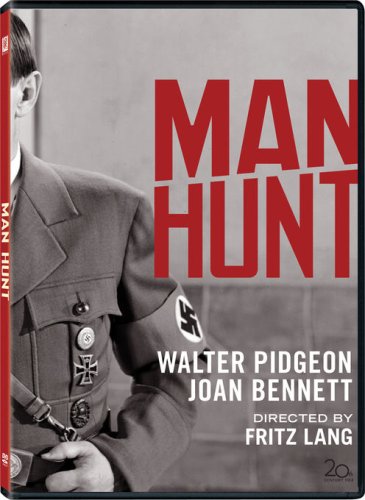
Shortly before World War II, British officer Alan Thorndike (Walter Pidgeon), vacationing in Bavaria, puts his sterling hunting skills to use by framing Adolf Hitler in his gun sights. He pulls the trigger on an empty barrel, not really planning to perform an assassination. Then, after a moment's hesitation, he loads the gun, but is captured before anything history-changing occurs. The Gestapo leader Major Quive-Smith (George Sanders) wants him to confess to being an assassin working for the British government. Thondike refuses. He manages to escape, and Quive-Smith's forces (including the always sinister John Carradine) pursue Thorndike to England, where he falls in with innocent Cockney lass Jerry (Joan Bennett).


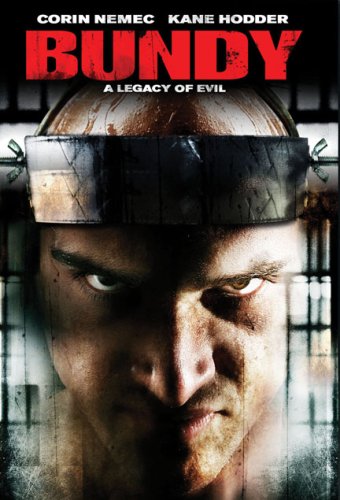
In the 1970’s, Ted Bundy murdered over 30 women across several states. He was jailed only to escape two times, and was finally captured and languished on death row until 1989, when he was put to death in the electric chair.

“If you look closely, you’ll find that everything has a weak spot, where it can break….”

The same can be said for Fracture. There are plenty of flaws, and if you look hard enough you can find a lot of problems with everything from the story to the performances. Thankfully these flaws are quite minor and require the kind of scrutiny that would likely ruin almost any movie experience. I taught law for about 7 years and make it a bit of a (bad?) habit to look for the errors in court and legal procedures. I found plenty here, but they aren’t all that obvious or that detrimental to the plot. You’ll find errors in such trifles as chain of custody for evidence and the admissibility of certain types of testimony. If you’re a student of the law you’ll take note, as I did, and then hopefully move on. There’s too much compelling stuff here to allow yourself to miss out because of some rather common legal mistakes.

“One night stands can be murder.”

That’s the tagline for 1987’s Fatal Attraction. Perhaps it’s no coincidence that both Fatal Attraction and the later Indecent Proposal were both directed by Adrian Lyne. Both were quite controversial upon their release. Both dealt in a kind of “what if” scenario that got people talking around their water coolers and watering hole gatherings. While the latter was pretty much a morality or ethics drama, the former was a gut wrenching morality tale with a Grimm’s Fairy Tale twist. Even if you’ve never seen the film you’ve at least heard of the “Bunny Boiler”, a term that’s entered the pop culture lexicon describing a woman who is likely to go psycho on you. The film was almost never made.

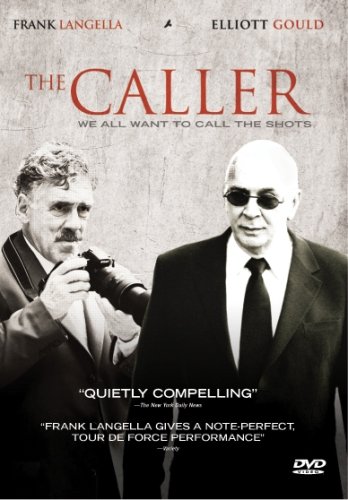
The Caller is a film starring Frank Langella and Elliott Gould. It is a tense thriller about corporate foul play and voyeurism, wait, what year is it?  With the recent critical acclaim of Langella, it seems only fitting to market his name on a low-budget film. Unfortunately for the film, Langella’s performance is one of the only shining moments. Langella plays an aging VP of an energy company that decides to blow the whistle on the corporate wrong doings that are going on. Understanding that he’s written his own death certificate, Langella hires a private investigator (Gould) to follow him to help catch his eventual killer.

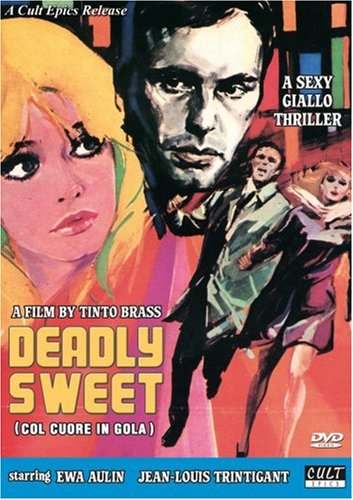
Jean-Louis Trintignant (here dubbed into Italian) is a hard-boiled actor (!). Arriving at a night club to meet the proprietor, he instead finds the man dead, and the luscious Ewa Aulin standing over the corpse, protesting her innocence. Trintingnant believes her, and decides to help her out. The quest for the truth leads them though a series of encounters with various aspects of London nightlife and lowlife, 1967 vintage.

This early Tinto Brass effort is nominally a thriller, though, as he himself points out on the commentary track, the film is only vaguely interested in its thriller aspects. The big influence here is Antonioni's Blow Up, which is name-checked a couple of times. Deadly Sweet has the same kind of meandering plot and love of lingering over various examples of Swinging London counterculture. The other guiding muse is comic book artist Guido Crepax, and Brass mimics comic panels with multiple split screens, shifts between colour and black-and-white, and the like. It is an open question whether all of these games work at a cinematic level, but they are certainly visually interesting. The films is, like so many of its contemporaries, self-indulgent, but in a rather endearing way. For my money, it's a more engaging viewing experience than many of the erotica exercises from the director's mature period.

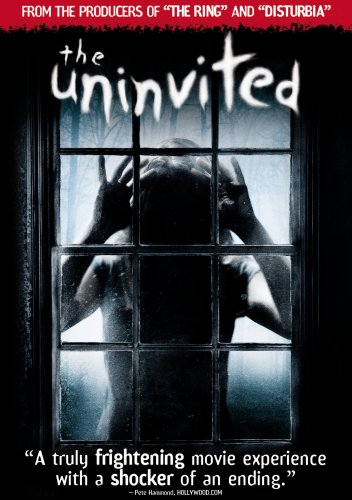
Citing personal history, I don’t do really well with horror films. As mentioned in other reviews, my parents let me see scary movies such as Exorcist & Poltergeist (as well as R-rated action films) when I was no more than ten years old. While, Poltergeist sits proudly in my DVD collection, I still have trouble to this day with Exorcist. Yes, I can be a scaredy cat at times. To be also perfectly honest, I was a bit worried when I received The Uninvited in the mail to review. After all, it proclaims proudly on the cover that it is made by the producers of the Ring(which I absolutely hated) & Disturbia. By the end of the movie, I was very pleasantly surprised.

Anna (played by Emily Browning) is out with her boyfriend Matt (played by Jesse Moss) at a local beach party. They start to kiss when Matt tells Anna he loves her and he has a condom. (Wow, that screams love) Upset, Anna decides to leave. She passes her sister Alex (played by Arielle Kebbel) on the way back to the house. Through the woods she goes until she encounters three filled garbage bags. She opens them and the dead body of a redheaded girl spills out. The redheaded girl’s head snaps and speaks. Anna runs again in the direction of the house.

Alan Rickman, in a stunningly unexpected bit of casting, plays an arrogant, womanizing SOB of a chemistry professor who has just been awarded the Nobel Prize. While he and wife Mary Steenburgen jet off to Sweden, their son (Bryan Greenberg) is kidnapped. Before long, the parents receive are sent a severed thumb as proof of the kidnapper's serious intent. But nothing is quite what it seems.

What we have here is a blackly humoured cross between farce, caper and revenge story. The name-studded cast also includes Bill Pullman as the detective assigned to investigate the kidnapping, Elize Dushku as Greenberg's love interest, and Danny DeVito as a gardener recovering from an obsessive-compulsive disorder. Ernie Hudson and Ted Danson also show up in small roles. DeVito doesn't have much to do in the film, but then, in the end, neither does just about anybody else. Rickman, though top-billed, isn't asked to do more than his patented bastard shtick, which he can do in his sleep. There's a creative heist scene, and plenty of twists, but these latter have a merely academic interest. There is no emotional attachment to anyone in the film, which means that the OTT flash and dazzle of the editing becomes pure surface distraction. Then there's the soundtrack, partly the work of electronica deity Paul Oakenfold. Too often, it has no relation to the action on screen, and is so loud that, fine as it is in and of itself, it becomes irritating. End result: a slick but empty, only fitfully engaging effort.

Frankly, if you need any information beyond the title of this release, then it probably isn't for you. It's The Sinful Dwarf, man! But if you really must know more, be it on your head. Mind-bogglingly stupid and broke newlyweds Mary and Peter (Anne Sparrow and Tony Eades, actors of an ineptitude that passeth all understanding) check in to the boarding house of retired (and scarred) burlesque performer Lila Lash (Clara Keller) her son Olaf (children's show host Torben Bille), the titular sinful dwarf. Mary hears noises in the attic, but Peter won't listen to her. He should, as Lila and Olaf keep a harem of women up there as prostitutes, ensuring their submission through forced injections of heroin. Now they have their sights set on Mary...

Whatever you fear or hope about a film with this title, the reality will likely exceed your imagination. “Exploitation” is almost too tame a word to describe the spectacles here, whether we're talking about incessant close-ups of Bille's sweaty, greasy, drooling, leering face, or Keller's disturbing Marlene Dietrich impersonation. If you don't need a shower after watching this, you aren't human. In other words, it's sublime.