Television

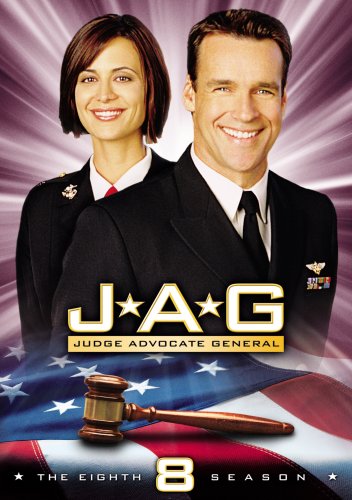
Finally, this show has really gotten to me. I don’t know what it is about this 8th season, but I was far more interested in the show than I had ever been. Maybe I’ve spent so long with these characters that they started to come alive for me. Maybe I was resistant to a slightly different way of telling stories. Maybe it was that the stories became less about who was with who that I was finally able to enjoy the great courtroom drama and investigation elements of the series. Whatever it was, I am finally a fan.

Most of each episode is dedicated to the investigation of the particular case. For action junkies, this often means flying some sweet high tech aircraft. The show’s primary character, Commander Harmon “Harm” Rabb (Elliott) does a lot of the high flying investigations. He was once an ace pilot who developed night blindness, which essentially grounded him.

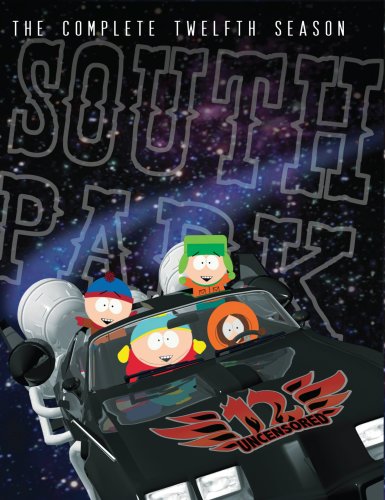
I often have trouble believing that South Park has been around for as long as it has. It’s not just the passing of 12 years, but the sheer brilliance in the face of an increasingly politically correct society. It’s like watching old episodes of All In The Family. Who believes that Archie Bunker would have any chance of survival in the 21st Century? It’s no wonder that Norman Lear has become involved in the series. It’s the last remaining vestige of a once great freedom to be ridiculous and offend. Eric Cartman’s a lot worse than Archie ever was. We always knew that, in his heart, Archie had a soul. Cartman’s a psychopath without a conscience, and in a civilized society we would be terrified of the existence of such a demon spawn…except he’s just so dang funny. Trey Parker and Matt Stone have been walking a tightrope for over 12 years now, and it just doesn’t get old. One of the reasons the show doesn’t grow stale is their ability to make such a quick turnaround on current events. Because the show takes literally days to write and produce, they are quite often always the first to address an issue. They had an election night episode on literally the next day in this season. That means the ideas stay as fresh as the headlines. Finally, you have to credit the expanding universe of good characters. The core group of Cartman, Stan, Kyle, and Kenny were great for a lot of years. But, watching this 12th season you have to admire how much Butters has infused himself into that core. We also have such great semi-regulars as Timmy, Jimmy, Token, and lately the Goth kids. These characters allow the stories to expand in ways the core group could not. I’ve honestly come to think of Butters as one of the core now.

So what about the episodes themselves? Let’s play a little game called: The Good The Bad, and The Ugly, shall we?

Does the name Quasimodo ring a bell? It should, and he did. The deformed cathedral tower bell ringer first appeared in the famous French language novel by Victor Hugo. The story is one of the more frequently filmed tales, going back as far as 1923 and the silent film starring Lon Chaney. Chaney created the definitive appearance from his own collection of grease paints and handmade appliances. The physical restrictions he placed upon himself then nearly crippled the actor. Charles Laughton put his own stamp on the character in 1939. This would become the defining sound film. Even the Walt Disney Studios put their own unique stamp on the tale. Their animated version brought us a romantic tale alive with music and talking statues. With such a rich history of films to its credit, one might question why a made for television film could add anything more to the story. It was with that attitude that I entered the world of this Hunchback Of Notre Dame.

It turns out that there were actually several elements to be added. The most significant is creating a faithful adaptation of the original story. To date no one has come very close to depicting the likely unfilmable Hugo narrative, at least the English translations that I’ve been exposed to. With that in mind, I must say that this film just might come closest to the original tale. Hugo’s description of Quasimodo fits this presentation rather snugly. The next element to be added was a more complicated portrayal of the man himself. While both Chaney and Laughton brought him effectively to life, I don’t feel that either instilled him with as much humanity as Anthony Hopkins does here. Even beneath plenty of prosthetics, Hopkins brings such an array of emotion that I don’t think you’ll have looked at this character in quite this manner before, nor are you likely to in the future. This is the most complete portrayal I’ve seen. Finally, the story has seldom involved this level of detail to many of the supporting characters. The cast is impressive for any film, doubly so for a made for television release with a limited budget.

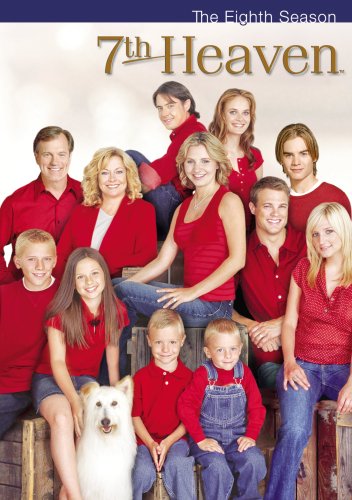
The last time I reviewed a set of the popular family TV series Seventh Heaven, I made the statement that “one of the hardest parts of reviewing DVD’s for this site is getting dropped in to the middle of a show I neither followed nor cared to follow….” Not much has changed since that time, certainly not regarding an improvement in the show’s quality, or in my enthusiasm regarding it. With Seventh Heaven – The Eighth Season, the Camden family and friends become increasingly obnoxious in their journey to the heart of sappy endings and Full House-esque melodrama. A dear friend of mine – a girl, no less, so it’s obvious this is not a matter of gender, but experience – recently pointed out that Seventh Heaven is little more than the one-hour drama version of the old TGIF lineup’s crap-tastic Bob Saget-starring sitcom. I agree.


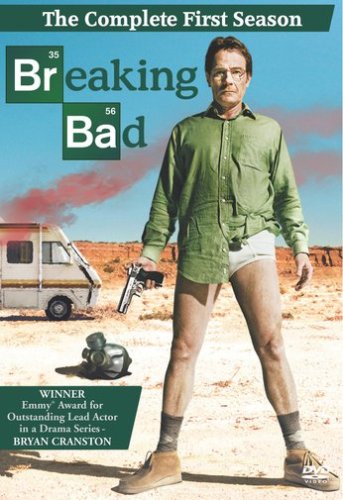
Breaking Bad could be the best show on television. I say “could be” because I haven’t seen enough of its competition to make a fair and adequate comparison. But one look at the beginning of Vince Gilligan and Mark Johnson’s breakthrough new series will have you undeniably hooked.


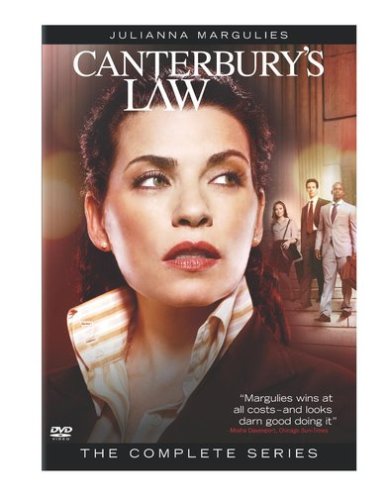
What happens when a television series depends on a title character, but that character is completely uninteresting? The answer is you get a 6 episode run, and then you’re over. That’s exactly the story with Canterbury’s law. I have no doubt that Julianna Margulies is a better actress than she showed on this show. I mean, she has to be, right? Margulies walked through her role as lawyer Liz Canterbury. The character had tons of potential. She was a bit of a rebel. She wasn’t afraid to bend…all right, break … the rules for her client. That kind of a maverick character usually means high ratings. But not if the actress playing the part refuses to invest anything into playing the character. Even when Canterbury is fired up, which, honestly, is most of the time, there’s almost no expression on Margulies’ face. Her voice fails to lift the dialog to the level of passion the material might be calling for. In short, she plays a charismatic character with no charisma. To make matters worse, the team was made up of unknowns, likely to remain such. Not that I really blame the actors. The parts were pretty bad. Ben Shenkman stars as Liz’s partner, Russell. Russell was once on the DA side of things. What makes him decide to partner up with Canterbury is a mystery deeper than any case the show explored. He disagrees with her nearly 100% of the time. He doesn’t appear to be happy most of the time. The firm appears to be struggling, so he’s not in it for the bucks. Liz, for her part, is always waiting for him to cut and run. It seems he’s there only to prove he’s loyal. Her associates are made up of Keith Robinson as Chester. Chester’s dad is running for the Senate and is a powerful man who doesn’t like the idea of his son in such a dead end firm. Chester’s trying to prove he’s got street cred and distances himself from his influential father. Finally you have Trieste Dunn as Molly, the attorney who has yet to pass the bar. She’s the budding idealist who was just beginning to develop somewhat when the show’s bottom fell out. Liz is dealing with a lot in her personal life as well. Her son was abducted three years ago, and it’s caused a strain on her marriage. The infidelities she’s had didn’t help much either. She’s in a pissing contest with one of the DAs who is out to bring her down at any price. She happily assists by doing things like suborning perjury and tampering with a jury. Did I miss anything?

Video

Each episode of Canterbury’s Law is presented in its original broadcast 1.78:1 aspect ratio. I hope this show looked better when it was on the air. This stuff is a mess. Colors are often unnatural and heavy on the reds and yellows. They also run and appear blurred. Flesh tones are hampered by some odd soft focus that makes it look like a kid was running the camera. There’s an excessive amount of grain, particularly in the pilot episode. If it looked this bad in HD broadcast, it likely improved the odds of it not surviving. This is a very bad video presentation.

This is actually a very charming situation comedy that harkens back to the days of The Cosby Show, but is actually far more honest and less about one liners. While everybody loves the Cos, the show got cluttered and rarely dealt with real life issues in any serious way. In My Wife And Kids, I get the sense of a real family here. The cast makes it work, but credit the writers for coming up with a comedy that did not rely on one liners. Don’t get me wrong, the jokes are there, and they sometimes fly fast and furious, but one always feels there’s more to any given scene or situation. The show is completely family friendly. I’m a little sorry that I stumbled on it after it was already gone.


Michael Kyle (Wayans) lives a comfortable life. He’s quite content. He makes good money, so they live in comfortable style. His wife, Jay (Campbell) is pretty much a stay at home mom and day trader. They have three children: Kady (Posey), Junior (Gore II), and Claire (Raycole). The younger child has a Hispanic nanny, Rosa (Forte), who doesn’t like Michael at all. But life is about to change in the Kyle household. Jay’s trading skills have gotten so good that she’s offered a job as a full time broker. Michael wants to be supportive, but he’s gotten used to having a housewife around. Now Michael will have to adapt and share some of the parenting. His own brand of common sense and efforts to advise the children tend to be where much of the show’s comedy is mined.

Season two marks the actual first complete season of Nash Bridges. It’s time for the show to deliver on the high octane, high attitude it was to be famous for. This was also the year that both of the main actors reunited with their former partners. Tommy Chong and Philip Michael Thomas both guested on the episode Wild Card. The show paid homage to both of the former partners. Chong plays a pot dealer, and Thomas plays a hotshot gambler friend of Nash's who likes to dress up like the Vice characters did . It was a pretty sweet episode on top of everything else. It might be the best Nash Bridges episode ever, definitely for this season. Don Johnson also got to stretch his acting chops a bit in an episode where he believes Cassidy, his daughter, has been killed in an accident. Nash also goes up against the infamous Zodiac killer in an episode crosses real life surreal episode. In Till Death Do Us Part, Joe thinks he’s only got a couple of days to live after he’s exposed to a deadly toxin. Cheech Marin really works this for all it’s worth. Marin also has an incredibly good episode in Inside Out, where he goes undercover as a prison inmate to take down a Mexican gang leader. In Knock Out, we learn that Nash’s sister is gay. Given an entire run of episodes, Nash has finally arrived for real in the second season.

When Miami Vice finally left the air in 1989, Don Johnson was a very hot commodity indeed. He decided to try and parlay that success into a film career that never really brought him the breakout roles and fortunes he envisioned. Not too proud to return to his roots, he signed a deal with CBS that gave him pretty much a blank check to star in whatever kind of television series he wanted. It was a rare deal that forced CBS to air, or at least pay for, whatever Johnson came up with. Many of us were expecting pretty much a Miami Vice clone when it was announced he would once again be playing a cop. It was all sounding pretty familiar. Bridges was a super cool cop, this time from San Francisco with a rather tattered personal life. He was going to be teamed up with a partner, who wasn’t going to be a cop, but an investigator whose cases would cross paths with Bridges’. It was rumored that the partner might not survive the pilot, thereby killing the buddy cop routine that was beginning to sound very much like Johnson’s previous show. It appeared doomed to failure, and even CBS was at first looking to back out of the deal. They tried to buy Johnson off, but he was by now very excited about the new show and insisted he get his episodes. But how could this new show not be compared to the old? How could anyone have the kind of chemistry with Johnson that John Diehl had? On March 29, 1996 everyone held their collective breaths as Nash Bridges appeared on the scene. Cheech Marin ended up with tons more chemistry with Johnson, helped by the fact the two had been friends for over 25 years. In short order Nash Bridges had arrived, and television audiences everywhere found themselves saying: “Miami Who?”

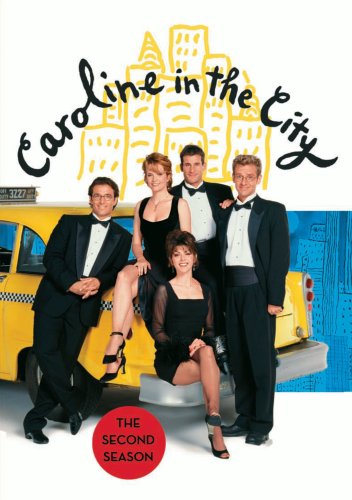
While nowhere does anyone actually say it, Caroline In The City is obviously inspired by/ripped off from the popular newspaper comic strip Cathy. Each episode, for a time anyway, would begin with an animated scene from one of the “Caroline” strips. The topic mostly deals with the pitfalls of being a single New York City girl. From these roots there was an often awkward attempt to create a warm and fuzzy romantic comedy that never seemed to find its own focus, let alone footing. It didn’t help matters that the title character was played by Lea Thompson, best known for her role as Michael J. Fox’s mom in the Back To The Future films. Here as she was there, Thompson is relatively unemoting, a tragic flaw in a romantic character. She’s a good enough actress, but she does appear to be missing charisma in the role. Caroline was joined by her comic strip colorist, Richard, played by Malcolm Gets. Here again we have a pretty reserved actor. Now we’ve got a couple of very low key actors playing a couple where sparks should be flying, and it never works. Most of the laughs, in fact, don’t even come from our leads. Instead Amy Pietz has most of the funny lines as intrusive next door neighbor Annie. Annie’s a cast member in the then huge Broadway production of Cats. She would often barge into the apartment where Caroline and Richard are working/sniping at each other and offer the comic relief in this situation comedy.

What’s most disappointing about the show is that it comes from minds like James Burrows, who brought us so many great moments on Cheers. On the surface there really isn’t anything wrong with Caroline In The City. There are many funny moments, but most of the time it simply hangs there leaving you waiting for the punch line, until you realize you’ve already heard it. I found the characters somewhat charming, but there’s no dynamic or chemistry there to suck you into these characters’ foibles. In the end it neither pleases nor displeases; it was merely just there. Gone soon and as quickly forgotten.

Family Ties is likely remembered most as the series that launched the career of Michael J. Fox. There’s no question that he owes a great debt to Alex Keaton. It’s almost a bit awkward now to watch him as this young, extremely conservative teenager after Fox has spent so much of his life as a liberal poster boy in the last couple of elections. Politics aside, it’s hard not to credit his performances in Family Ties and the Back to the Future films for launching him into a well deserved lucrative career. The Michael J. Fox issue, however, might hide some of the other assets the show had going for it in its time. For one of the first times parents were portrayed as humanly flawed, and families were not the perfectly functional institutions most of these shows described. Up until Family Ties, these households were either perfect little examples of American ideal or they were so dysfunctional that they could hardly be considered families at all. This show obviously went for a bit of realism.

In addition to Alex there was Dad Steven (Gross) and Mom Elyse (Birney). They were former hippies who now had the responsibilities of adulthood and family. Sister Mallory (Bateman) was portrayed as a girl with more fashion sense than common sense. She was always worried about how she looked and not so much about school. Sister Jennifer (Yothers) was underused most of the time. She was a balance between the other siblings and often got left behind in the stories. Newest kid Andrew was starting to grow up now, and Alex often tried to take him under his wing, hoping for a miniature version of himself. The kid would now be played by Brian Bonsall, who would later play Worf’s son on Star Trek: The Next Generation. Skippy (Price) was a neighbor kid with a crush on Mallory.