Television

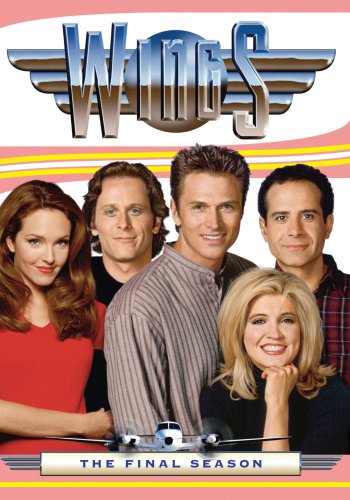
The curtain finally falls on Wings on DVD some 12 years after the show came in for its final approach on television in 1997. The end was a planned one so that the final episode was a fitting goodbye for the series and its collection of crazy characters. The final episode finds Joe and Helen off to Vienna to live while Helen studies cello. Brian is left alone to man the business. For us, we’ll get this one last chance to laugh it up with the clever and often hilarious television series.

A short time ago in a galaxy right in your own back yard….(cue music)

Star Wars Episode XXCV: The Clone Wars: A Galaxy Divided DVD Release:

“Scooby-Dooby, Scooby-Dooby-Doo! There's a mystery in town, So call the coolest pup around, Call Scooby, A pup named Scooby-Doo! Join Shaggy, and the crew, Daphne, Freddie, Velma too! And Scooby! A pup named Scooby-Doo! When the ghostly ghoul attacks, Scooby eats a Scooby Snack! Scooby-Dooby-Doo! So come on, it's mystery time, You can help us solve the crime, With Scooby, a pup named Scooby, Scooby, a pup named Scooby-Doo!”

First there was Muppet Babies. Then there were Tiny Toons. It seems that every famous children’s cartoon series eventually turns back the clock to offer up pintsized versions of the same formula. That’s what you get in A Pup Named Scooby Doo. The show aired 1988 through 1991. It was on somewhat erratically so that, while the box claims this 2 disc set contains the complete 2,3, & 4 seasons, that really only adds up to 17 half hour episodes in all.

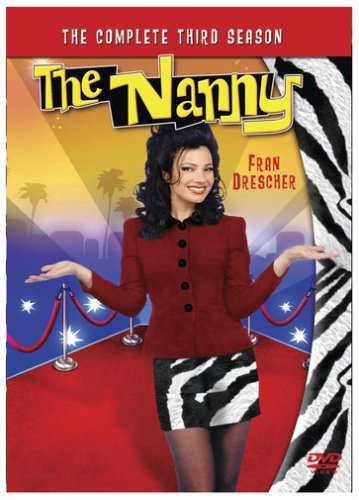
"She was working in a bridal shop in Flushing, Queens 'Til her boyfriend kicked her out in one of those crushing scenes. What was she to do? Where was she to go? She was out on her fanny... So over the bridge from Flushing to the Sheffield's door. She was there to sell makeup, but father saw more. She had style! She had flair! She was there. That's how she became the Nanny! Who would have guessed that the girl we've described Was just exactly what the doctor prescribed? Now the father finds her beguiling. And the kids are actually smiling. She's the lady in red when everybody else is wearing tan... The flashy girl from Flushing, the Nanny named Fran!"

Not exactly Mary Poppins.

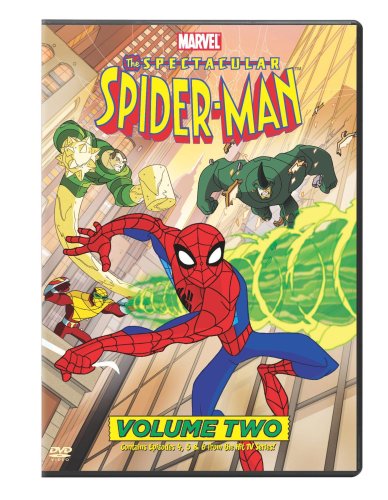
This is not your Friendly Neighborhood Spider-Man. If you’re at all like me, you grew up on the 1960’s cartoon series and, of course, the Marvel comic. A lot has changed since those early days of the web slinger. There’s been a not too successful television live action attempt. The comics themselves have changed significantly. You can’t discount the enormously profitable Sam Raimi films, that have given new legs to an old superhero. It stands to reason that a new cartoon series was in order. Enter The Spectacular Spider-Man, the 10th series based on the Marvel character. This recent cartoon series updates the world of Spidey. The shows take from both the original comics and the film series to create a new fusion of the hero. Like in the comics, Parker is the loner high school kid teased constantly by bullies like Flash Thompson. He has a few girls on his radar like Gwen Stacey and Mary Jane Watson. He still lives with his kind old Aunt May. Unlike the film, Spider-Man was not endowed with his web slinging ability by the radioactive spider. He developed the shooters and the chemical mixture that makes them work. That means he can run out of fluid and lose his ability to shoot webs. The Osborne relationship from the movies exists here. It’s also likely no coincidence that the villains featured in the film have prominence here. Doc Ock, Sand Man, The Goblin, and even Venom are hinted at in the last episode of this collection.

These cartoons are actually pretty good. The animation is pretty solid. Some of the characters look rather strange. Aunt May looks like she’s a 20 year old with white hair. Character jaw lines have a distinctive angular style that makes everyone look like they’re posing for some tough guy magazine cover. MJ looks like a matchstick and says “tiger” way too often. They are not really standalone episodes. Unlike the 1960’s series there is a story arc that connects the episodes into a longer form. The character’s mythology is also played with quite a bit. The cartoons work in a few origin stories and connect them together as a master plan plot devised by OsCorp and spearheaded by Dr. Octavius. The only real complaint I have is that each disc, sold separately, contains a mere 3 episodes. While this is great for bit rate and picture quality, it’s not much of a bargain material wise. The total running time for each disc is just 69 minutes. (That’s about 23 minutes an episode.) Because the stories are continuous, you never really reach the end of the plot. I think Sony would have done much better to wait and release season sets of the cartoon. I wouldn’t be surprised if that comes, making these discs unnecessary in the long run, except to add more money in the Sony cash registers.

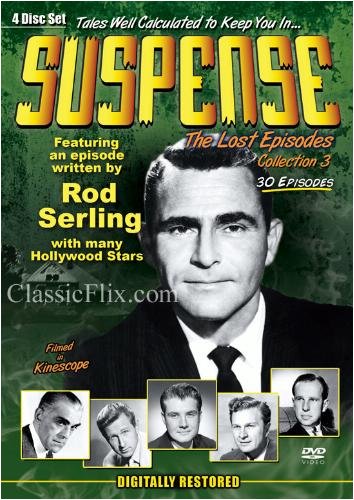
Suspense began life as a very successful radio show on the CBS Radio Network. It premiered in 1942 and lasted just over 20 years on the nation’s airwaves. When television began to make its own waves on the air in the late 1940’s, naturally many of those first shows would be programs that had already shown strong appeal to the radio audiences. Shows like Gunsmoke had been staples on the radio for years and would be a nice way to entice the first television crowds to the new medium. Suspense was one of those shows. It first broadcast in 1949 and was broadcast live from a studio playhouse in New York City. The anthology series presented stories that featured some kind of a horror or thriller theme. Public domain stories were great fodder for the series, and it certainly brought together some of the big names of that genre to the broadcasts. Names like Boris Karloff, Bela Lugosi, Peter Lorre, Nina Foch, and John Carradine would give the show instant credibility. But, the episodes were not limited to the horror field. Crime dramas that involved murders under mysterious circumstances were another favorite staple of the series. Because it was aired live there were no taped copies to be used as reruns, so that each episode was intended as a single broadcast event. For reference purposes a kinescope recording was made, but not very well preserved. These were the days when the networks were just starting, and they didn’t reach a majority of the nation yet. These simple recordings were intended so that the episodes could air in the towns and cities where the networks had not yet penetrated, a whopping 67% of the nation in 1949. It would go on to become one of television’s first hit shows and lasted 15 years. Surprisingly, the radio version would continue for almost another decade after the television series left the airwaves.

These kinescope recordings were uncovered in 2007. Since then they have been released in various sets and collections. 90 episodes in all have been found and somewhat restored. This collection 3 offers the last 30 of those 90 episodes. They feature the likes of Boris Karloff, Eddie Albert, Walter Matthau, Pat Hingle, Lloyd Bridges, Arlene Francis, Jack Warden, Jackie Cooper, James Whitmore, Vic Morrow, George Reeves, and Richard Coogan. The episodes span the entire run from 1949 – 1954, although one episode lists an airdate of 1958. I could find no record of that episode airing at all.

This set contains all of the episodes from the first season (or “series” as it is termed in the UK). The show follows a standard teen drama format of a group of high school friends, this time from Bristol. Each token stereotype is covered in the main characters (the quirky girl, the party animal, the dweeb, the cool guy & girl, the ethnic guy & girl, the gay guy) and each receives their own episode to focus on them, with a few ongoing romantic plots stringing all of their stories together. Each of said episodes ends with the focus character coming to some sort of new advancement or revelation in their lives (Example: the character with an eating disorder bites into a burger).

The packaging has reviewers drawing comparisons between this show and Gossip Girl, as if Skins is the raunchier, overseas equivalent of it. The characters of Skins are at least not the privileged horde that infest North American teen dramas such as The OC or Gossip Girl, thereby making them a touch more relatable. At the same time, the situations and stories do get rather disconnected from reality. The beginning episodes wish to be more about real-life troubles, there's even one about homework (sort-of), but by the time the teens are in an episode where they are being deported from Russia and held at gunpoint, the series loses touch with teen issues and starts to play out like a juvenile Melrose Place.

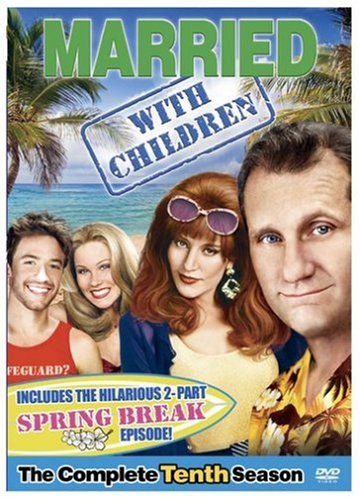
On October 9th 1986 the network television landscape did something that hadn’t been done successfully in its 40 year history. A fourth network broke on the airwaves. It was called FOX and wasn’t even going to broadcast 7 days a week. Most pundits in the television industry never gave it a chance. Most of the channels were in the double digit UHF range. This had long been considered the independent station area, and a lot of televisions didn’t pick up this band as well as the established VHF band. And for a while it looked like the network was going to disappear almost as quickly as it appeared. But by 1987 the network suddenly had two big hits on its hands. The first was a silly cartoon, originally aired as a throwaway segment on a variety show. The cartoon featured the most unlikely of television families, The Simpsons. That show is still with us nearly 25 years later. The second hit was a live action series, also based on a very unlikely and this time seemingly unlovable family, the Bundys. Right from the start there was criticism that the name itself was a death knell. At the time America was still dealing with the pending execution of a far more infamous Bundy. Married With Children, however, would become an almost instant break-out hit.

Al Bundy (O’Neill) was a working stiff. He had seen his high school glory years evaporate into the rearview mirror of his ancient Dodge when he married his childhood sweatheart (no, I did not misspell), Peggy (Segal). The red-headed woman would soon become his curse. She was lazy. Peggy wouldn’t know what a stove looked like if it fell on her. She was content to sit around all day while Al worked for minimum wage at a mall shoe store. Tying Al to his meager existence were two children. Bud (Faustino) was a frustrated teen who couldn’t seem to find his cool. Girls scorned him, and he appeared to be headed to the life of his father. Daughter Kelly (Applegate) was a teen slut. She slept around and used her looks to make her way in life, which was likely good, because she was dumber than rocks. Al was also plagued by neighbor Marcy (Bearse) who was a feminist and usually a thorn in Al’s behind. Her second husband, Jefferson (McGinley) was often Al’s accomplice in trouble. Most of the material involved Al’s suffering and the apathy of his family to his lowly station in life.

In 1976 a New York media group conducted a survey of the NYPD detectives. The question was: “Of all the TV cop shows, which most accurately portrays life as a detective?” The overwhelming response was the comedy Barney Miller. Seems real cops related to the daily grind and weekly wackos of Barney Miller. Let’s not put aside that this was also one of the most consistently funny shows on television. I remember it took me a while to accept Abe Vigoda in such a light role as Fish. My first exposure to Vigoda was the ruthless mobster in The Godfather. Barney Miller always managed to be funny while still telling a good short story. The characters were always wonderful.

Captain Barney Miller (Linden) was in charge of the detective squad at New York’s 12th Precinct. Among his detectives were a colorful group of odd individuals. Detective Ron Harris (Glass) was writing a book that detailed his life as a New York detective. It was called Blood On The Badge and was far more fiction than fact. He prided himself on his stylish clothes and culture. Arthur Dietrich (Landesberg) was a know-it-all. He had an almost encyclopedic base knowledge on everything and anything. He would bore his colleagues with his endless drone of facts. Stan “Wojo” Wojciehowics (Gail) was the typical New Yorker everyman. He might not have been the brightest tool in the box, but he more than made up for it in heart. At times his desire to show initiative would end up getting the squad in trouble. Fish (Vigoda) was past his prime and spent more time in the men’s room than actually fighting crime. He was always suffering from one old age ailment after another. His bulky frame made him look intimidating, however. Nick Yamana (Soo) was a lovable Japanese guy who wasn’t always the first to understand. He had a literal way of interpreting speech which led to some very classic misinterpretations. He was also a gambling junkie, often on the phone with his bookie. From time to time the squad would be visited by the clueless Inspector Luger (Gregory). He often reminisced about his glory days and often expressed regret that he didn’t go down in a blaze of glory like his old friends had. He was usually intruding upon the squad’s time with long pointless stories. Finally, patrolman Levitt (Carey) was an ambitious uniformed officer who wanted to be a part of the squad, which he eventually did.