Television

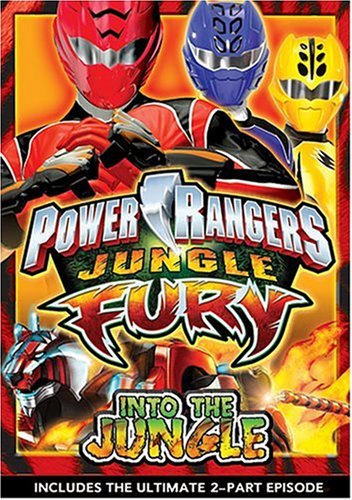
Power Rangers come, Power Rangers go. By the time Power Rangers: Jungle Fury had come into existence, some incarnation of Power Rangers had been around for sixteen seasons. The series however was unique due to two qualities. The first was that it centered on three Power Rangers where as other series typically encountered five. The second differentiating characteristic was that it was written during the 2007-2008 Writers Guild of America strike. Written by non-union writers, would the series still have the appeal that the Power Ranger shows had in prior runs?

The Order of the Claw has selected six students as potential guardians of Dai Shi’s prison. Dai Shi was an evil spirit who roamed across the earth waging a war against any human that stood in his path. The Order was able to secure his spirit and lock it away in a box that would be guarded by those who were up to the task. The six students were paired into three couples and squared off in mortal kombat. Wait, wrong show. Fatalities in a kid’s show could be uncomfortable.

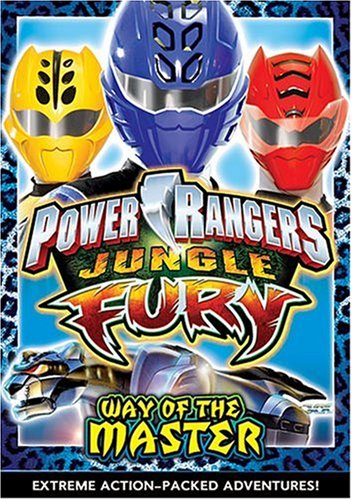
To me, the Power Rangers phenomenon was always a hard one to figure. Here we have a kids’ show featuring heroes and villains that look like they’ve escaped from a Ninja S&M Bar. Much like Ninja movies I have reviewed in the past – see my review for Ninja Collection Volume One: 10 Feature Film Set – these six episodes of Power Rangers Jungle Fury: Way of the Master share identical plotlines with subtle variations thrown in here and there for good measure. Looking back, I can’t really register this as a complaint, taking in to consideration the audience it’s in mind for, and the fact that He-Man and the Masters of the Universe was my favorite show as a kid. And honestly, how many of those plots were any different from one another? One dominating villain up to all kinds of vicious G-Rated evil – whatever that involves.

Instead of Skeletor, however, we have the Dai Shi forces and the Five Fingers of Poison. Caught in the midst of it all are the three main Power Rangers – we’ll call them Red, Yellow, and Blue – who answer to some creepy older animal-rights dude. There is also a clumsy friend, who helps out around the Jungle Karma Pizza restaurant, where the all-powerful Rangers work to make ends meet.

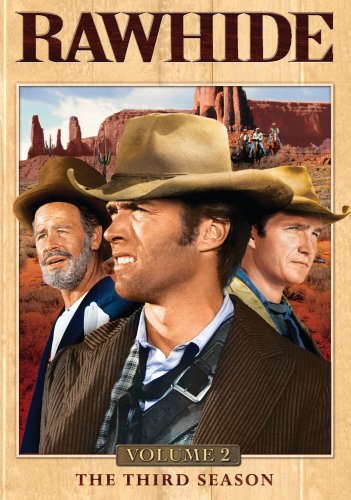
This is the second half of the third season of Rawhide. Among the better episodes found in this collection are: Incident On The Road Back. Favor is accused of horse rustling. That means hangin’ in those days. In Incident Of The Boomerang, some cattle are off to the Land Down Under, but one of the men may not be who he says he is. Rowdy is arrested for murder… again. This time he’s accused of killing a deputy who was on his way to warn of an attack in Incident Of The Running Man. A practical joke turns bad in Incident Of The Wager On Payday, which rounds out the collection.


The setting for Gunsmoke was the by now famous Dodge City, circa 1870’s. Phrases like “get out of Dodge” would enter the popular lexicon as a result of this resilient series. Marshall Dillon (Arness) was charged with keeping the peace in Dodge City. The only other character to see the entire 20 year run was kindly Doc Adams (Stone). Star Trek’s own Doc, Leonard McCoy, took many of his traits from Doc Adams. He was the humanitarian of the city, always looking to help someone. Like McCoy, he had a taste for bourbon and a soft heart underneath a rather gruff exterior and was always ready with free advice. Dillon’s love interest throughout most of the series was Miss Kitty Russell (Blake). While there were certainly a few romantic undercurrents, the romance never came to fruition. Miss Kitty was a prostitute on the radio and was likely one here as well, but CBS chose to underplay that aspect of her character as a “saloon girl”. Finally Dillon’s faithful sidekick deputy was Chester (Weaver). Chester often found himself in trouble and was the naïve son figure to Dillon.


For 4 years now, Lost has taken us through mystery after mystery. I’m beginning to think that the show’s title is more a mission statement for where they want to take the viewers. Each time Abrams appears to answer a question and move on, closer examination proves that nothing has actually been revealed. The series has become the poster child for misdirection and script sleight of hand. When I examine the 13 episodes from season 4 I’m left with the inescapable, pun intended, feeling that nothing significant has really happened here at all. But at the same time it’s the most significant event of the series. All the while I find myself compelled to watch episode after episode. Abrams would have been a great drug dealer if that producing gig hadn’t worked out for him. The show started out with enough directions and plot devices to put our brains into overload. From that point on he’s been cutting each dose a little bit so that we find ourselves drawn to each hour fix chasing the high we got in the beginning. Of course, we already know we’re never going to feel that way again, but we’ll keep coming back for more as long as he continues to make us believe that we will. I’m not saying the show has declined at all. I’m saying that it doesn’t really ever go anywhere. Abrams continues to introduce major plot lines such as the hatch, the others, and now the freighter with promises of linking it all together into some kind of epiphany, and for a short time he actually does. But hindsight leaves us scratching our heads, because once we come down we can’t really explain what the high was all about. And so, we’ll continue to tune in or buy the DVD’s to see where it’s all headed, even if we already know that we’re doomed to remain lost no matter how it all ends.


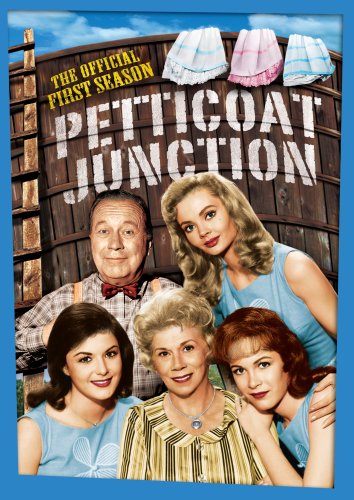
Come ride the little train that is on its way to the junction. Petticoat Junction. This forgotten show is a blast to behold at the junction. Petticoat Junction. Lots of curves for you to watch, much better than Who’s the Boss?, is the junction. Petticoat Junction – The Official First Season.


What do you get when you mix three juvenile delinquents, an enterprising police captain, and a load of social commentary mixed into the confines of an hour-long police drama? Why, TV’s “The Mod Squad,” of course; or, for the purpose of this review, The Mod Squad – Season 2, Volume 1. Yes, aggravating as it is, Paramount is still pushing their half-seasons on the public, but for a show like “The Mod Squad,” fans better eat it up. This is likely the best release the show will ever get. If you believe the packaging, “The Mod Squad” was a groundbreaking series that tackled major social issues from a predominantly youthful perspective, shooting for straight drama, and succeeding to the nines.

 

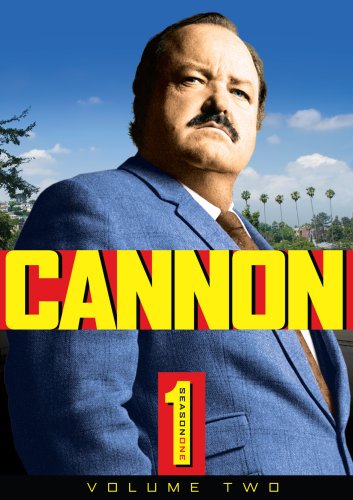
Frank Cannon was unlike any detective we’d ever seen on television before, or since. He was known as a high priced PI with a taste for the finer things in life, particularly fine food. His appearance was counter to all of the rules about rock-jawed handsome detectives who ran around shooting it out and beating up the bad guys. Cannon was a big man and wasn’t about to do much running and fighting. He wasn’t totally different, however. Cannon had a lead foot and could run a car chase with the best of them. He was smart and often a bit flashy in his technique if not in his appearance. It was also rare for a series to have a lone regular to carry the … um… weight. Conrad was up to the task and made the show and the character a permanent part of our pop culture.


This is another one of Paramount’s half season releases. I’m told the decision is driven by retailers wanting lower price point product, but I don’t find the argument credible. There are plenty of full season releases, and consumer surveys consistently show that’s how the public wants their television shows. Retailers will carry these shows in full seasons just like they do all of the others. When Paramount released the various Star Trek shows on DVD, there was obviously no consideration to price point, as these shows hit the shelves often double or more what other comparable shows have listed for. It’s greed, pure and simple.

High art it isn’t, but one thing’s for sure: Dynasty is ass-in-seat television. Launched in 1981, the John Forsythe-Linda Evans-Joan Collins starring vehicle crossed lines and took chances few of its contemporaries were willing to take. For several years Dynasty defied conservative conventions with sordid tales of extramarital affairs, catfights, and the hot-button issue of homosexual parenting. It’s this last issue that is featured so prominently in Dynasty – The Third Season, Volume Two.

Those of you who are uninitiated to the Dynasty saga have nothing to fear, as each script is weighted heavily with expository dialogue sure to catch you up in no time. (“If Blake loves you, Krystle, then why did he humiliate you by castigating you that day we fought in the lily pond” – Alexis Colby) Of course, the show’s quality suffers as a result, offering ridiculous conversations involving participants who should damn well know exactly what just happened to them, especially considering the weight of their experiences, without the need of another character explaining things. In fact, about 40-50% of every conversation is retread from a previous episode. Incidentally, the acting is terrible, but one must wonder if the actors could have done any better with the material they were given. While exposition can certainly be a necessity, especially in an hour-long ongoing series, the convention is best used in very small doses at the beginning of a story, not throughout every segment between the commercial breaks.