Television

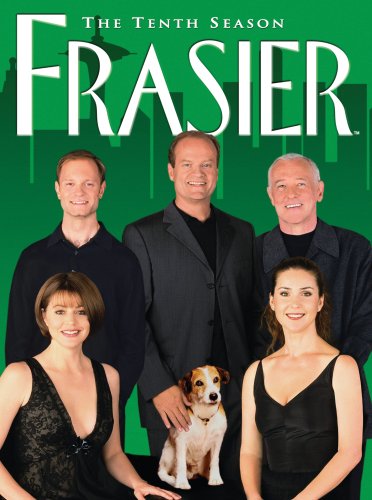
Frasier was another one of those unlikely hits. Frasier started as an intended one-off character on the hugely popular Cheers. Kelsey Grammer made the most out of it, and before long he was one of the regular barflies inhabiting a stool at Sam’s. In Cheers the wit worked because Frasier was so unlike his fellow characters. He was a sophisticated, almost snobbish psychiatrist with a taste for fine art and high class entertainment. Instead of a ballgame, Frasier was more at home at the opera or an art opening. The humor was to be found in his attempts to blend in with his crass companions or even make a run at enriching their lives with his cultured tastes. My favorite Frasier moment will always be his plan to expose the bar patrons to Charles Dickens, but instead of his changing them they eventually had him reinventing the brilliant author in his reading of David And The Coppers In The Field. Soon Cheers had run its course, and everyone was expecting a spin-off. There was too much rich material to be found here to let it just die with the closing of Sam’s bar. While Norm or Cliff were the natural choices, it was Frasier who would move on. While most fans were a little confused by the move, the show would go on for 11 seasons that were arguably far funnier than Cheers ever was.


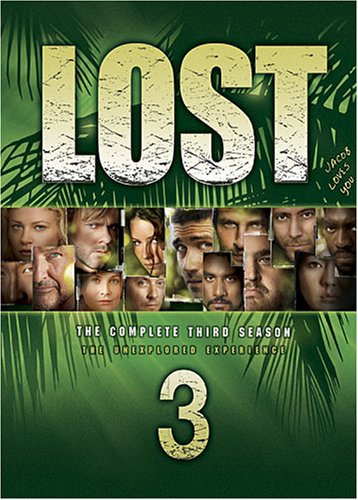
When Lost began its third season last fall I was beginning to feel a lot like the castaways must have felt; namely I was getting pretty lost watching Lost. There’s been a lot of mostly fair criticism about how ABC has handled the show last year. The first mistake was to air a small portion of episodes in the first couple of months and finish the season after the New Year. While this broken season plan works well for some cable shows like Monk, it does a serious disservice to Lost. I was so confused and burned out with the show after these first episodes, I never did return in February to see how it all played out. After reviewing the ratings numbers for the show, it seems I was not alone in leaving the island. Now with the release of the complete third season on DVD, there was renewed hope that I might be able to piece something coherent together by watching episodes in large chunks of marathon sittings. The result was the show was a little easier to follow but not much. Now don’t get me wrong. I appreciate the complicated plots and long detailed stories the show has been able to tell. Like the rest of the show’s fans, I enjoyed following the sparse trail of breadcrumbs and reveled in each new discovery in spite of the fact that each new answer also brought along five new questions as companions. Still, the third season of Lost was arguably its worst.

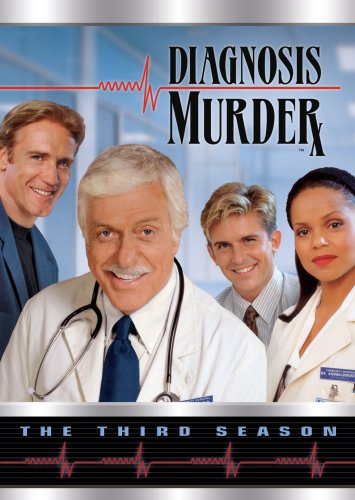
Dr. Mark Sloan first appeared in The It Never Entered My Mind episode of Jake And The Fat Man. In that episode Sloan was accused of a murder, and it was up to Jake and Jason to prove his innocence. The character had a certain charm that appeared to carry with audiences, and two years later Sloan had his own show, Diagnosis Murder. Dick Van Dyke did for doctors what his good friend Andy Griffith did for lawyers as Matlock. Both traded on their earlier careers in trademark comedies to reimagine dramatic roles in their twilight years. For Dick Van Dyke, Diagnosis Murder was more like a family affair. Almost every member of the Van Dyke clan arrived to play characters on the show that mirrored their real life connections. Jerry Van Dyke made numerous appearances as Sloan’s brother, while all of his children at one time or another played children of Sloan’s. Most notable, of course, was Barry Van Dyke, who costarred along with father. He played an L.A. Detective who often went to his father with his vast medical knowledge to solve crimes. Dr. Sloan had his own group of helpers who often either helped solve the crime or got themselves into danger, requiring doctor and son to rescue them, of course, just in the nick of time. Charlie Schlatter played Dr. Jesse Travis. Travis was a young ambitious resident who looked up to Sloan and would do almost anything for him. Victoria Rowell was Dr. Amanda Bentley who played the hospital’s real-life Quincy. She was the resident medical examiner and an important cog in Sloan’s crime fighting machine. Sloan was a combination Quincy and Columbo. Like Quincy, he had a knack for making medical discoveries no one else could find. His Columbo personality was brought out in his innocent simple nature that he relied on to lure criminals into a false sense of security.


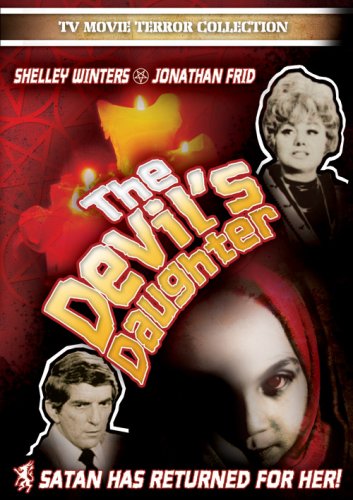
Come with me, gentle viewer, back to the state of horror on TV, Anno Domini 1973. After her long-absent mother dies in mysterious circumstances, Belinda Montgomery attends the funeral where she meets Shelley Winters, an old friend of the family, or so she claims. Winters takes Montgomery into her home, and there our young heroine meets all sorts of strange people, and gradually realizes she is in the clutches of a Satanic cult who believe she is Satan’s daughter.

Televised horror has made great strides since this Movie-of-the-Week era, though even the likes of Masters of Horror still has to work, on its best days, to reach the level of a decent theatrical release. But The Devil’s Daughter is eye-witness to an era where mediocrity was, with very rare exceptions, the best one could hope for. Awful as it is, this pick is awful in entertaining ways. So here we have Shelley Winters teasing us with the promise that she might not take the volume to 11, and then spectacularly breaking that promise; Abe Vigoda channelling the spirit of Boris Karloff; Jonathan Frid stuck with a mute character of unclear motivations; Montgomery’s character portrayed as such an incurious wallflower (she’s only mildly interested in the Rather Big Clue that is the portrait of a cloven-hoofed Satan hanging over Winters’ fireplace) that sympathy is very difficult to muster; Robert Foxworth showing up late in the day as a plot device only the dullest of viewers will fail to see coming; Joseph Cotten doing ditto; and such treasures as a photo album complete with a picture of all the Satanists, in full black regalia, happily posing for a group shot. In other words, the camp comes thick and fast, and that kind of entertainment value is what accounts for this terrible movie’s star rating.

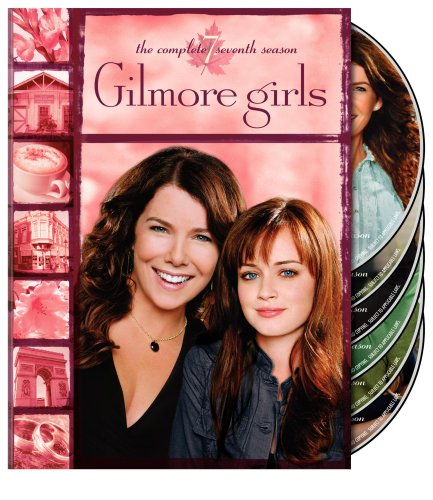
The fat lady has sung, taken her bows and waddled off to the after-party. Gilmore Girls, a show loved by many — and abhorred by some — was canceled in May, leaving fans without a true series finale. Here, in this DVD set, lie the final episodes, created without input from series creator Amy Sherman-Palladino, who left the show after season six.

This is not a fitting end for our Gilmore Girls, but unless a rumored movie becomes reality, it's all we're going to get. So if you're looking for closure, this ain't the place.


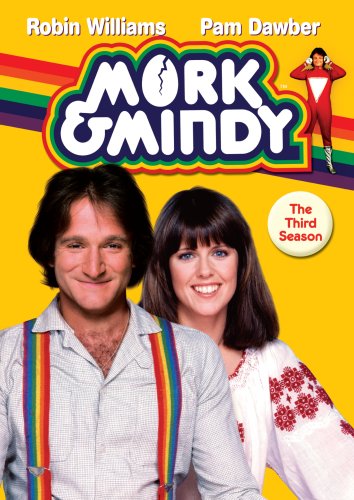
Have you ever watched a recent Robin Williams film and yearned for the days when the actor wasn’t so full of himself and stealing every scene he was in? Well, you’re out of luck, because there was never such a time for Williams; however, you can journey to a time when at least he was hungry and wasn’t so over the top. OK. Even in the days of Mork and Mindy Williams was never capable of reining himself in. Still, I thought I would look back on these episodes with that warm nostalgic feeling I tend to get and just remember the good times. And yes, there were good times. But the more I watched this third year of Mork and Mindy I was becoming all too aware that in 35 years nothing has changed except that the routine has gotten old. Watching Williams prance around with his silly voices and wide eyed faces might have been fresh in the 1970’s, but honestly, haven’t we all had just a little too much of it by now? A television film about the show didn’t present either of the stars in a very positive light, and perhaps it is that image that has tainted the show for me. Whatever the reason, I just didn’t find this stuff nearly as funny as I did 30 plus years ago. Somebody’s matured, and it wasn’t Robin Williams.


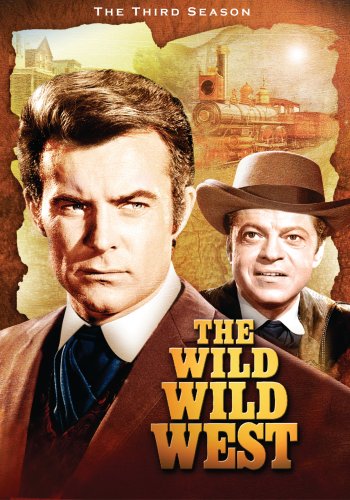
James West (Conrad) was a Union Army vet. He’s the kind of act first think about it later kind of guy. Artemus Gordon (Ross) was a typical con man. He could create the most convincing disguises and was also a master of sleight of hand. Together they worked for the Secret Service in the days of the western frontier. The two of them were the prototype of the future spy. They would use incredible inventions and Bond-like gadgets along with their own skills at trickery to investigate major Federal crimes, often plots against the United States. Think of James Bond in the Wild West.


This collection of SpongeBob cartoons has a distinct musical theme, underlined by the main offering, “Atlantis SquarePantis,” a 2-part episode that just aired. SpongeBob and friends travel to Atlantis on a song-powered bus (but of course!) and witness the many marvels of the lost city. Their tour guide is Lord Royal Highness (voiced by David Bowie). The action is cheerfully episodic, and many of the song sequences are very funny (one highlight being Sandy’s ditty which occurs with the cast transported into a 1991 video game). The other shorts are pretty fun, too, with the highlight being “Sing a Song of Patrick,” wherein the starfish writes his own pop tune, with hilariously catastrophic results.

Audio

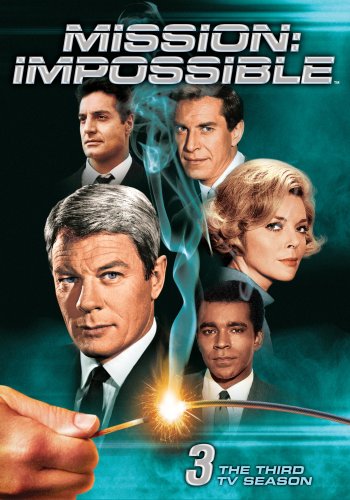
It was in the second year that the format of Mission:Impossible became what we all remember today. By this third year the show was running on all cylinders and full speed ahead. By now the formula was tight, so the audience knew exactly what to expect. They weren’t disappointed. The third year was also a very successful year in the ratings as the show began to come into its own. Mission:Impossible was a companion show to Star Trek. Both were produced at the Desilu Studios and often shared guest stars. If anything changed, it could be said there was a little more action in the third season. A few more fights and gunfights were added without compromising on the style or traditions of the series. A lot of time is still given to show the team performing some elaborate setup, often without any dialog for rather extended periods at a time. The scams were entertaining enough that somehow the audience stuck around for what many broadcast professionals would have called dead air.


You would think that after seven years, CSI would begin to show a little wear and tear around the edges. When you factor in the dilution of the two other versions of the franchise with a combined 8 years of episodes, you end up with 15 years and over 250 episodes of CSI total. Certainly even the best of shows with the most imaginative writers can’t stay fresh for that long. Still, somehow, the gang at CSI continues to crank out compelling drama, rarely repeating itself. Every year I go into a new season of CSI expecting to find it starting to show its age a bit, and every year I continue to be amazed. The fact is that season 7 just might be the best year of CSI to date. Each episode begins with The Who asking the question: Who are you? I have to say that after seven years the answer is, still a fan.