Television

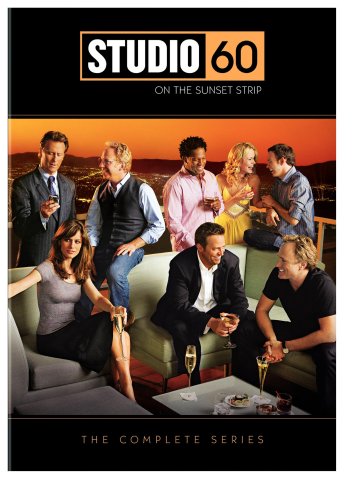
Oh, how the mighty have fallen. Five years ago, Aaron Sorkin and Thomas Schlamme were riding high with the best drama on Television, The West Wing, which is hands-down my favourite show ever. When word got out about a new Sorkin/Schlamme project set for the '06-'07 season, I was more excited than a monkey at the banana harvest. Expectations — mine and everyone else's — were sky-high for this new series, a behind-the-scenes drama about an SNL-type sketch comedy show. It would be the finest new show since The West Wing debuted in '99, Sorkin would once again raise the bar in prime-time entertainment and the collective intelligence of the human race would be elevated to the stratosphere.

Ok, not so much. While Studio 60 on the Sunset Strip premiered with much fanfare and critical praise, the series quickly slumped and never recovered. That made me angry, like a monkey whose monkey-mom made him stay home from the banana harvest. It's just not fair! So this review is about a good show killed by hype. Alas, Studio 60, you died too young.


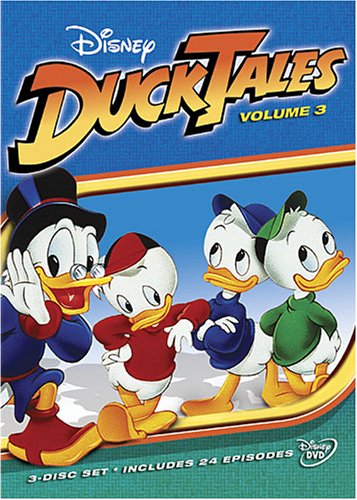
Disney Studios reinvented the afternoon cartoon when they introduced something they called Disney Afternoon. It was the brain child of studio animation head Bob Jacquemin. He saw the potential of taking famous Disney cartoons that were already beloved by millions and spinning them off into regular television cartoons. Not willing to take chances with the studio’s icon, Mickey Mouse, Michael Eisner allowed the Donald Duck universe to serve as the launching pad for this new venture. In 1987 Disney Afternoon and Duck Tales was born.


The Jungle Book was a milestone event in the history of Walt Disney’s animation history, so it shouldn’t come as too much of a surprise that the studio would tap this source for future adventures. The Disney Afternoon series has been a chance for the studio to continue many of the beloved characters. Tailspin was just such a series. The show is set in the Jungle Book world but minus little Mowgli. Now lovable bear Baloo runs an airline service with his new little friend baby bear Kit Cloudkicker. All of the other characters show up, from Shere Kahn to King Louie. This isn’t a musical, so the songs aren’t there, and there is no real mention or connection to the events in The Jungle Book. The stories are a kind of Indiana Jones affairs with plenty of tomb raiding and high flying stunts and narrow escapes. Ed Gilbert takes over the voice of Baloo, and while some of the original intonation is there, it’s clear how much the voice of Phil Harris gave Baloo so much character and charm. Obviously none of the same voice cast returns. The cost would have been prohibative for a television show, and unfortunately many of those voices are no longer with us.


Erle Stanley Gardner wrote crime fiction, and while many of his 100 or so works are unknown to most of us, he created a character that has become as identified with criminal lawyers as any other in fiction. It was in these crime novels that Perry Mason first faced a courtroom. He developed a style where he would investigate these terrible crimes his clients were on trial for. He would find the real killer, and in what has become a Hollywood cliché, reveal his findings in a crucial moment during the trial. While we may not remember the novels, we all remember the man in the persona of Raymond Burr.  Burr had a commanding presence on our screens and enjoyed a well deserved 11 year run as the clever lawyer. What makes this run so amazing is that the show followed pretty much the same pattern the entire time. We always know what’s going to happen, but we wait eagerly for that gotcha moment when Perry faces the witness on the stand. We know when he’s got the guy squarely in his sights, and we can’t sit still waiting for him to pull the trigger. OK. So, maybe that’s a little over the top, but so was Perry Mason. From the moment you heard that distinctive theme, the stage was set. To say that Perry Mason defined the lawyer show for decades would be an understatement. Folks like Matlock and shows like The Practice are strikingly similar to Perry Mason. If you haven’t checked this show out, this is your chance. See where it all began.


Wings was one of those unusual sitcoms that depended more on the characters than the situations they were in. While the setting was a small Nantucket airline owned by two brothers, most of the episodes had very little to do with flying. Rather, the writers populated this small airline with very distinctive personalities and let these interactions be fodder for the funny. The characters were played by more than competent actors, many who have proven themselves beyond this quaint sitcom. Timothy Daly played Joe Hackett, the older, more responsible brother who was often the show’s straight man. His rather adolescent sibling Brian was played by Steven Weber. I wouldn’t exactly say this was Oscar Madison and Felix Unger, but their conflicts over maturity fueled the characters. The airline’s love interest was Helen Chappel played by Crystal Bernard. She was an aspiring symphony cellist who worked the airport’s lunch counter. For much of the show’s run she had an on again off again romance with Joe. By far the most animated character was mechanic Lowell Mather played by Thomas Haden Church. It’s still amazing to me that this rather unintelligent character was played by the same guy who brought us Sandman in the latest Spider-Man film. Finally there was cabbie Antonio Scarpacci, played by the current Adrian Monk, Tony Shalhoub. Antonio is an Italian immigrant who has trouble understanding things most of the time, leading to some of the better moments in the series. Fay, played by Rebecca Shull, is the mothering member of the cast. And Roy Biggins (Schram) runs the rival airline and is often engaged in one underhanded scheme or another.


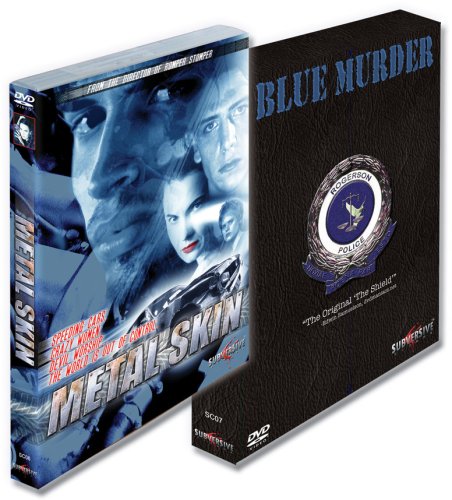
The name of this double-pack is slightly misleading, but that is not to suggest the film and television mini-series on offer are in any way bad. Quite the contrary, in fact. It’s just that they aren’t exactly “action” films per se. So don’t pick this up hoping for something in the vein of The Road Warrior. Instead, these are brutally intense dramas with strong action elements. Both titles are excellent.

Metal Skin is a 1994 effort from director Geoffrey (Romper Stomper) Wright. He returns here to the world of youth subculture. Here, instead of Skinheads, this is a world of underground races, but the denizens are just as doomed as in the earlier film. The main character is a disturbed young man whose dreams of driving a fast car and forming a romantic attachment are utterly deluded. He has a fraught relationship with a trio, each of whom has his/her own reasons to see the world as a black hellhole. When the car-duel climax arrives, it is earned at the emotional level, and makes the likes of The Fast and the Furious look even more anaemic than it already is.

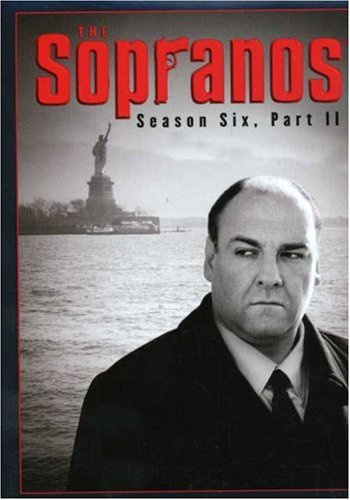
The Sopranos, called by some the greatest TV show in history, is over. With a much-publicized fade-to-black finish, the series finale aired June 10, 2007, leaving fans to forever speculate about the fate of Tony Soprano. Many were disappointed at this ambiguous ending, but I'm sure a similar number enjoyed having some major loose ends.

It's all academic for me, because I hadn't watched the series since its season three finale, and only caught the end when this DVD set came my way for review. After catching up on seasons four, five and six (part one) through synopses, I sat down to experience The Sopranos' closing act.

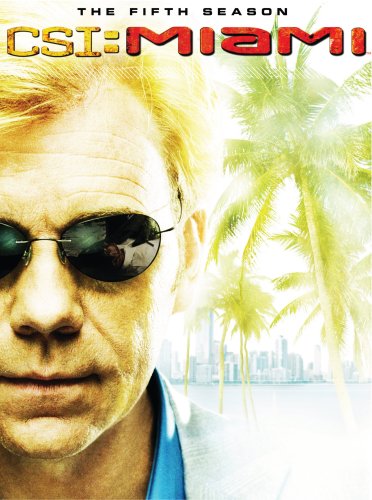
I love CSI and have been an avid fan from day one. I think it brought a fresh look to the procedural crime dramas that have long ago become just a little stale and predictable. The problem is that the series has gone the Dick Wolf route of branching out so that the final product might be a little diluted. Unlike the Law & Order franchise, each version of CSI has attempted to take on a unique look and style to reflect the location without giving up those elements which are the tradition of the series. CSI: Miami is by far the inferior of these three shows. In trying to create a slick glitzy Miami feel, the show has gone the way of style over substance. While the oversaturated colors and bright locations might make for a more visually stunning series, it tends here to overshadow the meat and potatoes of CSI, the stories. I get the impression that the show wants badly to recreate the Miami Vice accomplishment of trend setting fashion and style. Those days are long gone, and CSI has an entirely contrary mission that is weakened weekly by this overboard attempt to look good. The show is also beginning to adopt the 24 style of multi frames for no other reason than they think it looks cool. The show doesn’t respect the audience enough to believe they will buy into the series without all of these high tech distractions. It’s a shame, really, because I had higher hopes for this version of CSI, as I happen to live in Florida. Unfortunately most of CSI: Miami is shot in L.A. with the exception of a few overused establishing shots. Let me tell you, L.A. doesn’t look anything like Miami. Perhaps the show should consider dropping all of the fake glitz and move to location where they can take advantage of the city in a far more realistic way.


Every now and then a writer gets stuck for what to write. As a reviewer it happens that I can watch a film or series, take pages of detailed notes and read everything I can get my hands on about the subject, but still when I sit down to my computer it’s just me and that flashy cursor, aptly named, for every writer has felt the curse as that incessant blinking blob continues to remind us we’ve got nothing. In the industry we have a highly technical term for this condition. We call it writer’s block. Sometimes I’ll try and get around it by telling a little story about myself and hope the reader won’t find out it’s just a stall.


I can still remember the first time I saw Raiders of the Lost Ark. It was just after my birthday in June, and I had some time to kill on a weekday afternoon. I didn’t recall seeing a lot of hype, and it seemed no one knew just how huge the film was going to be. My expectations were not really high. The film looked interesting, and I was just looking to escape for a couple of hours. By the time I left that theater, I felt a little bit like Indiana Jones himself having made some grand discovery. I had to tell my friends. I even managed to drag a friend who hadn’t liked a movie since 1972 to see it with me the very next day. Of course, the film was followed by The Temple Of Doom, and my faith in old Indy Jones was shaken somewhat. Along came The Last Crusade, and I was born again into the world that was Indiana Jones. All of us are now gearing up for a fourth film after what seems like decades, because it has been. However, the decades have not been a complete Indiana Jones blackout. For a short time Indiana Jones could be found in the most unlikely of places… network television. Enter The Adventures Of Young Indiana Jones.