Television

Synopsis

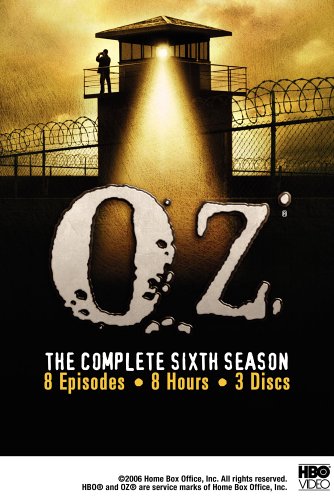
This is it. The finale. The many twists and turns and intricate plotlines of the series finally get wrapped up. If you haven’t been watching the series from the start, much resonance will be lost, but the last season is still comprehensible. For those in the know, this is where many of the stories come to some form of end. The battle between Schillinger and Beecher, for instance, has its final act during a performance of Macbeth, and that is precisely the kind of literate, neat, contrived, ...TT conclusion one would hope for. The series began in an almost realist vein, but before too long there were elements that were almost Twin Peak-sian in their bizarreness that crept in. The title does say it all – this is a kind of demented fairy tale, and what a wild ride it has been. Don’t expect all loose ends to be tidied up, and don’t hope for a lot of happy endings. The finale moments might seem a bit rushed, but they are certainly pretty dramatic.

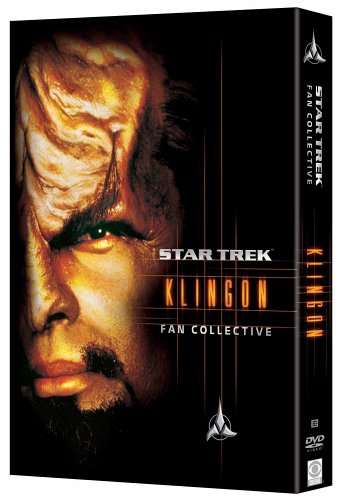
With the possible exception of the Vulcans no race has been given a richer history in Star Trek than the Klingons. We need to forget the drastic change in how these bad guys to allies look. In Enterprise this change is finally explained as a genetic experiment gone bad in an episode conspicuously missing from the set. I’m not sure I can criticize the episode selection, as they were voted on at Startrek.com. Still. I don’t like the over usage of repeats these collection sets are plagued with. It’s not like there are...’t a ton of Klingon episodes to pick from to include repeats like Trials and Tribulations from Deep Space Nine. Worf, perhaps the most recognized Klingon, is certainly one of Trek’s most interesting characters. Michael Dorn has essayed the role brilliantly over the years. Worf has grown throughout his run and Dorn deserves as much credit as the writers on that score. All of the Star Trek runs are represented here.

From Enterprise comes the pilot “Broken Bow” which I assume is included mostly as the first contact between Klingons and Humans. I would rather have seen the two-parter explaining the genetic mishap that changed some of the Klingons to human looking folks.

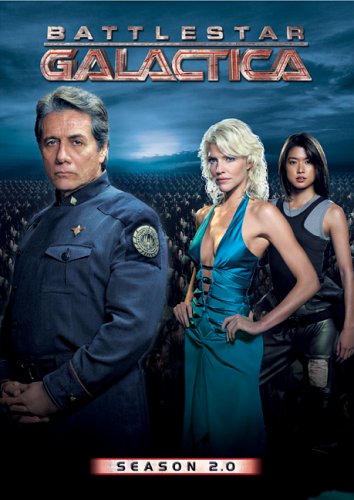
The Sci-Fi Channel has certainly gotten its considerable amount of money’s worth from Ronald D. Moore’s reincarnation of Battlestar Galactica. The trouble, at least for me, is that it is still very hard for me to consider this Galactica at all. It might have been better if, as Jack Webb used to say, the names had been changed to protect the innocent. There isn’t much doubt that this version of Galactica is innovative science fiction in its own right. The cinematography is often mind-boggling, if a bit too dark. T...e stories are also quite dark in tone. Here is where Moore misses the point of the original entirely. The first Galactica and Colonial Fleet were fleeing the destruction of their worlds, but with a great deal of hope in finding their long lost brethren: Us. In Moore’s tale, Earth is an almost impossible dream. The entire atmosphere is one of dread and bleakness. Galactica survives almost just for survival’s sake. No one is really living in this fleet. Not to say that Moore’s version can’t make for some compelling drama. It does. Under a different name I think I might actually be able to somewhat embrace this series. I can’t shake the feeling of watching something dear morphed into something it was never intended to be when I see Katee Sackoff addressed as Starbuck. She’s also one of the weakest actors to grace a major science fiction series since Denise Crosby.

OK. So let’s talk about what I DO like about the show. No question it’s the f/x. Moore has a luxury that not even a million dollars an episode could buy you in 1979. With today’s CGI advances, there isn’t very much that can’t be realistically visualized anymore. The fighters are sleek and the space battles are epic. If anything, these dogfights can get entirely too busy. Edward James Olmos is a fine actor and lends a ton of credibility to what is otherwise a fairly weak cast. His earlier concerns have ceased, either by studio edict or an uncharacteristic change of heart. Remember, it was Olmos who warned fans to stay away, offering that they would not be happy with the new show. The scripts are tight and go into depths the original never even attempted.

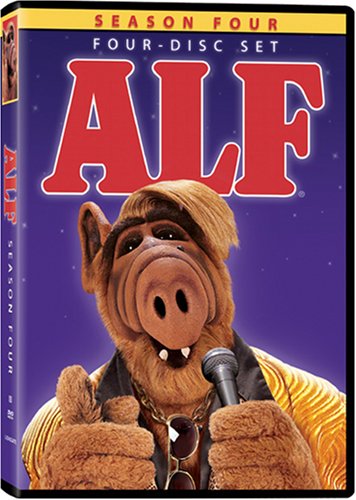
It’s time to say goodbye to that lovable furry alien from Melmac. After 4 years the network unceremoniously pulled the plug. Unfortunately it was in the middle of a cliffhanger. While a TV movie tried to wrap things up, I was never completely satisfied. The final season of ALF offers up pretty much more of the same. ALF’s go as a day trader is one of the better episodes. In case you haven’t noticed, all of the episode titles are song tittles. This season offers such hits and near misses as: Live and Let Die, Happy ...ogether, and the finale, Consider Me Gone.

Video

Synopsis

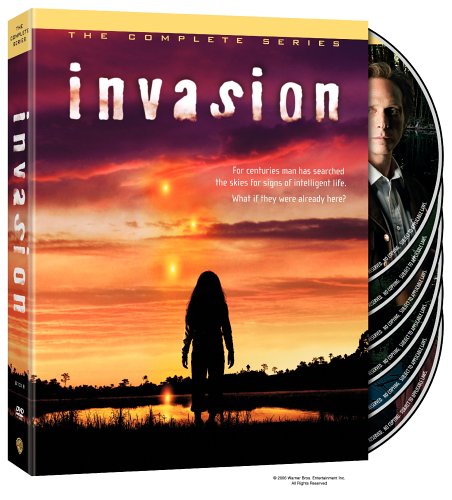
Hurricane Eve descends upon the Florida coast, wreaking particular havoc on the rural town of Homestead. The central characters are a park ranger, his two children, a reporter who is the ranger’s second wife, his conspiracy-nut brother (channelling Jack Black), his ex-wife and her second husband (the always suspicious-looking William Fichtner). As if the devastation weren’t enough, there are all those weird lights, and... hey... some people are acting kinda strange, like they’re might not be...human at all.

Synopsis

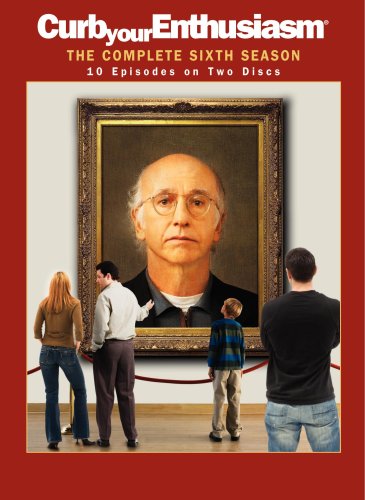
Larry David plays Larry David, so thorough a narcissistic curmudgeon that he would be completely and utterly loathsome were it not for his unerring propensity to bring disaster down upon his head. Once again, we see him grump from episode to episode, never failing to make the worst possible decision at the worst possible moment in every social situation. A case in point: he dings another character’s car, gives the guy money to get the car fixed. Instead, the money goes to the man’s daughter,...and Larry deduces that it financed breast enhancement. Cue a scene on the beach guaranteed to have you hiding in shame behind the couch.

The boys are at it again in Season 8 of South Park. To say that this season provides more of the same would be a tad unfair. It appears to me that South Park optimally matures in its eighth year. No, not that kind of maturity. Cartman and the gang are as raunchy as ever, and yes, still at times over the top. The kind of maturity I refer to is more subtle. South Park no longer has to rely on the running gags epitomized by the old Kenny deaths. The show isn’t afraid to feature some of the more peripheral characters. ...utters, Timmy, and Jimmy get a lot more to do, and I find them suddenly to be far more compelling characters. No longer simply foils for the usual suspects, they have come into their own. A good example can be found in “Up The Down Steroid”. While Cartman and one of his schemes are appropriately the center of the episode, the Timmy and Jimmy characters have some outstanding moments. “AWESOM-O” brings us face to face with a more endearing Butters. I must say that in this year of South Park I found myself enjoying these moments considerably. More than adding some dimension to the series, it has, I believe, given the show stronger legs leading into the years that follow.

Video

What is it about The Roman Empire that fascinates us so? The answer is far too complicated to address in this forum, if you can pardon the pun. The influences of Rome are all around us. From the very form of government we practice to the grand arenas we watch our ballgames in, Rome can be found literally around every corner. Hollywood has recognized the allure since the early days of filmmaking. Classics like Ben Hur and Spartacus eventually gave way to the more modern epic Gladiator.

It is 52 BC and...Rome stands at a crossroads. Long ago established as a great Republic to rival the likes of Greece, the fledgling empire suffers from within. Senators appear to the common man as merely wealthy aristocrats who have long since lost any connection to the problems of everyday Roman life. Sound familiar? Gaius Julius Caesar (Hinds) controls an elite legion of Roman soldiers fighting for the glory of Rome in Gaul. His co-consul in Rome, Pompeius Magnus (Cranham) has grown impatient with Caesar’s many years of absence from Rome. The resulting civil war would eventually lead to collapse of a Republic and the beginning of dictatorship and empire that would drive Rome for centuries hence.

Synopsis

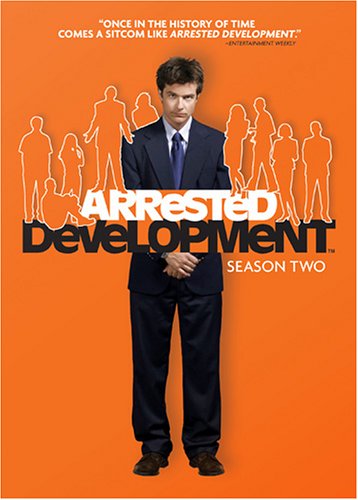
So when you’re the head of Fox prime time programming, and you’ve got a television staple like The Simpsons on your Sunday night lineup, and Arrested Development wins the Best Comedy Series Emmy in its first season, what do you do? Well you callously trim the order of episodes from 22 to 18, put The Simpsons as its lead-in without a lot of fanfare, and almost even more egregiously barely hype guest appearances by well-established comic performers like Julia Louis-Dreyfus (Se...nfeld), Ed Begley Jr. (Spinal Tap) and Zach Braff (Scrubs).

Clearly, I am in the minority when it comes to Veronica Mars. Reviewers go on and on about the sharp writing on this show, but I just don't see it. With character names like “Beaver”, “Butters”, “Weevil” and my favorite, “Dick Casablancas”, this is a show where the writing is actually one of the things that is wrong with this show. (And yes, Beaver and Dick are friends. How's that for creativity?) The character of Wallace is an African American stereotype that is embarrassing, and stinks of what old while people think young black men are like. Not only are these characters one-dimensional and unrealistic, but some of them are borderline offensive.

Veronica Mars is really just Nancy Drew for the 21st century. The writers have tried their best to add some real adult drama to the series by throwing in a murder mystery, but they have somehow managed to make even that seem soft, thanks to the amateurish acting. Story lines are basically teen faire, meaning that things are made to appear much more tragic than they actually are. That's fine if you are a teen girl, but for the majority of the population this should not be a desired trait in an hour-long drama.