Television

Synopsis

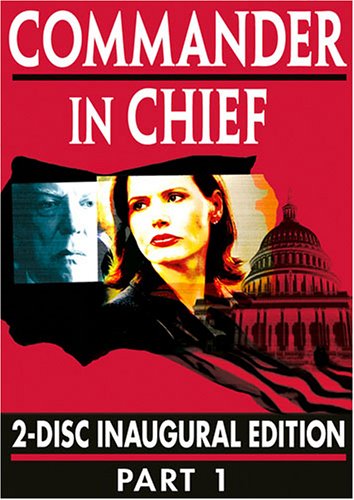
Geena Davis is the Vice-President who was chosen as running mate by the Republican President because she would balance out the ticket (she’s an Independent) and help him with the female voters. When he is felled by a stroke, the possibility that she might become President fills the powers that be with dread, and her resignation is demanded so that the hard-right Speaker of the House (Donald Sutherland) can step in instead. Davis refuses, and the series follows her struggles as the first woma... to be President of the US.

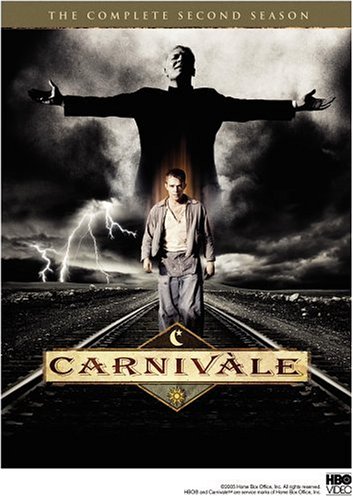
The truth may never come out as to why HBO cancelled Carnivale after the show's second season. They claim that it was a combination of decreased ratings and rising production costs equaling $2 million an episode. What doesn't make sense, however, is that the network also admits that they received as many as 50,000 emails in a single weekend following the cancellation announcement. The facts also show that they followed up this show that was “too expensive to be profitable” with Rome, a show that has been widely recognized as the most expensive television series ever produced.

Several months after the show was cancelled, HBO offered the show's producers the chance to shoot a 2-hour movie to finish up the story which was left hanging. They refused, as they claim that the entire story was planned out for six complete seasons, so a two-hour finale would not even come close to finishing up the story. The show runners then announced plans to finish up the story in comic book form, but nothing has been seen of this plan as of yet.

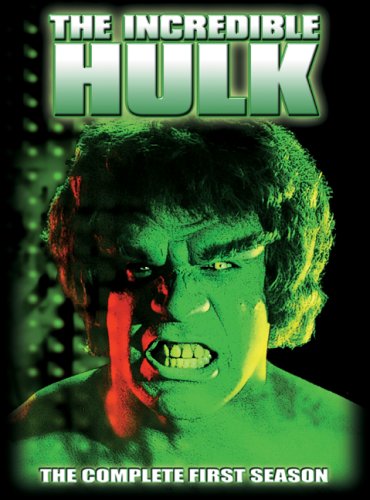
Stan Lee and Jack Kirby have created some of the most iconic superheroes of our time. Marvel Comics brought us such great names like Spiderman, X-Men, Iron Man, and of course, The Incredible Hulk. Now, television has had a jaded history with comic superheroes as series material. A bad Spiderman and Captain America set of episodes are good examples. The Incredible Hulk is one of the exceptions. Why? Mostly because the series was less about super heroics and more about human drama. The Fugitive style set-up gives the writers the entire country to play with. Instead of superhuman villains, Banner is really his own worst villain. The very human McGee, who haunts Banner, is an aggressive writer out to expose The Hulk. This grounds the entire show in reality as much as is possible. Enter Kenneth Johnson, also known for the Alien Nation series, and you know that quality isn’t going to be compromised. Insurance is obtained through the extremely likable Bill Bixby as the Dr. Jekyll to Lou Ferrigno’s Mr. Hyde as manifested by The Hulk. His ability to pump up the action is rivaled by his surprising ability to convey emotion with his eyes. This Hulk appropriately doesn’t speak.

The series started with two tele-films, both included in this set. While the stories and cinematography seriously date this material, the themes resonate on into the 21st Century. Far better than the 200 million dollar film, this series is quite a catch on DVD. The episode 747 features Brandon Cruz who starred with Bixby as Eddie in The Courtship Of Eddie’s Father, another fond memory from my childhood. A nitpick Hulk fans still rage about is the name change from Bruce, in the comics, to David. As a homage to these fans, we are shown his middle name is Bruce. Johnson has addressed these “problems,” and I understand his wanting to create a very different character here. Comics and television are very different media. We would have been quickly bored watching a grunting, wise-cracking crime fighter after too long.

Synopsis

In 1985, Steven Spielberg backed this TV anthology series. It took its name from the very first SF magazine (which was briefly revived to coincide with the TV show), but have very little in common with that mag. It was almost purely fantasy-oriented, and its real model was the likes of The Twilight Zone (which itself was revived for TV the same year). Spielberg himself directed the pilot, and plenty of other big names singed on as well. So Harvey Keitel stars in an episode directed by...Clint Eastwood, for instance. Other directors of note include Joe Dante and Martin Scorsese.

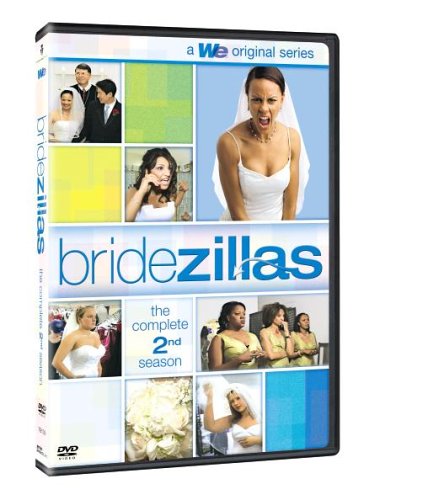
The women on this show are easily the most selfish, self-centered, hateful, wretched wenches that I have ever seen. The fact that they would voluntarily put themselves on this show proves it. Who would ever watch this show (whose sole purpose is to show how horrible a person can be) and think to themselves, “I would really like to be on that show. I want the whole world to see me acting that way.”

Even so, here they are. The second season (!) of this show features eight episodes and eight brides-to-be at thei... absolute worst. It's all here, from flower problems to cake difficulties to the simple fact that somebody isn't paying the bride enough attention 24-hours a day. I can't imagine why anyone would voluntarily purchase this title on DVD. The women here are absolutely horrible people, and it's generally my practice to steer clear of people who act in this way. However, if you are the kind of person that enjoys seeing people make asses out of themselves, then maybe you will enjoy watching this show. I most certainly did not.

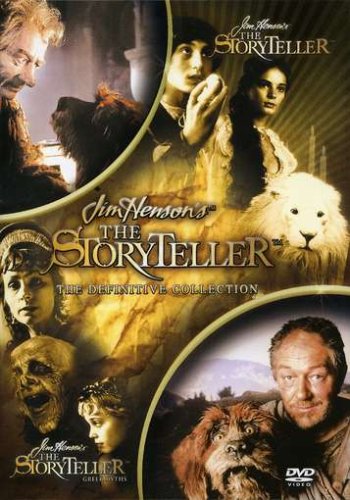
New from Sony Home Entertainment comes the complete series of Jim Henson's The Storyteller starring Mr. Elephant Man himself, John Hurt, and a slew of eye-popping creations from Jim Henson's Creature Shop. The series focuses on classic folk tales, fables, and legends, including "Fearnot," "The Heartless Giant," "The Three Ravens," and six other wonderful family-friendly tales on one disc. Also provided as part of the set is an additional disc entitled Greek Myths, which provides even more Henson-esque entertainment with the following four tales: "Daedalus and Icarus," "Orpheus and Eurydice," "Perseus and the Gorgon," and "Theseus and the Minotaur." There are thirteen episodes in all. Henson's typical production efficiency is present in each episode. His craftsmen always make the most of their miniscule budgets, and their work offers a refreshing break from these days of CGI-heavy effects.

What's so great about this series is its willingness to incorporate a myriad of cultural folk tales, many of which may be foreign to first-time viewers. Taking its selection from Greece, Russia, and Germany, the series never reached its full potential on account of the short run. However, it manages to educate and entertain children of all ages, and endures as a fine piece of family programming despite its brevity. Hurt is fabulous as usual, really sinking his teeth into the narrator role and telling each tale with an enthusiastic punch in his voice. Brian Henson also does a fine job voicing The Storyteller's cynically fearful dog. While effects may have advanced much since 1988, Creature Shop create a lovable character in the talking mutt, which is sure to enthrall younger viewers. Thankfully, these two characters are able to relate to that crowd without talking down to them. One last thing: watch for a minion of fine actors in early roles, including Gabrielle Anwar, Miranda Richardson, Joely Richardson, Alison Doody, and Jonathan Pryce.


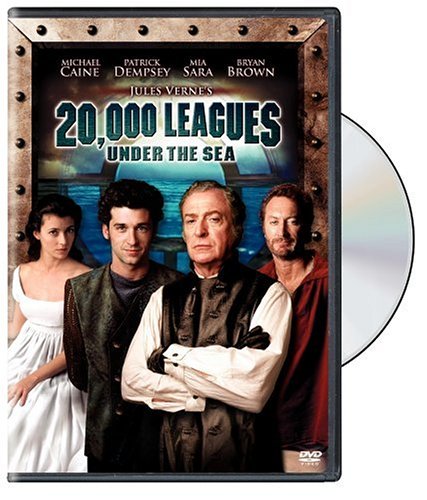
I guess because of some anniversary related to the initial version on Disney, someone decided to do a remake of 20,000 Leagues Under the Sea and not only lengthen it, but turn it into a miniseries. Built over a couple of parts, the piece, adapted by Brian Nelson (Hardy Candy) and directed by Rod Hardy (December Boys) stars some familiar names and faces, but is it really worth it?

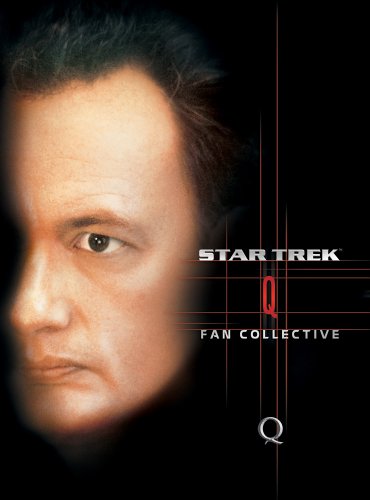
When Star Trek: The Next Generation began, we were introduced to a new crew and a new Enterprise. What I remember most about that first episode, however, was the new villain of sorts: Q. John De Lancie has created one of Star Trek’s most memorable and endearing characters. Some claim the Q character was really introduced in the Original Series episode Squire of Gothos. William Campbell plays the all powerful gamester Trelane who turns out to be a child of omnipotent parents who was merely playing with Kirk and his crew. While I can see the similarities, the Trek gurus have not officially endorsed this connection. I hope it stays that way. I didn’t like that episode. Trelane was quite an annoying character. That leads me back to my feeling that it’s really De Lancie and not necessarily Q that we’re in love with. Let’s face it. While some of the best Next Generation episodes feature Q, some of them are also pretty lame. Still, no matter how bad the episode is, it’s still worth watching Q. I guess I’ve always been a sucker for the clever con artist characters. Sid the Snitch from Hill Street Blues is another of my all-time favorite characters. In case you don’t know, Q is just one part of an omnipotent Q continuum. This omnipotent race or collective usually keeps to themselves. Our Q, however, has found a playmate in Picard and some of his counterparts. He seems intent on being that stone in Picard’s shoe while expressing some sincere interest in the human condition. While most of his appearances have resulted in mere annoyance, we can’t forget that it was Q who brought the Federation in contact with its most powerful and perhaps most popular bad guys, the Borg.

I tend to frown on such multiple dipping, but in the case of these fan collections I think they’re generally a good idea. The entire Trek collection would cost several thousand of your hard earned dollars. If you have most of this stuff on laserdisc like I do, you’ve been reluctant to plunk down the coin again. For me these collections are a good way to upgrade some of the more important stuff.

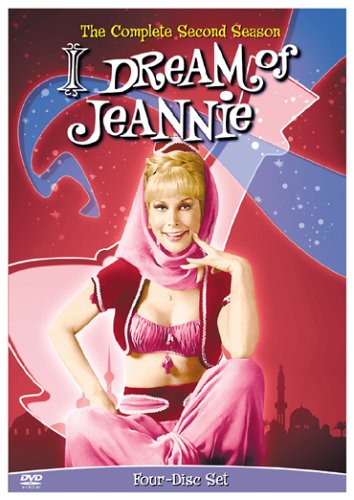
Larry Hagman and Barbara Eden return for more hokiness in the complete second season of I Dream of Jeannie, which features 31 not-so-fantastic episodes with the most juvenile humor and situations. I suppose the possibilities for fun are there, but none are fully realized, perhaps because censors just wouldn't let the series be all it could be. For goodness sake, they wouldn't even allow the display of the lovely Eden's belly button in her mid-riff outfit. Leave it to censors to find sex in the most ludicrous o... places. It makes one wonder what kinds of weird kinkiness goes on behind their closed doors, but that's an avenue I don't care to travel. Truth is: the show is completely harmless, and as with Bewitched, its harmlessness is to its detriment. Fans of the series, however, will have a great time with about 15 hours of Jeannie. And if it's bad entertainment such as this you like, at least there's the lovely Eden's belly button-less frame to make the experience more enjoyable.

The second season begins with the anniversary of Jeannie's discovery at the hands of good-hearted astronaut Tony Nelson. The first episode comes complete with a villain (the Blue Djinn), who was actually responsible for Jeannie's imprisonment. It's an episode that cries out for the main plot of the inevitable movie version of this decrepit-on-ideas series. But it's no more interesting than the other 30 episodes included here. Other highlights for fans of the series: "How to Be a Genie in 10 Lessons," in which Jeannie is forced to torment her aloof master in an effort to "be like other genies." There is the two-part "The Girl Who Never Had a Birthday," in which Captain Nelson and his sometimes rival Roger seek to find out Jeannie's birthday before she wills herself into nothingness. Last and just as least, there is "My Incredible Shrinking Master," which is just like it sounds. In a nutshell, if you've seen one episode, you've seen them all.

Bravo had an idea. On the surface it was actually a pretty good idea. They realized that of all the well known and critically acclaimed show runners out there with their hugely successful shows, there must have been some flops along the way. After all, no one hits a home run all the time. They also correctly assumed that some of these shows might have been pretty fair efforts that for some reason or another just didn’t last long enough to catch on. Furthermore, it was a rather clever marketing decision that there were folks out there who would like to see some of this stuff again. Even the idea of DVD releases was a smart strategy. The fatal flaw is the way they released this material. The DVD contains but a single episode of four very different programs. For three of the entries, these aren’t even pilots to properly introduce us to the characters and circumstances surrounding each show. Touching Evil is the worst of the lot in this department. From the very beginning, it’s obvious that we’re in the middle of a huge story with rather complicated character interrelationships. We’re left feeling like outsiders. For me that made it almost impossible to fairly evaluate the series. The added “Previously On” was completely inadequate to catch me up. In fact, it actually left me with even more questions.

Johnny Staccato is the shorter of the presentations at about 25 minutes. The series starred the wonderful John Cassavetes as a night club piano player who does a little gumshoe work on the side. The style is very much a 1950’s Sam Spade atmosphere and works quite well. The episode “Tempted” is a pretty nice affair starring Bewitched’s Elizabeth Montgomery as the apparent “damsel in distress”. Many plot twists in a short time move the story along pretty well. This is the only entry in black and white..