Television

“Ride into this world all alone. God takes your soul. You're on your own.
The crow flies straight, a perfect line on the devil's back until you die.
Gotta look this life in the eye”.

When these guys send a message, they don’t use Western Union. Not only will they blow up your warehouse, but they’ll catch one of your guys and plant a stick of dynamite in his butt cheeks to set off the explosion. That’s the world of the motorcycle club, the Sons Of Anarchy. In the wake of The Shield, FX stays true to form with the latest from that show’s alumni Kurt Sutter. Sons Of Anarchy has a familiar tone and quality to it for fans of that now gone cop drama. There’s a lot of handheld camera stuff, and you have very similar themes.

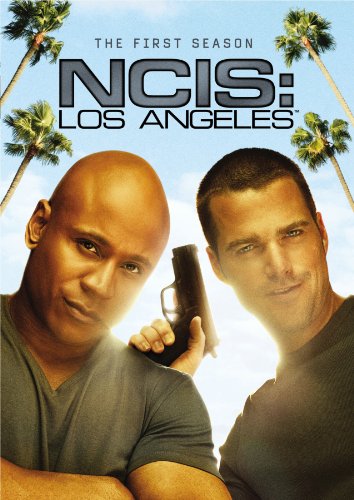
NCIS was a spinoff, of sorts, from the popular military lawyer show JAG. You could say that NCIS is the Order to JAG’s Law. The NCIS is a real government agency that deals with criminal activity inside or involving the US Navy or Marine Corps.  The show has proven even more popular than its parent series. Today that means branching out like the CSI and Law & Order franchises have done so well in the past. The next step in the ladder is NCIS: Los Angeles.

The series was previewed in a two-part episode of NCIS entitled Legend. A dead Marine in Washington led to a terrorist cell in LA, where Gibbs and McGee join the LA branch to bring down the bad guys. Here we meet the new characters and get a chance to get comfortable with them. However, by the time the show aired its first episode, there were some pretty major changes for the show already. It's not uncommon and the Legend episode was really a back-door pilot. The location would be completely scrapped. The show would get new digs in a covert building that appears to be a condemned water plant on the outside. I'm not quite sure why a public agency needed a secret hideout, but there it is. The show retained its high-tech look. They have a Minority Report-style computer system which remained the centerpiece of their operations room.

The longest running show in prime time doesn’t feature cops, doctors, or lawyers. It’s hard to believe that The Simpsons have existed as long as the Fox network. While the series didn’t really begin until Fox’s second year, the characters were part of The Tracey Ullman Show, which did start the first year of Fox. Who could have guessed that an animated short from an otherwise horrible and doomed variety show would explode into such a phenomenon? The Simpsons have not only dominated the pop culture; they have placed everything else into context with their show. Like Doonesbury, it could be said that the only thing worse than being made fun of on The Simpsons is not being made fun of on The Simpsons. With that said, you’ll understand my warm feelings and appreciation for this show.

This thing has been on forever. Still, it never gets old. The show has a charm yet edginess to it that can’t be beat. Let’s not forget that while kids might love the show, this stuff is intended for adults. We’re not talking South Park trash talk here; every episode is a veritable treasure hunt of subtle and not-so-subtle cultural references. Even after seeing an episode several times, it’s not uncommon for me to find something that I missed before.

Vampires are hot right now, at least that's what everyone keeps telling me. The truth is that everyone is absolutely wrong. Vampires are not hot right now. They've always been hot. Since at least since 1897 when Bram Stoker took the world by storm in one of the earliest examples of a horror novel. Of course, I'm talking about Dracula. Dracula, as a character, might have been based on the historical figure of Vlad the Impaler, but the vampire legend that Stoker perfected in Dracula is pure fiction. Still, it wasn't quite Stoker's novel that created the vampire craze, it merely lit the fuse. The explosion came just a couple of decades later with the Broadway production and Universal film based on the story. It was first on stage and then in the very first talkie horror film where Bela Lugosi would change Bram Stoker's rules and become the iconic symbol for vampires for nearly a century and beyond. Stoker's Dracula was a hideous, wretched creature who was not going to be seducing any ladies without his supernatural powers. It was Lugosi who delivered the vampire in the evening coat and cape. Here we see the cultured, handsome man who doesn't even need all of that vampire mojo to get the ladies. Of course, it doesn't hurt, and between the novel, play, and film vampires got hot, and they still are.

We've all seen the young girls out there swooning over the Twilight films and books as if the whole vampire idea had just been invented. It shouldn't come as too much of a surprise that the television networks and cable channels would be taking notice. No, it's not the swooning teenagers, it's the green being transferred from their pockets to their coffers. But vampires on television are not new either. Dracula itself was a series. In the 1960's and 70's there was Dark Shadows and the vampire Barnabas Collins. I rushed home from school every day to watch that show. Maybe that's why I missed so many homework assignments. I should have tried the "under a vampire's spell" excuse. Tim Burton and Johnny Depp are about to bring that franchise back to life. I can't wait. In the 1970's Kolchak began his monster chasing career going after a vampire or two. Then there was Buffy, and the craze reached another crescendo. The spin-off Angel only made the genre even hotter. Before that there was Forever Knight and The Hunger. I could go on for pages talking about vampires in television and movies. The Underworld franchise gave us Selene, and the sexy female vampire was reborn. Yeah, there were scary ones as well, but I was a bit distracted. HBO is mining vampire gold with yet another series of vampire books in True Blood. If you think this is going to end any time soon, you just haven't lived long enough ... yet.

It's been said that all good things must come to an end. In television that could not be more true. In the world of entertainment good things end, often quickly without a chance to leave any kind of an impact. Maybe six years wasn't exactly quick for Lost, but at least it can't claim not to have left an impact. The show changed how we watch television, and it will be a long time before anyone forgets about it.

For six years now, Lost has taken us through mystery after mystery. I’m beginning to think that the show’s title is more a mission statement for where they want to take the viewers. Each time Abrams appears to answer a question and move on, closer examination proves that nothing has actually been revealed. The series has become the poster child for misdirection and script sleight of hand. When I examine the 13 episodes from season 4, I’m left with the inescapable, pun intended, feeling that nothing significant has really happened here at all. But at the same time, it’s the most significant event of the series. All the while I find myself compelled to watch episode after episode. Abrams would have been a great drug dealer if that producing gig hadn’t worked out for him. The show started out with enough directions and plot devices to put our brains into overload. From that point on, he’s been cutting each dose a little bit so that we find ourselves drawn to each hour fix, chasing the high we got in the beginning. Of course, we already know we’re never going to feel that way again, but we’ll keep coming back for more as long as he continues to make us believe that we will. I’m not saying the show has declined at all. I’m saying that it doesn’t really ever go anywhere. Abrams continues to introduce major plot lines such as the hatch, the others, and now the freighter, with promises of linking it all together into some kind of epiphany, and for a short time he actually does. But hindsight leaves us scratching our heads, because once we come down we can’t really explain what the high was all about. And so, we’ll continue to tune in or buy the DVD’s to see where it’s all headed, even if we already know that we’re doomed to remain lost no matter how it all ends.

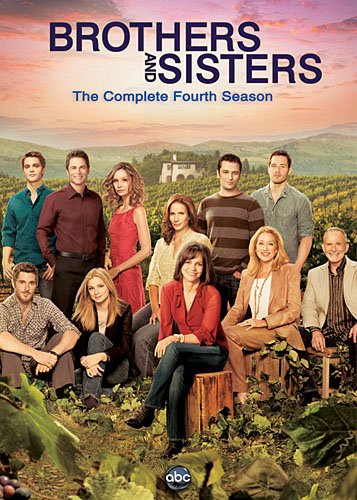
Ken Olin is truly a great talent that I’ve followed since back when he played the snotty detective Garibaldi on Hill Street Blues. Since then he’s done some wonderful work behind the camera, and Brothers & Sisters certainly shows his influence; however, this is not some of his best work. The show often leans on clichés and gets awfully lazy in moving forward at times. I do see the great family of characters they created here, but fail to find them interesting beyond the life breathed into them by their performers. This is a case of ego getting in the way of great potential. The writers and producers are trying way too hard to do something special. True greatness often requires the least effort. My advice to Olin and company is, play to the strengths of this great cast, and then get out of their way as often as possible.

Sally Field plays Nora Walker. Her husband has just died and left her with a lot of unanswered questions in her life. She soon discovers a twenty-year affair and some even more serious hanky-panky with the books of the company the family owns. Her emotional ups and downs can be about as compelling as television can get. Callista Flockhart plays the best opposite Field as the errant, and of course, conservative, black sheep of the family. The moments they share have given me a greater respect for Flockhart than her previous roles have. It is a little much watching her call someone else skinny. Ron Rifkin steals every scene he’s in as the old fashioned Uncle Saul, proving that Alias was no fluke for this accomplished actor. Rachel Griffiths again hides her English accent to show that if nothing else, she does a good job of crying. The remaining cast of Dave Annable, Balthazar Getty, and Matthew Rys are often just as nice as the three brother siblings on the show.

Despite lasting over a hundred episodes, The Patty Duke Show only lasted about three years from the fall of 1963 until the late spring of 1966. However, it was often penned as one of the best shows of the 1960’s and still finds a way into syndication when networks such as TV Land need a wholesome show to fill a time slot. So, it is little surprise that Shout Factory have decided to release all three seasons of the show to DVD. But how does the final season of this show hold up after all of these years?

Prior to this dvd set, I wasn’t very familiar with the show and had only caught a few random episodes on Nick at Nite. So I’ll do the service of giving a brief layout before we continue. The show is based in Brooklyn where the Lanes family resides. The main character of the show is Patty Lane (played by Patty Duke) who is a strong willed and outgoing teenager. She has a dad named Martin (played by William Schallert) and a mother named Natalie (played by Jean Byron).

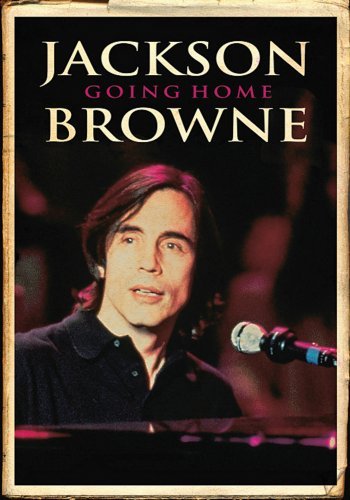
Mention the name Jackson Browne and one thinks less of the performances and more of the music itself. While he never achieved quite the fame of many of his peers, his style and songwriting has had a lasting impact on some of the biggest names in the music industry. He was part of the whole Troubadour scene in the early 1970's where he hung out with the likes of James Taylor, The Eagles, and other notable artists who were about to find their golden tickets to larger stages and the crowds, money, and fame that went along with them. The likes of Crosby, Stills, & Nash have been inspired both by his ability to write and his passion for the causes he believes in. In the 20 years from 1979 to 1999 he organized and performed at over 1000 benefit concerts. It's not so much an accomplishment to be willing to give up your own time for the causes dear to your heart. Brown has a reputation in the business of being someone they can't say no to. His biggest cause has been his stand against nuclear power plants. Agree with him or not, Browne used his fame in a responsible way that today's artists can learn from. He did his preaching at the events and not so much at his paying gigs.

"For more than two decades, Jackson Browne has been one of the most compelling artists in popular music. In August of 1994, The Disney Channel presented Jackson Browne: Going Home, a chronicle of Jackson's remarkable career. Jackson Browne: Going Home contains interviews, performances, and rare footage spanning twenty-five years featuring Don Henley, Bonnie Raitt, David Crosby, Graham Nash, The Eagles, David Lindley, Jennifer Warnes and many more."

It was hard for me to find any real solid information about The Diplomat. At first I decided that it was because the film was obviously not a movie at all, but a British mini-series. The piece is broken up into two parts that you must play separately, much like a mini-series is often presented when released on home video. That was still not enough to research the title, because it hadn't really been a mini-series at all either. Finally, a stroke of luck led me to the fact that The Diplomat hadn't been its original name either. The release was broadcast on British television as False Witness. Apparently, it had begun as something more ambitious, perhaps a single-season limited-run series. Whatever grandiose plans might have been in store of this title, whichever title you use, it fell pretty flat almost from the start.

Ian Porter (Scott) is a diplomat returning to London from his eastern European post. He is immediately stopped at the airport by Scotland Yard and charged with drug smuggling among other things. A cop was badly burned and nearly killed in a bust related to his arrest, and Chief Inspector Julie Hales (Blake) wants Porter rather badly. Porter's not talking, but the investigation leads to a Russian mobster named Krousov (Hany). Porter's ex-wife Pippa (Forlani) is threatened by the Russian mobsters, and the pair end up in protective custody. They are taken to Australia, where they will supposedly be safe so that Porter can tell his story. But Porter can't really tell his story at all. The crimes he is accused of committing were actually part of a plan to get Porter close to Krousov for MI6. A rogue agent there has started a black ops mission to bring the Russian down. Porter carries a key around his neck, but it's not related to drugs at all. This key sets a suitcase nuclear bomb that the Russians plan to explode in Australia. Wasn't that a lucky break? Some tension exists with his ex-wife. They lost a son, who drowned in their pool. She wants very much to get closer to Ian, but he's focused only on finishing his mission, something he hopes will atone for the guilt he feels over his son.

"I'm Rick Harrison, and this is my pawn shop. I work here with my old man and my son, Big Hoss. Everything in here has a story ... and a price. One thing I've learned after 21 years? You never know what is going to come through that door."