Criterion Collection

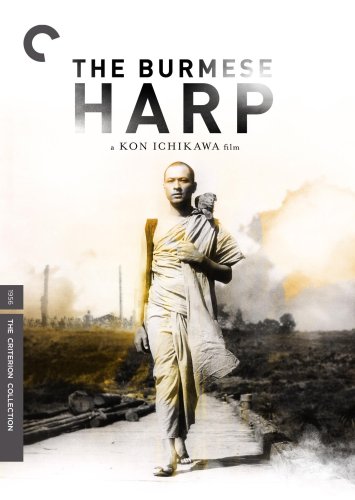
Criterion has surprised me once again with this beautiful film. It amazes me ow they continue to find these “diamonds in the rough”. Films that couldn't possibly exist, yet here they are, widely available on the mas market. The Burmese Harp is a Japanese war film that is decidedly anti-war, and features some truly beautiful music.

At the end of World War II, a group of Japanese soldiers find themselves in Burma, held by British forces as prisoners of war. One soldier from the party has spent his free t...me in Burma learning to play a native harp. This skill proves valuable upon capture, until an unfortunate incident leaves him in a state where he is thought to be dead. Upon recovery, the soldier finds true enlightenment, and takes the viewer along on the journey.

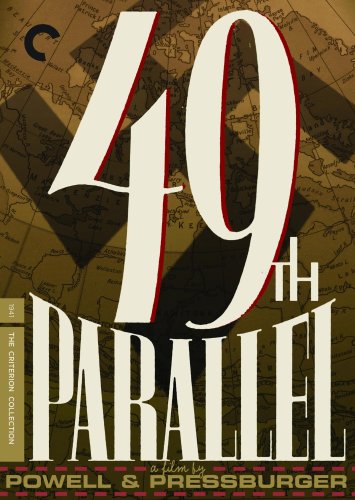
49th Parallel is a film that I had heard mentioned in passing on occasion, but never really had any practical knowledge of until now. Having now seen the film for myself, I find it to be one of those rare productions that only Criterion seems to be able to find. This is something that I would have never dreamed existed. While the idea of war films told from the Axis point of view are almost commonplace today, such a thing was practically unheard of in 1941, with the United States on the brink of entering World...War II themselves.

This is just part of what is notable about this film however. The truth is, the film stands on its own merit in any time frame. This is an epic feat of filmmaking that would qualify as a big budget project even today. The film follows the crew of a German U-boat as they make their way into Canadian waters. When they sink a Canadian tanker ship, the crew becomes the target of a massive manhunt. In an effort to evade capture, the crew take to land and move from hideout to hideout, eventually making their way to the United States.

Portions of this review were lifted from the previous Criterion Collection edition review.  Now on to the review...

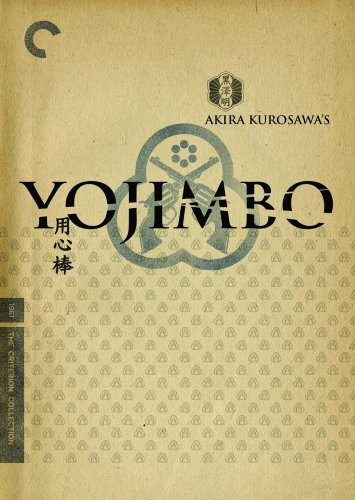
After making such internationally renowned samurai period films such as Rashomon and The Seven Samurai, Akira Kurosawa did make another film, Yojimbo, with a decidedly different tone, bordering on dark comedy. The opening shot is of Sanjuro (Toshiro Mifune, Throne of Blood), a samurai without a master, who look  at a mountain, and suddenly scratches his head, as if his hair is on too tight. It's almost the breaking down of a facade, helping to show you that the film will be bit different from other Kurosawa samurai films. The introductory cards say that the film is set in the 1860s, and the samurai comes into a town ruled by rival gangs. He doesn't know this when he comes in, but the first thing he sees in town is a dog carrying a human hand. People have said that the way that this film was told reminds them a lot of the Clint Eastwood/spaghetti westerns that came out several years later, and it's easy to understand why, with the quiet main character whom you can never really tell if he's a hero or villain. He deals with some situations with a toothpick in his mouth, reminding me of Chou-Yun Fat in Hard Boiled. Kurosawa does action flicks? That's probably the best way to characterize it, but he does it well, without a lot of one-liners or lack of common sense seen within a lot of today's action films.

Let me get this out of the way right up front; I really enjoyed Memoirs of a Geisha. Now, I am certainly smart enough to understand that the film was not entirely realistic, and there were some plot developments that pushed suspension of disbelief pretty far, but I wound it charming and entertaining. It was so charming, in fact, that it was often times easy to forget that you were essentially watching a movie about whores. You can romance it all you want, but at the end of the day a Geisha is really nothing mo...e than a high-paid escort.

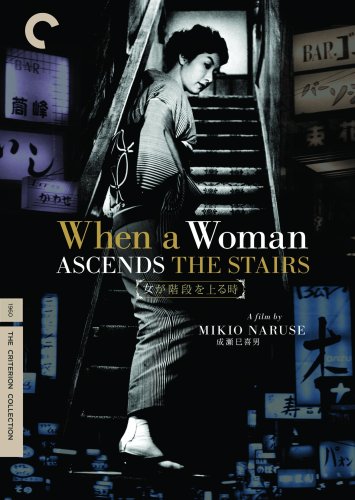
When a Woman Ascends the Stairs is sort of the realistic companion piece to Memoirs. The story here revolves around a modern-day Geisha, where the lifestyle has moved out of the Geisha-houses and into the bars. The lifestyle is still basically the same; women are “companions” to wealthy male bar patrons, making long-term relationships with one woman. The women pay a portion of their income to the owner of the bar, and keep the rest for themselves (though most of it is spent on kimonos and personal upkeep). Our heroine, Mama, is a Geisha that is well-respected amongst her peers, but she is starting to feel the pressure of age. As she is advancing in years, she is not able to rely as much on her youthful good looks. The time has come for her to either get married or open a bar of her own. As she is so well liked, it is not too long until she has suitors offering to pay for her own bar. Now she must decide how she is to proceed with the rest of her life.

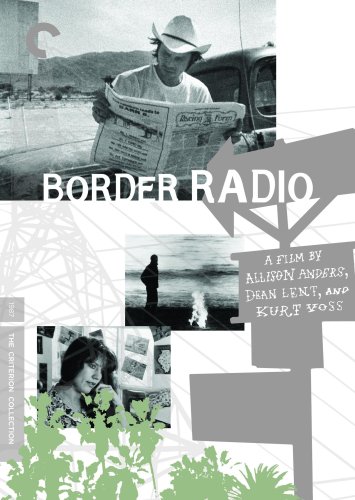
Border Radio is an independent film written and directed by Allison Anders, Kurt Voss and Dean Lent. The film serves as more of a curiosity than a great film on its own merits. Released in 1987, the film fell in amongst the wave of indie filmmakers making an impact at the time, including Quentin Tarantino and Robert Rodriguez. In fact, Anders directed one of the segments in the film Four Rooms, which also featured stories by these two filmmakers, in addition to Alexandre Rockwell. While Tarantino and Ro...riguez have gone on to amazing success, many of their contemporaries never took off on a grand scale. Anders, Voss and Lent fall into this category, with Lent and Voss later directing a string of "B" movies, and Anders turning her efforts toward directing television programs.

Still, this film is an excellent example of the advice that all indie filmmakers give to aspiring filmmakers; "just make your movie!!" The goal of a debut feature is not always to make the next Reservoir Dogs as much as it is a chance to gain experience and show the world that you can handle the strain of a feature-length production. Maybe neither director went on to direct a $30 million blockbuster film, but they created a career for themselves through their work in a self-funded production.

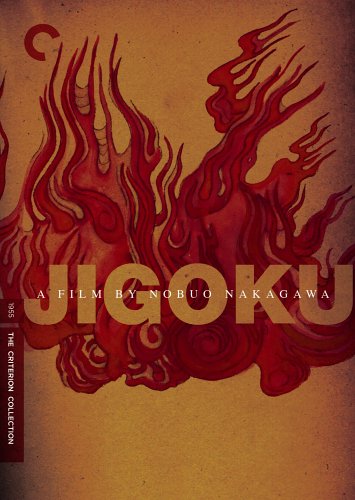
Japanese horror films are all the rage these days, with the originals hitting DVD in the States, and the remakes showing up in the theaters. Therefore, it stands to reason that even Criterion would get in on the trend, offering up a film from famed director Nobuo Nakagawa, widely regarded as the father of the Japanese horror film.

Jigoku is both strange and fascinating. The film tells the story of two friends that are involved in a hot-and-run accident. While one of the young men is cool, calm and collected, the other is wracked with guilt over their actions. While the family of the murdered man begins to close in on the guilty parties, strange things begin to happen to the man with a conscience.

Written By Jeff Mardo

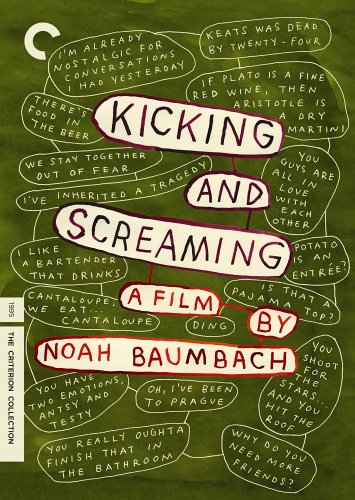
This is a Parker Posey film, which in itself is enough of a reason for me to check this film out. However, I was surprised to find that Josh Hamilton is here as well. While you may not know the name of Josh Hamilton right away, the two of them worked together in a brilliantly satirical film called The House of Yes; one of my personal favorites. In fact, there are several things that tie these two films together in my mind. While both are very funny and disturbing films, the charm in them both is the tension hi...ing just beneath the satire. The tension here is that uneasy feeling of just what to do once you have finished your years at college, and you are forced to go out into the real world. It is that depressing no man's land between knowledge and action.

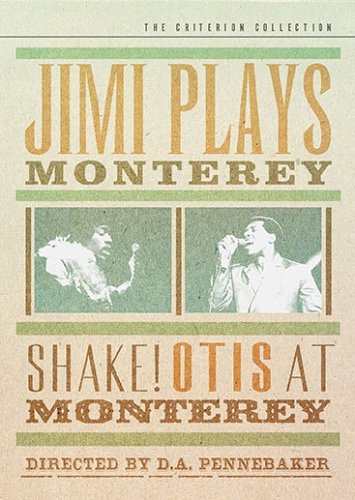
There was a time when no major groundbreaking events were captured on film. The thing is, it's sometimes hard to know when something of historical significance is going to occur. Major events such as World War II and the fall of the Berlin wall were planned in advance (so to speak), so it was easy to set-up a camera and capture the event. Spontaneous events, however, were mostly passed over. As technology has progressed, however, it has become easier to capture important and notable moments on the fly. September 11, ...001 has taught us that fact in graphic and horrible detail.

That's part of what makes this disc so very unique. At the time, who would know how popular Otis Redding would become, or that he would die an untimely death in the weeks following his performance? What's more, who could have predicted the unbelievable phenomenon that was Jimi Hendrix? Obviously these men were talented musicians, but the kind of lasting fame they eventually garnered, especially Hendrix, could never have been predicted.

OK, I hope I'm not diving into a review that may fall into the "film scholar" category, and thus rule me out of being taken seriously. When there's a lull in buying new releases, sometimes my wallet gets cabin fever, and so I went out and picked up the Hitchcock set from Criterion, entitled Wrong Men and Notorious Women: Five Hitchcock Thrillers 1935-1946, and includes the previous Criterion releases from Hitchcock, namely Rebecca, Notorious, Spellbound and The Lady Vanishes. I'm tackling the earliest release of the bunch, entitled The 39 Steps. The story very much resembles another of Hitchcock's later works, North by Northwest, in the aspect that the wrong man is thrown into a spy chase. While Cary Grant is taken through New York, a cornfield, and Mount Rushmore in the later film, in The 39 Steps, Richard Hannay, played by Robert Donat, attends a Music Hall production, meets and takes home a women (Annabella Smith, played by Lucie Mannheim), who he later finds out is a spy who is being chased by two men attempting to kill her. In the middle of the night, Annabella comes into Richard's room, and falls over him, dead of a knife in the back. As the police chase him, looking to detain him for the murder, the two men, assuming that Richard has found out about the secret she held, start to pursue him in order to kill him. And whatever he does, some of Anabella's last words to him are not to trust a man missing the tip of his right pinkie (It sounds strange to write the word "pinkie" in a review of Hitchcock, so I hope it looks out of place as you're reading it).

This was one of Hitchcock's last works before coming over to America to wow us with the movies that have become legend. For all of my DVD collecting, I'm still a bit green when it comes to the older stuff. And after seeing The 39 Steps, I now realize what I've been missing. For its time, it's a pretty suspenseful film, with a lot of shots that are still used in movies today, and even the story has been used in some fashion or another over the years, though clearly not to the same effectiveness that Hitchcock has done. Despite the "Born On" date for this film, it's a very good one, and to see many of the same devices used today, both within the story and within Hitchcock's technical realm, make it an easy recommendation to those who are even casual film fans.

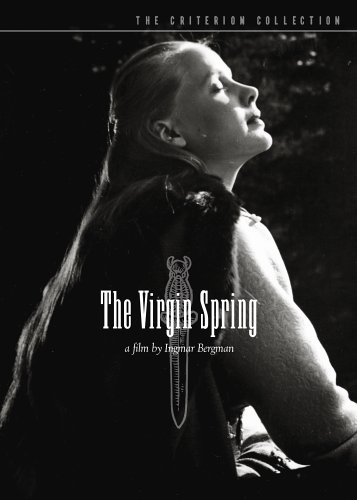
Honestly, I wasn't expecting too much from The Virgin Spring. I know that it's Bergman, but it's based on an ancient Swedish medieval ballad. If your source material is hundreds of years old and only two pages long, surely there can't be much to see from the film, can there?

I could not have been more wrong. Though this may be just under an hour-and-a-half in length, the film is filled with subtext, imagery and several powerful messages. Spring tells the story of a fair maiden who is brutally ...aped and murdered on her way to church, and her father's revenge on those responsible. Bergman has managed to make his morality tale into a complex commentary on both human nature and the nature of Christian faith. By setting his story in the period in Swedish history between paganism and Christianity, he is able to masterfully illustrate the struggle of both the first Christians and Christians today between denying basic impulses and focusing on the will of God.