Posted in: Disc Reviews by Archive Authors on October 14th, 2005
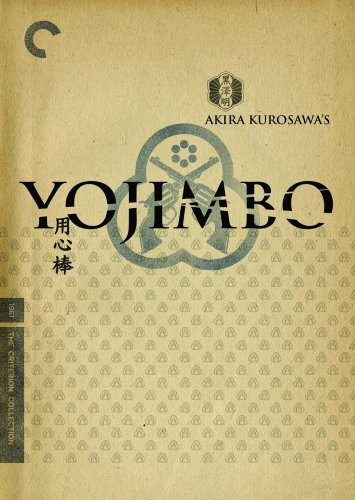
Call me crazy, but I came away from this disc feeling like I had just watched a samurai western. On one side, the film is filled with Japanese warriors, fantastic swordfighting and talk of honor and revenge. On the other hand, a major subplot of the film revolves around panning for gold in the mountains, and fighting over the claims. This excellent 1965 film has much in common with great westerns, such as The Good, The Bad and The Ugly, including interesting plot twists and a complicated-yet-comical sidekick t... the main character that is surprisingly similar to Eli Wallach's character in the Italian epic.
Of course, there is plenty of samurai action in this film as well. It is interesting to see the rapid zooms that are such a trademark of this style of film used in a black-and-white format. These conventions are even more interesting when juxtaposed with some of the other delicately framed deep focus shots in the film. The cinematography alone is enough to elevate this film out of the category of a basic samurai film and into that of art, but the script and the wonderfully-choreographed fight scenes really put this film into a whole new level.
Posted in: Disc Reviews by Archive Authors on September 20th, 2005
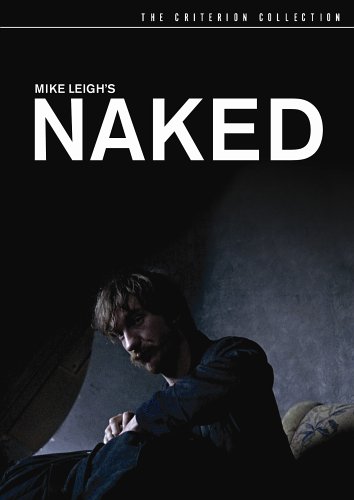
The great thing about DVDs produced under the Criterion moniker is that they can't really be compared to much else. Usually, I can just whip out a peppy little monologue about the film I have just watched, but Criterion always makes things a bit more difficult... which is great for film fans that have seen it all before.
Naked is, of course, no different. There is no easy summation for this piece of art, which won awards for Best Actor and Best Director at the 1993 Cannes Film Festival. This is ... simply fantastic dark comedy, filled with superb performances and brilliantly witty dialog. While many American audiences live and die by the easy-to-follow plot, this is more of a collection of character studies, with Johnny (played by David Thewlis) serving as the tour guide. Microcosms of relationships, criminal minds, malicious intent and the curse of intelligence are all explored here, in a film that may severely expand the viewer's beliefs about those that live on the fringe of society, and their own lives.
Posted in: Disc Reviews by Archive Authors on August 20th, 2005
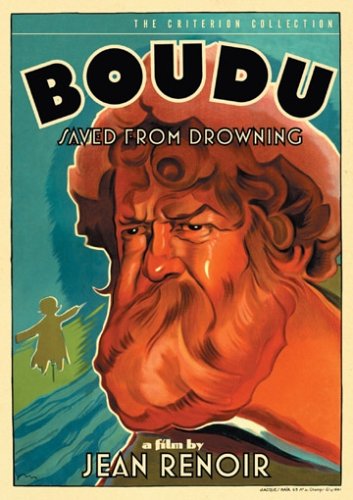
Boudu Saved From Drowning is a style of film that is quite popular in the modern independent film scene. Tales of understanding the outcasts and what it means to fit in with the status quo have always been powerful, especially ones such as this one, where the moral is that no particular group or culture is without its drawbacks.
This film tells the story of Boudu, a homeless man who decided to commit suicide by jumping off of a bridge, but is saved by a man of “integrity”. He is then taken in to the ma...'s home, given a new suit, and expected to change his ways and become a valuable member of society. Once these cultures collide, the resulting comedy is inevitable. The truth behind the humor, however, is biting.
Posted in: Disc Reviews by Gino Sassani on July 15th, 2005
Synopsis
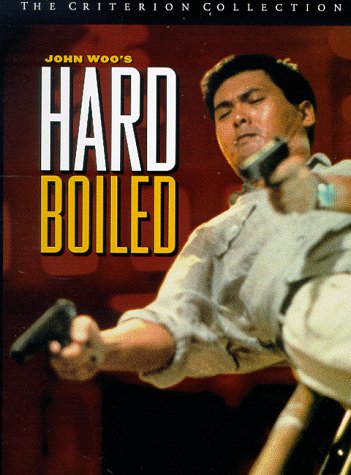
John Woo did not just direct Tom Cruise from a big rock in Mission Impossible:2, nor EVERY recent action movie with featuring either Nicolas Cage or John Travolta. He was only a name you heard about whenever the hot director of the moment (Quentin Tarantino comes to mind) talked about their film influences. Woo was recognized as a top directing talent before his move to the West, and is the one name people consistently mention when talking about the Hong Kong crime/action film genre. This fi...m was his last before coming to the US, his American debut was Hard Target, and following that were several other action films. His creativity and action sequences seemed to resuscitate the American action film, which, until that point, had stagnated for a few years. One can only subject oneself to so many Chuck Norris 80’s action films without losing sanity.
Posted in: Disc Reviews by Gino Sassani on June 26th, 2005
Synopsis
After making such internationally renowned samurai period films such as Rashomon and The Seven Samurai, Akira Kurosawa did make another film Yojimbo, with a decidedly different tone, bordering on dark comedy. The opening shot is of Sanjuro (Toshiro Mifune, Throne of Blood), a samurai without a master, who looks at a mountain, and suddenly scratches his head, as if his hair is on too tight. It’s almost the breaking down of a facade, helping to show you that the film will ...e bit different from other Kurosawa samurai films. The introductory cards say that the film is set in the 1860s, and the samurai comes into a town ruled by rival gangs. He doesn’t know this when he comes in, but the first thing he sees in town is a dog carrying a human hand. People have said that the way that this film was told reminds them a lot of the Clint Eastwood/spaghetti westerns that came out several years later, and it’s easy to understand why, with the quiet main character whom you can never really tell he’s a hero or villain. He deals with some situations with a toothpick in his mouth, reminding me of Chou-Yun Fat in Hard Boiled. Kurosawa does action flicks? That’s probably the best way to characterize it, but he does it well, without a lot of one-liners or lack of common sense seen within a lot of today’s action films.
Posted in: Disc Reviews by Archive Authors on May 4th, 2005
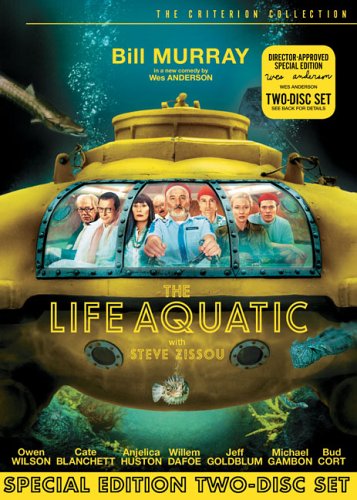
Wes Anderson has been a breath of fresh air since he hit the Hollywood scene in 1996 with his first feature length film Bottle Rocket. Since then, Anderson has continued to stretch the imagination of film-goers with fabulous films such Rushmore (1998), The Royal Tenenbaums (2001), and now with The Life Aquatic with Steve Zissou (2004). Anderson’s films are not for every joe-schmo film fan; his work could even be described as an acquired taste. But from a creative and visual perspective,...Wes Anderson’s work stands by itself.
Anderson has a thing for using actors that he is comfortable with, so in The Life Aquatic, we see many return actors from his previous films – Bill Murray, Owen Wilson, & Anjelica Huston. Fresh to this film, and with a good chance of appearing in future Wes Anderson projects, include Cate Blanchett, Willem Dafoe, & Jeff Goldblum. With a cast that reads as a whos-who of Hollywood, how could this film not be entertaining?
Posted in: Disc Reviews by Gino Sassani on March 28th, 2005
The sophomore effort of Wes Anderson, Rushmore brings together a 15 year old who flunked out of private school, and a steel tycoon in his 40s, and shows the lengths that people go to sometimes to try and win the heart of the one they love.
That would be too easy an effort, wouldn’t it? Well, Max Fischer (Jason Schwartzman, I Heart Huckabees) is attending Rushmore Academy on scholarship, and he loves Rushmore. So much so, that he creates a club for just about everything that hasn’t had an esta...lished club at Rushmore. Beekeepers’ Society? Check. Model U.N.? Check. He also writes and produces plays at the school. Not your average plays, more along the lines of adaptations. Adaptations which may not be appropriate for younger kids. I mean, why subject an 8 year old to a play that’s adapted from Serpico? The problem with all his extracurriculars is that he neglects his studies, and is threatened with expulsion by the school’s headmaster (Brian Cox, The Rookie). As Max’s father (Seymour Cassel, Stealing Harvard) is only a barber, expulsion would be expulsion, he couldn’t buy his way out of it. Max does find an inspiration, someone that he falls in love with, a 1st grade English teacher named Ms. Cross (Olivia Williams, The Sixth Sense). The problem is that Ms. Cross rejects his flirtations, so he enlists the aid of Herman Blume (Bill Murray, Caddyshack), a self-made tycoon who gains Max’s admiration and respect at a guest speaker engagement at the school, simply telling the poor kids to take the rich kids down. The problem with getting Blume involved is that he eventually falls in love with her also, though he is already unhappily married.
Posted in: Disc Reviews by Archive Authors on March 28th, 2005
The Monterey Pop Festival has been mostly ignored by a lot of people, compared to the two other two large concerts that occurred after it, Woodstock, and Altamont. Those who do remember Monterey always mention the one incident it is most known for, Jimi Hendrix’ appearance on the U.S. stage. Jimi had been tearing it up in England, and he ended by setting his guitar on fire, which turned out to be a defining moment in music history. Criterion brings this event and others back to life in a comprehensive 3 disc set which is designed not only to showcase Jimi’s set during the show, but also breathes new life into the festival in general. Artists who appeared were The Who, Simon and Garfunkel, Otis Redding and Janis Joplin, to name a few.
The festival was shot over 3 days, and the DVD set is broken up into 3 parts: the film of the festival on disc 1, the performances of Jimi Hendrix and Otis Redding take up disc 2, and almost 2 hours of outtake performances comprise disc 3. Disc 1 is the film of the festival. The usual components of a music concert documentary are here, including footage of crowds and artists flocking to the show, and some behind the scenes logistics, but that footage is quick, and it runs for about 10 minutes before the performances start. The performances are edited together fairly abruptly with almost no fanfare in between songs. The film is only 79 minutes, so I can‘t understand the need to get everything crammed in here as much as possible, but that helps to make the second and third discs a relief to see.
Posted in: Disc Reviews by Archive Authors on February 16th, 2005
The barometer for those interested in Robert Altman’s Short Cuts is usually whether or not they liked Paul Thomas Anderson’s Magnolia. Hell, it’s the question I posed to my fiancée when we were trying to figure out what to watch over the Thanksgiving holiday. The comparisons are pretty conventional; both are large ensemble films with intertwined plotlines set in California, both have a 3 hour runtime. Both even have Julianne Moore in predominant roles.
Based on short stories by Raymond Carver...and written by Altman, many of the characters in Short Cuts are reprehensible turds, let’s face it. You’ve got the policeman/husband and father of three Gene (Tim Robbins, The Player), who frequently cheats on his wife Sherri (Madeline Stowe, Stakeout), and even drops off the family dog hundreds of miles from home because he barks too much at Gene. Gene pulls over women at traffic stops to get phone numbers, one of whom may have been Betty (Frances MacDormand, Fargo), who is separated from her pilot husband Stormy (Peter Gallagher, The OC). Jazz singer Tess (Annie Ross, Pump Up the Volume) frequently drinks and never provides any encouraging words to her daughter Zoe (Lori Singer, Footloose). Limo driver Earl (Tom Waits) is a drinker who frequently berates his wife Doreen (Lily Tomlin, Nashville).
Posted in: Disc Reviews by David Annandale on September 13th, 2004
Synopsis