Posted in: Disc Reviews by David Annandale on January 15th, 2007
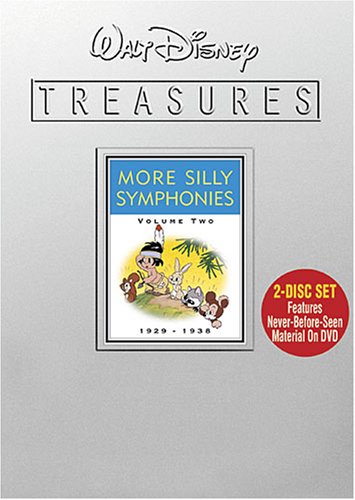
Warner Bros. had the Looney Tunes and Merrie Melodies, Disney had the Silly Symphonies. This is the second volume collecting those shorts, covering the years 1929 to 1938. The shorts are selected on a menu that can be presented in alphabetical or chronological order, and it is the latter approach that is the most enlightening, as we can see the cartoons evolve. There is no dialogue in these shorts – the point was to fuse animation and music. And while that is an end in itself in the earlier cartoons (and quite the technological feat at that), more and more narrative content develops over the years. The culmination of this form of animation would, of course, be Fantasia, and in such early pieces as “Hell’s Bells,” one can see in embryonic form the ideas that would become, for instance, the “Night on Bald Mountain” segment.
Audio
Posted in: Disc Reviews by Archive Authors on January 15th, 2007
Adapted from the hit stage musical, Norman Jewison's film version of Fiddler on the Roof has established itself as a classic over and over again since its release in 1971.
"He loves her. Love, it's a new style... On the other hand, our old ways were once new, weren't they?" I'll hardly be the first to write it, but the reason Fiddler on the Roof, a story about Jewish people and their culture, is so popular, is that its themes have universal appeal. In fact, in a way it hardly matters th...t the characters are Jewish. As we learn from a famous anecdote, when the first Japanese production of the stage musical opened, the show's creators traveled to Japan to meet the producer. He said to them, "I don't understand, I don't know how this piece can work so well in New York. It's so Japanese!"
Posted in: Disc Reviews by Archive Authors on January 13th, 2007
Pulse is a remake of the 2001 Japanese film Kairo which was based on a novel of the same name. The movie opens with Josh entering a dark university library looking for someone named Zieglar, where he is instead met by some creepy old man and an entity that sucks life out of him. At this point everything seemed to be promising, although a bit out there. We soon find out that Josh was the boyfriend of Mattie (Kristen Bell) who is now worried as to where their relationship stands because Josh isn�t speaking with her anymore. She goes to his apartment where Josh is still alive but looking very pale and lifeless. Moments after he asks her to wait for him, he walks into another room and hangs himself using a wire, Mattie is left blaming herself. Shortly after his death Mattie and her friends begin getting messages from Josh online, believing it is a virus Mattie�s friend Stone goes to his apartment to turn off his computer, where he is in turn met by these entities. Basically the rest of the movie is Mattie and her new found friend Dex trying to figure out who these people are and how to stop them, while her friends are slowly being killed one by one.
The movie�s central theme is technology's negative impact on people; instead of connecting people together, it has in fact distanced us from personal and emotional relationships. But maybe that�s getting a little too deep, because that�s exactly the opposite of this movie�s intention. Instead, while keeping that as a core theme, the movie is essentially The Grudge combined with White Noise, The Ring, and Night of The Living Dead with the exception of digital zombies in the place of human-like ones. That�s right, two of the most overrated and weak horror movies, The Grudge and The Ring, essentially piled into one even crappier movie, Pulse. Referring to The Ring, as in Pulse a creature if you will comes from a television and kills people. With reference to The Grudge (another Japanese remake) you got someone wandering around trying to figure out some nonsense plot all the while leaving you to wonder when something scary is going to happen.
Posted in: Disc Reviews by Gino Sassani on January 13th, 2007
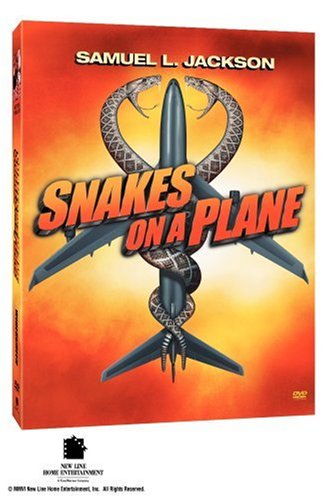
Let me tell you something about myself. I am surrounded by hundreds, sometimes thousands, of snakes every day. As I write this review, there are about 500 snakes just a couple hundred feet away. I'm not on a plane, of course, but snakes are a big part of my life. I'm a snake breeder. I'm also a musician who has just released an entire CD of reptile tracks (see footnote). So it was with more than the little bit of curiosity that I just had to see this film. I knew everybody would be asking me what I thought. So what did I think? This film is a hell of a lot of fun. I've long since learned to forgive the use of common non-venomous species to play these nasties on screen. These are actors, for crying out loud. And at least Samuel L. Jackson's worth a ton of jack, so it really wouldn't be a great idea to place him in a confined space with a pack of cobras or mambas. At least they made some effort to mimic the deadly kinds. I had a little bit of fun trying to see how many species I could identify. Then the game becomes how many of them do I own. Quite a few, as it turns out.
Snakes On A Plane rocks. If you didn't catch this when it was out, you must at least rent it now. What I love most about this film has almost nothing to do with the snakes. This film pretty much puts it out there. As Jackson is fond of saying, you just know exactly what you're going to get with the title. There were efforts to tone down the gore and silliness, but Jackson wanted nothing to do with any of that. And so the film is a romp, but it never told you it would be anything more. The same can be said of Jackson himself. When you go to one of his movies, unless George Lucas has anything to do with it, you pretty much know what a screen full of Sam Jackson's gonna be. The supporting cast is your obvious planeload of stereotypes, but again, this is all what you paid your admission to see. There will be F Bombs littered across the dialogue. His in your face persona will make or break the film, not anything in the script. Lots of guys curse, but Jackson makes the language his own. I often complain in these pages about the use of vulgarity for vulgarity's sake ruining an otherwise nice film. Here I don't think there was enough. I first saw the film in a theater and when Jackson delivered his battle cry, the room exploded. Honestly, isn't that what we all came to see? Snakes? What snakes? Oh, those MF snakes. Got it.
Posted in: Disc Reviews by Gino Sassani on January 13th, 2007
Bernardo Bertolucci is no stranger to controversy. His Last Tango In Paris caused quite a bit of noise when it was released. Novecento, as 1900 is known in its original Italian, has been a subject of controversy for decades. Since its 1976 original Italian release, American studios have been cautious about releasing the film in the states, at least as it was originally intended. First there is the running time. The film clocks in at over 5 hours. Theaters in the US face fierce competition for movie goers’ dollars. The economics of the industry make such a long film simply impracticable even in 1976. There were other problems. A short version was eventually brought to the United States, but the unprecedented violence and sexual images required the then dreaded X rating. Even with today’s more forgiving mores, 1900 would certainly have received an NC-17 rating. The political subjects are also problematic. Americans need good guys and bad guys. This film blurs those lines. The competing forces here are Fascist and Socialist. Neither group is embraced here by anyone other than the far left wing of the Democratic Party. Finally, foreign language films serve a very small niche even with today’s public. Mel Gibson broke down some of those barriers recently, but the hardship remains. I must confess, I am not drawn to films requiring subtitles. I find relying on reading the dialogue a distraction. I watch films with a careful eye toward detail. Reading subtitles simply doesn’t allow me the luxury to observe the subtle nuances of a film. It is these minute details that more often than not create a great film. Enter 2006, and the DVD has removed each of these problems. Sitting in the comfort of my own theater, I can pause when I wish and take multiple breaks. The DVD offers me an English dubbed version which allows me to see those magical details that a film like this requires. The dubbed version also has the added bonus of allowing me to hear Robert DeNiro’s and Donald Sutherland’s voices. Like many film connoisseurs, I had only heard of this film. Now I had the chance to enjoy it in comfort and style.
1900 benefits from an extraordinary cast. American staples Robert DeNiro, Donald Sutherland, and Burt Lancaster lead a mostly Italian supporting cast. Sutherland is absolutely evil as the Fascist enforcer, Attila. His mutilation of a cat is quite an infamous scene. Although it wasn’t quite as graphic as legend had proclaimed, it is disturbing just the same, made more so by the gleeful way Sutherland revels in the act. Robert DeNiro shows flashes of the brilliance that would become his trademark. The character is often moody and perhaps not written with as much passion as DeNiro provides. Burt Lancaster has a small but potent role as Alfred’s grandfather. It helps to establish some historic place mark for the film. Finally, French actor Gerard Depardieu provides an uneven portrayal of Olmo. At times he provides incredible passion and depth in the role. Still, there are moments he seems almost uninterested. The chemistry with DeNiro is a little awkward and never really clicks. This is a huge shame, as this relationship is vital to the story.
Posted in: Disc Reviews by Archive Authors on January 13th, 2007
Wolf Creek is an Australian horror film that is based on true events; with no certain event in specific it combines a few elements from some missing people�s cases in Australia. The actions of some of the characters mirror that of famous serial killers, most notably that of Ivan Milat who most have speculated is whom the movie is based on. According to Quentin Tarantino Wolf Creek is ��One of the great horror film heavies of the last 25 years� so it seems to be really promising.
Liz Hunter (Cassandra Magrath) and Kristy Earl (Kestie Morassi) are friends from England who are travelling Australia for a holiday. Here they meet up with Ben Mitchell (Nathan Phillips) with whom they plan to take a trip to Wolf Creek, a desolate area of Australia where a large crater formed by a meteorite lays. The Wolf Creek of the movie is based upon the real life Wolfe Creek in Australia, which you can see during the aerial shots of the crater in the movie. After driving to Wolf Creek and exploring it the group happily returns to the car ready for their next adventure. But fait would have it, or maybe someone else would have it, their car won�t start. Waiting in the car for hours finally they see headlights off in a distance approaching them. Out comes Mick, a Crocodile Dundee looking fellow who offers to tow their vehicle to his camp and will fix it free of charge. Although a bit hesitant the group decides to accept the offer due to their lack of money. After driving for quite some time they arrive at Mick�s camp, an abandoned mining site that he calls home. Here they all sit down and exchange stories, where Mick�s behaviour becomes a bit suspicious, but somehow he manages to woe them into a false sense of security. Before we know it everyone passes out and we skip ahead to day break where Liz, Kristy, and Ben wake up.
Posted in: Disc Reviews by Archive Authors on January 9th, 2007
Four years after Jackass: The Movie took the popular MTV franchise to the big screen, Johnny Knoxville and his gang returned to theatres with Jackass - Number Two. The sequel is bigger, bolder and much more disgusting. But is it better?
In my humble opinion, the sequel equates to more of the same. If you loved the original, you'll eat this up. If you hated it - and we both know those are the only two options - you can happily make indignant remarks to any friends or family in the "love it" camp.
Posted in: Disc Reviews by Archive Authors on January 9th, 2007
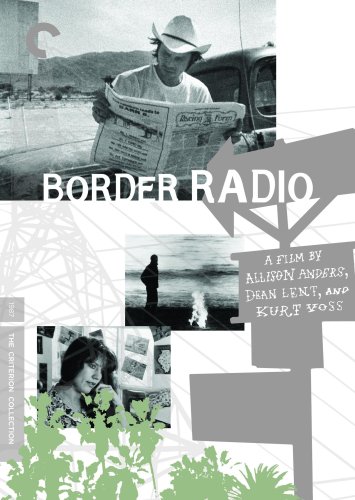
Border Radio is an independent film written and directed by Allison Anders, Kurt Voss and Dean Lent. The film serves as more of a curiosity than a great film on its own merits. Released in 1987, the film fell in amongst the wave of indie filmmakers making an impact at the time, including Quentin Tarantino and Robert Rodriguez. In fact, Anders directed one of the segments in the film Four Rooms, which also featured stories by these two filmmakers, in addition to Alexandre Rockwell. While Tarantino and Ro...riguez have gone on to amazing success, many of their contemporaries never took off on a grand scale. Anders, Voss and Lent fall into this category, with Lent and Voss later directing a string of "B" movies, and Anders turning her efforts toward directing television programs.
Still, this film is an excellent example of the advice that all indie filmmakers give to aspiring filmmakers; "just make your movie!!" The goal of a debut feature is not always to make the next Reservoir Dogs as much as it is a chance to gain experience and show the world that you can handle the strain of a feature-length production. Maybe neither director went on to direct a $30 million blockbuster film, but they created a career for themselves through their work in a self-funded production.
Posted in: Disc Reviews by Archive Authors on January 8th, 2007
After seeing Casino Royale it's hard to look at a Bond film the same way, and when Roger Moore inhabited the guy who likes martinis, fast cars and dangerous situations, it may have been a little cheesy. Granted, Moore did appear in a couple of notable Bond misses, but in the tenth release of the James Bond franchise, The Spy Who Loved Me stands as one of his best, if not the best Moore film.
From a screenplay by Richard Maibaum (his 7th Bond film) and Christopher Wood (his first) and directed by Lewis Gilbert (his 2nd Bond film), this new situation finds James at first in Austria, being chased by assassins, with everyone on skis. The end of the chase, whether you like it or not, is one of the better (maybe the best) in Bond film history. Once he gets settled, he is sent to find out why nuclear submarines are going missing. Complicating things is that James has to work with a Russian agent, a striking female named Major Anya Amasova (Barbara Bach, Caveman). Together, they find out the cause of the disappearances, a reclusive businessman named Stromberg (Curt Jurgens, The Longest Day, The Enemy Below) and his henchman, the ginormous guy with metal teeth, lovingly nicknamed Jaws (Richard Kiel, The Longest Yard).

Posted in: Disc Reviews by Archive Authors on December 30th, 2006
Comments on the supplemental material on this edition have been ported over from Ryan Erb's excellent (and recent) review of the HD DVD, which also can be enjoyed on this site. Now onto this review...
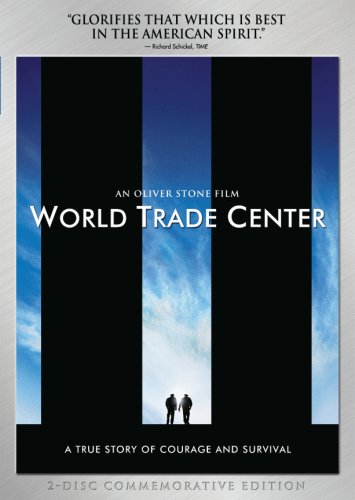
Remember when it was announced that far-left conspiracy theorist (and resident Castro admirer) Oliver Stone would be making a film about the September 11 attacks? Of course you do. In fact, the collective pucker of the nation tightened in horror and trepidation when the notion was first thrown around, and later grew in suspicion as the film's realization became closer and closer.