Posted in: Disc Reviews by Gino Sassani on July 6th, 2006
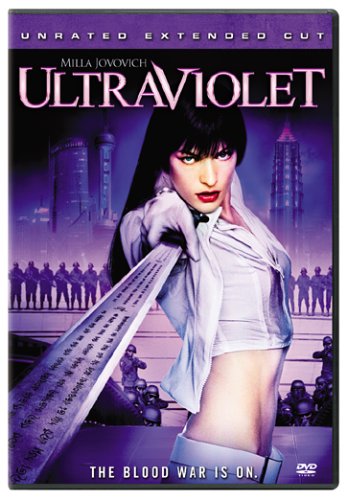
There is no shortage of vampire stories out there. There’s certainly no shortage of kick butt chicks dressed as sparsely as possible running around in depressed future populated worlds. Underworld, without a doubt, does the combination better than anyone. Ultraviolet makes a grand attempt that really ends up being more of a ride than anything else. Now, I can usually follow the most convoluted storylines, but this one gave me some trouble. It seems that while trying to create a super soldier (where is Mulder and Scully when you need them) the government made a big oops and created something akin to a vampire. Those infected with HGV, (I wonder what connection they’re going for there?), possess extraordinary strength. They also develop light sensitivity and a thirst for blood. After realizing these new hybrid beings weren’t going to quite fit in socially, the plan was to round them up and kill them all. That was the plan, anyway, before the likes of Violet. As part of an underground hemophage movement to survive the genocide, Violet finds herself having to protect a child whose blood might contain a cure or a plague. The inevitable chase through a futuristic city serves more to show off some expensive CG f/x than really further any plot.
Ultraviolet makes the fatal flaw of trying to serve too many purposes. There’s nothing wrong with a thrill ride with plenty of eye candy. Still, Ultraviolet is trying to make too many statements. The obvious HIV inferences, combined with the concentration camp mentality of the totalitarian future, overwhelm us most of the time. Another problem is the f/x are often too slick. More often than not the film just doesn’t appear believable. Now I don’t mean “That’s just not possible” unbelievable. I mean, the picture just doesn’t look real. This is what happens when color correction becomes manic. Everything is so smooth and shiny it looks as though it might as well all have been CG. The action is also almost comical. We’re talking Kill Bill on the believability gauge. She just takes on hundreds of enemies at a time. Before long you’re thinking, Who cares? She’s indestructible. Don’t get me wrong, I rather enjoyed it at times. It’s an over-ambitious thrill ride and nothing more. The problem is, it obviously wants to be so much more than that.
Posted in: Disc Reviews by Archive Authors on July 6th, 2006
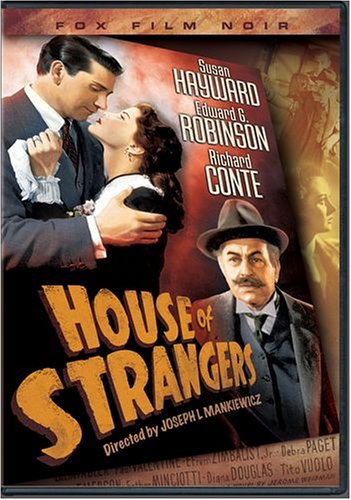
Not having much appreciation for (or just being an aficionado of) the film noir genre, I could probably do one better and say that even if noir was induced on me subliminally, there may be a good chance that I wouldn't even recognize it. So I don't know how cool things like The Blackboard Jungle or some other films are and I can't really rule them out of hand. So when I got House of Strangers to review, I had to give it a try.
Based on a novel by Jerome Weidman (who won a Pulitzer for a Broadway play) and directed by Joseph L. Mankiewicz (who directed a couple of films called Guys and Dolls and Cleopatra), the film centers around several brothers and their father Gino, played by Edward G. Robinson (Soylent Green). Gino's favorite son Max (Richard Conte, The Godfather) is thrown in jail in connection with his father's dealings (he runs a well-known bank in New York). Unbeknownst to Gino, his other sons Pietro (Paul Valentine, Against All Odds), Joe (Luther Adler, Absence of Malice) and Tony (Efrem Zimbalist Jr., Hot Shots!) overthrow Gino in a power play, which leads to Gino's death.
Posted in: Disc Reviews by Archive Authors on July 4th, 2006
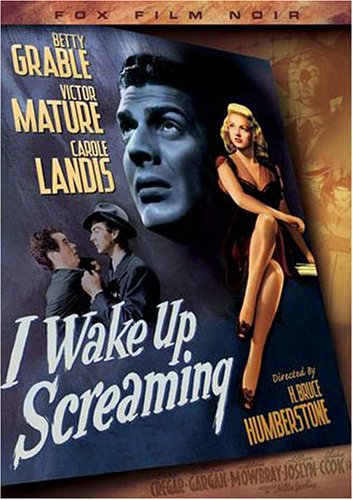
Fox has done a really great thing with their Fox Film Noir line. There are tons of great film noirs from the 40's and 50's, and Fox has done an excellent job of grabbing those classic films and presenting them in great new affordable editions for modern viewers to experience for the first time. I Wake Up Screaming is one of 18 films currently in the series, and I am sure that number will only continue to grow over time.
Betty Grable shows up here in a starring role that is a departure from her u...ual flirty faire. Here she plays a secretary, the sister of a murdered model. The film is told in flashbacks through the police interrogation process, as the investigation into who murdered this mysterious woman slowly unfolds. We discover that Grable's character has fallen in love with the prime suspect, and the more questions the police ask, the deeper the story goes. Plot twists, quick dialog and shady characters fill this film, and the whole sorted affair builds to a gutsy surprise ending.
Posted in: Disc Reviews by Archive Authors on July 1st, 2006
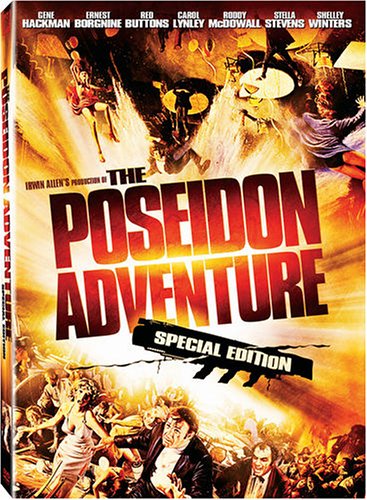
God bless producer Irwin Allen for aiming high in just about everything he did. He would make large scale productions, some focused on disasters (like his next film after this, The Towering Inferno), but he also produced Lost in Space for TV and made other contributions like Voyage to the Bottom of the Sea and an incarnation of The Lost World. He may not have had a DeMille-like grip on his project because the studios had so much control still in the early '70s, but he sure dreamt big, which is always a good thing.
In The Poseidon Adventure, based on the novel from Paul Gallico, the S.S. Poseidon has set sail and its cast and crew will be celebrating New Year's Eve on the water. When captain Leslie Nielsen (Airplane!) receives a notice about a tidal wave from an earthquake, he prepares for the worst. The wave hits the ship and turns it over, and it leaves a handful of passengers left to try and reach the water's surface before the ship sinks. Among those are Reverend Frank Scott (Gene Hackman, fresh off The French Connection), Mike and Linda Rongo (Ernest Borgnine (From Here to Eternity) and Stella Stevens (The Ballad of Cable Hogue), respectively), Belle and Manny Rosen (Shelly Winters, (Lolita) and Jack Albertson (Willy Wonka and the Chocolate Factory), respectively, Acres (Roddy MacDowall, Planet of the Apes) James Martin (Red Buttons, The Longest Day) and Susan Shelby (Pamela Sue Martin, Dynasty).
Posted in: Disc Reviews by Archive Authors on June 28th, 2006
There was a time when no major groundbreaking events were captured on film. The thing is, it's sometimes hard to know when something of historical significance is going to occur. Major events such as World War II and the fall of the Berlin wall were planned in advance (so to speak), so it was easy to set-up a camera and capture the event. Spontaneous events, however, were mostly passed over. As technology has progressed, however, it has become easier to capture important and notable moments on the fly. September 11, ...001 has taught us that fact in graphic and horrible detail.
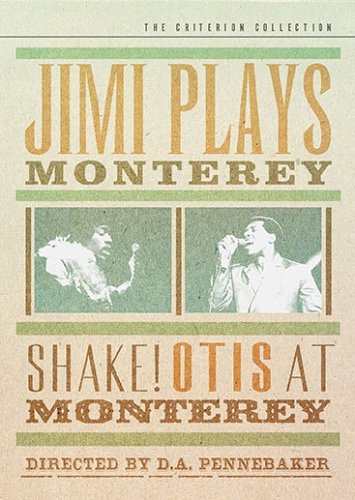
That's part of what makes this disc so very unique. At the time, who would know how popular Otis Redding would become, or that he would die an untimely death in the weeks following his performance? What's more, who could have predicted the unbelievable phenomenon that was Jimi Hendrix? Obviously these men were talented musicians, but the kind of lasting fame they eventually garnered, especially Hendrix, could never have been predicted.
Posted in: Disc Reviews by Gino Sassani on June 27th, 2006
Coach is one of those shows that never seemed to make a lot of noise. I can’t remember any year it was on that it burned up the ratings or scored many awards. Still, it was the little show that could. It ran for nine seasons, always holding on to a loyal core audience. I’m sure most of the success belongs to the underrated talents of Craig T. Nelson. I’ll admit that this guy just never showed up on my talent radar until his unexpected turn at drama during The District. It was then I learned to appreciate his self-effacing subtle abilities. Now I watch Coach with a somewhat renewed interest. Dick Van Dyke’s lesser known brother in comedy, Jerry is also a huge reason for the show’s stamina, if not outright success. The bumbling Luther was my favorite part of the show. The first season of Coach is a short one. I also appreciate the way it begins. It assumes you already know these guys and doesn’t feel the need to explain why everyone is here. The Coach is already in his position with his staff that we’ll soon get to know better. It’s a quirky show, and not at all one of my favorites, but certainly worth a second look on DVD.
Video
Posted in: Disc Reviews by Archive Authors on June 24th, 2006
War movies, in my opinion, are one of the rarities in film, where the most recent pics are usually the best ones. I need only cite films such as Full Metal Jacket, We Were Soldiers, and Saving Private Ryan to argue my cause effectively. But that doesn't mean all of the older ones were bad. Most were because they took more of a silly ra-ra viewpoint in relation to the reality of war. They didn't show the nasty details because, in many ways, they were recruiting tools. But Decision Before Dawn> was one earlier work, which took chances with its dramatization. This 1951 film refuses to jump on any bandwagons, instead telling a captivating, and sometimes tragic, story about a strange kind of hero... one that comes not from within our own ranks, but from those of our World War II enemies. In fact, the main character of Decision Before Dawn is a captured Nazi soldier, who makes the decision to spy for the U.S. army - not for freedom, but redemption.
It's no wonder a film such as this was nominated for the 1951 Best Picture - and it's also no surprise it didn't win. This type of subject matter has never been able to avoid controversy, and the Academy hates to honor controversy. However, director Anatole Litvak's handling of the George Howe novel Call It Treason makes for an exciting and tasteful motion picture that was sure to win over audiences - even in its time - with the tale of Lieutenant Rennick, a German POW, who has agreed to go back to his home country and betray his old side to the Allies. Tension builds as Litvak plays with the possibilities of trust. Neither the Allies nor the Nazis know what to think of Rennick, and for a time, neither do we. But as the film progresses, Rennick shows there may be more to his decision of assisting the Allies than simply the proverbial "get out of jail free" card. He's one well-drawn character at the center of an important motion picture, which dared to paint an uglier face on war, and call in to question the line between treason and heroism.
Posted in: Disc Reviews by Archive Authors on June 20th, 2006
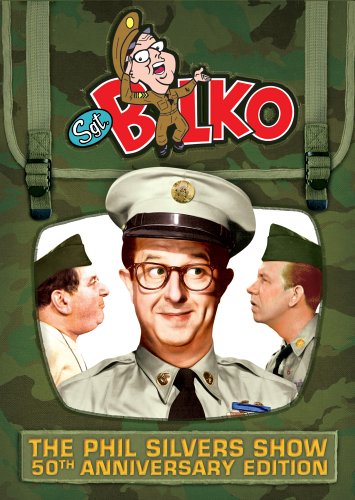
The Phil Silvers Show was groundbreaking for several reasons, but to look at the list of those who appeared on the show during its four season run is to look at a "Who's Who" of television ancestry and history. Allen Melvin played Sam the Butcher on The Brady Bunch, Harvey Lembeck previously appeared in Stalag 17 and his son Michael became an accomplished television director. Joe Ross played one half of the cop team in Car 54, Where Are You? next to a guest star of the show, a guy named Fred Gwynne, who also appeared in a show called The Munsters. Billy Sands went on to appear in McHale's Navy with a friend (and other Silvers show guest star named George Kennedy). Dick Van Dyke even showed up once in a blue moon.
Sometimes with projects like that, the stars in space seem to last longer than the television planet they orbit. But with The Phil Silvers Show and its star of the same name, there was an irreverent comic talent that not only was hilarious in his own right but helped to complement other members of the cast and giving them their chances to shine. Based around the fictional Ernie Bilko and the soldiers stationed on Fort Baxter, Bilko was sharp and a bit of a schemer, and his schemes involving other soldiers were the perfect vehicle to help Silvers offload some prime comedic moments to other actors. With Silvers and his co-creator Nat Hiken, the two managed to put together a show based on their sensibilities and wrote it the way they wanted to.
Posted in: Disc Reviews by Archive Authors on June 20th, 2006
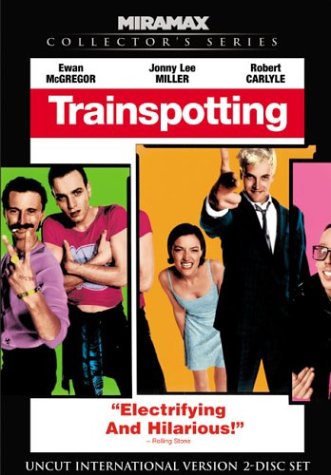
I've seen people quote this film from time to time, and I never understood the attraction because I saw it once and forgot about it. After a bit of intrigue, I finally got my hands on a copy of the US version of this 2 disc set (though the UK version, with the orange cover and silhoulette image of Ewan McGregor on the cover looks much cooler) and gave it a spin, lo and behold, I discovered a pretty good movie.
It's been talked about a lot for awhile I guess, but to sum up, McGregor plays Benton, a heroin addict in Scotland, who spends his days getting high and hanging around with his mates. Spud (Ewen Bremner, Black Hawk Down) wears Nancy Reagan-like glasses from time to time, and seems to be the closest one Renton relates to; Sick Boy (Jonny Lee Miller, Hackers) is the one that tries to make himself superior to the group, when he's not off spouting weird theories about movies that Sean Connery has starred in; Tommy (Kevin McKidd, Topsy Turvy) is against his buddies using but is curious about it, and then there's Bigbie (Robert Carlyle, The Full Monty), a beer-drinking Scot with an offensive mustache and a penchant for getting into brawls.
Posted in: Disc Reviews by Archive Authors on June 11th, 2006
OK, I hope I'm not diving into a review that may fall into the "film scholar" category, and thus rule me out of being taken seriously. When there's a lull in buying new releases, sometimes my wallet gets cabin fever, and so I went out and picked up the Hitchcock set from Criterion, entitled Wrong Men and Notorious Women: Five Hitchcock Thrillers 1935-1946, and includes the previous Criterion releases from Hitchcock, namely Rebecca, Notorious, Spellbound and The Lady Vanishes. I'm tackling the earliest release of the bunch, entitled The 39 Steps. The story very much resembles another of Hitchcock's later works, North by Northwest, in the aspect that the wrong man is thrown into a spy chase. While Cary Grant is taken through New York, a cornfield, and Mount Rushmore in the later film, in The 39 Steps, Richard Hannay, played by Robert Donat, attends a Music Hall production, meets and takes home a women (Annabella Smith, played by Lucie Mannheim), who he later finds out is a spy who is being chased by two men attempting to kill her. In the middle of the night, Annabella comes into Richard's room, and falls over him, dead of a knife in the back. As the police chase him, looking to detain him for the murder, the two men, assuming that Richard has found out about the secret she held, start to pursue him in order to kill him. And whatever he does, some of Anabella's last words to him are not to trust a man missing the tip of his right pinkie (It sounds strange to write the word "pinkie" in a review of Hitchcock, so I hope it looks out of place as you're reading it).

This was one of Hitchcock's last works before coming over to America to wow us with the movies that have become legend. For all of my DVD collecting, I'm still a bit green when it comes to the older stuff. And after seeing The 39 Steps, I now realize what I've been missing. For its time, it's a pretty suspenseful film, with a lot of shots that are still used in movies today, and even the story has been used in some fashion or another over the years, though clearly not to the same effectiveness that Hitchcock has done. Despite the "Born On" date for this film, it's a very good one, and to see many of the same devices used today, both within the story and within Hitchcock's technical realm, make it an easy recommendation to those who are even casual film fans.