Posted in: Disc Reviews by David Annandale on April 24th, 2006
Synopsis
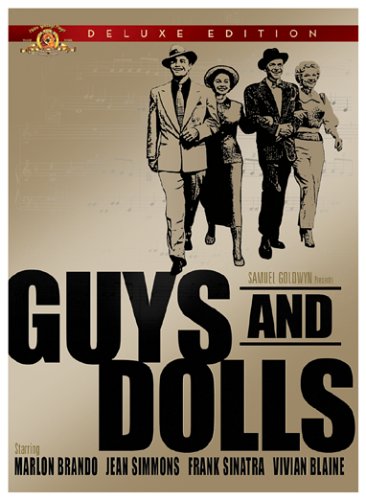
In a New York happily riddled in sin, Frank Sinatra is Nathan Detroit, who runs a notorious floating crap game. But since the cops are breathing down his neck, he is having trouble finding a location for his game. He finds one, but needs a thousand dollars cash to get the space. Enter Marlon Brando as Sky Masterson, gambler extraordinaire. Sinatra bets him a grand that he can’t seduce missionary Jean Simmons, and the romantic complications are on.
Posted in: Disc Reviews by Archive Authors on April 24th, 2006
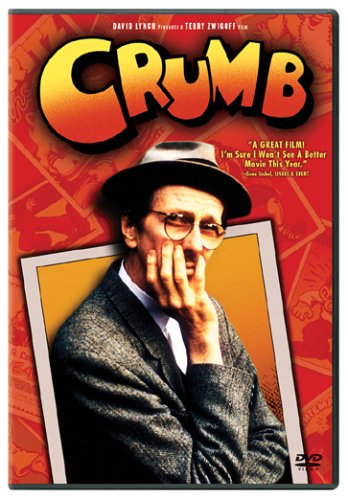
Say what you want about Robert Crumb, and his controversial cartoon funnies, but at least he’s found a healthy way of expressing not-so-healthy ideas – more than what can be said for his brothers, Maxon and Charles. Sony’s classic documentary Crumb (directed by Terry Zwigoff) demonstrates this in a beautifully ugly piece of filmmaking, now available in a new special edition to celebrate (albeit, a bit late) the film’s tenth anniversary. Maxon is the “molester” of the Crumb kids, and I say that hoping it’s an e...aggeration, but knowing somehow, deep-down, he’s probably been on his share of sex offender lists. Charles, if not for his appearance in this documentary (and role in Robert’s life), might as well not exist. He sits at home and bathes sporadically (but never often enough – you can almost smell the guy as he sits there with a pompous grin and green teeth), and he never leaves the house to get a job, seek out a slice of personal happiness, or add any value to society. The brothers of Robert Crumb are, indeed, losers, and the only things preventing Robert from sharing their fate is his talent for drawing, and for using said talent to carve out a better niche in life. Still, he, too, is guilty of hypocrisy, not necessarily in his work, but in his personal thoughts and opinions. He bemoans the commercial aspects of our society. He makes rushes to judgment about large groups of people, based solely on the kind of clothes they wear, yet his own views do little else besides espousing hostility towards women and presenting other races in unflattering lights (even if that isn’t his intended purpose). He can lay claim to all the liberal social ideas he wants, but if an African-American read his strip “Angelfood,” and had immediate access to Crumb’s throat, he or she would be ringing it emphatically (and would be just in so doing).
I am unsure of Zwigoff’s intentions in his presentation of Crumb – is this guy supposed to be a visionary artistic hero, or a mealy-mouthed little pervert with better ways of expressing it than Max? What I managed to draw from Crumb is that the case can be made for both. Make no mistake – I did not like this man. I’m more inclined to believe the pervert aspect of him than the hero. Still, I find his artistic style pleasing to the eye, and I enjoyed this examination of his work very much. He may not be a model citizen, and his move to France, which takes center stage in the final act, can only mean good things for our country, but he’s an interesting chap, and he makes for interesting viewing during the solid two-hour running time. I also found the extensive discussions among the three brothers very fitting to the film’s overall purpose – to dissect a legendary artist and his work. See, the brothers play such a huge part in shaping what this central figure becomes that, without them, there is no film – and subsequently, no Robert Crumb. Overall, this is a great piece of documentary filmmaking, which represents the difference between those that dream, and those that make their dreams come true. But the more obvious message – at least, to me – through the dichotomy of the Crumb siblings’ personalities, is how a degenerate doesn’t have to be a human slug, too. And that’s how Robert differs from his brothers.
Posted in: Disc Reviews by Archive Authors on April 22nd, 2006
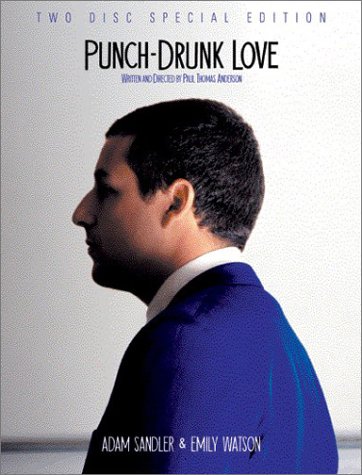
A critically acclaimed Adam Sandler film? I’d never would I have thought I’d see the day. I guess if The Truman Show is one of Jim Carrey’s dramatic stabs, then the star of Big Daddy can give a romantic comedy a try. Written and directed by Paul Thomas Anderson (Magnolia), using a story from the “Strange But True” category, combined with adding a touching tenderness to his characters, wrapped up with Sandler, playing a quiet, soft spoken man prone to fits of blind rage.
Sander is Barry ...gan, a novelty toilet plunger salesman with 7 sisters, who don’t hesitate in bullying him at every opportunity. Barry has times where he has periods of anger that cause him to destroy things, such as a sliding glass door at one of his sister’s houses. One morning, while at work, Barry discovers a harmonium that is left abandoned outside of the warehouse where he works. The harmonium becomes a metaphor for Barry’s pursuit to reclaim his life, as he periodically tries to play it through the film. Barry soon meets Lena (Emily Watson, Breaking the Waves) who drops her car off at the mechanic next to Barry’s office, but her intent is to meet him. Barry is attracted to Lena, and his awkwardness around her is cute to see, as if he’s a 13 year old trying to figure out what to do and say. Barry’s conflict in the movie is when he calls a phone sex company. He’s very awkward, and even confused, when talking with the girl on the other line. She decides to extort money from him, and enlists the help of Dean (Philip Seymour Hoffman, Capote), the owner of the company, and 3 crazed brothers.Through this, Barry is inspired by Lena, and when he finds out about a business trip she has to take to Hawaii, he takes advantage of a loophole in a Healthy Choice Promotional Campaign, which allows him to collect over 1 million frequent flyer miles from pudding purchases. He’s unable to redeem the miles in time, but he goes to meet her anyway.
Posted in: Disc Reviews by Archive Authors on April 21st, 2006
Hollywood can sometimes be so enthused to cash in on a certain type of film many decent projects looking to explore a worthwhile subject topple under the weight of the cash-grabbing, money-hungry throng. Such is the case with Director John Woo’s Windtalkers, coming to DVD a third time on April 25 in this director’s cut. Though it’s sometimes overly melodramatic, this Nicolas Cage vehicle makes good use of its characters to forge an intriguing story about Navajo code talkers, and the presumed military practice ...f protecting the code and not the man. Cage plays Joe Enders, a soldier with a death wish and a lot of survivor’s guilt for having made it through battle-after-battle, only to receive another medal, while all of his friends die around him. He has grown to hate the medals because they remind him of this fact, and it seems like his whole mission is to die in battle with honor… not to go on living in a world so terrible that it welcomes the horrors of war. Then, he receives a peculiar mission: the U.S. has found luck with a form of code based on the Navajo language. It’s vital the Japanese do not get their hands on any of the Navajo code talkers, and Enders must do everything in his power to protect the code… even if that means taking the life of a fellow soldier to do it.
Such a situation lends itself to great drama; however, this is still a John Woo film, and his enslavement to self-imposed convention does cause the film to have a few problems. For one, I would like to see Woo – just once – shoot an entire film, edit, and release it, without the use of one slow-motion moment. The reason for this: if the technique is an option, he will abuse it with zero regard – or knowledge of – having done so. After seeing film-after-film of his resort to this overused tactic, I’d say it’s time he laid off. He has a good story, and characters viewers can get emotionally involved with – so why does each fallen soldier have to take an hour to hit the ground? Also, just about every war movie cliché there is turns up at some point, whether it be the bigoted soldier with a change of heart, or the loving husband telling his buddy to make sure his wife gets his wedding band “should anything happen.” (On a side note, any time a soldier says a variation of this in a war film, you know “should anything happen” actually means “when something happens.”) Lastly, there is the clunky dialogue, mostly given to Adam Beach as the featured code talker Enders must protect. With these things said, something intrinsic about the film still manages to hold everything together in a respectable narrative. And I think whatever it is, the stellar cast consisting of Nicolas Cage, Christian Slater, Noah Emmerich, Mark Ruffalo, and Jason Isaacs, has something to do with it.
Posted in: Disc Reviews by Archive Authors on April 19th, 2006
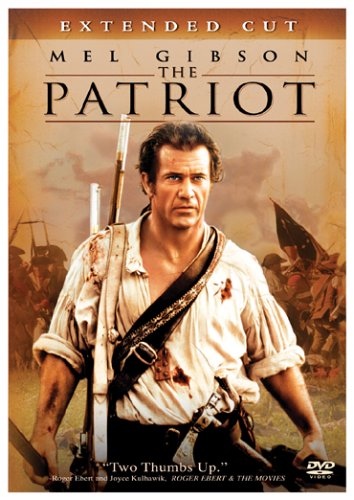
Mel Gibson stars as reluctant guerilla fighter Benjamin Martin in this story of courage, passion, and war, which dramatizes elements from the American Revolution into a gripping fictional narrative that will manipulate every emotion you have until its rousing finale. Martin endures great personal tragedies at the hands of the British - in particular, the despicable Colonel William Tavington (played with the vile gusto of a demon from Hell by Jason Isaacs). Tavington has already killed one of Martin's sons, and it is ...enjamin's concern for his other - as well as his insatiable lust for revenge - that drives him to take up arms for the Continentals and lead them into battle... and perhaps, freedom.
Whether it's tugging at heart strings, or planting viewers right in the middle of primitive warfare (no type of warfare is capable of being anything but), The Patriot maintains control of its audience, and only lets go at the final credits. Be forewarned, if you've never seen it. There will be times when you want to stop the film for fear of what might happen to Benjamin at Tavington's brutal hands. Then, other moments are "damn the torpedoes," kill that expletive-expletive, if it's the last thing you ever do. The point is, it will involve you the way few films can, and will actually have a physical effect on you - of some kind - by the time it reaches its conclusion.
Posted in: Disc Reviews by Archive Authors on April 18th, 2006
I always hated Moonstruck… but don’t get me wrong, this is a positive review. See, it seemed like, back in my childhood, every time I wanted HBO or Showtime to play The Goonies, they were always in the middle of yet another airing of this Academy Award-winning romance. It was a boring movie about love with that lady Cher, who needed to stick to the radio, and stay off my movie screens. My, how a little age and maturity can alter perceptions. As a seven-year old boy, I just didn’t have the sensibility fo... this film. And while many would argue I haven’t grown up much in the years following, I gauge all such detractors wrong by the simple fact I now enjoy Cher’s shining moment thoroughly. I mean, there has to be some growth there. Right?
Moonstruck is a modern film, which uses the model of classical Italian comedies as its primary structure. In fact, some elements are directly lifted from the divine comedies of yore, but Norman Jewison’s direction, along with a top-notch script, and a terrific cast, lend a freshness not seen in the romantic by-products of today, which make the film more homage than rip-off. For one, the story centers on a 37-year old widow (Cher) – not your common leading lady role – whose superstitions dictate her happiness. She agrees to marry an older man, whom she admittedly doesn’t love, just to bring some structure and stability to her life. Then, she meets her fiance’s estranged younger brother, and a spark ignites that turns her world upside down… in a good way. The eccentricities of her Italian-American family are mined to perfection with both warmth and humor. The film explores how cruel the closest people can be to one another without wrapping viewers up in any negativity. I can finally see what the critics were raving about – a good, solid film.
Posted in: Disc Reviews by David Annandale on April 12th, 2006
Synopsis
Three friends are driving across Australia. In a particularly desolate national park, their car mysteriously dies, and they accept help from a passing bushman. Big mistake. The bushman (John Jarrat) is a psycho of the first order.
Posted in: Disc Reviews by Archive Authors on April 12th, 2006
Cecil B. DeMille’s The Ten Commandments hits store shelves in a new three-disc special edition, just in time for the release of the new made-for-TV mini-series. While the film classic is no stranger to DVD, it has yet to be released with this kind of gusto. At over three-and-a-half hours long, the film is simply too much for one disc to hold. The first disc contains the first 140 minutes, while disc two finishes up with the last 80. Plus, as a bonus, we get the original 136-minute silent version (also a DeMill... picture) on disc three. Since the later version is the most famous – and the centerpiece of this release – I will treat the inclusion of the silent version as a bonus feature.
Unless you’ve been living under a pyramid for the last 5000 years, you’re probably familiar with the story. Moses (Charlton Heston) grows up in the Egyptian palaces as a brother to Ramses (Yul Brynner). He discovers his true heritage as a Hebrew and forsakes all the riches and comforts of his childhood for the harsh life of a Hebrew slave. After killing an abusive Egyptian overlord (Vincent Price) in defense of a fellow Hebrew, he flees into the wilderness for about thirty years, until God decides it’s time for Moses to deliver the Hebrews from their plight. At first reluctant, Moses embraces the task at hand, and boldly marches back to Egypt for the famous showdown with the man he once called “brother.” Of course, the film takes certain liberties with the source material, but not so much to fall beyond the realms of reason. Moses really did grow up as an Egyptian, or so historians tell us, and so he must have had some deep ties to that people. DeMille does a fine job of honoring the text, while parlaying it into a compelling story of a house divided.
Posted in: Disc Reviews by Archive Authors on April 11th, 2006
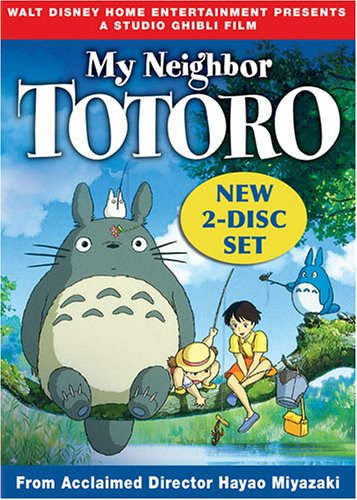
It’s rather stunning to discover that My Neighbor Totoro was made way back in 1988, long before the days of CG and all automatic illustration. And perhaps that animation does detract from the overall experience from the film, but if that’s the only reason that it would be a problem, then people simply need to get their taste in order.
In another film from legendary Japanese film director Hayao Miyazaki (who made the Oscar-winning film Spirited Away), the film follows sisters Mei and Satsuki, w...o move with their father to the countryside, to spend more time with their mother. They do some exploring and encounter Totoro, a mystical being in the woods that can only be seen by children. Totoro helps the children experience a world of wonder that they never would have previously seen.
Posted in: Disc Reviews by David Annandale on April 6th, 2006
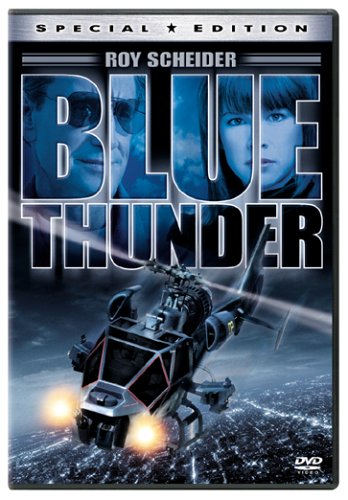
Synopsis
Roy Scheider is the police helicopter pilot and Vietnam war vet (cue flashbacks) who is tapped to test Blue Thunder, a new helicopter equipped with every conceivable weapon and means of surveillance. He discovers that the machine is at the heart of a conspiracy to undermine all that is good and free, and chief bad guy here is Malcolm McDowell, for whom Scheider has a more than cordial dislike thanks to what happened back in 'Nam. The stage is set for high-tech showdown in the skies over LA..../p>