Posted in: Disc Reviews by Archive Authors on November 7th, 2005
Synopsis
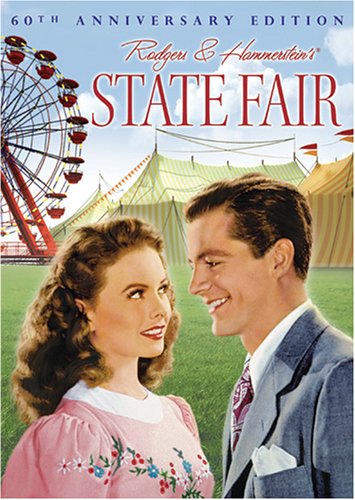
Things don’t get much more anodyne than this storyline, showcasing an impossibly idealized family and their trials of love and prize pigs as they travel to the eponymous event. This is strictly for the nostalgic and pure fans of Rodgers and Hammerstein (the songs generally are not as culturally engrained as those of Oklahoma!). There are two versions of the film here, and the 1945 take is easily the better of the two. The 1962 remake (and the third film by this name, a non-musical ver...ion having appeared in 1933) has Pat Boone in the lead (never a good sign) and is even more plastic. This version does, however, have Ann-Margaret pulling a bit of a show-stopper with her dance number.
Posted in: Disc Reviews by Gino Sassani on November 3rd, 2005
The extras are the only significant difference between the Collector’s Edition and the near barebones first release of this film. Therefore, some pieces of this review will be taken from the standard release review.
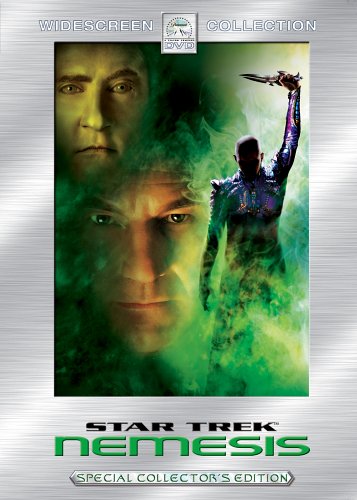
If ever there was a film that was badly misunderstood it is Star Trek: Nemesis. The most common complaint I’ve heard is it was too much like an episode. Excuse me, but isn’t it supposed to be? Nemesis has everything a good Star Trek film should have. The character chemistry, space battle, a morality tale, and terrific f/x. If the film suffers at all it is from poor editing, as the collection of deleted scenes clearly shows (more on that in the special features section). As many politicians are fond of saying, “mistakes were made,” but this is a far better film than the critics or fans have given it credit for being. It deserves a second look and this 2 disc release is the perfect opportunity to revisit Star Trek: Nemesis.
Posted in: Disc Reviews by David Annandale on October 28th, 2005
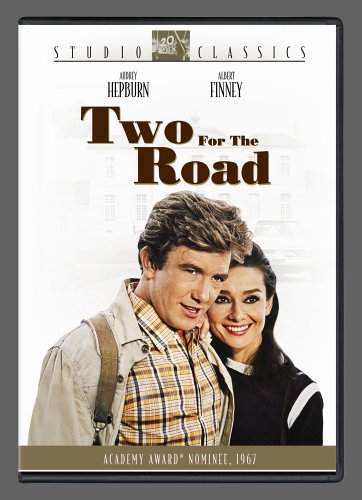
Audrey Hepburn and Albert Finney are a couple whose marriage appears to be reaching its end. They travel through France, which was the scene of so many other memories, and they (and we) experience, through interlocking flashbacks, the history of their relationship.From the moment the animated credit sequence and Henry Mancini score begin, one is clearly watching a Stanley Donen film from the peak of his career (the presence of Hepburn is yet another reminder of Charade from just a couple of years prior). The flashbacks-within-flashbacks structure might initially seem daunting, but the film is light on its feet, and is never confusing. Finney's character is sufficiently cranky even in the early stages of the relationship that one might be forgiven for wondering what Hepburn ever saw in him, but the scenery is pretty and the dialogue zings.
Audio
Posted in: Disc Reviews by David Annandale on October 27th, 2005
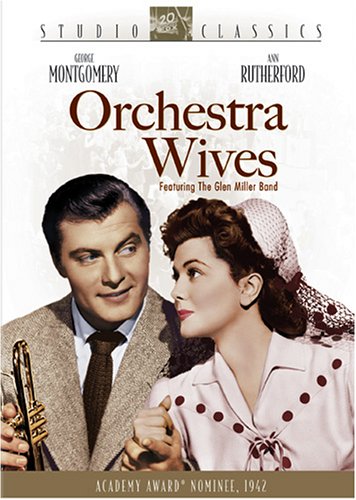
George Montgomery plays the lead trumpet for the "Gene Morrison Band" (the Glen Miller Band). As they set out on tour, he falls in love with, and marries, audience member and big fan Ann Rutherford, much to the displeasure of Lynn Bari. The film then uses the tensions between the various significant others during the tour to cobble together a plot that connects the various musical numbers.From the point of view of plot and character, this is nothing to write home about. But as a record of one of the greats of the Big Band era in action, it is a valuable document, and certainly manages to entertain, if not much else.
Audio
Posted in: Disc Reviews by Archive Authors on October 27th, 2005
Synopsis
In between the other new stuff that’s come out (and the older stuff I’ve picked up), I wanted to try and whittle down the archives, so huzzah for small victories.
Posted in: Disc Reviews by Archive Authors on October 26th, 2005
Synopsis
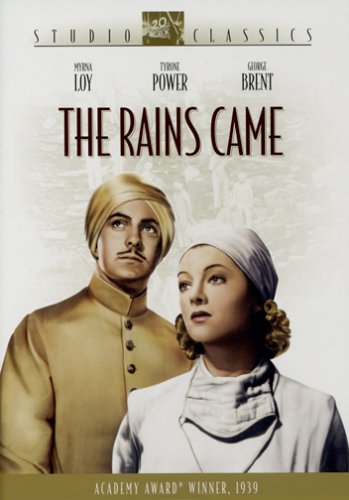
India, 1938. Dissolute ex-pat Brit George Brent is amused when old flame Myrna Loy, now married to an aging aristocrat, arrives, but is less amused when he sees her set her sights on Indian doctor Tyrone Power (all done up in dark make-up). Power is so decent that Brent doesn’t want him corrupted. But it soon turns out that Loy really loves Power, as she demonstrates by helping selflessly after the city is savaged by torrential rains, flooding and an earthquake.
Posted in: Disc Reviews by Archive Authors on October 24th, 2005
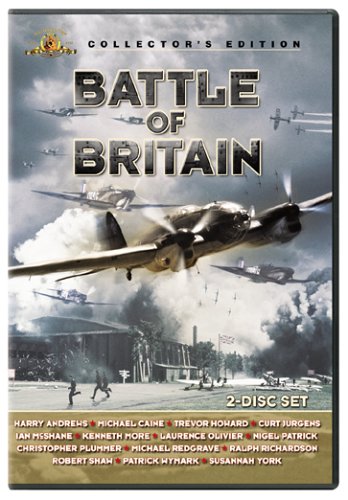
The Battle of Britain was a famous turning point in the World War Two theatre. The movie, Battle of Britain, was brought to your home theatre a few years ago. This single disc edition, with very few features, seemingly cried out for more. Now we have it in Battle of Britain: Collectors Edition, 2 discs of military goodness.
The film itself has spectacle. The planes used for this film helped create an air force equal to a medium sized country. No CGI here. The director is Guy Hamilton (b...st known for early James Bond films). Battle of Britain is one of those large all star cast war movies (think of A Bridge Too Far) that was made popular in the late 60's/early 70's. This movie is all Brits however (with a sprinLing of Germans). Michael Caine, Ralph Richardson, Robert Shaw, Laurence Olivier, and many others take part in the action. The film has a few flaws. There are some phony photography shots and the dramatic construction is a bit sloppy. There’s an attempt at a romantic sub-plot (featuring Christopher Plummer and Susannah York), and thankfully it’s not as damn annoying as the love plots in Pearl Harbor. But I quibble.
Posted in: Disc Reviews by Archive Authors on October 19th, 2005
Synopsis and Comments
Apparently “Land of the Dead” was created for an audience that the producers of the movie (and writer Romero) consider to be no more intelligent than the zombies that populate Romero’s world. We shuffle into the theatre, clutching out-sized drinks like totems from the outside world, moaning piteously that they cost us five bucks to get. Unnnghhhhhh. Mooooovie. RRRrrrrgghhh.
Posted in: Disc Reviews by Archive Authors on October 19th, 2005
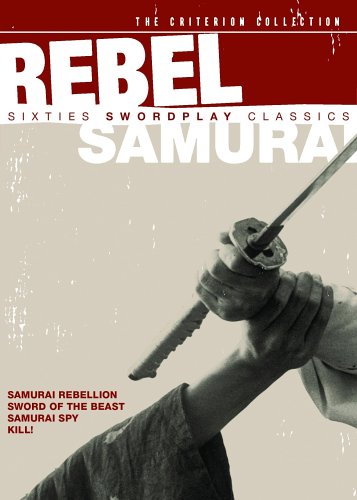
Criterion doesn't put out too many box sets, so you know that when they do, it is really going to be something special. Their Brazil set is a benchmark release that all other single-film, multiple-disc sets are measured against. The Wrong Men & Notorious Women – Five Hitchcock Thrillers set is a brilliantly-themed way to showcase five of the director's most devious films. They have taken that same approach with Rebel Samurai – Sixties Swordplay Classics. The four films in this set, Samurai Re...ellion, Kill!, Samurai Spy and Sword of the Beast, represent unrelated productions that turn the proven conventions of the samurai film genre on its ear.
In the sixties, rebellion was occurring worldwide; not just in the United States. These films show how revolutionary thoughts of freedom were affecting the citizens of the East. While each of these films is different in its style and tone, the unifying message is the same. The Japanese were starting to see that the ruling class may not be the flawless entity that it had been perceived to be for so many hundreds of years. It is not only a citizen's right, but their duty to question authority, and to stand up for injustice, even when that injustice comes from within. These are powerful and controversial ideas in a culture devoted to duty, honor and respect. The examination of the fall of the samurai through film may have been the best way to safely share these new national feelings. The films in this boxed set may be one of the best examples that I have ever seen of the power of art to affect and change the collective conscious of a society.
Posted in: Disc Reviews by Archive Authors on October 19th, 2005
In an odd sort of way, Samurai Spy has the feel of one of the Sean Connery Bond films. The plot seems to be more convoluted than it really needs to be, and there are many scenes that show a character quiet and alone, as they discover a new piece of the plot puzzle for themselves. I would say that parts of the film could be a bit too complex for some American audiences to follow, as so much of the story is driven by Japanese character and clan names. It seems that Criterion anticipated this problem, as they hav... included a character gallery in the extras, complete with brief character bios.
However, as is the case with many of Criterion's releases, patience is well rewarded. Those that put in the effort will find a film that is rich in its message and quite modern in its tone. While most samurai films up until this point rested on the fact that a samurai can always trust completely in his shogunate, this film is full of double-crosses and wavering allegiances. No longer is what is good for the community always best. Sometimes, this film teaches, personal interests are more noble than those of the collective.