Posted in: Disc Reviews by Gino Sassani on February 4th, 2009
Meerkat Manor is back for a fourth season on DVD. You’re invited back into the South African desert with the famous Whiskers Clan. Animal Planet has themselves a relatively big hit here with Meerkat Manor. OK, so, it’s not exactly The Sopranos or The Shield, but it does have a modestly dedicated audience. Seems that folks just can’t get enough of these fur balls. They’ve set up blogs and websites dedicated to the antics of the celebrated Whiskers. If you like them and are dying to see what these lil’ guys are up to next, wait no longer. Fast on the heels of the prequel film, The Story Begins, Meerkat Manor is here again. Of course, all of this is strictly in the interest of scientific study. Sure it is! Don’t worry, I won’t tell a soul.
Stockard Channing takes over the narration duties from Sean Astin. She’s a bit more playful and often more dramatic, but I have to admit I was partial to Astin. Expect more of the same here. Kidnapped kids to missing Commandos and, of course, the annual loss of a beloved character. It’s all par for the course on Meerkat Manor. I have to admit that as cute as these little guys are, it’s all starting to run together for me. I can’t remember which character is which or who belongs to which tribe. Maybe it’s about time to close the books on the fur balls from the African desert.
Posted in: Disc Reviews by David Annandale on February 3rd, 2009
Director Rene Daalder is best known in cult film circles as the man who gave us Massacre at Central High. But now Cult Epics has released a pair of his films (this and Here Is Always Somewhere Else) that seem more in keeping with his real interests. A long and twisting road led to this effort, starting with an abortive collaboration with Russ Meyer and the Sex Pistols, which brought Daalder into the world of punk rock. In that field he met Tomata Du Plenty, vocalist for The Screamers. After funding for their proposed collaboration Mensch collapsed and Du Plenty’s HIV-positive status became apparent, they put together the present film out of a mixture of footage from the abandoned project, plus new elements. The striking result is Du Plenty as the last survivor of nuclear holocaust, holed up in his bunker, declaming/singing poetic rants about the history of the United States, all the while surrounded by a phantasmagoria of bizarre sights. Whether the result is compelling or pretentious (or both) will depend on one’s sympathies with respect to the art scene from which it emerges, but that it is a work that rigorously works out its conceptual and artistic premises all the way to the end cannot be denied.
Audio
Posted in: Disc Reviews by David Annandale on February 3rd, 2009
This is another of Cult Epics’ entries in their new Rene Daalder Collection. His most recent film, it’s a documentary about conceptual artist Bas Jan Ader. The brief body of work he left behind is best known for using gravity as a medium (so, for instance, he did a number of filmed pieces of himself or objects falling). He was lost at sea in1975 while attempting to cross the Atlantic in a minuscule boat as part of a piece to called “In Search of the Miraculous.” Daalder’s 68-minute film retraces Ader’s life, but does so in part through the filter of Daalder’s own parallel experiences as an expatriate Dutch artist. The film is very interesting, though I would have like a bit more analysis of Ader’s work, in order to have a better understanding of exactly what it was doing, and Daalder’s speculations about what Ader’s final thoughts might have been are a little too definitive. Still, a strong documentary.
Audio
Posted in: Disc Reviews by Gino Sassani on February 3rd, 2009
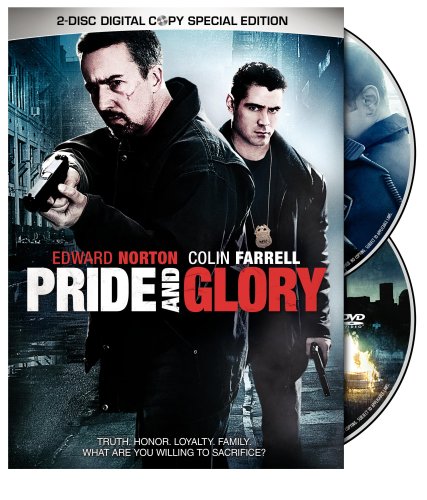
“Four cops down: two dead, two likely. An NYPD drug bust has gone horribly wrong.”
That’s how this gripping drama opens. Not since the likes of Al Pacino in Serpico has there been a movie anything at all like Pride And Glory. This film doesn’t pull punches, and it looks about as real as any police drama I’ve seen anywhere before. Filmed entirely on location in the seedy streets of New York City’s Washington Heights district, there is enough gritty realism to go around. Director Gavin O’Connor not only used these very dank and atmospheric streets, but he also employed his extras and some of the key cast members from the community. If nothing else, you can’t criticize this film for not taking us into the street and watching the action from street level.
Posted in: Disc Reviews by Gino Sassani on January 28th, 2009
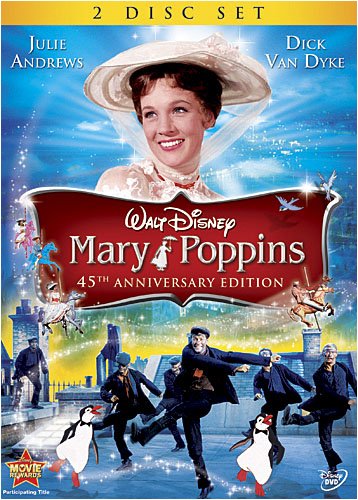
Mary Poppins was the subject of a series of books by P.L. Travers. Long before Harry Potter came on the scene, Mary was delighting children all over the world with her spectacular magical abilities. At the time Walt Disney was making a name for himself and his studio by bringing many of the children’s classics to the big screen. From fairy tales to Winnie The Pooh, the studio was providing the look and the soundtrack to the imaginative worlds already known and beloved by millions. It was a magnificent strategy, and it would pay off huge for the company. The problem with Mary Poppins was that it needed to be a live action film. Mary and her pals needed to appear as real people. The worlds themselves could be animated, of course, but Mary and Bert and the children had to be real. Walt insisted upon it. And so a painstaking effort was begun to bring the story to life on screen in a way no film had yet done before. The results were as magical as Mary herself and have captivated children of all ages ever since.
In the 1960’s Walt Disney was the center of some of the most groundbreaking f/x technology in Hollywood. Disney was that era’s Industrial Light & Magic. Even films not produced by the Mouse Factory went to their f/x wizards for their high end work. Films like Forbidden Planet made use of the Disney magic for a few of their trickier sequences. Mary Poppins is a wonderful example of the magic that Disney was capable of at the time. The film is a wonderful blend of live action and hand drawn animation work. The two worlds interface seamlessly even by today’s standards.
Posted in: Disc Reviews by David Annandale on January 27th, 2009
So there's this group of flight attendants, and we follow their swinging adventures and affairs on and off planes. One, for instance, hopes to be an actress, and hooks up with an advertising executive. And if you care what the plot of “the first 3D sex film” is, you need your head examined. Much of the what goes on is mind-numbingly banal (SEE Wine being poured SEE Drinks being mixed HEAR Dull conversations ), though the acid trip that leads one woman to make out with a lamp in the form of a greco-roman head is something you don't see every day.
The film is an object lesson on how far mere novelty can take a film – it was a huge success at the time, and 3D was, in 1969, a rarity again after its initial craze in the 50s. So there are numerous shots of legs and pool cues (and feet) jabbing at the camera, enough, presumably, to have kept audiences entertained while everything else remained mundane beyond words. Or, so the situation is for most of the running time. But the last act takes a sudden turn into the starkly dramatic, and becomes very dark indeed. It is also rather more imaginatively shot than most of the rest of the film. The ending is a vicious sucker punch that must be seen to be believed, and suggests that the filmmakers were storing all of their creative juices for the cruel finale. In fact, as the accompanying featurettes reveal, the dramatic plot was added to the film after the rest of it was completed, and indeed, after it had already been released in some markets. In the final analysis, this is a vital piece of low culture.
Posted in: Disc Reviews by Gino Sassani on January 26th, 2009
“This motion picture is principally based upon the book “Wallace” by Marshall Frady and other historical sources. Certain events, characters, and dialog have, nonetheless, been created or altered for dramatic purposes”.
In other words, this should not be taken as an historical record of the controversial George Wallace. If anything, the film attempts to soften his personality some. One of those created characters is Archie, a trustee attending to the needs of the residents at Alabama’s Governor’s Mansion. We are meant to see Wallace and the events of the tumultuous era through his eyes. It’s not told from his perspective, mind you, but we are intended to share his reactions and emotions along the way.
Posted in: Disc Reviews by Gino Sassani on January 21st, 2009
“When one starts to perceive one’s own reflection as a completely separate being, one is suddenly confronted with two entirely separate egos, two entirely separate worlds that can surface at any given moment. A feeling of self hatred usually triggered by a psychological shock can split the personality in two, hence creating two or more personalities with distinct memories and distinct behavior patterns within the same individual. The patient has the false perception of the existence of two distinct worlds, the real world and the world inside the mirror.”
Or maybe not so false, at least according to the 20th Century Fox thriller, Mirrors.
Posted in: Disc Reviews by Gino Sassani on January 16th, 2009
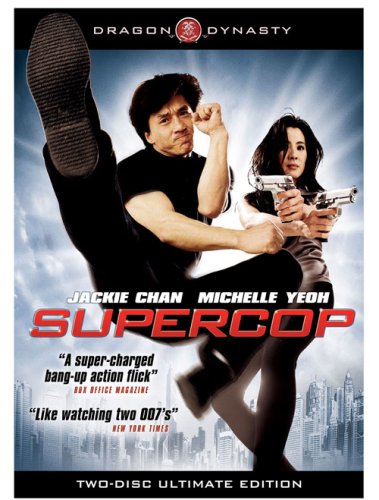
Supercop is really just the American title for the third entry in Jackie Chan’s very popular Police Story series in Hong Kong. For the first time in the franchise, Chan decided to go with an outside director, and he made a wise choice with newcomer Stanley Tong. Tong might have been a green director, but he had a natural feel for the abilities and strengths of his mega-star. The two would go on to collaborate on several more films after this rather remarkable first time pairing. It didn’t hurt that Tong not only had Jackie Chan to draw upon for the film, but he also had Chan’s Hong Kong film female equivalent with the talented Michelle Yeoh. Both stars are accomplished martial artists and perform nearly all of their stunts without the use of doubles. Tong’s task here was to allow his stars to “do their thing”, yet bring something new and fresh to the formula of Police Story, and to a certain degree all of the Jackie Chan films. He succeeded on all accounts, and Supercop is easily the best of the Chan Police Story films. The two would also team up for one of Chan’s most popular films, Rumble In The Bronx. While I’ve not seen anywhere near all of Chan’s Hong Kong outings, this is high and away the best that I’ve seen from that market.
Jackie Chan once again stars as police inspector Chan. When he overhears his superiors talking about a dangerous mission in need of a “supercop”, Chan volunteers for the task. Of course, he has to convince his girl that the month long job is going to be easy and safe, all the while giving her his life insurance policy and bank book records. Chan’s job is to pretend to break the infamous Panther (Wah) out of State custody and infiltrate the organization. He is briefed and trained by INTERPOL Inspector Jessica Yang (Yeoh). Once he’s ready the breakout commences, but the military guarding the prisoner aren’t in on the gag. After dodging bullets and missiles, Chan gets Panther safely away. Now the gang wants to meet with their contact in a local town that just so happens to be Chan’s cover story hometown. This is where his family is supposed to be. The only trouble is that Chan’s never been there before. INTERPOL sets up a fake group of family and friends, and it’s amusing to watch Chan try and fake his way about knowing these people when he’s not even sure who they are each even playing. Chan has a particular problem when he’s introduced to his “sister” played by Yang. The two follow the gang through various government operations to recapture him. Finally they’re in it for the meet and payoff, but Chan’s cover gets blown by a chance meeting with his girl, May (Cheung). Now it’s as much a matter of survival as of bringing down the bad guys.
Posted in: Disc Reviews by Gino Sassani on January 15th, 2009
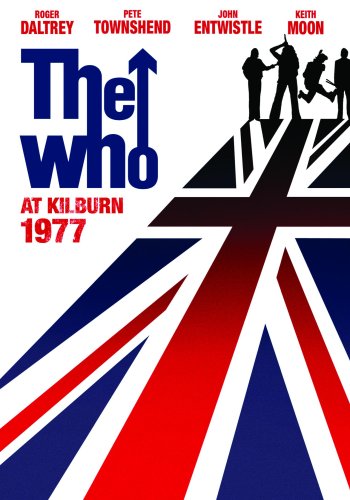
“On 15 December, 1977, after a hiatus of over a year, The Who assembled at Gaumont State Theater in Kilburn, North London, to record a concert for Jeff Stein’s documentary film, The Kids Are Alright. Shot before a select invited audience it would turn out to be Keith Moon’s last, but one live performance. Unusual for live rock at the time, it was shot on 35mm film by six cameras and professionally recorded on a 16 track recorder. Never seen before, the film rested in The Who’s vault for 30 years.”
What young 1970’s pup, learning to play a guitar for the first time, didn’t, at one time or another, attempt to imitate Pete Townsend’s windmill power chord strum? I count myself in that group. While I was not a very dedicated Who fan, I had an appreciation for the musicianship. There were still songs like Pinball Wizard and Behind Blue Eyes that I would embrace as if they were my own anthems in those days. It would be hard to deny that The Who is one of the most successful rock bands in history. Part of the original British Invasion of the 1960’s, there are few such acts that are even still around, let alone able to fill the huge stadiums and halls of Rock’s yesteryears. Their songs have become anthems, and their antics have become legend. The band wrote the soundtrack for an entire generation, and proudly touted the fact in aptly named song, My Generation. Banned from all Holiday Inns at one time for their well publicized trashing of rooms, they weren’t any easier on their own instruments. Smashing their instruments and amps on stage became a staple, for a while, of the whole Who experience. They’ve inspired a legion of superstars, and now after more than 40 years of rocking, they soldier on. Their influence goes beyond just rock music. All three of the CSI franchise shows sport Who songs for their opening credit sequences. They’ve been lampooned on South Park and The Simpsons. They were once referred to as The Band That Wouldn’t Go Away, and that was more than 30 years ago.