Posted in: Disc Reviews by Gino Sassani on July 22nd, 2009
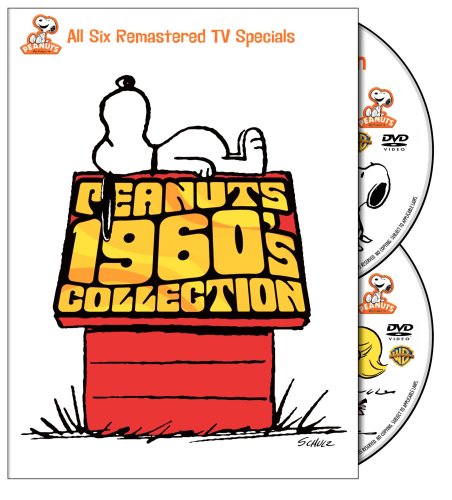
I grew up on the Peanuts creations of Charles M. Schulz. Most of us have, in some way or another. His newspaper comic strip is one of the longest running and most successful strips of all time. The work has been translated into every language currently spoken on the planet. The images of Charlie Brown, Snoopy, Linus, and the rest of the Peanuts gang have appeared on just about any kind of product imaginable. Our pop culture contains too many references to the strip to mention briefly. For me, it was the television specials starting in the mid 1960’s that brought the gang into my life. The classics are running annually, still after nearly 50 years. A Charlie Brown Christmas and It’s The Great Pumpkin, Charlie Brown are the most mentioned and certainly beloved by generations of children and adults. I thought I never missed an airing.
Now Warner Home Video has brought together a special collection of the cartoon specials that started it all. It includes those annual greats and a few that I don’t really remember so much. The two discs include the following Peanuts specials:
Posted in: Disc Reviews by William O'Donnell on July 4th, 2009
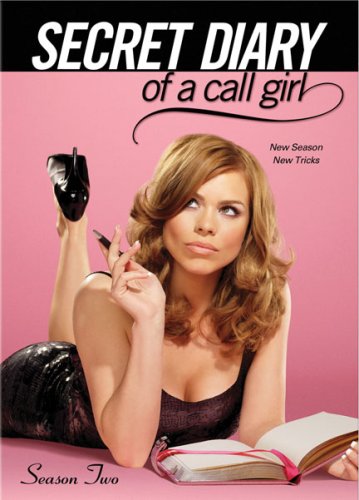
At first glance, it is quite easy to see why this show has been compared to Sex and the City by many critics, and is about to again by yours truly. Mainly this comparison occurs because of the shows’ similarly humorous approach to sex, never wavering from any sort of topic therein. The first similarly I noticed though was the meta-cinematic use of our heroine Hannah (who escorts under the moniker “Belle”) when she talks to the audience directly. This device was only utilized in Sex and the City’s first season but we still see a similar mix of voice-over narration (which would take over Sex and the City) and the viewer being acknowledged (used more often than not with Secret Diary…).
This second season of Hannah’s trails dealing with having a secret life is changed in typical sitcom fashions, that is, introducing a main love interest (a man named Alex whom she mistakes for a client in the season opener) as well as a goofy pseudo-side kick by way of a young girl calling herself Bambi who wants to prostitute simply for the money. The drama revolves mainly around Hannah and Alex’s romance as Hannah loses the thrill of escorting in exchange for the desire to build something ‘real’ with Alex. At the same time, Hannah does face some moral questions throughout the season regarding her profession. Of course, these internal dilemmas (often accompanied by slow-motion shots of a Hannah/Belle looking about blankly) are mainly squashed immediately, or else the show would stop all-together. With the season lasting only 8 quick episodes, thankfully her brooding bits don't get enough time to became too tiresome to witness, although the drama certainly amplifies (less wink-at-the-camera moments) as the season passes the halfway point.
Posted in: Disc Reviews by Michael Durr on May 19th, 2009
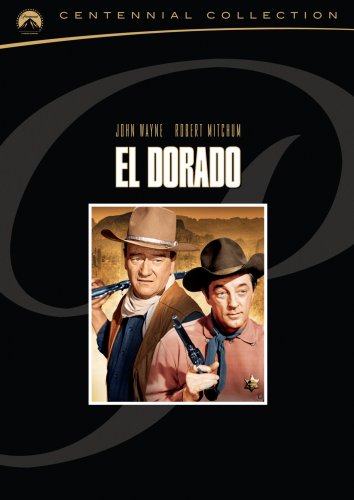
My history with Westerns isn’t exactly a vast one. I watched a bunch of Westerns with my dad growing up and I continued to watch the bigger ones of the modern era like Tombstone and Unforgiven as I progressed through my teenage years and young adulthood. John Wayne is kinda a mystery to me. He’s a huge gritty guy with a lot of patriotism and a funny way of talking. For lack of a better analogy, Sylvester Stallone is my generation’s John Wayne. Or Chuck Norris I guess. El Dorado is an interesting western flic because it was shot later in John Wayne’s career but he had still had the swagger of earlier pictures. A true classic revisited by the minds at Paramount.
Cole Thornton (played by John Wayne) is a gunslinger for hire. He’s been hired by Bart Jason (played by Ed Asner) for some help in a ranch dispute with the McDonald family. Cole rides into El Dorado and is approached by his friend: Sheriff J.P. Harrah (played by Robert Mitchum) who tells him the real tale of the ranch dispute. Cole also finds out that Jason eventually would have put him in a gunfight with the Sheriff. This is something that he didn’t want to do.
Posted in: Disc Reviews by Gino Sassani on May 6th, 2009
“Symbols are a language that helps us to understand our past. As the saying goes, a picture says a thousand words, but which words? Understanding our past determines actively our ability to understand the present. So, how do we sift truth from belief? How do we write our own histories, personally and culturally, and thereby define ourselves? How do we penetrate years, centuries of historical distortion to find the original truth? Tonight, that will be our quest.”
Conspiracies can be fun. We all buy into them to one degree or another. I’m not talking about the paranoid nutjob who sees a conspiracy behind every closed door, and even a few open ones. Of course, there is something to the old axiom that just because you’re paranoid doesn’t mean they’re not really out to get you. Of course, we’re not talking about the persecution complex style conspiracy here. We’re talking about the old fashioned cover-up. It’s what made The X-Files so famous for so many years. It’s why JFK’s death is so much more interesting than anything he did in his remarkable life. There are still some crazy people out there that believe George W. Bush orchestrated the 9/11 attacks, or at the very least was complacent in them. Everywhere from Super Bowl outcomes to manned missions to the moon, someone somewhere thinks it was all a big lie. So, you might as well cop to it now. We all love a good conspiracy theory. In his second Robert Langdon novel, The Da Vinci Code, Dan Brown writes about what would be the mother of all cover-ups. As one character put it so well in both the novel and film, “What if the greatest story ever told was a lie?”

Posted in: Disc Reviews by Michael Durr on April 30th, 2009
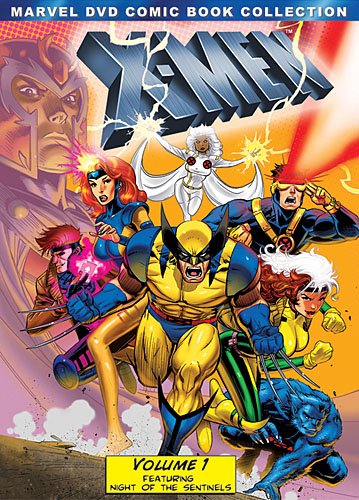
The day of October 31st is usually Halloween to most people. However, back in 1992 it was the day one of the best cartoon superhero shows premiered on the Fox Network. It was simply called X-Men. The show would last seventy-six episodes and five seasons while rising to considerable popularity. I’m not one to toot personal bias, but this is probably my second favorite comic book related animated show next to Batman: The Animated Series. Most of us X-Men fans have been waiting for these episodes to be released for as long as the dvd format has existed. Finally that time has come and I couldn’t be more delighted to watch these again.
Two parents sit in a living room wondering if they did the right thing. Their adopted child: Jubilee is a mutant. They have felt the best thing to do is file her name with the Mutant Registration Program, a privately funded program with ties to the government. The Mutant Registration Program is supposed to be a peaceful group helping humanity and the mutants carry on in their existence. However, things are not as they seem.
Posted in: Disc Reviews by Gino Sassani on April 23rd, 2009
I’m not a wrestling fan. There is very little about that world that holds any charm for me. I find the grandiose posturing to be rather dull. The characters aren’t all that interesting to me, and I don’t find myself compelled to spend 100 bucks on a “free for all” pay per view event. With that said, this film did bring back a flood of memories for me. When I was a kid, perhaps 11 or 12, I looked at wrestling a little differently. I had an uncle who would watch it from time to time, but the television version never held much for me even then. I grew up in a relatively middle sized town in eastern Pennsylvania. If you play Monopoly, you’ve heard of the Reading Railroad. I grew up in Reading. By the way, it’s pronounced Red not Reed (ing). Nearby in a place called the Hamburg Field House, the regional wrestling federation of the time would film a month’s worth of television episodes in one night. Our parents found out that for about 5 bucks they could drop us off for 5 hours or so and we would be entertained. It didn’t hurt that the place featured 25 cent hotdogs. So my friend David and I would hang out at the joint every second Tuesday and watch live wrestling. To an 11 year old kid, it was as much about being trusted out on our own than it was the event. Still, we did become familiar with the regional names and characters. I even got smacked upside the head by one ranting wrestler’s shoes. It hurt, but it was a bump I wore with some kind of twisted feeling of honor for three days. I don’t even remember the name of the wrestler, but I remember that bump. Times have changed and Championship Wrestling has been gobbled up by the Vince McMahon empire that most of those regional outfits have succumbed to. I haven’t talked to Dave in years, and honestly I haven’t even thought of those summer Tuesday nights at the Field House in a long time, filled up with quarter hotdogs and plenty of soda. Then came The Wrestler.
Randy “The Ram” Robinson (Rourke) is at the end of his career as a superstar wrestler. He’s known for his trademark move, the Ram Jam, where he climbs up on the ropes and leaps down on his helpless opponent. You can feel the pain, not only of his current bout, but the decades of abuse he’s put his body through. In the ring he’s beloved by thousands and respected by his peers. Outside of the ring he’s alone. He seeks comfort in the guise of stripper, Pam (Tomei). Pam is also at the end of her career, finding it harder to compete with the younger girls at the club. She’s drawn to Randy, but resists hooking up with one of her clients. When Randy finally pushes his body over the edge, he has a heart attack. The doctors warn him that he’s got to stop pumping the steroids and growth hormones into his body, and worse, that he has to stop wrestling. Randy tries to acclimate himself to the outside world. He increases his hours at the Acme by working the meat counter and attempts to reconcile with his college age daughter. He even has hopes of breaking through Pam’s resistance. Perhaps it’s too late and he’s too old, but he learns that the only place he was ever really good at anything was in the ring. There he’s accepted and loved for what he is. Randy accepts a rematch, celebrating the 20th anniversary of one of his most famous matches. He’s determined to go through with it and please the crowd, if it kills him.
Posted in: Disc Reviews by Gino Sassani on April 23rd, 2009
Sin City arrives in high definition with some pretty high expectations. You get both versions of the movie here, and I have to say that I’m very pleased to see that. By now fans of the movie have seen the recut version of Sin City and likely have your own opinions as to what you thought of it. The fan base appears to be somewhat divided on the effort. For me it’s never been a case of better or worse. It’s merely a case of different. The two versions are very different experiences. Watching the recut version is not really like watching a movie at all. Frank Miller presents them more akin to the original graphic novel experience. For those we don’t already know, this version offers the movie split into four very separate pieces. They each come complete with their own title page and closing credits. You should be warned that these closing credits actually account for more than half the promised 20 minutes of extra footage. They are not even presented in the same order as the original film. Watching the movie this way appears a bit disjointed and leaves many of the movie’s fans feeling like they have been served up their favorite movie in television-like installments. But, there is value to this presentation. It allows you to watch it with a new perspective and a new completeness, albeit within itself. The only segment that just totally doesn’t work is the short The Customer Is Always Right segment, which originally bookended the movie in theaters. On its own it feels rather incomplete and makes very little sense. It’s only after watching the final segment that a newcomer to this material will finally make any connection. There are also many moments where characters appear in the background of one segment leading directly to their own moments. These subtle touches are a bit wasted when one views the parts independently. Of course, there is no escaping the joy of merely watching the original film the way it was presented at the box office. I won’t deny that it is only in that form that the true movie experience can be realized. So what to do with this duality of purpose and divided audience? You give us two complete Blu-ray discs in one release and offer us the choice. That’s exactly what Dimension Films has done for us in this eagerly anticipated high definition release of Frank Miller’s classic Sin City.
For the purposes of this review I spent most of my time in the recut version. I’ve seen the film countless times by now in the theatrical cut and decided to experience my Blu-ray journey with the new version. The audio and video elements are virtually the same, so all aspects of the review remain unchanged. For those new to this incarnation of Sin City, here’s a breakdown of the four segments as they appear on the second disc of this set.
Posted in: Disc Reviews by Gino Sassani on April 10th, 2009
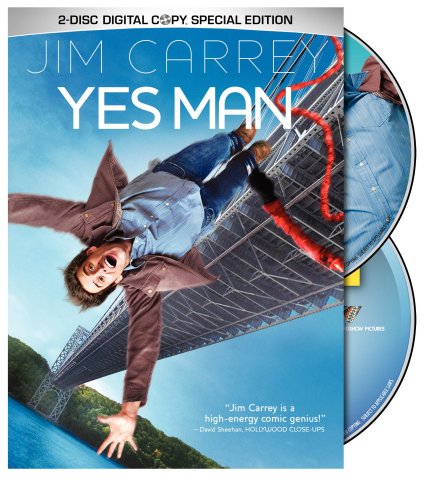
Jim Carrey’s life and career are in a sort of mid-life crisis. He has avoided doing his usual goofball comedy films and opted for more serious roles. His appearance in Number 23 was a bit of a shock for most of us, but he pulled it off reasonably well. Even his more recent comedies have often been less about one crazy character and more about the story elements. It seems that he has decided it was time to return to the parts that made him a household name with Yes Man. But after watching Yes Man,,I have to wonder if maybe that genre has passed him by. For the first time, you really start to see age catching up on the crazy actor, and while he still has tremendous timing, he doesn’t look altogether quite right when he brings out the twisted faces and expressions anymore. It’s not a dig at Carrey at all. Still, it can’t be very good for a comedy, particularly one with a romantic element to it, when your first reaction is that the lead’s starting to look a little old. It’s not even that he looks bad. He just might need to tone down the goofy and concentrate on being more sincere. When Carrey takes that approach in this film he’s far more believable and, yes, that much more funny.
The story is almost a direct riff from his Liar Liar plot. In this one Carrey plays Carl Allen. Carl is a loan officer at a local bank. He was divorced three years ago, but he still hasn’t gotten over it. He’s become somewhat reclusive and self absorbed. He finds all manner of excuses to avoid doing anything with his friends. Instead he spends each night falling asleep watching rented movies on television. What’s worse is that he doesn’t even know that he’s miserable. One day at lunch a former coworker, Nick (Higgens) approaches him as he’s eating lunch in front of the bank. He tells Carl about how a motivational seminar has changed his life. He invites Carl to come to a workshop, but Carl drops his usual no thanks on him. But later Carl begins to realize how detached he’s become and has a scrooge-like epiphany at just how lonely he is. So, predictably, Carl goes to the seminar. Here motivational Guru Terrance (Stamp) preaches the gospel of Yes. He challenges Carl to merely accept every opportunity that comes his way. He commits him to a covenant to say yes to anything. As soon as Carl leaves the building the expected situations arise, where most sane people would say no. In a series of Yes’s that involve a homeless man, Carl begins to have second thoughts when his affirmative replies appear to put him in a bad situation. That is, until he meets Allison (Deschanel). Suddenly his new life appears to bring him a bounty of experiences and pleasures. As you might expect, it’s all leading to some rather uncomfortable consequences. But, as all “feel good” films must, Carrey eventually learns to live his new life in moderation and lives happily ever after.
Posted in: Disc Reviews by Gino Sassani on April 3rd, 2009
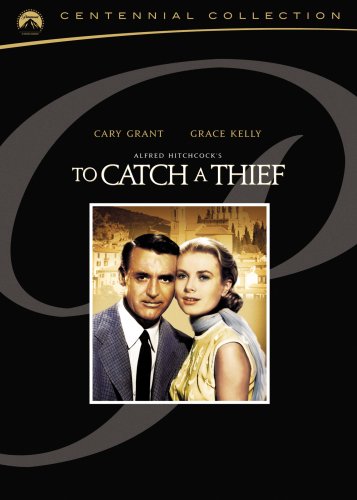
To Catch A Thief is not typical Alfred Hitchcock territory, but then again, it really is. It’s not a terribly suspenseful film coming from the acclaimed “Master of Suspense”, nor is it at all a frightening film even though it was directed by one of horror’s genius minds. What really is scary, however, is how close to a different film this almost was. Cary Grant had exiled himself into retirement. If you can believe his statements at the time, he was concerned that the moviegoing public was pretty much sick of seeing him and preferred the younger actors just then coming of age. He turned Hitchcock down for the role at least twice, before Hitch made a personal visit and appeal to the Hollywood legend. Grace Kelly was also reluctant to do the part. She did it because she loved working for Hitch. Unfortunately, Paramount had other plans. They were troubled that Grant was nearly twice Kelly’s age, and worried either the public or the standards censors would not accept the situation. They were half right. While the film was one of Hitch’s toughest battle with the Standards folks, the public flocked to see Grant and Kelly on the screen together. Grant would continue his return to acting for over a decade longer. Not so Grace Kelly. The Philadelphia native would have her faithful meeting with Prince Rainier of Monaco and would spend nearly 30 years portraying the larger than life, but real nonetheless, Princess Grace of Monaco, before a tragic automobile accident would end her life. All the same, To Catch A Thief would remain one of her last films. Hitch almost lured her out of retirement some years later, but she declined, saying that if she were to do a film, Hitchcock was about the only man she would have done it for.
John Robie (Grant) is a renowned jewel thief and cat burglar. While he’s been retired for fifteen years, he’s still the prime suspect when a rash of burglaries occurs on the French Riviera. The MO is the same as Robie’s, and before long the police are blaming him for the work of France’s newest celebrity thief, The Cat. Robie sees only one chance to get himself out from under the mess. He has to go to the area and catch the real thief. Once there he hooks up with insurance agent Hughson (Williams) who cooperates on the off chance his company can be spared these high payouts. Robie also meets young and attractive socialite Frances Stevens (Kelly), who sets her sights on catching this thief for her own. She constantly tries to seduce Robie, knowing who he is and suspecting him of being The Cat. When her own family jewels turn up missing, she begins to rethink the dangerous game she was playing. That only gives Robie even more incentive to catch the real crook. Will Robie catch The Cat? Will Frances catch Robie? Only Hitch knew for sure, and in 1955 audiences found out in the film classic, To Catch A Thief.
Posted in: Disc Reviews by Gino Sassani on April 2nd, 2009
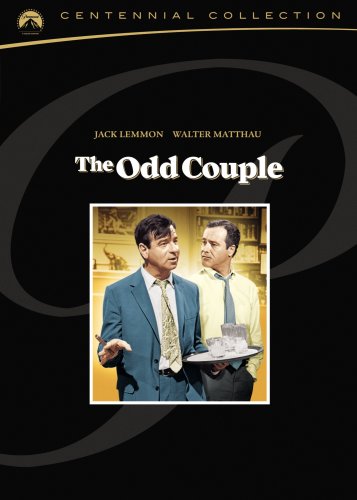
The Odd Couple began as a concept when playwright Neil Simon observed his recently divorced brother share an apartment with another divorced guy. He developed it into a very successful play. In the original play Walter Matthau played Oscar, but it was The Honeymooners star Art Carney who played Felix. Both actors were offered the parts for the film. Carney declined. It was because of the onscreen chemistry between Matthau and Jack Lemon on the film The Fortune Cookie that led to Lemmon being cast as Felix. The decision was a stroke of genius. If you look at it on its surface, there really isn’t much of a story here at all. It is the connection and relationship between these characters, and subsequently these actors, that made this film the classic that it is. Also returning from the play to reprise their roles were Monica Evans and Carole Shelley as the amusing Pigeon Sisters, roles they would actually repeat for the television series two years later.
When I watch this film, I will admit that it’s often a little hard to get the images of Jack Klugman and Tony Randall out of my mind. Most folks have had far more exposure to that 5 year television series than they have with the original film. To me, they will always be those characters. In fact Klugman replaced Matthau on the stage as Oscar before he took the role on television. Still, even with that bias, it is awfully hard not to get drawn into this film. For me characters and performances can be everything. That’s what makes this film have the lasting power it has enjoyed. Most of the film, as the play, takes place inside the apartment. There is a very limited cast, often just Felix and Oscar on the screen. Certainly there are some great moments with the poker buddies and the Pigeon Sisters, but most of the film takes place in a limited environment with just two actors. If you can make that work at all, let alone create a classic experience from it, that’s saying something. There were a few outside locations utilized in the film that were not part of the original play. These were placed there just to give the viewers a change of scenery but were totally unnecessary.