2-Disc

What we've got here is a nasty case of the Sequels. Rush Hour, the original Jackie Chan/Chris Tucker vehicle, was a fun action-comedy with an amusing twist on the buddy-cop genre. Rush Hour 2 was a re-hash, bigger but not better, but still worth a rent. Six years later, Rush Hour 3 proves the third time is definitely not the charm, with 121 minutes of recycled gags, bad acting and uninspiring action.

This two-disc release may be a top-notch DVD, but I certainly hope you don't get suckered by a nice transfer, good audio and a whole whack of extras. No matter how well you dress it up, this film's a walking, talking turd.


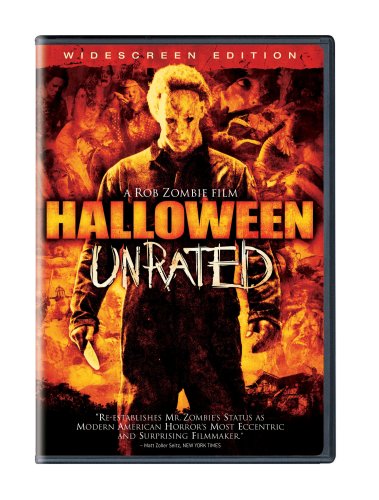
The trailer trash Myers family (inexplicably living in a pretty big house) is a powder keg waiting to go off, what with the rampaging abuse and a young Michael (the admittedly creepy Daeg Faerch) butchering small animals and looking like he’s mad as hell and soon not going to take it anymore. Snap he does, going on a killing spree, before he is captured and locked up for years, while eccetric shrink Dr. Loomis (a shameless Malcolm McDowell) making a career out of trying to learn what makes him tick. Growing to Godzilla proportions, Michael makes his escape, and proceeds to pick up his spree where he left off in his home town of Haddonfield.

I trashed this fiasco in a Brain Blasters column back in September, and the unrated version of the film does nothing to change my opinion. Zombie misses the fact that restraint of the original film was a large part of its success, stupidly gives Michael a backstory and thus nixes his fearsome aspect as supernatural boogeyman, distractingly fills small roles with Look Who It Is cameos (Udo Kier, Richard Lynch, Brad Dourif), and, after expanding the original movie’s single shot prologue to an entire act, compresses the actual rampage to the point that there is no time for character development, and so we care not a whit for the victims. An idiotic, crashing bore.

My wife and I have gotten into a small discussion about October Road. A fellow writer has mentioned that this show is the natural progression of shows like Gilmore Girls, where you've got young twenty and thirty somethings living in an idyllic setting, somewhere in the Northeast, as they take in the residents of the town they used to spurn. I think my wife likes it in that vein. Me? Not so much.

October Road was helped along to TV by Gary Fleder, director of films like Kiss the Girls, but also has done quite a bit of television directing. The show's main focus is Nick (Bryan Greenberg, The Perfect Score), who left Knights Ridge, Massachusetts when he graduated college and went to New York and became a successful writer after his book about his hometown was published. He's faced a couple problems since then, first off is that he's blocked and unable to write a follow-up, and secondly, the first book seemed to burn a lot of bridges and goodwill between him and the town, so it seems he can't go home again.

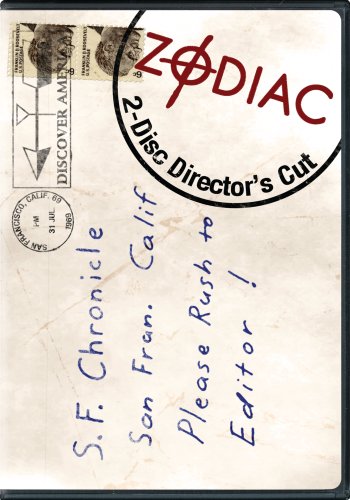
In the late 1960’s Northern California was being terrorized by the actions of a serial killer. This murderer was not content with his brutal slayings, but taunted the communities with cryptic letters and ciphers. He demanded these codes be published and promised more horrifying violence if his wishes were not carried out. Serial killers were actually quite common during those years. 1968-1980 produced more confirmed serial killers than any other time in our nation’s history. Of course, most of them get caught. What makes the story of The Zodiac killer a far more interesting case is that he was never caught. Like Jack The Ripper before him, his unsolved crimes allow for wonderful speculation and theorizing. All of us consider ourselves amateur sleuths, and we just can’t resist an unsolved mystery. The problem here is that the film doesn’t really engage our fantasy of finding clues and observing suspects. The film does settle on a suspect, but there isn’t enough on-screen evidence for us to play out the scenarios in our own mind. Director David Fincher does a good job of reproducing that era on the screen, and he certainly can’t be accused of not delivering a compelling story. The trouble is, this happens to be a nearly three hour film that doesn’t need to be half that long.


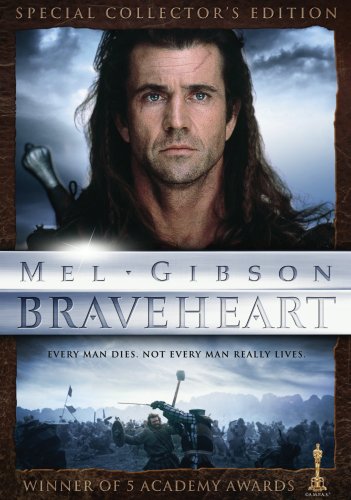
Mel Gibson has had a bit of a rollercoaster life these last couple of years. He has apparently given up on the mainstream films that have made him such a hot property over the years. His DUI arrest and subsequent anti-Semitic rant have caused many to look less favorably upon the man himself. It doesn’t help that his last two films have been less accessible and in obscure ancient languages. These films have not come without their own controversies. Still, no matter how you view Gibson or his work today, it can’t be denied that he has created one of the more compelling films of our day in Braveheart.

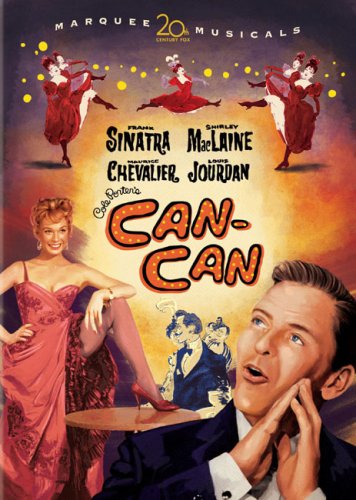
In Belle Époque Paris, the can-can is all the rage but also illegal, and Shirley MacLaine’s nightclub is cracked down on by uptight judge Louis Jourdan. MacLaine is defended by libertine lawyer Frank Sinatra. Jourdan falls for MacLaine, who is waiting perhaps in vain for Sinatra to marry her. Maurice Chevalier shows up to chuckle indulgently.

The vision of Paris may be no more convincing than MacLaine and Sinatra playing characters named “Simone” and “François,” but this is a musical, so who cares? The sets are bright, the songs are catchy, and the dance numbers energetic. But the storyline itself is stultifying. Maybe Krushchev was right about this thing after all.

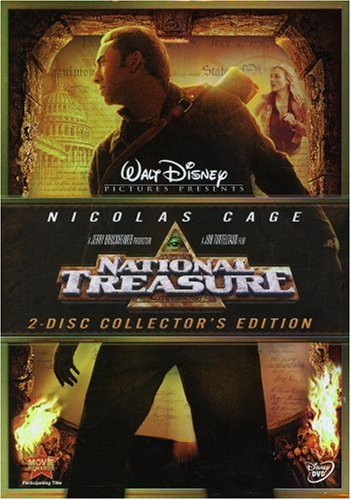
The United States is a young nation compared to most places on the Earth. Our history only recently broke the 200 year mark. Sure, there’s plenty of colonial history you can include, but taken all together you still can’t get more than about 500 years out of the deal. That means Indiana Jones or Laura Croft won’t be spending a lot of their time working their way through New Jersey any time soon. So leave it to the likes of director Jon Turteltaub, producer Jerry Bruckheimer, and star Nicholas Cage to bring us a romp through historical places, and yes, American tombs, in search of the ultimate treasure.

This is a Bruckheimer film from beginning to end. You get all of the standard conventions in National Treasure. Plenty of action, intriguing characters, and a fast and furious ride.

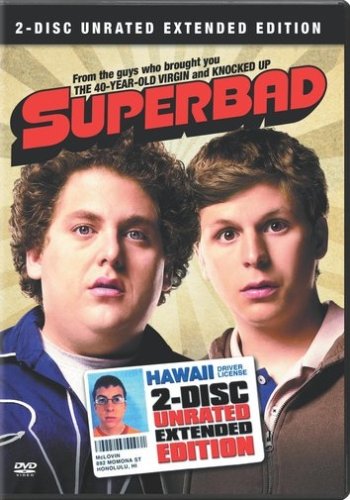
So in a summer where a film directed by Judd Apatow and starring Seth Rogen made a truckload of money, another film released a couple months later where Apatow produced and Rogen co-wrote made almost the same truckload of money, yet both films were funny for different reasons.

In Superbad, Rogen and Evan Goldberg (Da Ali G Show) wrote the script that Greg Mottola (Undeclared) directed, and the film’s premise is simple enough. Seth (Jonah Hill, Knocked Up) and Evan (Michael Cera, Arrested Development) are high school seniors who are attending one last party, with the help of their friend Fogell (Christopher Mintz-Plasse) and his fake ID and subsequent new name ‘McLovin’. The trio’s night takes a dramatic turn, as Fogell is assaulted at the liquor store and Seth and Evan presume that he’s been taken to jail for the fake ID. So Seth and Evan try to get liquor for a party that Seth’s friend Jules (Emma Stone, Drive) is throwing, and Evan wants to get some vodka for Becca (Martha MacIssac, Ice Princess), and the boys desperately want to get with the girls before the boys go to their respective colleges. In the meantime, Fogell isn’t taken to jail, but is taken on a wild ride and a wild night by Officers Slater (Bill Hader, You, Me and Dupree) and Michaels (Rogen), who take him through various twists and turns in the city.

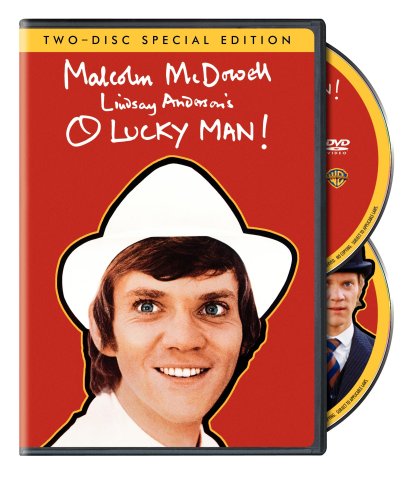
Malcolm McDowell’s second collaboration with director Lindsay Anderson, after their triumph with If..., sees McDowell as an enthusiastic new coffee salesmen sent off to make his company’s fortune in an ever widening area of the Britain. In true picaresque style, he has one strange adventure and encounter after another, each more bizarre than the last, and the whole is intercut with studio performances of Alan Price’s songs that comment on the whole enterprise.

Picaresque narratives are, by their nature, sprawling, episodic tales, and that is certainly true of O Lucky Man, which clocks in at just under three hours. They can, however, also have plots that only appear to be random, but are in fact as tight as wound watch, as is the case with Henry Fielding’s Tom Jones. This is less the case with Anderson’s film, which feels considerably more scattershot in approach. The episodes can be amusing, and McDowell is excellent throughout, but the satirical broadsides feel more obvious than pointed. Viewers will likely be divided over how they feel about the same actors (including Ralph Richardson and Helen Mirren) popping up in multiple roles, a convention rarely seen except in theatre. An interestingly messy work.

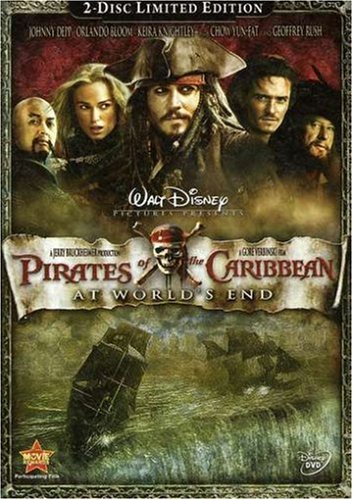
Avast ye mates, Jack’s back, and did ye ever doubt the return of Cap’n Jack Sparrow? Johnny Depp once again transforms himself like no other actor in Hollywood can. It doesn’t hurt that he wears the persona of Jack Sparrow with the ease of a well worn favorite hat. In this case it be the unmistakable chapeau of Disney’s favorite pirate. At World’s End is the third and final entry in the Pirates Of The Caribbean trilogy. If and when we’ll ever see Sparrow again is anybody’s guess, but I’d lean toward the likelihood that he will return, albeit not that soon and with an almost completely new supporting cast. But that’s not the question that was on most of our minds going into At World’s End. Does the film hold up well against the other two movies? The answer is a somewhat complicated yes… and no.