Box Set

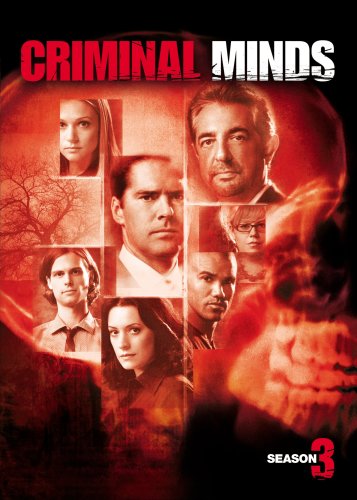
To the point, Criminal Minds is very compelling television. Ever since The Silence Of The Lambs and perhaps long before, we have been fascinated by serial killers and the profilers who try to get inside their heads. To see evidence of the continuing trend, one needs only look toward the success of films like Zodiac and shows like Dexter. Of course, serial killers are not the only prey this FBI team pursues, but they are certainly the marquee item on the agenda. To be sure, there are equally disturbing subjects such as arsonists, bombers, kidnappers, and rapists to give the show a touch of variety, but let’s face it, it’s the killers that keep us tuned so attentively to Criminal Minds.


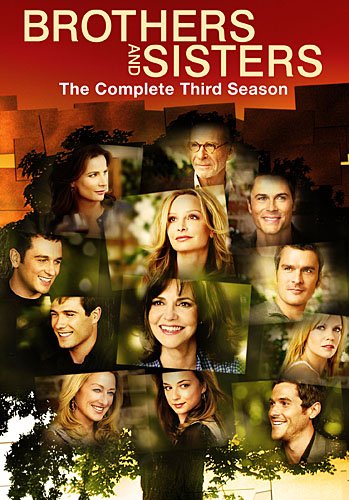
It’s unfortunate that the writers’ strike interrupted the second season of Brothers & Sisters. I was looking forward to finding out if the writers were going to live up to the amazing on camera talent they had speaking their words. What I found was pretty much more of the same, and a quickly eroding patience with the series. I guess the writers had a little more on their mind this year. More’s the pity.


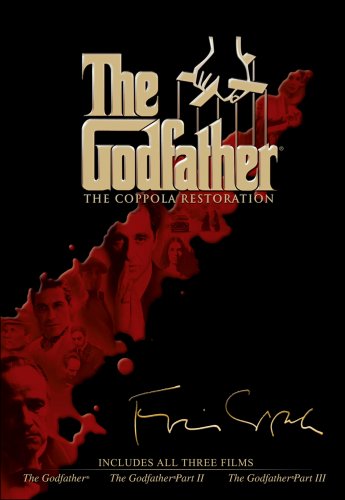
The Godfather films changed storytelling forever. Films before that time, mobster or otherwise, had some very simple but unshakable rules. There was always a fairly clear distinction between the good guys and the bad guys. The good guys always win in the end, and the bad guys always succumb to justice before the final credits. For perhaps the very first time, we were given characters that we knew in our souls were evil men. They killed. They broke laws. They manipulated everyone around them through fear and terrorism to bend to their wills. Somehow, now they are the film’s core heroes, if you will. When Vito is shot, we cheer for Michael, who discards his contempt for his family’s criminal image and comes to his father’s aid. Suddenly this wasn’t just about a gang of mobsters. This was a story about a family. Most of us can’t relate to the mafia ins and outs, but we all have fathers, and even when we dislike what our fathers represent, we will more often than not come to their aid if they’re being threatened. This unique morality paved the way for an entire genre of such characters today. There just couldn’t have been a Tony Soprano or Vic Mackey without The Godfather. While there were certainly protests from aspects of the Italian-American community decrying the violent way our ethnicity was portrayed, most of us from that community saw more than violence and Mafioso. If you’re from an Italian family, you simply can’t help recognizing aspects of your own family in the Corleones. I could see my own grandfather in Vito, sans the mob boss occupation. Many of us took away the strict codes of honor and respect that drive Italian-Americans to this day in very normal lives. We’re a very passionate people, even if most of us are not part of an organized criminal element.


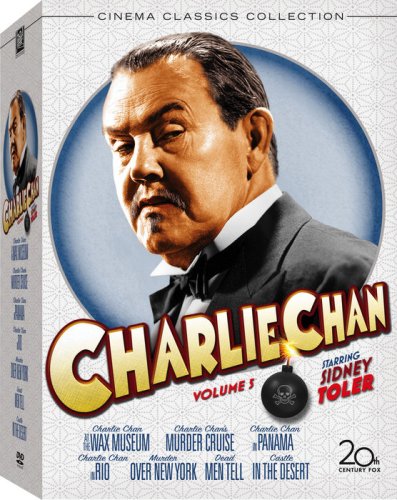
The character of Charlie Chan was created by writer Earl Derr Biggers in 1925 in the book A House Without A Key. He based the character on real life Honolulu detective Chang Apana. Like the fictional Chan, Apana was a detective of Chinese descent on the island. In the first three films, all based on Biggers novels, the character was played by three different actors. It wasn’t until 1933 that Warner Oland took the part in a long series of films that the character gained his worldwide fame. When Oland died in 1938 the series continued with actor Sidney Toler in the title role. It is 7 of these films that make up this latest Charlie Chan Collection. Like Oland before him, Toler was not Chinese; in fact neither of the men were even Asian. The character was created using heavy makeup and overexaggerated features to give the character his distinctive look. Chan was joined by his # 2 Son Jimmy, played by Victor Sen Yung, for his series of films. Jimmy was always getting in the way and was often a source of both disappointment and pride for his reserved father.


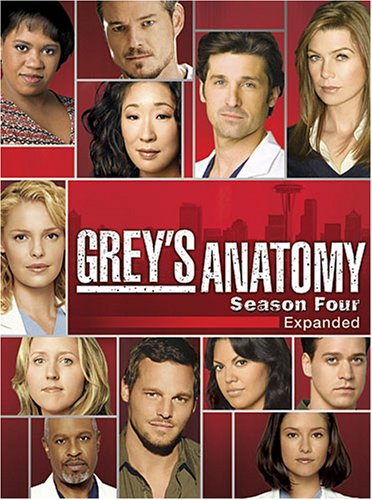
There are some significant changes in season 4. The interns now have interns of their own. It’s actually a little fresh to see them struggle with circumstances we only recently watched them deal with from the other perspective. All except George, who is forced to repeat after blowing off his final exam to help Izzie. There are also many cast changes. Gone are Washington and the baggage he carried with his gay bashing slur. Also gone is Kate Walsh, as her character has moved on to her own spin-off, Private Practice. There were also 3 major additions to the cast. To replace Washington, Brooke Smith has come on to play new head cardiologist Dr. Hahn. Smith plays a rather abrasive character who has it in for Yang. She believes Yang has gotten her mentors’ attention by sleeping with them in the past. She spends a lot of the season going out of her way to make Yang’s life miserable. Chyler Leigh joins the show as new intern and Meredith’s half sister Lexie. Meredith isn’t really thrilled with her half sister and tries to ignore her attempts to get to know her. Leigh adds a great deal of energy in her performance and instantly becomes a standout. Finally, Lauren Stamile plays Nurse Rose, who becomes Shepherd’s next love interest.


Medium was based on a real person with alleged psychic powers who apparently has helped out various law enforcement agencies in some actual cases. If you’ve seen the series, you might find that hard to believe, and the episodes are obviously fictional adventures and not based on the real Allison Dubois’s experiences. At first glance it might be easy to lump Medium in with Ghost Whisperer or The Dead Zone. Actually there are almost no similarities to any of those shows. Allison does not gain any understanding through touching, and while she does see ghosts at times, that aspect of the show has been made to play in only a small percentage of the episodes. Allison accesses her powers through dreams. These nightmares are usually vague and often provide additional clues with each recurring dream. The formula for the show is that she must interpret these images and signs in time to do whatever it is she needs to do. Now that her secret is out, she’s not able to continue her work at the DA’s office. Joe’s career is also in jeopardy, so the show is going through some changes here. The strike likely did some damage, so we may never know exactly what was in store.

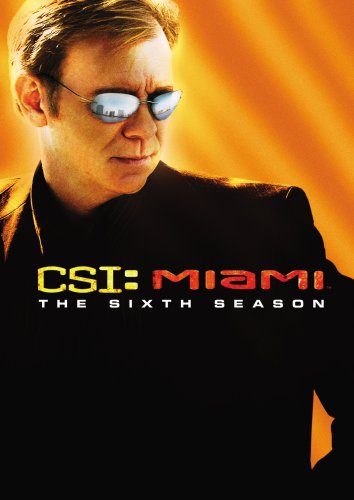
I love CSI and have been an avid fan from day one. I think it brought a fresh look to the procedural crime dramas that have long ago become just a little stale and predictable. The problem is that the series has gone the Dick Wolf route of branching out so that the final product might be a little diluted. Unlike the Law & Order franchise, each version of CSI has attempted to take on a unique look and style to reflect the location without giving up those elements which are the tradition of the series. CSI: Miami is by far the inferior of these three shows. In trying to create a slick glitzy Miami feel, the show has gone the way of style over substance. While the oversaturated colors and bright locations might make for a more visually stunning series, it tends here to overshadow the meat and potatoes of CSI, the stories. I get the impression that the show wants badly to recreate the Miami Vice accomplishment of trend setting fashion and style. Those days are long gone, and CSI has an entirely contrary mission that is weakened weekly by this overboard attempt to look good. The show is also beginning to adopt the 24 style of multi frames for no other reason than they think it looks cool. The show doesn’t respect the audience enough to believe they will buy into the series without all of these high tech distractions. It’s a shame, really, because I had higher hopes for this version of CSI, as I happen to live in Florida. Unfortunately most of CSI: Miami is shot in L.A. with the exception of a few overused establishing shots. Let me tell you, L.A. doesn’t look anything like Miami. Perhaps the show should consider dropping all of the fake glitz and move to location where they can take advantage of the city in a far more realistic way.


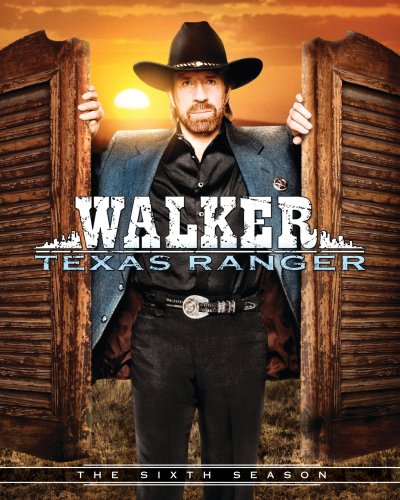
There was a new Cowboy in Dallas, and he wasn’t throwing touchdown passes. But Walker was almost gone before he could really get started. After just four episodes the show’s production company suffered financial collapse, and the show was rescued at the last minute by CBS Productions, who would continue to run the show for its nearly decade-long run. For nine years Norris brought us the ultimate Texas Ranger in a formula cops and robbers show. The show often became a parody of itself, but maintained a solid viewer ship throughout. Hell, Norris even sings the theme song. Truthfully, what started as a one man show (it was originally called Chuck Norris Is Walker, Texas Ranger became a good working ensemble that probably kept the train going for so long. Walker (Norris) is a tough guy Texas Ranger. He is partnered with Sydney Cooke (Peebles) and Jimmy Trivetti (Gilyard) who’s an ex-jock with a brain. Walker had a love interest and eventual wife in the local assistant district attorney Alex Cahill (later Walker). Together they fight the evils that come to the high plains of Texas armed with their fists, six-shooters, and Stetsons. After starting with the final season, CBS is finally halfway through the series back from the beginning.

Norris almost deadpans his entire performance. Let’s face it, the man is no accomplished thespian. Still, Norris fans are quite passionate about their guy. There’s a popular tee shirt design that lauds their hero in epic fashion. One of my favorite is : “McGyver can build a plane out of gum and paper clips but Chuck Norris can kill him and take the plane.”  Another brags: “Some people wear Superman pajamas. Superman wears Chuck Norris Pajamas”. And there’s the humorous: “Chuck Norris knows what Willis is talkin’ about”. Fans of Norris were never disappointed in what they got here. The requisite martial arts and tough guy talk are present pretty much in every episode. Season five is no exception. You should also note if you’re using an episode guide: this is really season 6, as the first two were combined in the first season release. The series had its share of heartstring episodes, most notably the two part story, Lucas. Here Walker helps a young boy with AIDS find his mother and go on to become an AIDS awareness icon.  There’s another old west tale of Hayes Cooper in Last Of A Breed. Walker entertains some kids with another tale of his legendary forefather. It’s another two part episode and takes place in the old west. If you just want some good old Walker butt kicking, you won’t have to wander far. Walker kicks butt to protect some orphan kids in Small Blessings. In Warriors, Walker goes up against a group attempting to build genetically altered “super soldiers”. The season ends on a powerful cliffhanger. In The Wedding, Alex is shot and clinging to life while Walker sets out to find the shooter. That brings to mind one more of those Norrisisms: “Chuck Norris’s chief export is pain”. Ouch!

Working in Hawaii on one of televisions hottest shows in the 1970’s was too good a job for most of the cast and crew of Hawaii Five-0. This meant that there was very little cast turnover for the series in general, and none going into the fourth year. Jack Lord saw his star rise considerably, and while he began to see some serious pay hikes, even he wasn’t about to kill the golden goose. With this kind of consistency, fans were never disappointed or turned off by drastic changes in the cast or formula. With this cop show it was all about tropical locations and formula. The fourth season was no exception to the rule.


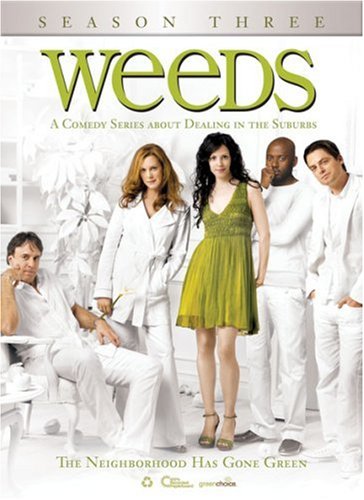
When last we left the fine folks of Weeds, Nancy Botwin (Mary-Louise Parker, Saved!) and her herb-growing buddy Conrad (Romany Malco, Blades of Glory) were being held at the mercy of two rival drug groups, both of which were very interested in Nancy’s stash and her cash, but it was taken by her son Silas (Hunter Parrish, Freedom Writers), who was arrested by Nancy’s friend Celia (Elizabeth Perkins, 28 Days). I’m not even close to discussing how things got to this point, and needless to say, the twists and turns sound a little soap operatic at times, but when you’re invested into the characters’ fates as you are, they provide for some memorable experiences.


One of the things that Weeds does is push things to the edge of the envelope, and I‘m fine with that. What I’m not fine with, and what my wife and I get into debates about from time to time, is that in Season Three, Nancy’s transformation from widowed mother in a upper/middle class suburban neighborhood to full-fledged marijuana dealer becomes full and complete. In the previous two seasons, Nancy mixed her Caucasian naivete rather well with her cold and precise drug dealing livelihood. In Season Three, she becomes much more cold and precise, particularly around people she knows and calls friends. She takes care of her feelings first, particularly in one episode where she sleeps with her boss (played by Matthew Modine of Vision Quest lore), despite Celia’s urge to be with him. Her rendezvous with Conrad, one the show had been waiting for for almost three seasons, was more for her convenience than anyone else’s. She becomes much more distasteful than in previous seasons, and all the sweetness of sucking on an iced coffee straw isn’t going to help things.