Box Set

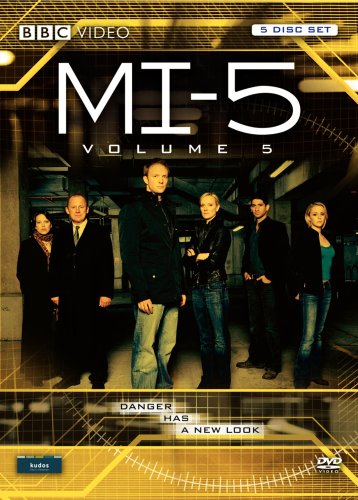
When MI-5 first hit American shores, Alias was in full swing, and the comparisons were inevitable. After all, both were sy shows set in a post September 11 world, and both were slick, fun thrillers. Fast forward to 2006, however, and the landscape has changed dramatically. Alias is now off the air, having crashed in spectacular fashion, yet MI-5 is still going strong. In fact, the show just seems to keep getting better and better.


I had my concerns when all the key members of the original cast departed one by one, but as the show goes on, I am realizing that the story lines here are much bigger than any one cast can handle. High pressure jobs such as these virtually demand a high rate of turnover, and the actors who come in to play these new characters are always first-rate. While early seasons dealt with your typical spy stories, more recent efforts are starting to tackle much larger issues of governance, such as terrorism and the delicate balance of power that holds a democracy together.

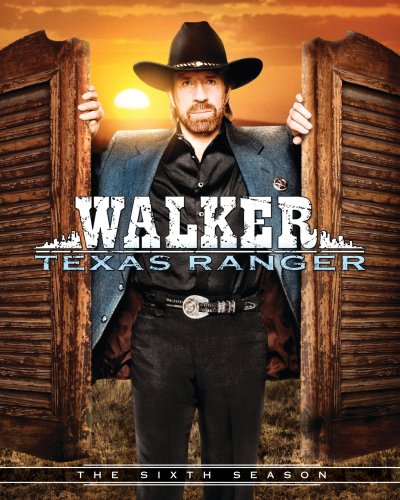
There was a new Cowboy in Dallas, and he wasn’t throwing touchdown passes. But Walker was almost gone before he could really get started. After just four episodes, the show’s production company suffered financial collapse and the show was rescued at the last minute by CBS Productions, who would continue to run the show for its nearly decade-long run. For nine years Norris brought us the ultimate Texas Ranger in a formula cops and robbers show. The show often became a parody of itself, but maintained a solid viewer ship throughout. Hell, Norris even sings the theme song. Truthfully, what started as a one man show (it was originally called Chuck Norris Is Walker, Texas Ranger) had become a good working ensemble that probably kept the train going for so long. Walker (Norris) is a tough guy Texas Ranger. He is partnered with Sydney Cooke (Peebles) and Jimmy Trivetti (Gilyard) who’s an ex-jock with a brain. Walker had a love interest and eventual wife in the local assistant district attorney Alex Cahill (later Walker) Together they fight the evils that come to the high plains of Texas armed with their fists, six-shooters, and Stetsons. After starting with the final season, CBS is finally halfway through the series back from the beginning.

There is a discrepancy in the season numbers that I should explain here. Most episode guides will refer to this collection of episodes as the fifth season. The first season of Walker was really only 3 episodes long, running in April and May of 1993. CBS included those episodes along with the complete “second” season run in a release they called The Complete First Season. While I applaud their inclusion in that set, the release more appropriately should have been entitled The Complete First and Second Seasons. What that did in reality is put their release numbers one behind, so that the second season DVDs are in reality season three, and so on. There are 27 episodes in this collection, so it is quite a value no matter what number it might be. You just need to be aware if you are consulting an episode guide and looking for a specific episode.

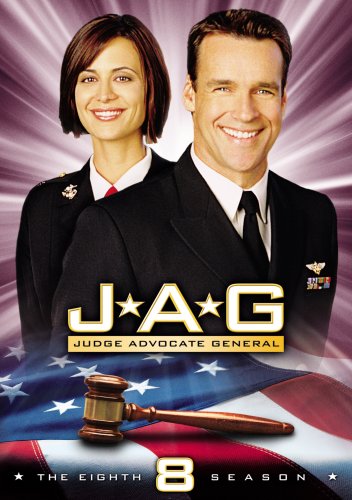
JAG or Judge Advocates General might have gone silent on our television screens in 2005, but it really remains with us in its spin-off NCIS. Both shows explore the world of military justice. Both shows are also the masterworks of successful television producer David P. Bellisario, who also brought us Magnum PI and Quantum Leap. The idea behind JAG was likely inspired by the film A Few Good Men. Most of us remember the “You can’t handle the truth” rant that Jack Nicholson delivers from the stand, but fans of the film rather enjoyed the rare look behind the Judge Advocate General’s office in our military. Like that film, JAG spends its time pretty much split in three directions.


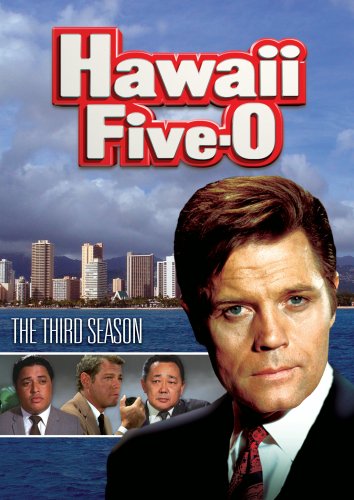
Have you ever walked down the street and heard a chorus of “Five Oh” making the rounds? In street lexicon that means the police. It’s a warning to the drug dealers and any other illegal activities that the police are on the way. That’s just one of the ways that Hawaii Five-0 has invaded our pop culture. Who hasn’t heard the phrase, “Book him Danno”? It’s no surprise, because until Law & Order, Hawaii Five-0 was the longest running crime drama on television. It started in 1968 and didn’t end until 1980 when the production staff and facilities were immediately retooled to produce Magnum P.I., which was an unofficial spin-off of Hawaii Five-0. While he never actually appeared on Magnum, Five-0’s McGarrett was often referred to by characters on the series. The series continued for a few years in syndication where the episodes were all mixed up. These DVD’s allow the first chance since their original broadcast for these episodes to air complete and in the correct order. While continuity wasn’t huge, as there were few actual story arcs beyond the episodes, there were minor changes that made the show look strange in syndication. The final season was aired under the title, McGarrett.


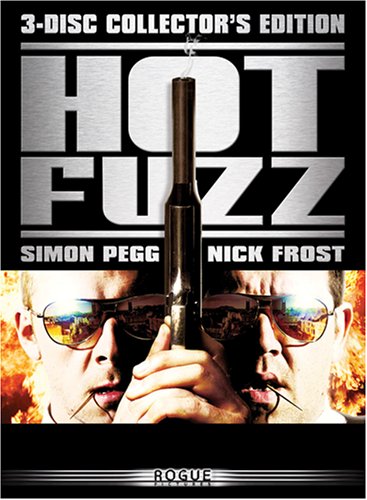
It's not often that a review starts with the final score, but I'm going to break that rule. Go out and buy this DVD set. Stop reading this review, leave your residence, and go directly to your nearest DVD retailer for a copy of the 3-disc version of Hot Fuzz. When I first watched Shaun of the Dead, I was absolutely blown away at how deftly creators Simon Pegg and Edgar Wright were able to mix the comedy, spoof and horror genres into one of the most entertaining and original films of the decade. While I had high hopes for the follow up project, deep down I was expecting to find a case of the sophomore slump; a good film that manages to fall short of the success of the debut. Not only was my gut feeling dead wrong, but I am of the opinion that the two have actually been able to surpass their previous success. Shaun of the Dead was not a fluke, but merely a warm-up to the amazing success of Hot Fuzz.

This time around, the pair (along with hilarious stalwart Nick Frost) cover the action film genre. Pegg plays a London cop so outstanding that he makes the rest of the department look bad, so he is shipped off to a sleepy countryside hamlet to hand out tickets to speeders and the occasional noisy pub patron. What he finds, however, is something more sinister than anything he had ever come in contact with on the streets of London.

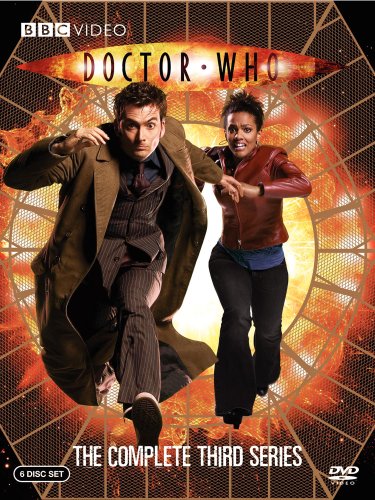
Imagine a world where William Shakespeare is being controlled by creatures akin to witches, a place where Santa is a deadly menace, and a rather eccentric fellow travels about in a police call box with a rather deceptively spacious interior. To Dr. Who fans of all ages, this is all very familiar territory. I fell in love with Dr. Who as played by Tom Baker from 1974 – 1981. He was the fourth actor to portray the Doctor and arguably the most popular. With a pocket full of jelly babies and a trusty sonic screwdriver, The Doctor rather muddled his way about with a massive wool scarf around his neck, all the while solving the mysteries of the universe. It was through PBS stations in the late 70’s that Americans were first introduced to these adventures on a regular basis. Before long The Doctor would develop a cult following of sorts, particularly at college campuses. The Doctor was an alien from the planet Gallefrey. A time lord, he traveled through space and time in his TARDIS, disguised as a police call box by a chameleon device. He was accompanied by a line of companions that would serve as the representative of the audience. These women provided a place for The Doctor to bounce his ideas off of, and from time to time they would more often than not require a bit of rescuing. The show was noted for its low budget f/x and over the top villains. The cardboard sets often appeared as if they would collapse at any moment. All of this created more than a little bit of campy cheese. But for some reason there was a charm to the entire play that was oddly compelling. To ensure longevity, the character was able to regenerate when faced with death. The new Doctor would not only look different, but he would sport an entire new range of mannerisms. This way the series would continue through several changes in the actor playing him. It all worked, and Dr. Who became the longest running scripted science fiction show ever in the world. Of course all good things do come to an end, and so did Dr. Who, in spite of an American television film attempt to bring the character back. But what started with Peter Cushing in a couple of films finally ended for good…


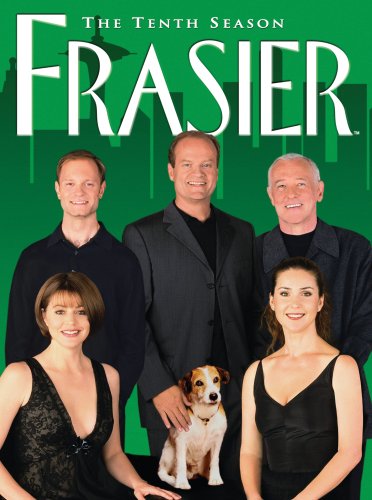
So from time to time, I get television shows to review that frankly I don't really follow. However, my wife does, so she grabbed the tenth season of Frasier from me quicker than a crackhead getting a fix at the methadone clinic. I encourage you to peruse and enjoy her literary stylings.

For about 20 years, the character of psychiatrist Frasier Crane gave us awkward humor, taught us about Freud, and was the only character on television who tried to get sherry promoted from cooking liquor to a regular drink.

When Close Encounters of the Third Kind came out in 1977, a young Steven Spielberg was coming off of the unexpectedly phenomenal success of Jaws. This was the director's chance to solidify his career as a well-respected filmmaker, and build a lifelong career. While most directors would have either gone the route of making Jaws II or picking up a no-brainer script from a proven scriptwriter, Spielberg wagered his success on the odd tale of a possibly mentally deranged individual's belief in extra-terrestrial life. What he came away with was a film that won an Academy Award for Best Cinematography, was nominated for four Golden Globes (including Best Picture and Best Director), and has become synonymous with the legacy of the famed director.

Normally I would take this opportunity to go over the basic plot of the film, but this is a classic. Most film buffs are already well versed in the plot of this film, and those who are not should be ashamed of themselves. The real story here is not the fact that this film has been released yet again. The story is the manner in which it has been released. In addition to Spielberg's original version of the film, he also re-cut the film into a Special Edition in 1980. In 1998, the film was re-cut yet again, in a version that the Director considers to be his definitive cut. All three versions are included on this three-disc set, so there is plenty here to warrant a purchase for any Close Encounters fan. All versions have been completely remastered, and the set is packaged in a box that reminds one of the excellent packaging of The Soprano's sets.

HBO’s Rome was cutting edge historical drama and, of course, was crazy successful. Is it any surprise that their largest rival Showtime would attempt to cash in on that success? Showtime’s The Tudors flashes forward a few centuries to 16th Century England and the rule of Henry VIII. The Tudors has more than just history in common with Rome. Both series have an almost obsessive fixation on sexual encounters. This one is not going to play well in those history classes for the kiddies. Both shows were filmed on location with lavish sets and costumes. The comparisons soon end as we examine the approaches each take on their subjects. The Tudors attempts to modernize the story more than a little. Henry’s attire is more akin to a rock star than a 16th Century ruler. The language is also more updated, often filled with modern colloquiums and the like.


So here we are again with a second collection of episodes from The Young Indiana Jones Chronicles television series. This is the middle of a three volume set and concentrates the stories around World War I and II. It can hardly be a surprise that Young Indy kept himself quite busy during these war years in Europe. He was a pilot, secret agent, and even ballet dancer all for the cause. The set has as an appropriate subtitle: The War Years. Except for the bountiful features, the information from the first set is still valid and repeated here for the sake of convenience.