Box Set

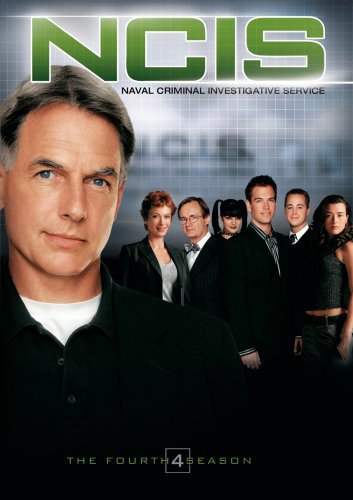
I remember when there was only one Criminal Investigation show and it was in Las Vegas. The buzz was how they could piece together scraps of evidence to form a case against the eventual perpetrator. Now we have ones in Miami, New York and I heard they were pitching one for Sister Mary's School for Girls. (those nuns are deadly with rulers) However, in the redundant search for DNA and hair follicles; there is one rather unique gem in NCIS or better known as Naval Criminal Investigative Service. The series boasts both dramatic and comedic elements and has to date posted very strong ratings. But how would season four relate to DVD and does the show continue its strong impressive form?

At the beginning of season four, Leroy Jethro Gibbs (played by Mark Harmon) has retired to south of the border and the NCIS force is left to their new leader, Tony DiNozzo (played by Michael Weatherly). Tony does his best to lead the staff which includes Tim McGee (played by Sean Murray), Ziva David (played by Cote de Pablo ) & Michelle Lee (played by Liza Lapira). The season is dubbed "The Season of Secrets" as we start finding out various things about the cast and certain things they have done or situations they find themselves in. Some are interesting, some are provided for comic relief. However, they aren't revealed to the cast until the last episode (the audience sees it in bits and pieces throughout the season) in a dramatic cliff hanger show guaranteed to get us back into season five. (which is enjoying the usual great ratings NCIS has come to expect)

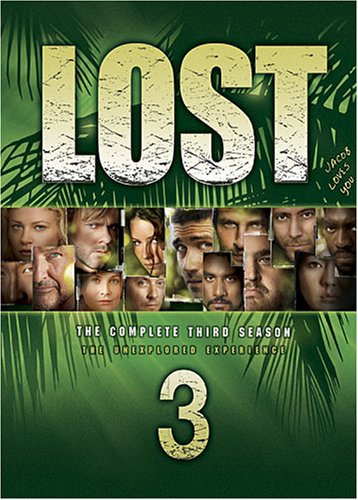
When Lost began its third season last fall I was beginning to feel a lot like the castaways must have felt; namely I was getting pretty lost watching Lost. There’s been a lot of mostly fair criticism about how ABC has handled the show last year. The first mistake was to air a small portion of episodes in the first couple of months and finish the season after the New Year. While this broken season plan works well for some cable shows like Monk, it does a serious disservice to Lost. I was so confused and burned out with the show after these first episodes, I never did return in February to see how it all played out. After reviewing the ratings numbers for the show, it seems I was not alone in leaving the island. Now with the release of the complete third season on DVD, there was renewed hope that I might be able to piece something coherent together by watching episodes in large chunks of marathon sittings. The result was the show was a little easier to follow but not much. Now don’t get me wrong. I appreciate the complicated plots and long detailed stories the show has been able to tell. Like the rest of the show’s fans, I enjoyed following the sparse trail of breadcrumbs and reveled in each new discovery in spite of the fact that each new answer also brought along five new questions as companions. Still, the third season of Lost was arguably its worst.

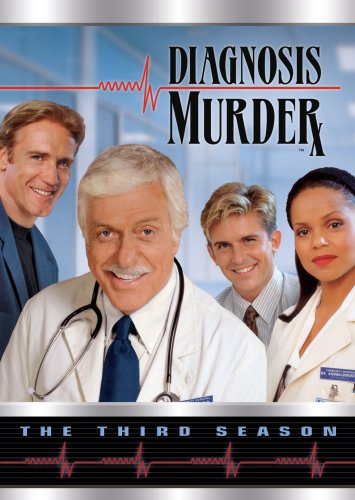
Dr. Mark Sloan first appeared in The It Never Entered My Mind episode of Jake And The Fat Man. In that episode Sloan was accused of a murder, and it was up to Jake and Jason to prove his innocence. The character had a certain charm that appeared to carry with audiences, and two years later Sloan had his own show, Diagnosis Murder. Dick Van Dyke did for doctors what his good friend Andy Griffith did for lawyers as Matlock. Both traded on their earlier careers in trademark comedies to reimagine dramatic roles in their twilight years. For Dick Van Dyke, Diagnosis Murder was more like a family affair. Almost every member of the Van Dyke clan arrived to play characters on the show that mirrored their real life connections. Jerry Van Dyke made numerous appearances as Sloan’s brother, while all of his children at one time or another played children of Sloan’s. Most notable, of course, was Barry Van Dyke, who costarred along with father. He played an L.A. Detective who often went to his father with his vast medical knowledge to solve crimes. Dr. Sloan had his own group of helpers who often either helped solve the crime or got themselves into danger, requiring doctor and son to rescue them, of course, just in the nick of time. Charlie Schlatter played Dr. Jesse Travis. Travis was a young ambitious resident who looked up to Sloan and would do almost anything for him. Victoria Rowell was Dr. Amanda Bentley who played the hospital’s real-life Quincy. She was the resident medical examiner and an important cog in Sloan’s crime fighting machine. Sloan was a combination Quincy and Columbo. Like Quincy, he had a knack for making medical discoveries no one else could find. His Columbo personality was brought out in his innocent simple nature that he relied on to lure criminals into a false sense of security.


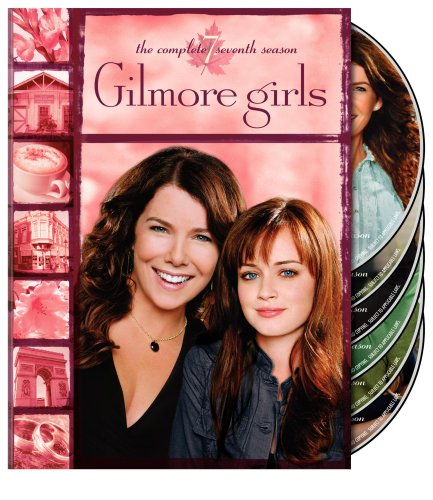
The fat lady has sung, taken her bows and waddled off to the after-party. Gilmore Girls, a show loved by many — and abhorred by some — was canceled in May, leaving fans without a true series finale. Here, in this DVD set, lie the final episodes, created without input from series creator Amy Sherman-Palladino, who left the show after season six.

This is not a fitting end for our Gilmore Girls, but unless a rumored movie becomes reality, it's all we're going to get. So if you're looking for closure, this ain't the place.

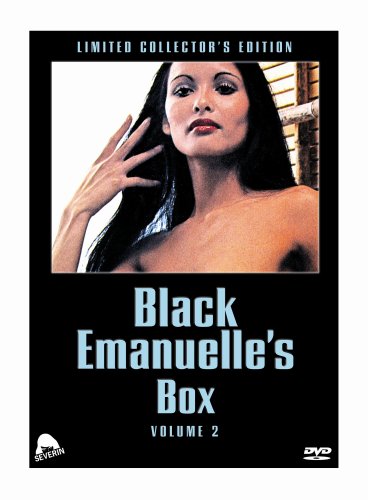
Severin unleashes three more entries from Italy’s long-running sexploitation saga, and the result is another fascinating collection. The quality of the movies themselves up and down, but the good stuff is very good, and the collective result is something that is completely fascinating. Exploitation fans should be over the moon.

I’ve already gone on at length about Black Emmanuelle/White Emmanuelle (1976) elsewhere, so I won’t rehash everything again. Briefly, though, the set-up has Laura Gemser as Emanuelle (let’s stick to the single “m” version to avoid confusion with Sylvia Kristel), here a model instead of a journalist, arriving with SOB photographer boyfriend at the palatial home of some friends in Egypt. Much aristocratic ennui ensues, until Laure (Annie Belle) arrives to tear down everyone’s comfortable illusions. The most nicely shot and intelligently scripted of the films, there is something absolutely mesmerizing about the display of decadent self-loathing proposed here. Writer/director Brunello Rondi’s effort is emphatically a high point of the series, and invites repeated viewings.

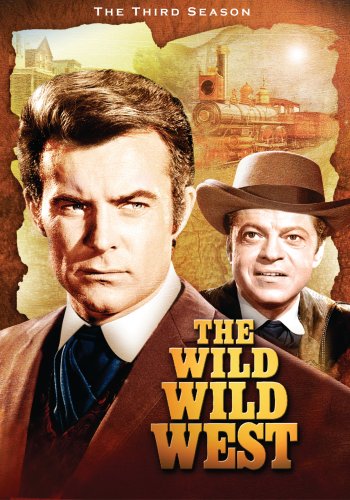
James West (Conrad) was a Union Army vet. He’s the kind of act first think about it later kind of guy. Artemus Gordon (Ross) was a typical con man. He could create the most convincing disguises and was also a master of sleight of hand. Together they worked for the Secret Service in the days of the western frontier. The two of them were the prototype of the future spy. They would use incredible inventions and Bond-like gadgets along with their own skills at trickery to investigate major Federal crimes, often plots against the United States. Think of James Bond in the Wild West.


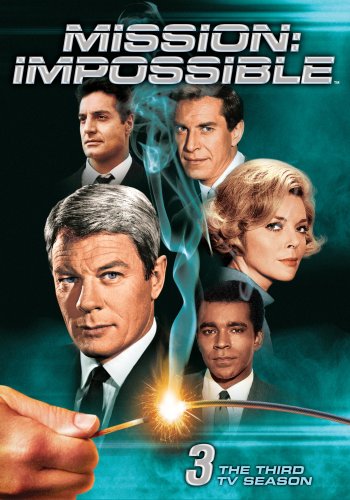
It was in the second year that the format of Mission:Impossible became what we all remember today. By this third year the show was running on all cylinders and full speed ahead. By now the formula was tight, so the audience knew exactly what to expect. They weren’t disappointed. The third year was also a very successful year in the ratings as the show began to come into its own. Mission:Impossible was a companion show to Star Trek. Both were produced at the Desilu Studios and often shared guest stars. If anything changed, it could be said there was a little more action in the third season. A few more fights and gunfights were added without compromising on the style or traditions of the series. A lot of time is still given to show the team performing some elaborate setup, often without any dialog for rather extended periods at a time. The scams were entertaining enough that somehow the audience stuck around for what many broadcast professionals would have called dead air.


You would think that after seven years, CSI would begin to show a little wear and tear around the edges. When you factor in the dilution of the two other versions of the franchise with a combined 8 years of episodes, you end up with 15 years and over 250 episodes of CSI total. Certainly even the best of shows with the most imaginative writers can’t stay fresh for that long. Still, somehow, the gang at CSI continues to crank out compelling drama, rarely repeating itself. Every year I go into a new season of CSI expecting to find it starting to show its age a bit, and every year I continue to be amazed. The fact is that season 7 just might be the best year of CSI to date. Each episode begins with The Who asking the question: Who are you? I have to say that after seven years the answer is, still a fan.


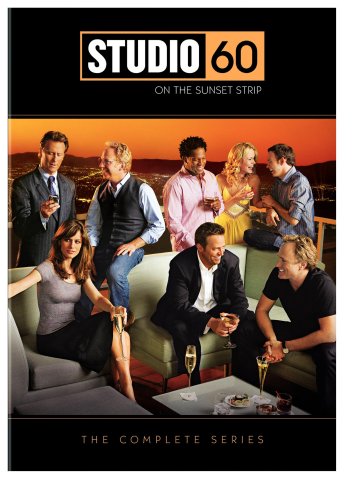
Oh, how the mighty have fallen. Five years ago, Aaron Sorkin and Thomas Schlamme were riding high with the best drama on Television, The West Wing, which is hands-down my favourite show ever. When word got out about a new Sorkin/Schlamme project set for the '06-'07 season, I was more excited than a monkey at the banana harvest. Expectations — mine and everyone else's — were sky-high for this new series, a behind-the-scenes drama about an SNL-type sketch comedy show. It would be the finest new show since The West Wing debuted in '99, Sorkin would once again raise the bar in prime-time entertainment and the collective intelligence of the human race would be elevated to the stratosphere.

Ok, not so much. While Studio 60 on the Sunset Strip premiered with much fanfare and critical praise, the series quickly slumped and never recovered. That made me angry, like a monkey whose monkey-mom made him stay home from the banana harvest. It's just not fair! So this review is about a good show killed by hype. Alas, Studio 60, you died too young.


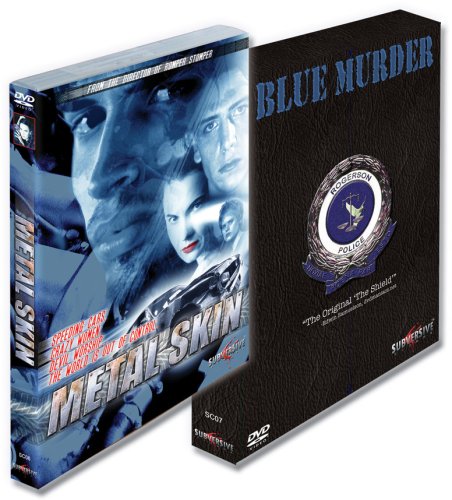
The name of this double-pack is slightly misleading, but that is not to suggest the film and television mini-series on offer are in any way bad. Quite the contrary, in fact. It’s just that they aren’t exactly “action” films per se. So don’t pick this up hoping for something in the vein of The Road Warrior. Instead, these are brutally intense dramas with strong action elements. Both titles are excellent.

Metal Skin is a 1994 effort from director Geoffrey (Romper Stomper) Wright. He returns here to the world of youth subculture. Here, instead of Skinheads, this is a world of underground races, but the denizens are just as doomed as in the earlier film. The main character is a disturbed young man whose dreams of driving a fast car and forming a romantic attachment are utterly deluded. He has a fraught relationship with a trio, each of whom has his/her own reasons to see the world as a black hellhole. When the car-duel climax arrives, it is earned at the emotional level, and makes the likes of The Fast and the Furious look even more anaemic than it already is.