Box Set

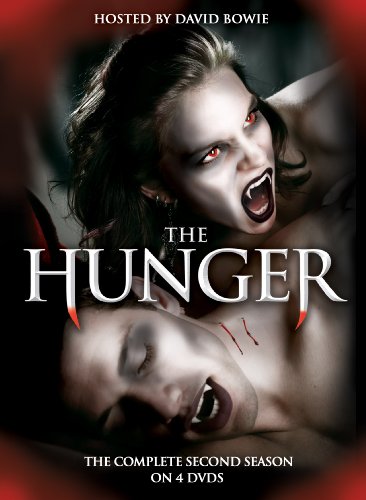
The second (and final) season of this erotic horror anthology series follows the pattern set down by the first. David Bowie replaces Terence Stamp as host, and takes up the job of briefly uttering portentous statements before each story rolls. These stories star such luminaries as Giovanni Ribisi, Eric Roberts, Jennifer Beals and Lori Petty, and are based on tales by a pretty impressive line-up of line-up of writers: Poppy Z. Brite, Kim Newman, David J. Schow, Gemma Files and Ramsey Campbell, to name but a few.

As before, the erotic fixations give the series a clear identity, but also narrow its focus so that a marathon viewing of episodes would be a bit tiresome. But again, as before, the talent involved means horror fans would be remiss to pass the series up without giving it a serious look.

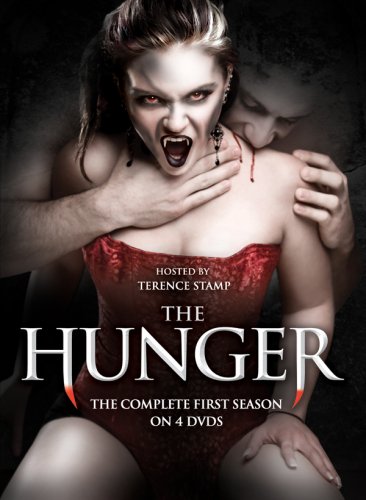
In 1983, director Tony Scott wasn't quite as prone to self-caricature as he is today, but he was already enamored of glossy, pretty surfaces, and if nothing else, his vampire movie The Hunger was glossy and pretty. The film arguably remains the most high-profile mixture of eroticism and horror, its place in libidinal history cemented by the love scene between Susan Sarandon, Catherine Deneuve, and Deneuve's body double. The film's lasting cult appeal resulted in a short-lived TV horror anthology series, presented by brothers Tony and Ridley Scott, and running two seasons (1997-8 and 1999-2000). Here we have Season 1, hosted by Terence Stamp.


The series' mandate was to present glossy sex-and-horror tales in a half-hour format. In this respect, it follows in the footsteps of The Hitchhiker (1983-91), but the intervening years mean generally better production values for The Hunger. An annoyingly long opening credit sequence leads to an enigmatic 30-second intro from Stamp (everything set to the sort of flashy cutting and visual excess that sure feels like it was directed by Tony Scott, even if it wasn't). The actual stories are notable for their talent on both sides of the camera – directors such as Russell Mulcahy, Patricia Rozema, and Tony Scott; actors like Daniel Craig, Karen Black, and Jason Flemyng. Even more interesting is the fact that just about every story is either adapted from a short story by a notable writer (Robert Aickman, F. Paul Wilson, Brian Lumley, Edgar Allen Poe) or scripted by one (Harlan Ellison, David Schow). The limitations of TV and budget are still present (beware some extremely ill-advised CGI), and the centrality of sex to the narratives mean that things can feel repetitious if you watch many episodes back to back. On the other hand, there is also some genuinely disturbing imagery here (check out the climax to “Necros”). In small doses, then, worth watching.

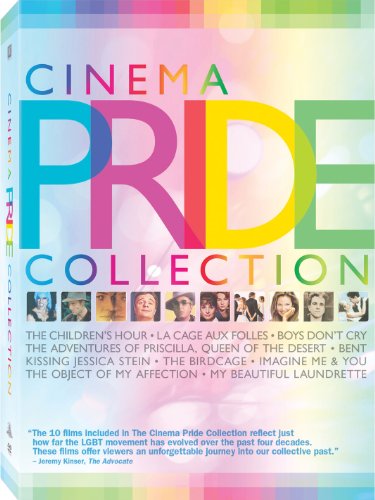
As the name suggests, this is a collection of ten movies on LGBT themes. In chronological order, here's what we have:

The Children's Hour (1961): Shirley MacLaine and Audrey Hepburn are the headmistresses of a girl's school, and their lives are turned upside down when one ghastly little child accuses them of being romantically involved. It is clear, though, the MacLaine would very much like to be. This was director William Wyler's second stab at adapting Lilllian Hellman's play, and this time was able actually to deal with the play's central issue, rather than disguise it as he had to

In Florida we have some very large bugs. There's this one particular spider that is quite a problem in my house. It's real name is a huntsman spider, and it grows to about 16 feet, not including the legs. It sports 27-inch fangs and tends to move the furniture around at night while it stalks its prey. Yes, it stalks its prey at night in my house while I'm trying to sleep. Years ago I coined my own name for these clever, ferocious killers. I call them Rambo Spiders. The name fits these long-legged freaks perfectly as they perform their recon missions throughout our home. When I find them, I terminate them with extreme prejudice. I suspect that if these arachnids happen to be movie fans, they have a name for me, as well. You guessed it: Rambo.

John Rambo was the brainchild of novelist David Morrell. In his novel you'll find a John Rambo who is very much like the one played by Sylvester Stallone, yet quite different, as well. While he retains that one-man-fighting-machine persona, in the book he is much more of a cold-blooded killer than the man we meet in the franchise's first film. In that movie, Rambo disables the police and whoever else stalks him, but he never kills one person in that film. The officer who does die does so because of his own actions, not Rambo's. He's actually a very innocent man, when we first meet him. There's a vulnerability that we see in that film's first five minutes that we never will see again over the course of four films. Credit Stallone for allowing us those fleeting moments that you won't find anywhere in Morrell's book. But it is the Rambo as portrayed by Stallone that has become the cultural icon and household word today. The term is in most modern dictionaries, usually to describe a relentless force of strength, which brings me back to those spiders. And before you animal rights people start writing me your displeasure over my spider kills, understand that it's more than a fair fight. They have those 99 inch fangs, and all I have is a rolled-up newspaper.

The Real McCoys was a major TV hit during its run of 1957-1963. Starring three-time Oscar winner Walter Brennen and a pre-Rambo Richard Crenna. Led by Grandpa, the family move from Virginia to California (sound a touch familiar?) and is comprised of brothers and sisters that range in age from their twenties right down to eleven. This series paved the way fir rural comedies, especially the Beverly Hillbillies, proceeding it, and Brennen's voice set the bar for wiley Southern farmer characters for a generation.

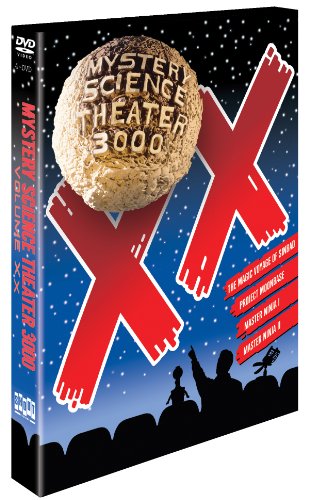
This series from Comedy Central began as a low-budget film hosting show in a small television station in Minnesota. It was the brainchild of Joel Hodgson. It ended up running for 11 years and a feature film version.

Mystery Science Theatre is an acquired taste. For me, I’ve really got to be in that certain mood to watch it. That’s the beauty of these DVDs. You pop them in when you’re ready. The idea is pretty whacked. Depending on the season you’ve got, Joel or Mike is trapped in space on the “Satellite of Love”. Doomed to spend his life watching very bad films, our hero makes the best of a bad situation. He uses his resources to construct a couple of robot pals. There's Crow T. Robot (Beaulieu), Tom Servo (Murphy), and Gypsy (Mallon). Part of an experiment together, they watch the films from the front row, constantly ranting throughout. If you’re like me, you’ve invited a few friends over to watch a schlock festival. The movies weren’t as important as the banter you created while watching. That’s exactly what you see here. The silhouettes of our host and his robots dominate the lower portion of the screen, where they provide alternative dialog and sometimes witty commentary on the action. The two evil station owners/mad scientists send them a new bad film each week to observe their reactions to the bombs. The films are broken up by off-the-wall skits and fake commercials to alleviate the tedium. This DVD collection is better than some because it includes films from four different seasons to give you a good sample of the overall series.

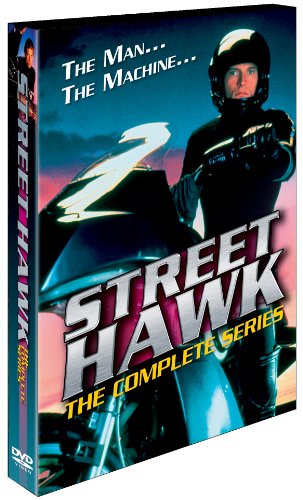
Street Hawk is an adventure series about a young cop named Jesse Mach, played by one-time 80s pop idol Rex Smith, who gets injured on the job and is selected to be a part of an experimental motorcycle / vigilante program (funded by the government), that is helmed by computer genius Norman Tuttle, played by a pre-Murphy Brown Joe Regalbuto.

A time of change is descending on the America and the men and women of the Sterling Cooper ad agency. The civil rights movement is underway, and (at the end of the season), President Kennedy is assassinated. Personal lives are also undergoing upheaval. Peggy is learning to express her sexuality, while the closeted Stan wrestles with some painful reckonings involving his own. And Don's marriage hits a crisis thanks to his serial philandering and a huge secret from his past.

Easily one of the most acclaimed shows of recent memory, Mad Men hardly needs me to point out how strong its performances are, how intelligent its scripting is, and how beautifully it's shot. But at the risk of being branded a heretic, I would point out a few gaps in the emperor's clothes. The series is highly inaccessible to new viewers, assuming as it seems to that everyone watching has been doing so from the first. I had only seen a couple of episodes prior to plunging into this set, and was often frustrated by the plethora of significant glances between characters that clearly spoke volumes about past events. Not only did I have trouble figuring out what was going on, I wasn't always certain that anything was. Yes, the writing is very smart, but it can, at times, wear that intelligence a little too ostentatiously – little bits of business involving a child reading Gibbons' Decline and Fall of the Roman Empire to her grandfather, or executives trading quips about Balzac feel show-offy to me. (And while we're on the topic, be wary of the knowledge you're going to parade. At one point in Episode 1, we are informed that London no longer has fogs. That is true now, but is a very anachronistic statement to be making in 1963, as my parents can attest to.) Finally, there is a certain coldness to the affair that I found made it hard to particularly care about any of the characters. Again, none of this is to deny the program's manifold and great qualities, but for my money, it isn't quite in the same stratospheric heights as something like The Wire.

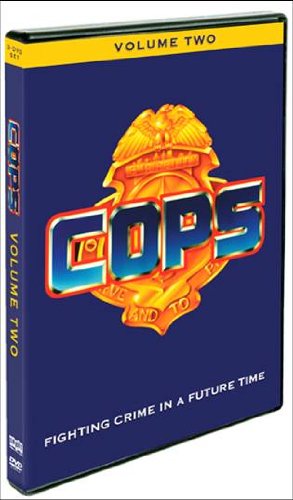
C.O.P.S aired in 1988, one year after the debut of Robocop, and the future-cop theme and design is clearly influenced by Verhoven's violent satire. As a child I caught onto this influence immediately and a part of me always saw it as derivative (along with some Judge Dredd influence). Watching it now I get an eery knot in my stomach as I realize just how silly and loaded with slapstick this cartoon really is, and yet cannot help but still recognize the design influence of Robocop. Throughout there is this strange paradox of immensely threatening looking characters doing terribly silly things. One should expect these various behemoths to be murderers, rapists or just violent thugs (just look at the caricature grins most of them have and tell me I'm wrong) and yet they're stealing fur coats and cavemen and all have goofy voices....my brain takes a while to process all of this.

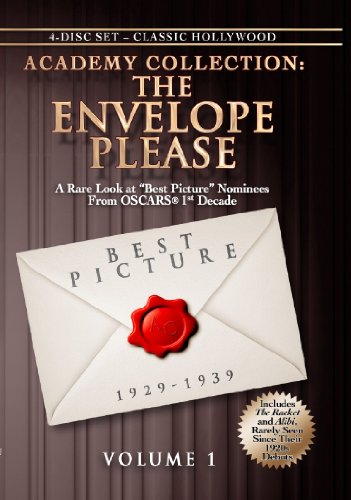
Infinity Entertainment's latest themed grouping of public domain movies deserves some props for originality: eight features that were up for Best Picture during the first decade of the Oscars. Not a single one actually won the prize, but as we all know, that doesn't mean they weren't worthy of doing so.

In chronological order, then, here are the nominees: