Box Set

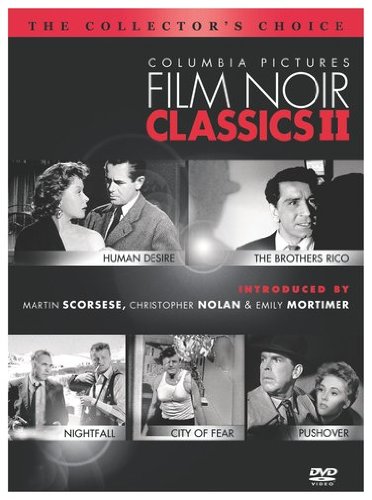
“In the 1940’s, a new genre – film noir – emerged from the world of hard boiled pulp magazines, paperback thrillers and sensational crime movies. These films, tough and unsentimental, depicted a black and white universe at once brutal, erotic, and morally ambiguous.”

And so Sony collects 5 of these films as part of what looks like is going to be an ongoing series. But what exactly is film noir? You hear the word used from time to time, but what does it mean?

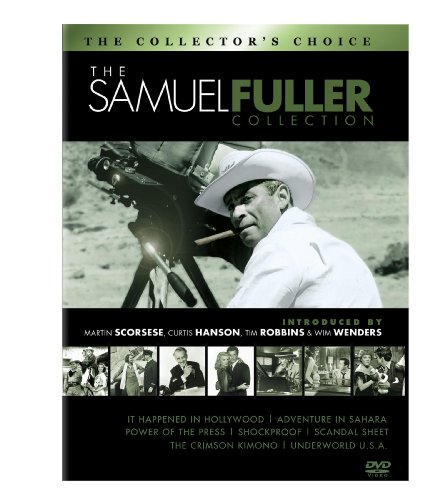
Sam Fuller lived quite a life before he ever even thought about working in the film industry. He was a crime beat reporter at 17 years old. He served in the infantry in World War II, turning down a cushy press corps assignment. Both of these experiences would shape the man, writer, and filmmaker he was to become. His newspaper experience gave him access to a lifetime of stories, an understanding of the newspaper business, and a honed writing skill. That ability would serve him most. Fuller was a writer more than a filmmaker, and it was with his typewriter that he most excelled. The war would emotionally scar him. He may have entered with the typical young ideas of glory in the battlefield, but he left with visions of death and gore that he could never forget. It hardened the man. Instead of turning bitter, he found a way to exorcise those demons and ultimately made a heck of a living in the process.

His films are, if nothing else, quite unique. He wasn’t raised in the same studio environment as most filmmakers, and there was always a kind of docudrama feel to almost everything he wrote or created. He was excessively patriotic in his younger years, but at the end of his life he became disillusioned and moved to Europe. His films were almost always steeped in the film noir of the early 30’s and 40’s, even his later works. Everything from the characters to the words they spoke had a decidedly Fuller reality to it. Known mostly for smaller budget films, Fuller was prolific and could work quickly.

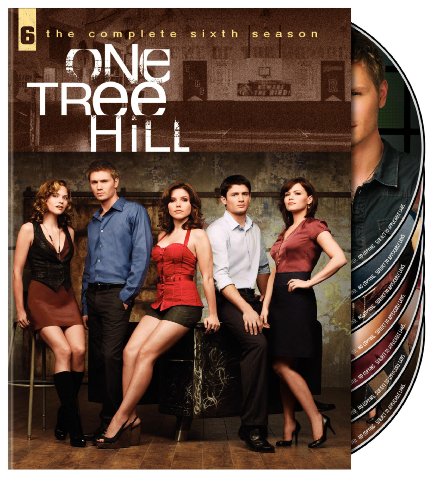
This season finds the protagonists well beyond high school, now having adventures in the adult world. So writer Lucas, in the midst of promoting his book, proposes to Peyton. Brooke fights to save her clothing business from the clutches of her mother From Hell. Piece of work Dan is flattened by a car and then finds himself in the hospital, helpless, badly injured, and at the mercy of a sadistic nurse out for revenge. Basketball player Nathan doesn't know that his mother is having an affair with one of his friends. And on we go, and I haven't even mentioned the episode that's a fantasy construction of Lucas', relocating the entire cast and setting to the 1940s.

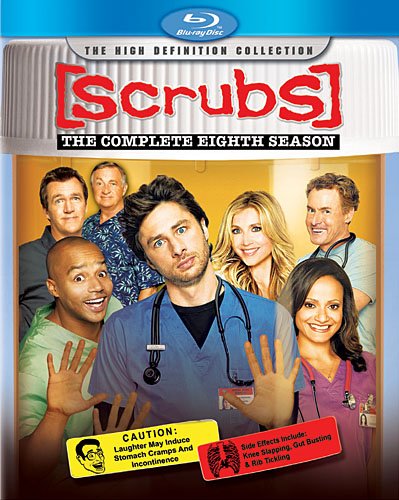
When we left J.D., Turk, and the rest of the staff of Sacred Heart Hospital at the end of their seventh season, there were good reasons to believe we had seen the last of Scrubs:

1)    The show had suffered the lowest ratings in its history.

“Four turtles. Four brothers genetically reborn in the sewers of New York. Named after the great Renaissance masters and trained as ninjas. They battled many creatures and foes before defeating their arch enemy, The Shredder. But, now a greater evil is poised to destroy their brotherhood. An evil born 3000 years ago.”

What started as a low budget comic has grown into quite a sensation. The Turtles are everywhere. There are cartoons, books, comics, movies, and thousands of toys. They’ve been translated into just about every language in the world. The 1980’s and 1990’s were alive with Turtle power. With yet another film now in the works, the Turtles are about to make a comeback. While the characters might not have started with the 80’s cartoon series, that’s where it made its greatest leap in popularity. The show ran for over a decade, a rare record for cartoon shows of the era. Then came the inevitable movies. Three of them in all during the live action phase. The Turtles were part actor and part animatronics Jim Henson creation ala the Disney/ABC Dinosaurs television series. The fourth was a recent (2007) CGI film. All four are collected here for the first time in high definition Blu-ray in a rather righteous collection. The case is a pizza box, and each of the four discs resemble different kinds of pizza. There’s also a bit of swag to be found in the spacious box. You get character cards featuring shots from the live action films, a signed black and white sketch, a comic book detailing events from the first film, and a “radical” beanie for your head. It may be a bit corny and somewhat impractical, but it beats those crazy eco cases that are getting way too popular in the industry.

I, of all people, should know that one person's cultural detritus is another's fond nostalgia, and what better example of that can there be than this release. A strange mix of athletic contest, pro-wrestling posturing and silly gimmick game show, this series (which has recently been reborn) pitted hard-bodied contestants against the even-more-hard-bodied (at least in appearance) Gladiators of the title. Some contests involve knocking each off a beam, or dodging tennis balls fired from a gun while trying to get in a shot of one's own. Or then there's swinging in on a rope in the attempt to knock the Gladiator off a pedestal. It's all pretty silly, made even more so by the straight-faced colour commentary. If the intent was to satirize sports broadcast generally, then this is quite brilliantly funny, at least at first, but the joke can't sustain itself over multiple seasons. Basically, it is what it is. If you enjoyed the show when it first ran, then perhaps you'll enjoy it again (but is there anything less intended for multiple viewings than a game show?). If you are unfamiliar with the concept, probably best to stay that way. For the benefit of the completists out there, it should be noted that this set begins halfway through Season 1.

Running for a single season in 2008, this ABC Family production is a humorous pastiche of superheroics and Avengers-style adventure. Natalie Morales plays Wendy Watson, a struggling artist making ends meet as a temp. When she demonstrates incredible unflappability when a monster is unleashed at her current job, straight-arrow superhero the Middleman (Matt Keeslar) recruits her to join him in the fight against all sorts of bizarre menaces. A sampling of titles gives the flavour of the series: “The Boy-Band Superfan Interrogation,” “The Palindrome Reversal Palindrome,” “The Flying Fish Zombification.”

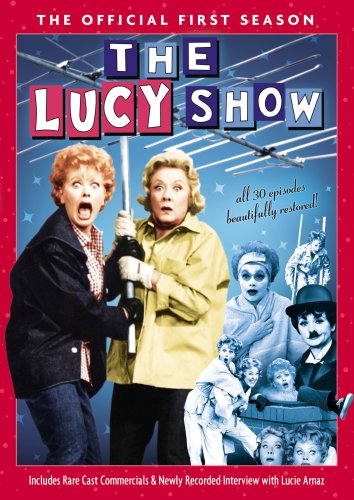
This was Lucille Ball's follow-up to I Love Lucy, and the first season is, apparently, the most highly regarded one. Here Ball is a widowed mother of two, sharing her home with best friend Vivian Vance, who is a divorced mother of one. All the other members of household are, of course, faced with the disasters triggered by Lucy. I screened this set immediately after viewing its close contemporary, Petticoat Junction, and the difference between the two was instructive. There are plenty of hoary gags and situations on The Lucy Show, but there is an enormous difference between the shows thanks to the comic genius of Lucille Ball. Her energy fills each episode, her timing is spot-on, but there is also her commitment to a type of physical comedy that to this day remains pretty much the exclusive domain of male performers. Not only does she make this style her own, she grounds it in a female reality. There is a reason she was so beloved a performer, and why her work still stands up today.


Though the image is a bit soft, with features losing definition in long shots, the picture is still looking remarkably good for television from 1962-63. The black-and-white tones are very warm, and the grain, though present, is minor. There is no edge enhancement to deal with. It is, frankly, very unlikely that these episodes have ever looked better.

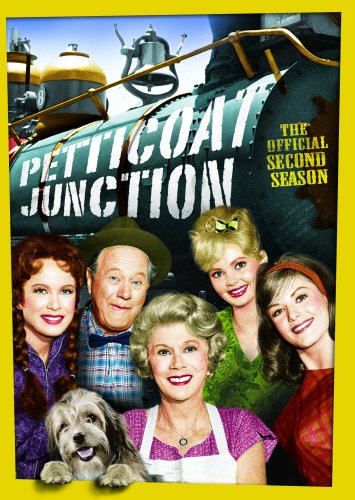
Once upon a time, there was an age of TV where hit shows where women in their 20s played high school students, and an entire episode could revolve around the burning crisis of whether the dog that followed one daughter home could stay. It is from this era that Petticoat Junction hails. This series about a widowed mother and her three daughters tending the Shady Rest Hotel ran for seven years, and begat both Green Acres and The Beverly Hillbillies, in that characters from all three series would interact with each other.

So our principle cast here consists of mother Kate Bradley (Bea Benaderet), daughters Billie Jo (the flirt, played by Jeannine Riley), Bobbie Jo (the bookworm, played by Pat Woodell, who would leave after this season), and Betty Jo (the tomboy, played by Linda Kaye Henning, daughter of series creator Paul Henning). Throwing in his two bits is lazy Uncle Joe (Edgar Buchanan). Joining the cast this season is Higgins the dog, who would subsequently star as Benji, and thus eclipse his human co-stars.

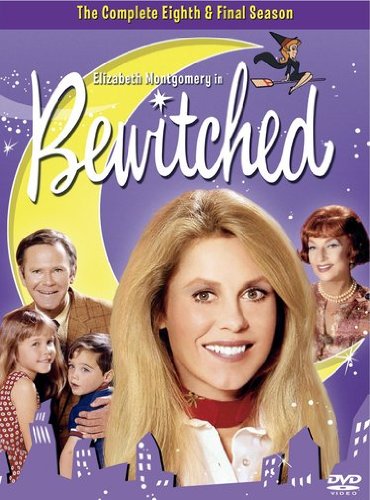
This, the final season of the series, opens with Samantha (Elizabeth Montgomery) and Darrin (Dick Sargent) on a European tour. This means stock shots of various European landmarks before we return to rather unconvincingly dressed-up studio backlots. There are a few two-parters in the mix, including the opening episodes, where Samantha is zapped back to the court of Henry VIII, and a late-season adventure where the time travel goes the other way, and George Washington is brought forward to the present. Special note should be made of Episode 3, where the Loch Ness Monster shows up, in all his googly-eyed, man-in-a-costume glory.

There's a certain brazenness, it seems to me, for any show, even a budget-conscious one in 1972, to limit itself to the special effects technology of 1896. Indeed, there is nary a moment that couldn't have been accomplished by Georges Méliès. As for the humour, well, it's very much of its period – in other words, it creaks very badly, with the laugh track kicking in at every single line. I remember watching this show as a kid, and getting some fun out of it, though preferring the identically themed I Dream of Jeannie (for reasons now that I cannot recall). Basically, this is mildly entertaining for the nostalgic, but not much more.