Posted in: Disc Reviews by Archive Authors on November 12th, 2010
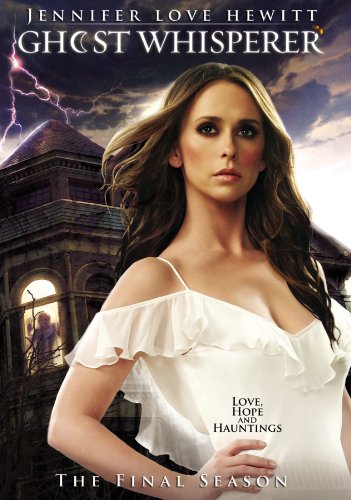
Melinda Gordon (Jennifer Love Hewitt) is basically the kid from The Sixth Sense, only with boobs, killer cheekbones, and a formerly lucrative pop career. I may not be entirely accurate about that last item, but until this 6-disc set arrived, I had not really watched the show. It always seemed a little too Touched by an Angel meets The Sixth Sense meets Jennifer Love Hewitt’s aforementioned cheekbones for my taste. Upon viewing the episodes in this set, I pretty much stand behind that assessment, and though it is still not my particular cup of tea, I can understand its appeal to its fans.
The show revolves around Melinda’s ability to communicate with ghosts, spirits of the dead who have unfinished business in this realm and are unable to cross over to the next world. Whether that’s heaven or another dimension is never expanded on in the show, so it avoids awkward questions about religion. In most episodes, she comes in contact with one of these troubled spirits, and then spends the episode working out what happened to them, what’s keeping them from crossing over, and things of that nature. She does this with the help of a stalwart group of friends, some of who have abilities of their own. Jamie Kennedy’s character, for example, can’t see but can hear dead people. A second gifted character is introduced in this season, but we’ll get to that in a minute.
Posted in: Disc Reviews by William O'Donnell on October 15th, 2010
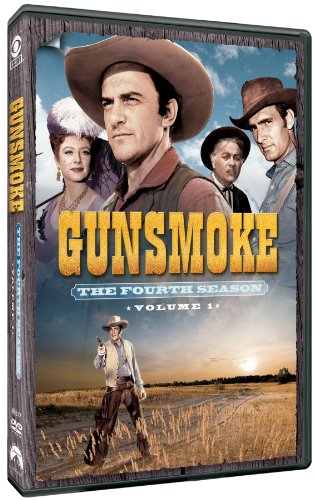
Gunsmoke, in all of its 20 seasons, making it the longest running prime-time drama of all time, has such a strong legacy that it feels odd to review it. Thankfully the challenge is an enjoyable one as the show is at a full head of steam in its fourth season (it was ranked #1 at this time) and each episode is still as engrossing today as it was over 4 decades ago.
James Arness plays Marchall Matt Dillon, and is the law of Dodge City. Both him and the local doctor have rather stony demeanors when it comes to death, and death seems plenty common in 1800s Kansas. More often than not the criminal behind each episodes story is shot dead by the quick draw of Dillon before they could ever see a trial. I suppose that just makes the opening narration all the more suiting as many episodes start with a stock scene of Dillon wandering through a graveyard as Dillon narrates his musings on those that have made one too many mistakes and earned themselves a spot in that yard.
Posted in: Disc Reviews by Archive Authors on October 13th, 2010
Written by Diane Tillis
Considered by many to be the first televised miniseries, Rich Man, Poor Man became a television ‘event’ in the late 1970s and opened the doorway for other miniseries to follow. A&E and NBC Universal restored and compiled the two-part, thirty-four episode long show on DVD format in this one-of-a-kind collection. It was difficult for me to grasp the importance of this show just by watching it because I wasn’t born until the late 80’s. I decided to surf the internet to gain insight on a true fan’s response to the show and their impression of this collection. It was not hard to discover that the fans of Rich Man, Poor Man have been waiting with bated breath for the show to be released on DVD.
Posted in: Disc Reviews by William O'Donnell on October 13th, 2010
Having been dropped by NBC, Medium finds a new home for its sixth season at CBS. The story of a psychic working for a Phoenix (I could have played off their location's name and used it as a metaphor for this show rising from the ashes onto a new network...but I'm a much classier and restrained writer than that) district attorney's office. Meanwhile, her husband struggles with a new job and when it comes to her daughters, there is evidence that there might be more than one psychic in her household.
I did not follow this show before, but had watched a few episodes previous to reviewing this season. Something I had always admired about this program was the dynamic the family has with each other. Driving the plot of each episode is a crime mystery, but instead of new evidence arriving as it might in a CSI or Law and Order, our hero would dream the truth, making for a supernatural side to things. Despite this, the writing would blend said supernatural elements into their daily bickering and family matters until it seemed utterly domestic. Now with a daughter showing powers the family is becoming significant in different ways but all the while never ignoring facts of life that occur and change over the six years that this show existed, such as the girls growing up, job changes, sickness etc. Perhaps what I admire about this is not only how the show does not hinge on the psychic aspect of things, but also creates an all the more believable family unit while doing so. Much credit for this goes to the more than capable leads Patricia Arquette and Jake Weber (who plays her husband) as well as the writing staff.
Posted in: Disc Reviews by Gino Sassani on October 6th, 2010
One Flew Over The Cuckoo's Nest was the first movie I ever saw on HBO. These were the very early days of the cable network. It was before the dawn of any real home video. It was at my Aunt Shirley's house that several members of the extended family gathered in dining room chairs around a 19-inch television to watch a movie uncut and without commercial interruption for the first time in our lives. A lot has changed since that 1970's afternoon at my aunt's house. Today we have hundreds of such choices on our television dials. I've seen a huge wave of home video technologies since that day that have included CED video discs, VHS/Beta, laserdisc, DVD, and now high-definition Blu-ray and movies on demand. The entire game has changed since that gathering 35 or so years ago. One thing has not changed a bit. One Flew Over The Cuckoo's Nest was a dynamic and compelling film that day. It remains so today.
R.P. McMurphy (Nicholson) is a repeat criminal who has caused more than his share of trouble in the system. He is sent to the Oregon State Hospital to have his sanity evaluated. There the head psychiatrist Dr. Spivey (Brooks) doesn't really think he's crazy. But McMurphy is held over for observation. He's placed inside a general population ward where he comes into contact with the resident "crazies" of the hospital. He takes a particular liking to Billy (Dourif) who is a sexually repressed teenager who stutters and lacks any kind of self-confidence. In a big way, he is the opposite of McMurphy himself, who is quite the extrovert and borders on manic most of the time. There is an Indian man who is about as big as a mountain who the staff and inmates simply call Chief (Sampson). At first Chief is the subject of mockery from McMurphy, but the allegedly deaf and dumb Indian soon earns McMurphy's respect, something we quickly understand is a rarity for McMurphy. Other patients include the childish Cheswick (Lassick), the shy and naive Martini (DeVito), the borderline psychotic Taber (Lloyd), and Harding (Redfield) who was pretty much the crew's unofficial leader before McMurphy came along. In charge of the ward is the indominable Nurse Ratched (Fletcher). A battle of wills soon develops between McMurphy and the cold nurse. What McMurphy doesn't know is that she has the power to keep him even after his original jail sentence has expired.
Posted in: Disc Reviews by David Annandale on September 20th, 2010
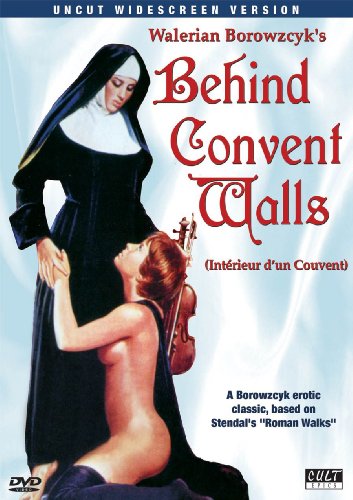
A nunsploitation box set was always an inevitability, and here the good people at Cult Epics chime in with just such a collection, one limited to 2500 copies. There are only two films here, but they are two good ones, the works of strong directors. One is a distinctively idiosyncratic work, showing the unmistakable hand of its filmmaker. The other will quite simply knock you out the back wall.
Behind Convent Walls is Walerian Borowczyk's contribution to the subgenre. A repressive abbess rules her convent with an iron fist (not to mention the blade concealed in her cane), but the sexuality of the nuns will not be repressed, and it will make its presence known, whether through rebellion or madness. The film defies any linear summary, given that it is almost impossible to tell the nuns apart, and the various incidents are not only disconnected, they take place with very little motivation or logic. Instead, we have a strikingly beautiful exercise in pure cinema. The Aurum Film Encyclopedia: Horror, on the subject of Borowczyk's Docteur Jekyll et les Femmes, notes, “Borowczyk's imagery, here fed by his fetishistic fascination with all things antiquarian, is often stunning and the film becomes a sort of still life in which familiar yet alien objects … seem imbued with a secret significance all their own.” Exactly the same is true for Behind Convent Walls. While nowhere near as powerful a film as The Beast, it is nonetheless well worth one's full attention.
Posted in: Disc Reviews by Archive Authors on September 13th, 2010
“Greed is Good.”
No other cinematic phrase described the 1980’s better. And no other movie captures the financial corruption of the 80’s better than Oliver Stone’s Wall Street.
Posted in: Disc Reviews by David Annandale on July 31st, 2010
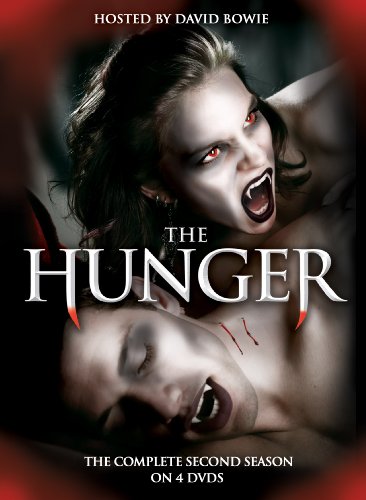
The second (and final) season of this erotic horror anthology series follows the pattern set down by the first. David Bowie replaces Terence Stamp as host, and takes up the job of briefly uttering portentous statements before each story rolls. These stories star such luminaries as Giovanni Ribisi, Eric Roberts, Jennifer Beals and Lori Petty, and are based on tales by a pretty impressive line-up of line-up of writers: Poppy Z. Brite, Kim Newman, David J. Schow, Gemma Files and Ramsey Campbell, to name but a few.
As before, the erotic fixations give the series a clear identity, but also narrow its focus so that a marathon viewing of episodes would be a bit tiresome. But again, as before, the talent involved means horror fans would be remiss to pass the series up without giving it a serious look.
Posted in: Disc Reviews by David Annandale on July 31st, 2010
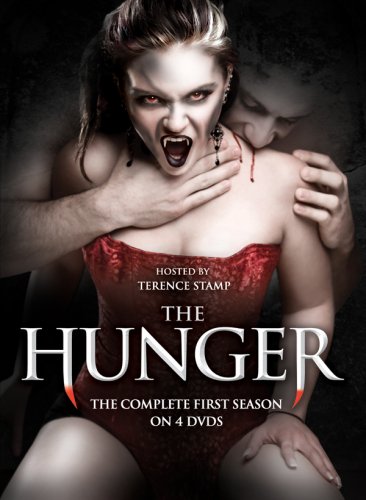
In 1983, director Tony Scott wasn't quite as prone to self-caricature as he is today, but he was already enamored of glossy, pretty surfaces, and if nothing else, his vampire movie The Hunger was glossy and pretty. The film arguably remains the most high-profile mixture of eroticism and horror, its place in libidinal history cemented by the love scene between Susan Sarandon, Catherine Deneuve, and Deneuve's body double. The film's lasting cult appeal resulted in a short-lived TV horror anthology series, presented by brothers Tony and Ridley Scott, and running two seasons (1997-8 and 1999-2000). Here we have Season 1, hosted by Terence Stamp.

The series' mandate was to present glossy sex-and-horror tales in a half-hour format. In this respect, it follows in the footsteps of The Hitchhiker (1983-91), but the intervening years mean generally better production values for The Hunger. An annoyingly long opening credit sequence leads to an enigmatic 30-second intro from Stamp (everything set to the sort of flashy cutting and visual excess that sure feels like it was directed by Tony Scott, even if it wasn't). The actual stories are notable for their talent on both sides of the camera – directors such as Russell Mulcahy, Patricia Rozema, and Tony Scott; actors like Daniel Craig, Karen Black, and Jason Flemyng. Even more interesting is the fact that just about every story is either adapted from a short story by a notable writer (Robert Aickman, F. Paul Wilson, Brian Lumley, Edgar Allen Poe) or scripted by one (Harlan Ellison, David Schow). The limitations of TV and budget are still present (beware some extremely ill-advised CGI), and the centrality of sex to the narratives mean that things can feel repetitious if you watch many episodes back to back. On the other hand, there is also some genuinely disturbing imagery here (check out the climax to “Necros”). In small doses, then, worth watching.
Posted in: Disc Reviews by David Annandale on July 26th, 2010
As the name suggests, this is a collection of ten movies on LGBT themes. In chronological order, here's what we have:
The Children's Hour (1961): Shirley MacLaine and Audrey Hepburn are the headmistresses of a girl's school, and their lives are turned upside down when one ghastly little child accuses them of being romantically involved. It is clear, though, the MacLaine would very much like to be. This was director William Wyler's second stab at adapting Lilllian Hellman's play, and this time was able actually to deal with the play's central issue, rather than disguise it as he had to