Special Category

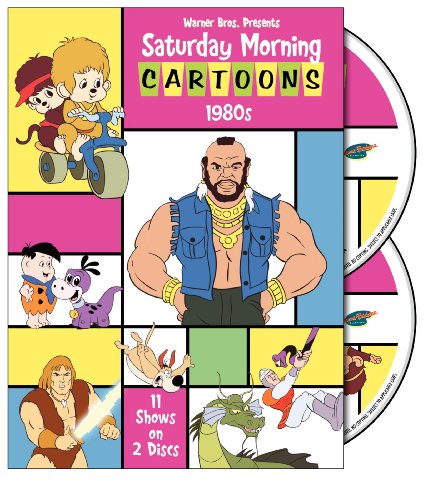
Most of my growing up and living occurred in the 1980’s. From ages five to fifteen, I grew up in an era that was famous to many different types of cartoons. It helped to shape my personality, from bad jokes to that unmistakable sarcasm. So, it was easy to attract me to a cartoon set that showcased odds and ends from that familiar era. Join me as we take a step back in history, a history that hits very close to home.

The first toon we find is one called Goldie Gold & Action Jack. They fight by air, by sea and by the seat of their pants. They aren’t kidding. Goldie is a certified lunatic: she rides a helicopter indoors, jumps out windows and talks to hobos. Doesn’t she know that she is blonde and rich? Jack really isn’t all that Action, he’s just good at being lucky. The show is very gadget heavy and has a little Scooby Doo sleuthing thrown in.

A time of change is descending on the America and the men and women of the Sterling Cooper ad agency. The civil rights movement is underway, and (at the end of the season), President Kennedy is assassinated. Personal lives are also undergoing upheaval. Peggy is learning to express her sexuality, while the closeted Stan wrestles with some painful reckonings involving his own. And Don's marriage hits a crisis thanks to his serial philandering and a huge secret from his past.

Easily one of the most acclaimed shows of recent memory, Mad Men hardly needs me to point out how strong its performances are, how intelligent its scripting is, and how beautifully it's shot. But at the risk of being branded a heretic, I would point out a few gaps in the emperor's clothes. The series is highly inaccessible to new viewers, assuming as it seems to that everyone watching has been doing so from the first. I had only seen a couple of episodes prior to plunging into this set, and was often frustrated by the plethora of significant glances between characters that clearly spoke volumes about past events. Not only did I have trouble figuring out what was going on, I wasn't always certain that anything was. Yes, the writing is very smart, but it can, at times, wear that intelligence a little too ostentatiously – little bits of business involving a child reading Gibbons' Decline and Fall of the Roman Empire to her grandfather, or executives trading quips about Balzac feel show-offy to me. (And while we're on the topic, be wary of the knowledge you're going to parade. At one point in Episode 1, we are informed that London no longer has fogs. That is true now, but is a very anachronistic statement to be making in 1963, as my parents can attest to.) Finally, there is a certain coldness to the affair that I found made it hard to particularly care about any of the characters. Again, none of this is to deny the program's manifold and great qualities, but for my money, it isn't quite in the same stratospheric heights as something like The Wire.

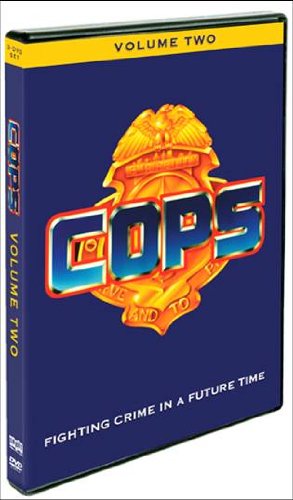
C.O.P.S aired in 1988, one year after the debut of Robocop, and the future-cop theme and design is clearly influenced by Verhoven's violent satire. As a child I caught onto this influence immediately and a part of me always saw it as derivative (along with some Judge Dredd influence). Watching it now I get an eery knot in my stomach as I realize just how silly and loaded with slapstick this cartoon really is, and yet cannot help but still recognize the design influence of Robocop. Throughout there is this strange paradox of immensely threatening looking characters doing terribly silly things. One should expect these various behemoths to be murderers, rapists or just violent thugs (just look at the caricature grins most of them have and tell me I'm wrong) and yet they're stealing fur coats and cavemen and all have goofy voices....my brain takes a while to process all of this.

If you're reading this review, you must surely already know what the movie is about. We're talking, after all, about what must surely be the single most celebrated case of mistaken identity in the history of film. Cary Grant stands up in a lounge at just the wrong moment and is mistaken for a man who doesn't exist. That utterly perverse mix of chance and paradox, leading to ever more dangerous situations for Grant, in an ever more complicated tangle of battling conspiracies, is so utterly Hitchcockian, it might just as well be trademarked.


The film is also very funny, as so much of Hitchcock's work is. Of course, much of his humour is black as pitch, and that mordant wit is certainly still present here, but there is also a joviality to the proceedings, due in no small measure to the presence of Cary Grant. Unlike the Jimmy Stewart of Vertigo and Rear Window, whose screen image of fundamental decency makes the deeply flawed, pathological aspects of his characters even more painful and weighty, Grant here keeps things light, as his character is just as aware of the absurdity of his perils as we are, and is just as likely to be amused. But if this is Hitchcock working in a lighter vein, that astounding perversity keeps poking through. What are we to make, for instance, of that creepily close relationship Grant has with his mother?

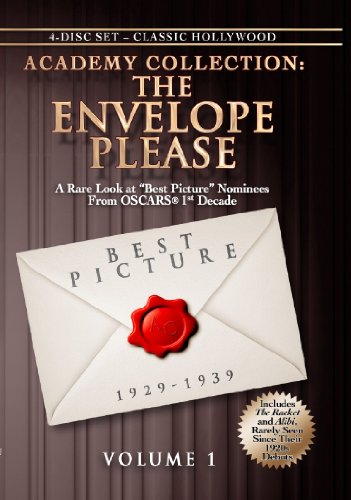
Infinity Entertainment's latest themed grouping of public domain movies deserves some props for originality: eight features that were up for Best Picture during the first decade of the Oscars. Not a single one actually won the prize, but as we all know, that doesn't mean they weren't worthy of doing so.

In chronological order, then, here are the nominees:

An ancient facility beneath Antarctica becomes the launching platform to the lost city of Atlantis. Atlantis is buried beneath an ocean in another galaxy and can only be reached with an additional symbol on the Stargate. Because of power limitations this trip, at least for the time being, is a one-way adventure. A crew of scientists and military officers from many countries assemble to explore the Pegasus Galaxy from the Atlantis gate. Led by scientist Dr. Weir (Higginson) and Maj. John Sheppard (Flanigan) they take over the Atlantian command center and begin to explore. In their initial investigations they accidentally awaken the area’s top bad guys, The Wraith. These vampire-like beings suck the life-force out of humans.

When Stargate SG-1 was about to enter its ninth year, there was speculation that after season 8 the series would bow out gracefully with the anticipated exit of Richard Dean Anderson. With that plan in mind, the folks at Stargate Command decided it was time to spin off the franchise, and so was born Atlantis. Stargate Atlantis boasts pretty much the same production team as SG-1. The quality of the production and tight storytelling have translated well to this sister series. Stargate Atlantis took a little getting used to. I wasn’t sure the characters had enough chemistry or were even dynamic enough to carry the high expectations for a Stargate series. Those concerns eventually evaporated by the time Atlantis began to live without the SG-1 companion series. These characters really took off, and they’ve developed into nearly as strong a group as SG-1 ever was.

Cult Epics here presents us with their second box set of films by ex-pat Spanish surrealist/'pataphysician/provocateur Fernando Arrabal. These are more recent works, and are, arguably, even more of an acquired taste than the earlier set, though not necessarily for the reasons one might think.

Car Cemetery is the 1983 TV version of his 1958 play. In a dystopian future, the punk/S&M/whatnot inhabitants of the titular setting live through a rock-n-roll version of the Passion. What would have been a hell of a taboo-buster in 1958 hasn't aged well. Quite apart from the very 1980s costume design of the film (in the most unfortunate ways), the religio-political points, clearly aimed at Franco's Spain, no longer have the same bite when re-staged in the post-Franco era, and today seem altogether precious and rather twee.

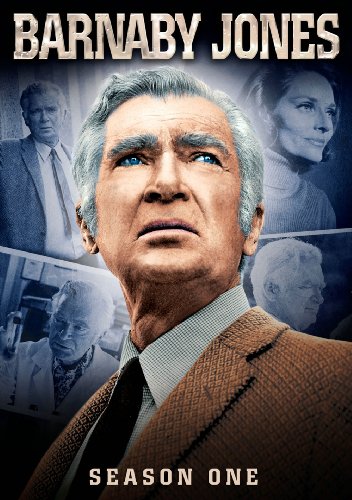
In many ways Barnaby Jones was seen as the Matlock of private Detectives. The title character's age alone gave him a similar, elderly fan-base that sustained the program for eight seasons. As a spin-off from Cannon, producer Quinn Martin offered us yet another protagonist who is designed to be perpetually underestimated (Cannon because of his obesity, and Jones for his age). Buddy Ebsen (who most know best as Jed Clampett from the original Beverly Hillbillies) is Barnaby Jones, who is always accepting a cold glass of milk over a hard drink, and always asking “a lot of questions” to catch the bad guy.

What good would come from me panning a series that ended over 15 years ago? Would personal satisfaction be enough? I hope so because I'm moving forward with this.

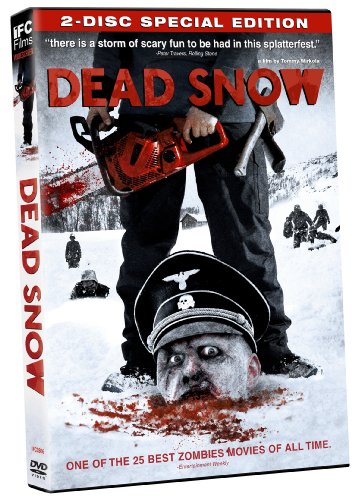
In my lifetime, I’ve really only liked five zombie movies. There is Shaun of the Dead, the three Resident Evil movies, and Zombieland. Most of the other zombie type films either belong in the “Way too Gory” or “Nonsense” designation. So, naturally when I receive a zombie movie like Dead Snow, there is some apprehension. However, in this case I can say that this movie belongs in both of those designations and delightfully so.

The movie opens with a lady (played by Ane Dahl Torp) and she is chased through the snowy mountains of Norway. The creatures ultimately corner her and eat her alive. We notice that the zombies have strange costumes as we fade to black. We re-open with seven medical students who are spending their vacation at a cabin up in what appears to be the same mountains.