Special Category

“Who? Or What is the newest, most breath-taking, most sensational super-hero of all?”

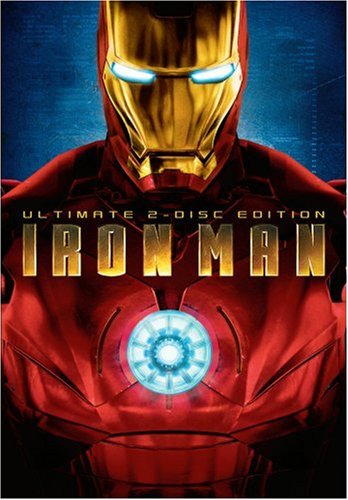
That was the question asked on the cover of Marvel’s Tales Of Suspense issue number 39. Pictured with that buildup was a character quite different from the Iron Man that we would come to know and love over the next 40 plus years. He was all silver and appeared to be wearing combat boots. He was not very slender, and you could almost hear the clunking as he moved. By the next issue he was gold colored. By Issue number 48 of that same series, the new and improved Iron Man look would appear for the first time. He was sporting the red and gold colors that would be relatively unchanged for decades. Certainly the suit evolved over the years, but Iron Man’s basic design was born. It was December, 1963. In issue 53 the book would begin to incorporate the name of Iron Man into its front page header. Finally in May of 1968 Tales Of Suspense gave way to The Invincible Iron Man. The hero would often be teamed with the likes of Captain America and The Hulk. The Marvel universe was extremely fluid, and characters often crossed over into other books. The ultimate result would be the Marvel Avengers book, which was an answer to DC’s Justice League. It didn’t come as any surprise that Iron Man would be a founding member of the team. His alter-ego Tony Stark would become the all important finance, weapons, and gadgets supplier to the group.

Shonda Rhimes had a big hit on her hands with Grey’s Anatomy, so after five years she did what comes naturally in her situation. You spin the success off in the hope that the fans just can’t get enough in just one night. At first it appeared to me she had chosen the wrong character to put out on her own. I mean, I never considered Kate Walsh as Addison to be one of the show’s more compelling characters. The show was presented as what the business calls an imbedded episode on Grey’s. What that means is that the situation is set up during one of the original show’s episodes. In this case a two parter called The Other Side Of Life. The idea is that you want to be sure that your existing show’s fans at least watch the pilot in the hope that they will consider it a part of their beloved series. I got to watch that episode when I was called upon to review the fifth season of Grey’s. I was new to the whole universe, so I believe I was able to approach the spin-off more objectively. To tell the truth, I didn’t like it at all. And so I considered Private Practice to be doomed even before I saw the first stand alone episode. That wasn’t boding well when I received this truncated season one set to review recently. True, I had warmed up to Grey’s by then, but I was still a bit put off by the new show. I watched it anyway.


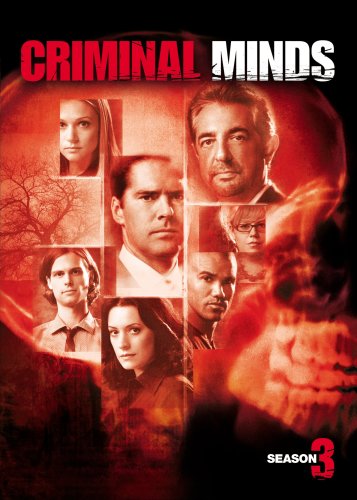
To the point, Criminal Minds is very compelling television. Ever since The Silence Of The Lambs and perhaps long before, we have been fascinated by serial killers and the profilers who try to get inside their heads. To see evidence of the continuing trend, one needs only look toward the success of films like Zodiac and shows like Dexter. Of course, serial killers are not the only prey this FBI team pursues, but they are certainly the marquee item on the agenda. To be sure, there are equally disturbing subjects such as arsonists, bombers, kidnappers, and rapists to give the show a touch of variety, but let’s face it, it’s the killers that keep us tuned so attentively to Criminal Minds.


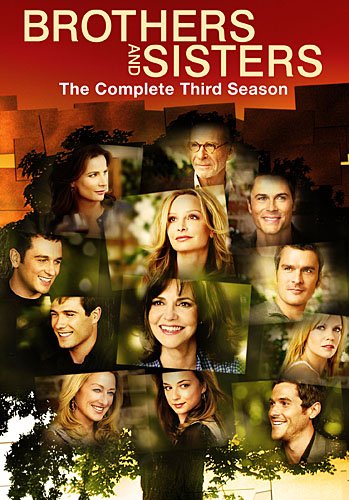
It’s unfortunate that the writers’ strike interrupted the second season of Brothers & Sisters. I was looking forward to finding out if the writers were going to live up to the amazing on camera talent they had speaking their words. What I found was pretty much more of the same, and a quickly eroding patience with the series. I guess the writers had a little more on their mind this year. More’s the pity.


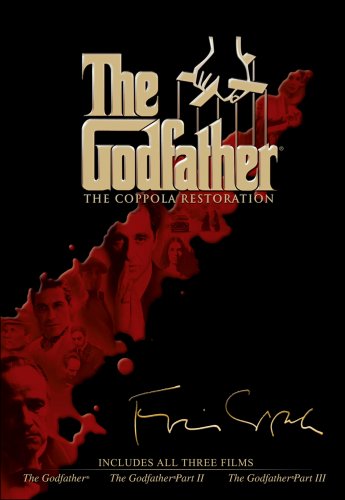
The Godfather films changed storytelling forever. Films before that time, mobster or otherwise, had some very simple but unshakable rules. There was always a fairly clear distinction between the good guys and the bad guys. The good guys always win in the end, and the bad guys always succumb to justice before the final credits. For perhaps the very first time, we were given characters that we knew in our souls were evil men. They killed. They broke laws. They manipulated everyone around them through fear and terrorism to bend to their wills. Somehow, now they are the film’s core heroes, if you will. When Vito is shot, we cheer for Michael, who discards his contempt for his family’s criminal image and comes to his father’s aid. Suddenly this wasn’t just about a gang of mobsters. This was a story about a family. Most of us can’t relate to the mafia ins and outs, but we all have fathers, and even when we dislike what our fathers represent, we will more often than not come to their aid if they’re being threatened. This unique morality paved the way for an entire genre of such characters today. There just couldn’t have been a Tony Soprano or Vic Mackey without The Godfather. While there were certainly protests from aspects of the Italian-American community decrying the violent way our ethnicity was portrayed, most of us from that community saw more than violence and Mafioso. If you’re from an Italian family, you simply can’t help recognizing aspects of your own family in the Corleones. I could see my own grandfather in Vito, sans the mob boss occupation. Many of us took away the strict codes of honor and respect that drive Italian-Americans to this day in very normal lives. We’re a very passionate people, even if most of us are not part of an organized criminal element.


I've got this great idea for a new show: it's about a group of people stranded on a mysterious island after a plane crash. I'll call it Where Are We? It's gonna be the biggest ratings hit ever for whichever network is lucky enough to lavishly reward my creative genius.

On the other hand, it might seem like a complete ripoff of Lost, a rehash, old news that will never live up to the glory of the original. You know, like Cashmere Mafia, the Lucy Liu vehicle modeled gene-by-gene on HBO's mega-hit Sex and the City. It might only last seven episodes before it's axed. Now on DVD for the first time, Cashmere Mafia: The Complete Series is further proof that the entertainment industry is all out of fresh ideas.


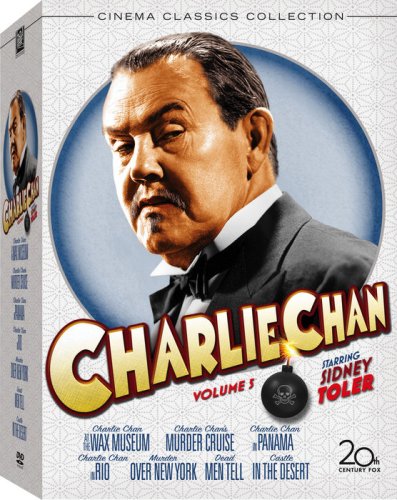
The character of Charlie Chan was created by writer Earl Derr Biggers in 1925 in the book A House Without A Key. He based the character on real life Honolulu detective Chang Apana. Like the fictional Chan, Apana was a detective of Chinese descent on the island. In the first three films, all based on Biggers novels, the character was played by three different actors. It wasn’t until 1933 that Warner Oland took the part in a long series of films that the character gained his worldwide fame. When Oland died in 1938 the series continued with actor Sidney Toler in the title role. It is 7 of these films that make up this latest Charlie Chan Collection. Like Oland before him, Toler was not Chinese; in fact neither of the men were even Asian. The character was created using heavy makeup and overexaggerated features to give the character his distinctive look. Chan was joined by his # 2 Son Jimmy, played by Victor Sen Yung, for his series of films. Jimmy was always getting in the way and was often a source of both disappointment and pride for his reserved father.


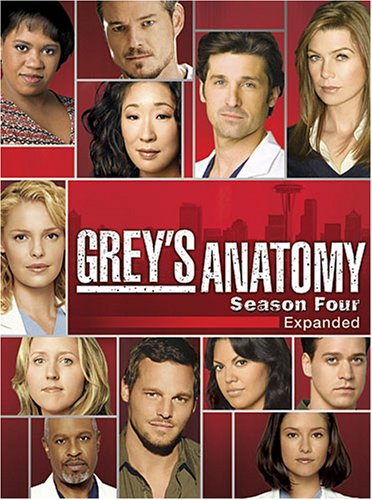
There are some significant changes in season 4. The interns now have interns of their own. It’s actually a little fresh to see them struggle with circumstances we only recently watched them deal with from the other perspective. All except George, who is forced to repeat after blowing off his final exam to help Izzie. There are also many cast changes. Gone are Washington and the baggage he carried with his gay bashing slur. Also gone is Kate Walsh, as her character has moved on to her own spin-off, Private Practice. There were also 3 major additions to the cast. To replace Washington, Brooke Smith has come on to play new head cardiologist Dr. Hahn. Smith plays a rather abrasive character who has it in for Yang. She believes Yang has gotten her mentors’ attention by sleeping with them in the past. She spends a lot of the season going out of her way to make Yang’s life miserable. Chyler Leigh joins the show as new intern and Meredith’s half sister Lexie. Meredith isn’t really thrilled with her half sister and tries to ignore her attempts to get to know her. Leigh adds a great deal of energy in her performance and instantly becomes a standout. Finally, Lauren Stamile plays Nurse Rose, who becomes Shepherd’s next love interest.


Medium was based on a real person with alleged psychic powers who apparently has helped out various law enforcement agencies in some actual cases. If you’ve seen the series, you might find that hard to believe, and the episodes are obviously fictional adventures and not based on the real Allison Dubois’s experiences. At first glance it might be easy to lump Medium in with Ghost Whisperer or The Dead Zone. Actually there are almost no similarities to any of those shows. Allison does not gain any understanding through touching, and while she does see ghosts at times, that aspect of the show has been made to play in only a small percentage of the episodes. Allison accesses her powers through dreams. These nightmares are usually vague and often provide additional clues with each recurring dream. The formula for the show is that she must interpret these images and signs in time to do whatever it is she needs to do. Now that her secret is out, she’s not able to continue her work at the DA’s office. Joe’s career is also in jeopardy, so the show is going through some changes here. The strike likely did some damage, so we may never know exactly what was in store.

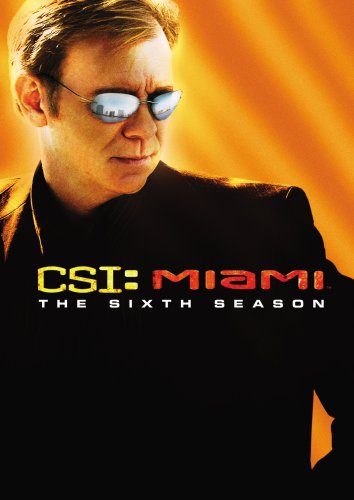
I love CSI and have been an avid fan from day one. I think it brought a fresh look to the procedural crime dramas that have long ago become just a little stale and predictable. The problem is that the series has gone the Dick Wolf route of branching out so that the final product might be a little diluted. Unlike the Law & Order franchise, each version of CSI has attempted to take on a unique look and style to reflect the location without giving up those elements which are the tradition of the series. CSI: Miami is by far the inferior of these three shows. In trying to create a slick glitzy Miami feel, the show has gone the way of style over substance. While the oversaturated colors and bright locations might make for a more visually stunning series, it tends here to overshadow the meat and potatoes of CSI, the stories. I get the impression that the show wants badly to recreate the Miami Vice accomplishment of trend setting fashion and style. Those days are long gone, and CSI has an entirely contrary mission that is weakened weekly by this overboard attempt to look good. The show is also beginning to adopt the 24 style of multi frames for no other reason than they think it looks cool. The show doesn’t respect the audience enough to believe they will buy into the series without all of these high tech distractions. It’s a shame, really, because I had higher hopes for this version of CSI, as I happen to live in Florida. Unfortunately most of CSI: Miami is shot in L.A. with the exception of a few overused establishing shots. Let me tell you, L.A. doesn’t look anything like Miami. Perhaps the show should consider dropping all of the fake glitz and move to location where they can take advantage of the city in a far more realistic way.