Special Category

Why god must you do this? Why does Hollywood in all its limited wisdom try to remake any and everything with the hopes that it will be good, when it just winds up becoming another EPIC FAIL? They’ve done it with The Grudge, they’ve done it with The Eye, and now I hear they might be remaking Oldboy and The Host. We’re coming up on sacred cow territory here, and quite frankly, I don’t know why these films have to be “Americanized” to appeal to the unwashed masses; I thought the whole point of them was to be appreciated on their own merits. But sure enough, the horror film genre is guilty of cannibalizing product like anyone else. See what I did there?

Moving on, The Eye is based on the 2002 Hong Kong film Gin gwai, but Tom Cruise’s CW Production studio bought the American rights, and Sebastian Gutierrez (Snakes on a Plane) adapted the screenplay for American audiences, in a film that David Moreau and Xavier Palud (Them) directed. Sydney Wells (Jessica Alba, The Love Guru) is a classically trained violinist who has been blind most of her life. Upon receiving a corneal transplant (the eyes people, work with me here), she starts to see visions that shock and terrify her. Her sister Helen (Parker Posey, Best In Show) doesn’t know what to do for her, and her doctor (Alessandro Nivola, Grace is Gone) thinks she’s crazy, even though she walks around with strange markings on her hands and arms. So she tries to find out where her donor eyes came from, and the person who had them before saw unimaginable horror, and those visions are transferred to Sydney.

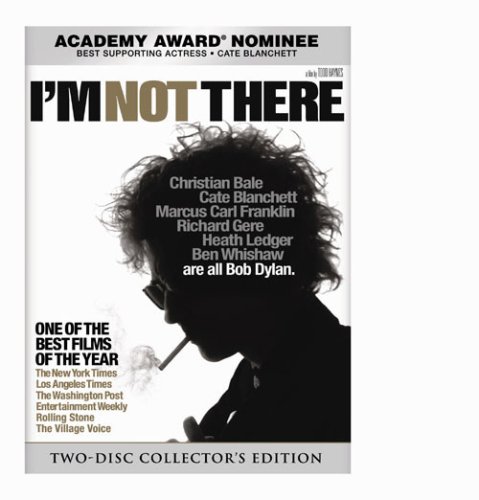
Todd Haynes continues to dazzle and amaze with his body of work. In Velvet Goldmine, he told the story of a fictitious glam-rock band in David Bowie/Ziggy Stardust style. Far From Heaven found him taking the Douglas Sirk films of the ‘50s into a nontraditional turn. In his follow-up film I’m Not There, his first directorial effect in five years, Haynes examines the persona and essence of Bob Dylan without actually really using the name or the words together at all in the film in a film released in 2007, where features like No Country For Old Men and There Will Be Blood earned a slew of awards, I’m Not There was an understated gem, and yet summing it up is a little difficult.

First off, while I’m Not There is a film inspired by the life of Bob Dylan, semantically it’s not a biopic. It examines the more notable images created by Dylan; one of the adolescent who portrayed himself to be the poor white kid who liked the work of Woody Guthrie and who, ironically enough, is named Woody (Marcus Carl Franklin, Be Kind Rewind). Arthur Rimbaud (Ben Whishaw, Layer Cake) is the mid-‘60s Dylan and de facto narrator whose words appear to be lifted from magazine articles of the era; Jack Rollins (Christian Bale, Batman Begins) is the folk hero and later born-again Christian-era Dylan; ironically Rollins is played by Robbie Clark (Heath Ledger, Brokeback Mountain), who watches his marriage deteriorate while he deals with the period of fame he has wrought; and Cate Blanchett (Elizabeth) plays the electric Dylan, touring in England, addicted to pills and alienating his acoustic fans. In his later years, Billy the Kid (Richard Gere, Pretty Woman) plays Dylan as the aging anonymous hero in the west, which in a way Dylan seems to want to do in reality. While none of these interpretations can be claimed to be accurate, they are, as Haynes says, fleeting glimpses of the image that Dylan created for himself. Using surrealistic and style choices influenced by Fellini and Goddard, Haynes helps make the worlds of Dylan all the more emotionally affecting.

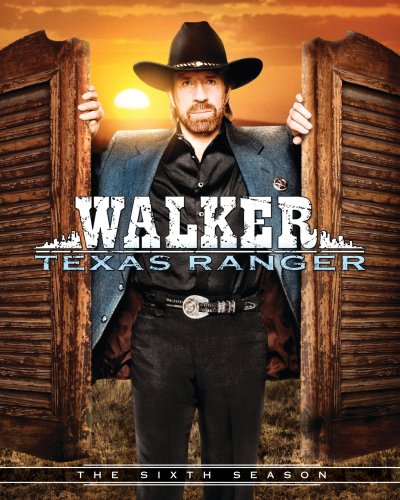
There was a new Cowboy in Dallas, and he wasn’t throwing touchdown passes. But Walker was almost gone before he could really get started. After just four episodes the show’s production company suffered financial collapse, and the show was rescued at the last minute by CBS Productions, who would continue to run the show for its nearly decade-long run. For nine years Norris brought us the ultimate Texas Ranger in a formula cops and robbers show. The show often became a parody of itself, but maintained a solid viewer ship throughout. Hell, Norris even sings the theme song. Truthfully, what started as a one man show (it was originally called Chuck Norris Is Walker, Texas Ranger became a good working ensemble that probably kept the train going for so long. Walker (Norris) is a tough guy Texas Ranger. He is partnered with Sydney Cooke (Peebles) and Jimmy Trivetti (Gilyard) who’s an ex-jock with a brain. Walker had a love interest and eventual wife in the local assistant district attorney Alex Cahill (later Walker). Together they fight the evils that come to the high plains of Texas armed with their fists, six-shooters, and Stetsons. After starting with the final season, CBS is finally halfway through the series back from the beginning.

Norris almost deadpans his entire performance. Let’s face it, the man is no accomplished thespian. Still, Norris fans are quite passionate about their guy. There’s a popular tee shirt design that lauds their hero in epic fashion. One of my favorite is : “McGyver can build a plane out of gum and paper clips but Chuck Norris can kill him and take the plane.”  Another brags: “Some people wear Superman pajamas. Superman wears Chuck Norris Pajamas”. And there’s the humorous: “Chuck Norris knows what Willis is talkin’ about”. Fans of Norris were never disappointed in what they got here. The requisite martial arts and tough guy talk are present pretty much in every episode. Season five is no exception. You should also note if you’re using an episode guide: this is really season 6, as the first two were combined in the first season release. The series had its share of heartstring episodes, most notably the two part story, Lucas. Here Walker helps a young boy with AIDS find his mother and go on to become an AIDS awareness icon.  There’s another old west tale of Hayes Cooper in Last Of A Breed. Walker entertains some kids with another tale of his legendary forefather. It’s another two part episode and takes place in the old west. If you just want some good old Walker butt kicking, you won’t have to wander far. Walker kicks butt to protect some orphan kids in Small Blessings. In Warriors, Walker goes up against a group attempting to build genetically altered “super soldiers”. The season ends on a powerful cliffhanger. In The Wedding, Alex is shot and clinging to life while Walker sets out to find the shooter. That brings to mind one more of those Norrisisms: “Chuck Norris’s chief export is pain”. Ouch!

Working in Hawaii on one of televisions hottest shows in the 1970’s was too good a job for most of the cast and crew of Hawaii Five-0. This meant that there was very little cast turnover for the series in general, and none going into the fourth year. Jack Lord saw his star rise considerably, and while he began to see some serious pay hikes, even he wasn’t about to kill the golden goose. With this kind of consistency, fans were never disappointed or turned off by drastic changes in the cast or formula. With this cop show it was all about tropical locations and formula. The fourth season was no exception to the rule.


When last we left the fine folks of Weeds, Nancy Botwin (Mary-Louise Parker, Saved!) and her herb-growing buddy Conrad (Romany Malco, Blades of Glory) were being held at the mercy of two rival drug groups, both of which were very interested in Nancy’s stash and her cash, but it was taken by her son Silas (Hunter Parrish, Freedom Writers), who was arrested by Nancy’s friend Celia (Elizabeth Perkins, 28 Days). I’m not even close to discussing how things got to this point, and needless to say, the twists and turns sound a little soap operatic at times, but when you’re invested into the characters’ fates as you are, they provide for some memorable experiences.


One of the things that Weeds does is push things to the edge of the envelope, and I‘m fine with that. What I’m not fine with, and what my wife and I get into debates about from time to time, is that in Season Three, Nancy’s transformation from widowed mother in a upper/middle class suburban neighborhood to full-fledged marijuana dealer becomes full and complete. In the previous two seasons, Nancy mixed her Caucasian naivete rather well with her cold and precise drug dealing livelihood. In Season Three, she becomes much more cold and precise, particularly around people she knows and calls friends. She takes care of her feelings first, particularly in one episode where she sleeps with her boss (played by Matthew Modine of Vision Quest lore), despite Celia’s urge to be with him. Her rendezvous with Conrad, one the show had been waiting for for almost three seasons, was more for her convenience than anyone else’s. She becomes much more distasteful than in previous seasons, and all the sweetness of sucking on an iced coffee straw isn’t going to help things.

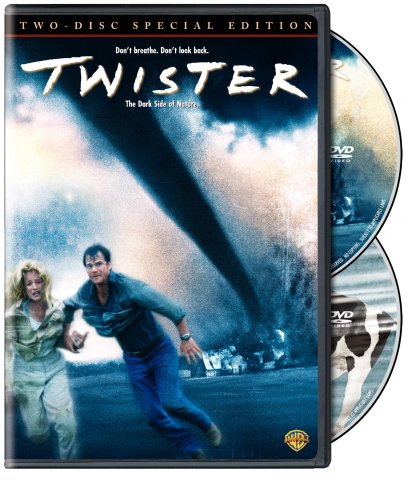
You probably remember where you were when you saw the trailer for Twister. Hot off the heels of Forrest Gump, which was a nice story with some pretty cool computer effects at the time, Twister simply took the effects to a whole other level. Barns were torn apart, cars were tossed into the air, and that one shot, where the car is driving as a tractor is thrown and slammed into the ground, and the tire from the tractor hurdles through the car window. You wanted to go see that film, whatever the cost might be.

But holy crap, once that movie came out, the film landscape was redefined. But it was less about actual storytelling per se, and more about the computer effects that carried the film along, with not a lot of significant or even interesting story or characters that were appealing enough to care about. No real original ideas, just 113 minutes where director Jan de Bont (Speed) tries to dazzle you and say, “Hey look! Really cool twisters!” And you know why that is disappointing? Because one of the writers was Michael Crichton, who’s written some pretty cool stuff: Jurassic Park and Westworld, and yet nothing much is to be had here. Bill (Bill Paxton, Aliens) has returned to Oklahoma and “Tornado Alley” with his fiancée (played by Jami Gertz of Still Standing lore), to find out if Bill’s estranged wife Jo (Helen Hunt, As Good As It Gets) has signed the couple’s divorce papers. Jo hasn’t yet, so Bill’s got to stay on her to get them done. In the meantime, the chase to find a twister has begun, and Bill, compelled by an urge to see a technology that he and Jo had envisioned come to fruition, helps Jo and her crew out for one day.

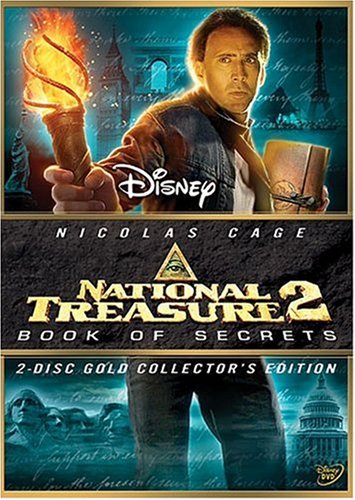
The first National Treasure film took us on a historical journey through the locations that were the birthplaces of The United States. There might not have been a ton of historical accuracy, but there were enough things right that it was an entertaining adventure. For the sequel, the entire canvas was greatly expanded. While we’re once again deep in some arcane American history, the locations span the globe. Paris and London join the uniquely American locations, adding a fresh bit of variety to the mix, enough to make this film different enough from the first and yet still deliver on expectations.


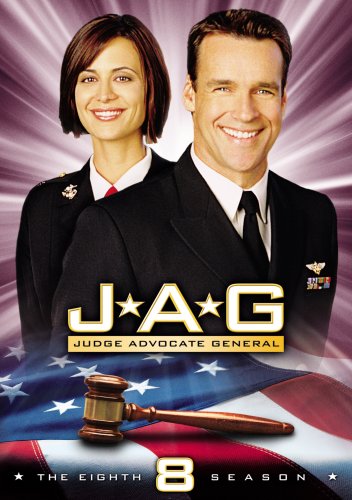
When last I reviewed a season of JAG, a couple of the show’s fans had a few problems which I will attempt to address here. The first was about knocking a show I wasn’t extremely fluent in. Unfortunately, when I’m called upon to review a season of any series there is no time, or money for that matter, to go back and watch several years of the show to get acquainted. Secondly, I believe that a series season needs to be able to stand on its own if I am to recommend it as something you should buy. If you’re already a big fan of the show, who knows all of the story threads, you have likely already decided to buy the set and don’t need my advice at all. While I do feel that the action sequences and courtroom drama are often compelling, I believe much of the personal lives of these characters muddles up the overall show, leaving guys like me feeling a bit left out. The second comment informed me that in later seasons the show spent more and more time in the courtroom and less on the soap opera elements of the show. That may well be true, but I don’t see evidence of it yet in year 6. Also, I am not reviewing those seasons, yet, so can’t really talk to how they will eventually play out. Of course, if you’re a fan, these stories have already run their course and you have, I freely admit, an entirely different perspective on the series as a whole. For those who have not read the season 5 review, I will repeat my unchanged observations of the series in general, followed by some specific season 6 information. Still, keep those comments coming, because agree or disagree, it’s good to hear what you have to say.


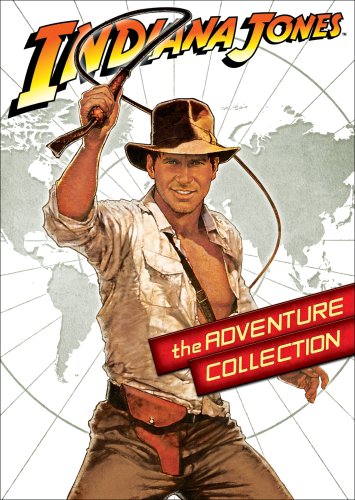
Just in time for the release of one of the most eagerly awaited films in years comes a new box set of the Indiana Jones Adventures. The problem is that these transfers are not upgrades so, aside from squeezing out a few extra bucks, what’s the point? I’m sure that The Kingdom Of The Crystal Skull will add hundreds of millions to the Paramount coffers, so this just looks like greed to me.


Jim Phelps (Graves) led his team in a fourth season of Mission Impossible starting in 1969. The show continued its trademark traditions. Jim would receive a mission from the “self destructing” tape and would gather his IMF (Impossible Mission Force) team. The team was necessarily eclectic in nature, and it changed significantly in the fourth season. Gone were Martin Landau in his signature role of Rollin Hand and Barbara Bain as Cinnamon Carter, model and the team’s chief seductress  Still in the team we had Barney Collier, the gadget man, played by Greg Morris. The muscle was still supplied by Willy Armitage, played by brute Peter Lupus. Leonard Nimoy joined the team in season four as Paris, who also had a skill for disguise. He was a magician, so his sleight of hand skills came in … well, handy. Together they took on missions that the government could not be officially a part of. They were always admonished that should they be caught “the secretary would disavow any knowledge” of them.  Usually they were sent somewhere to put some evil mastermind out of business. Their tactics ranged from scams to outright theft. Sometimes they were a rescue team, while other times they would infiltrate a group of bad guys. There were certainly cold war elements to the whole thing. Each week the team concocted some convoluted con to play on their mark, walking away at the end of each episode often without getting any credit or congratulations.