Special Category

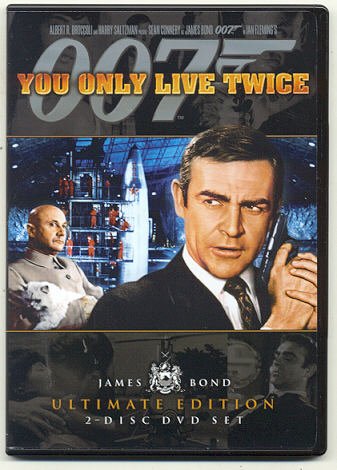
By the time of the fifth James Bond film, producers Harry Saltzman and Albert Broccoli decided to shake things up a bit creatively. Star Sean Connery was probably getting a little antsy inhabiting the suits and drinking the martinis and feared getting pigeonholed (sorry Sean) and announced he was stepping away from the role. However, he still had one more in him, and with You Only Live Twice there was a definite change in style. It may have been based on Ian Fleming's novel, but it was adapted for the screen by Roald Dahl, of Charlie and the Chocolate Factory fame. Lewis Gilbert began the first of his three Bond adventures as director of the Bond films, and in a surprise, Freddie Young took the cinematographer reins, quite a change of pace for the collaborator of such David Lean classics as Lawrence of Arabia.

Moreover, I think You Only Live Twice is probably one o the first Bond films I can recall seeing, growing up back in the day. It's probably because the pre-opening sequence where the spacewalking astronaut gets swallowed by the satellite always stuck with me, who knew? However, the bigger surprise should probably be that there was a pretty good story along with that stunt. In this installment of the film (out of order from the original intent of the producers, who wanted to shoot On Her Majesty's Secret Service), James goes to Japan to continue to thwart the attempts of SPECTRE and Blofeld (Donald Pleasance, Halloween). And because James is in Japan and is as obvious as any tall Englishman can be in Japan, there are some subtle things to make him blend more with the people and the culture.

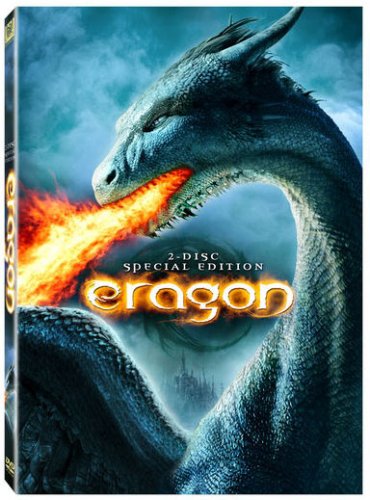
Eragon is based upon the best selling book, which was written by then nineteen-year-old Christopher Paolini. This film was met with much hype, but initially to me seemed to be another generic Lord of the Rings type rip-off, with the addition of a dragon. Not usually my type of movie, but The Lord of the Rings trilogy did more that just amaze me maybe Eragon has a trick or two up its sleeve.

Right from the beginning Eragon starts off shaky, a storyline that seems too have been done a hundred times before; a mesh of Star Wars and The Lord of the Rings. Eragon is a seventeen-year-old farm boy living in the village of Carvahall in the fictional world of Alagaesia. One night, while out hunting, he stumbles upon a dragon�s egg. At first unsure of what�s really going on, Eragon becomes enlightened that he is the chosen one to save his kingdom. It turns out that before the dark ages of Alagaesia�s dark ruler the land was ruled by Dragon Riders, who are just as they�re called, people who ride dragons. The evil king Galbatroix (John Malkovich) sends his evil minion and sorcerer Durza (Robert Carlyle) to kill Eragon and his dragon as they pose a threat to his dark rule of the kingdom. While trying to unite with the remaining rebels, Eragon is trained by Brom (Jeremy Irons) in the arts of magic, combat, and dragon riding.

Long the bad boy of French novelists, Jean Genet directed this 25-minute short in 1950. Borderline pornographic, it is a silent portrayal of (literally) imprisoned desire. Two prisoners convey their longing for one another through the prison walls, while a voyeuristic guard watches, becoming aroused and frustrated to the point of violence. Poetic, fetishistic, and intensely personal, it is a startling and historic piece of underground cinema.Audio

Consider the rating a place-holder, because we don't have a star equivalent for "Not Applicable." This is a completely silent film. Not even a score. As for the extras, they are clear enough.

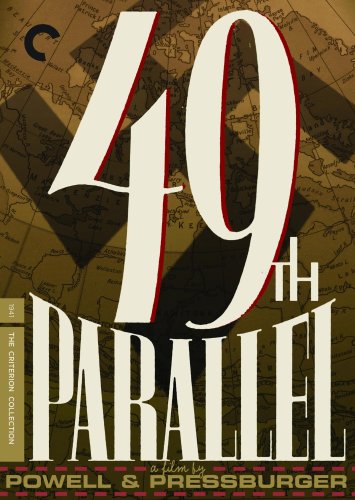
49th Parallel is a film that I had heard mentioned in passing on occasion, but never really had any practical knowledge of until now. Having now seen the film for myself, I find it to be one of those rare productions that only Criterion seems to be able to find. This is something that I would have never dreamed existed. While the idea of war films told from the Axis point of view are almost commonplace today, such a thing was practically unheard of in 1941, with the United States on the brink of entering World...War II themselves.

This is just part of what is notable about this film however. The truth is, the film stands on its own merit in any time frame. This is an epic feat of filmmaking that would qualify as a big budget project even today. The film follows the crew of a German U-boat as they make their way into Canadian waters. When they sink a Canadian tanker ship, the crew becomes the target of a massive manhunt. In an effort to evade capture, the crew take to land and move from hideout to hideout, eventually making their way to the United States.

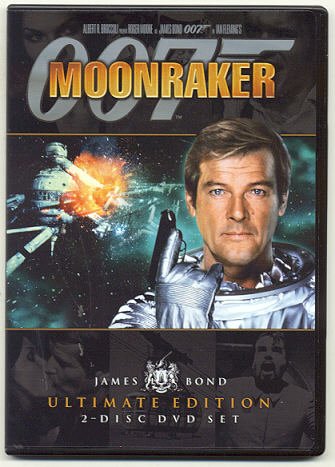
If you want another reason to hate George Lucas, it's that James Bond film producer Albert Broccoli decided to fast track the production of Moonraker ahead of For Your Eyes Only to capitalize on the proverbial Star Wars effect that was occurring through box offices worldwide. However in this one, written by Christopher Wood, who wrote the epic film Remo Williams: The Adventure Begins and directed by Lewis Gilbert (who had just done The Spy Who Loved Me), Roger Moore rides a shuttle into space and takes the dynamic of the film with it.

In this Bond film, Moore's 4th and the franchise's 11th, James tries to find out who is terrorizing the planet using a soon to be astronaut vehicle called the space shuttle and a space station to do it. So James gets a chance to test out the means of NASA, but not before going through the spacious locales of Rio de Janiero and France, eluding the harm and capture of Jaws (Richard Kiel, Billy Madison), who reprised his role from The Spy Who Loved Me due to popular demand. The villain in this film is Hugo Drax (Michael Lonsdale, Munich), who may be soft-spoken, but his plans to mass murder the population are far from rational.

Poor Roger Moore. He does get a bit of a bum rap when it comes to James Bond movies, but I think that in terms of the character, he actually fits the jacket, Walther PPK and shaken martinis fairly well, but the problem for his work was that it faced a lot of new technology, and thus was subjected to a lot of ridicule as a result. New things like walking in space and the computer revolution were given a tongue in cheek look, and in between this and the visual effects simply not catching up to the imaginations, then sure, some of the films look and feel a bit silly.

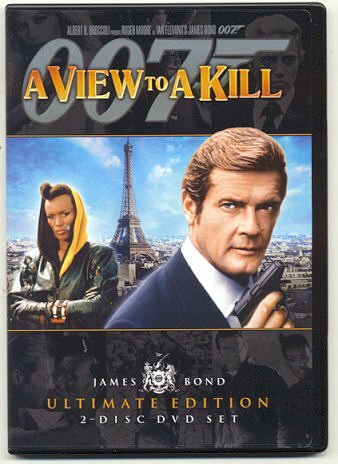
Take the case of A View to a Kill. The film was Moore's seventh (and last) as Bond, and he already had one foot out the door when he made Octopussy. But in this one, Moore may have stuck around a little too long. By my math, he was approaching 60 at the time the film was released to theaters, and seeing him with a Bond girl like Stacey Sutton (Tanya Roberts, Sheena) really wasn't all that believable anymore. The story itself surrounded a microchip that was purchased by a fanatic named Max Zorin (Christopher Walken, The Deer Hunter), who apparently was genetically enhanced somehow or was a descendant of a elite German during World War II.

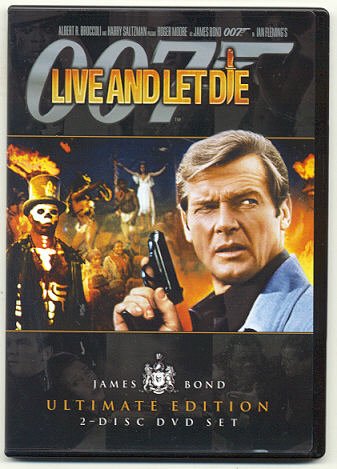
As a relatively topical fan of the James Bond franchise (though not so topical that I'd buy all of the films on DVD), I had a cursory knowledge of the actors who played Bond and the times that they had been cast. Little did I know however that by the time Roger Moore had signed onto the role in Live and Let Die that this was the third attempt to bring him aboard, and that maybe producers Harry Saltzman and Albert Broccoli were hoping that the third attempt brought the proverbial charm. Moore had been approached for the role as early as the Dr. No days, but was in the midst of doing The Saint television show, and Connery was chosen. Connery left and the opportunity came to Moore again, however he was not available and George Lazenby came on to do On Her Majesty's Secret Service. He left, Connery did one more and then finally, Moore was available to take the reigns.

And he came aboard to a Bond film that is probably his best and one of the best Bond films in the franchise. In Live and Let Die, James has to go to America (and subsequently, the Caribbean) to research the deaths of several British agents. He goes into Harlem to try and find out the whereabouts and criminal motivations of a mysterious boss named Mr. Big, and eventually makes his way to a fictional island called San Monique, where a United Nations delegate named Kananga (Yaphet Kotto, Homicide: Life on the Street) is waiting for his arrival, and using the results from a tarot card reader named Solitaire (a very young Jane Seymour, Dr. Quinn, Medicine Woman), he plans for the demise of Bond.

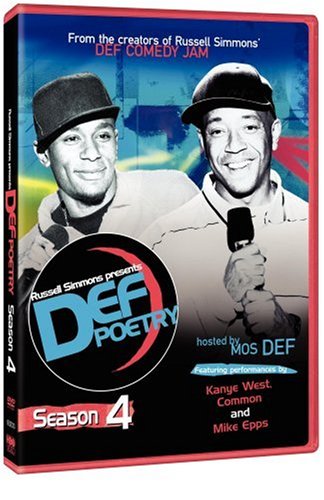
In the continuing need for media mogul Russell Simmons to produce an HBO show and put the word "Def" in front of it, musician Mos Def approached Simmons with the opportunity to present a weekly show for urban spoken word artists to show off their wares. And surprisingly, not only has the show survived, but has thrived into a fourth season that has come out on DVD, with ten episodes in all, split over two discs.

The layout of the show is pretty straightforward, as Mos Def introduces the beginning and end of the shows and the acts in between. The latter is mostly done on a voiceover, however he does introduce the acts on stage from time to time. The show usually ends with a more recognizable name at the end, along with some words of wisdom by Simmons himself. And while most of the acts appear to be people who spend their time on anti-Israel message boards and in Starbucks whipping up vente lattes, the familiar names are fairly eclectic. Among the people you'll recognize are Ani Defranco, Kanye West, Ruby Dee and KRS One.

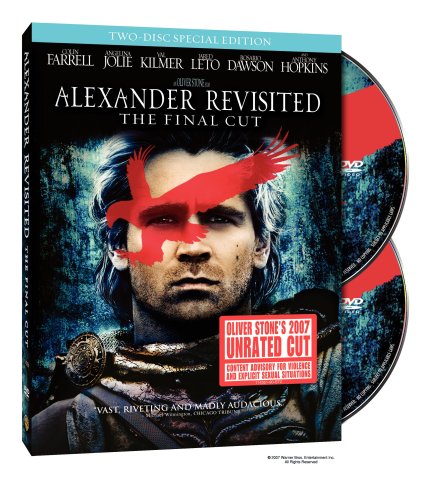
The return of the historical epic hit Hollywood hard in 2005/2006. Troy, Kingdom of Heaven, King Arthur and the two Colin Farrell vehicles, The New World and Alexander, all hit theaters pretty close to each other... and all flopped. The basic complaint was the same about all these films; they were too long, the pace was too slow and they were hard to follow. As much as these huge pictures cost, the studios quickly looked to the DVD cash cow to try to recoup some of the production co...ts. The first to hit was King Arthur, which was released in the theatrical PG-13 format (full screen only), and the director's preferred extended unrated cut (presented in widescreen). Antione Fuqua's fighting with the studio over the final cut of the film was widely known, so it was nice to get to see the director's original, more violent, vision. Audiences were pleased too, as this new cut was widely regarded as superior to the original.

A very similar thing happened with Ridley Scott's Kingdom of Heaven. The theatrical release was regarded as average, as it was on DVD. When Scott re-cut the film and released it as a four-disc special edition, however, consumers and critics went wild, declaring this new extended cut far superior to the original theatrical version. In fact, this new vision was named the DVD of the year last year by many critics. Scott has since said that this new cut represented more of his original vision for the story, but that the studio feared that it was far too long for theater audiences. (Remember, these are the same audiences who had complained that the film was too long to begin with, proving that filmmakers' would be best served creating their films on their own terms, without the input of the general public.)

If you've seen any of Terry Gilliam's other films, you can probably guess that this one is pretty bizarre. Based on the novel of the same name by Mitch Cullen, Tideland is an eccentric, grotesque and imaginative tale of a child's resilience.

I'm going to say right off the top, I wanted to like Tideland, and for two reasons. One, Gilliam has made some incredible films in his career, from Monty Python and the Holy Grail to Twelve Monkeys and Fear and Loathing in Las Vegas. Other than the flawed Brothers Grimm, it's been seven years since a Gilliam-helmed film was released. So I wanted to like this one. I really did. Unfortunately, while I admired the creativity in Tideland, and was at times intrigued and repulsed, I ultimately found the film extremely unsatisfying.