A&E Home Video

Written by Diane Tillis

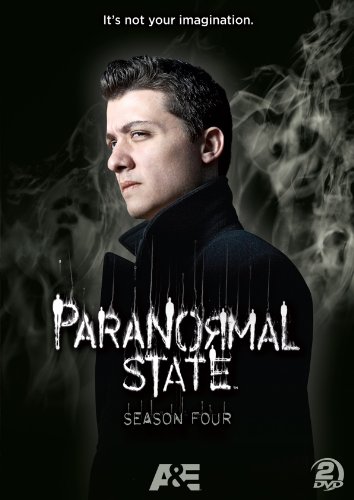
Paranormal State is a paranormal reality documentary television series that premiered on the A&E network in 2007. The series follows a group of students from Pennsylvania State University who formed the Paranormal Research Society (PRS) under the guidance of leader Ryan Buell. The students travel across the country investigating instances of paranormal activity at the behest of people looking for answers.

It's been said that all good things must come to an end. In television that could not be more true. In the world of entertainment good things end, often quickly without a chance to leave any kind of an impact. Maybe six years wasn't exactly quick for Lost, but at least it can't claim not to have left an impact. The show changed how we watch television, and it will be a long time before anyone forgets about it.

For six years now, Lost has taken us through mystery after mystery. I’m beginning to think that the show’s title is more a mission statement for where they want to take the viewers. Each time Abrams appears to answer a question and move on, closer examination proves that nothing has actually been revealed. The series has become the poster child for misdirection and script sleight of hand. When I examine the 13 episodes from season 4, I’m left with the inescapable, pun intended, feeling that nothing significant has really happened here at all. But at the same time, it’s the most significant event of the series. All the while I find myself compelled to watch episode after episode. Abrams would have been a great drug dealer if that producing gig hadn’t worked out for him. The show started out with enough directions and plot devices to put our brains into overload. From that point on, he’s been cutting each dose a little bit so that we find ourselves drawn to each hour fix, chasing the high we got in the beginning. Of course, we already know we’re never going to feel that way again, but we’ll keep coming back for more as long as he continues to make us believe that we will. I’m not saying the show has declined at all. I’m saying that it doesn’t really ever go anywhere. Abrams continues to introduce major plot lines such as the hatch, the others, and now the freighter, with promises of linking it all together into some kind of epiphany, and for a short time he actually does. But hindsight leaves us scratching our heads, because once we come down we can’t really explain what the high was all about. And so, we’ll continue to tune in or buy the DVD’s to see where it’s all headed, even if we already know that we’re doomed to remain lost no matter how it all ends.

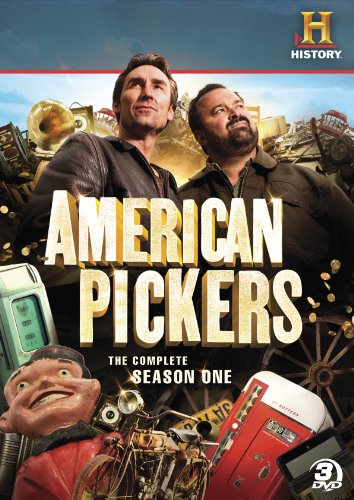
American Pickers revolves around two “gifted” pickers: Mike Wolfe and Frank Fritz.  The thesis of the show is that these two men comb the back roads of the Midwest searching for hidden treasures and collectible items.  The people they encounter along the way are far from garden variety with the majority of them having stacks upon stacks of junk cascading out of their property.  These two men barter and haggle over pricing on many different things with each item earning them a considerable profit. The question arises through these exchanges, does morality come into play? 

The two leads are relatively uncharismatic; Mike is slightly more comfortable on camera than Frank.  However, the majority of their conversations in their van are cringe-worthy. The typical episode involves Frank and Mike going “freestyling” or going to leads that their secretary sets up for them.  “Freestyling” is when Frank and Mike drive around areas until they see a house that catches their eye.  After they proposition the owner of the property, they begin the picking and deal making.  Once they obtain the pieces that they are seeking, audiences are given a breakdown of the cost of the piece and what they value it at.  

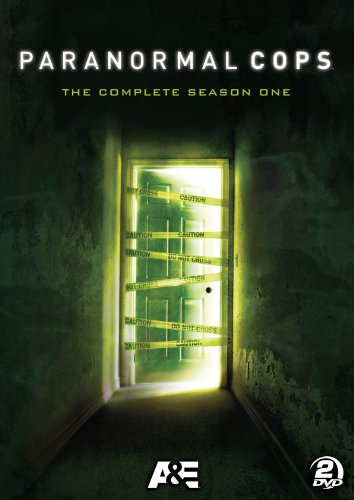
"Responding to the pleas of people who are victimized by distressing and inexplicable activities in their homes and workplaces, these cops bring their no-nonsense approach to hunting ghosts and their real-life police skills to separating fact from fiction - and often happen upon results much scarier than the paranormal."

I've had a lot of opportunities to watch and review many of the new wave of reality shows, from Ice Road Truckers to riding along with Steven Seagal in his real-life police job. This is my first exposure to "unreality" television. Okay, that's my term and not theirs. But, after just 10 minutes of watching Paranormal Cops, unreal is the only word I can think of to describe the experience.

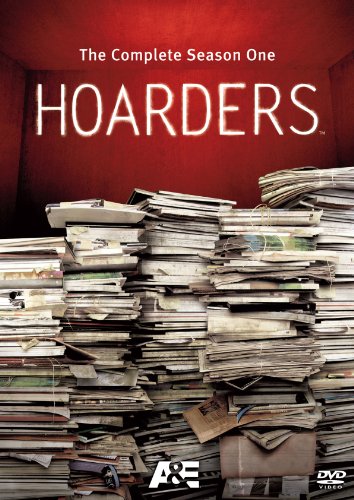
"Compulsive Hoarding is a mental disorder marked by an obsessive need to acquire and keep things, even if the items are worthless, hazardous, or unsanitary. More than 3 million people are compulsive hoarders. These are two of their stories."

The reality television craze has entered its second generation. In the beginning, shows merely found folks who were willing to put themselves in odd circumstances for the chance to earn some big payday. That first wave included such shows as Big Brother, Fear Factor, and Survivor. These shows quickly evolved, or devolved, depending on your point of view into the relationship game. Instead of cash, these contestants went looking to marry, most often a millionaire. It turns out that Chuck Barris actually invented the reality show in 1965 with The Dating Game and later with The Gong Show. He discovered, way ahead of his time, that we wanted to see real people make complete fools of themselves for love or money. When the writers’ strike hit, these shows became a gold mine to network executives looking to fill prime-time slots. That's when everyone noticed just how cheap these shows were to make.

In June of 1982 I was fishing in a secluded mountaintop lake with my friend Willie Nelson. No, he wasn't the country singer. He was a State College, Pennsylvania DJ. He is a giant kind of fella who stands about 11 feet tall in his socks. It was a Sunday night, June 20th, the night before my birthday, and we decided to spend an all-nighter at the lake fishing. The place was in the middle of a wooded area, and there was nothing around for miles. Just before midnight and my birthday, we both saw something I'm sure we will never forget. I've since lost track of Willie. Last I heard he was living on a boat in L.A. So if you're out there, buddy, drop me a line. What we saw was a series of bright lights in the sky. They were flying extraordinarily close to the ground and moving quite slowly across the sky. What impressed both of us most of all was that they never made a sound. At first we suspected they were individual objects. I remember thinking they might be missiles of some kind. But as they flew overhead, the space between them blocked out the stars. It was a solid object. We went immediately back to the radio station and phoned the FAA, local airport, and whomever else we could think of. It was a hell of a thing. I still don't know what we saw that night, but it still appears vividly to me if I close my eyes. I wrote down the experience as a song for my Invented Memories album, which I will include at the end of the review should you be interested in hearing it.

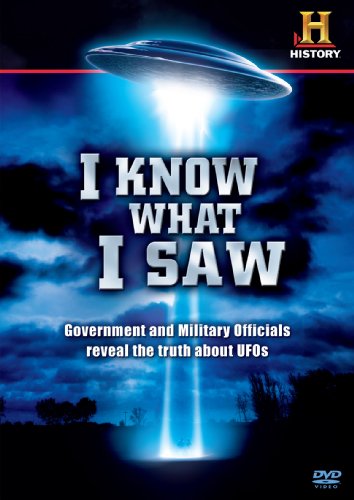
We're not alone. I don't mean in an extraterrestrial sense. I mean as witnesses to an unidentified flying objects. There have been millions of such reports over the decades. Often these sightings are dismissed as coming from crackpots or just someone desperate for attention. The government has waged a long campaign to discount these sightings as either unreliable or something more explainable like weather balloons or flares. But there have been some very credible witnesses over the years, people you would be hard-pressed to lump into any of the categories I've named. We're talking trained observers with sterling reputations. Together many of us reject these government claims of what we might have witnessed. To those claims we join in unanimously: I Know What I Saw.

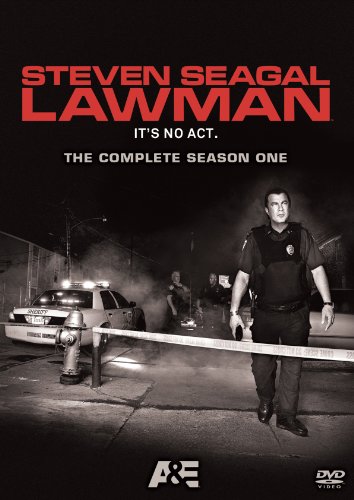
"I make a living in the movies, but for the past 20 years I've also been a cop. And, along with some of the finest deputies on the force, I serve the people of Jackson Parish, Louisiana. My name is Steven Seagal. That's right, Steven Seagal, deputy sheriff."

We've all seen Steven Seagal kick the bad guys butts in the movies. Since 1988's Above The Law, Seagal has gained a reputation for playing a tough guy. What most people didn't know is that for just about as long he has been a fully commissioned police officer working a beat in Southern Louisiana. Recruited by the legendary Sherriff Harry Lee, Seagal works as a reserve officer for the Sherriff's office there. He pretty much does what any cop in the field would do. He responds to calls, makes arrests, and serves in whatever capacity might be required. He also uses his own extensive martial arts training to teach workshops for his fellow officers and up-and-coming officers in training. Now, on the surface you might be tempted to look upon this work as some kind of publicity stunt or half baked celebrity honorary role. The fact that A&E is now doing a reality show on his exploits on the force would tend to solidify such feelings. However, the truth is that he's been doing it for 20 years, actually going out of his way to avoid bringing attention to the gig. Believe it or not, this stuff's for real.

"If you can control the sky, you can control the world."

With the current remake of Ray Harryhausen's Clash Of The Titans, is it any real surprise that there might be a resurgence of interest in the gods and goddesses of Mt. Olympus in Greek mythology? The Greeks created an entire family of deities to explain the various natural elements and phenomena around them. There were gods of the sea and of the underworld. There were even gods of wine and music. It was believed that these supernatural beings sat high on the highest point of the Greek island nation, interfering in the affairs of men to settle their own petty squabbles and arguments. Being all-powerful was somewhat boring, and so these beings, with very human qualities of greed, jealousy, and spite, played an endless game with the lives of the mere humans for their own entertainment and amusement.

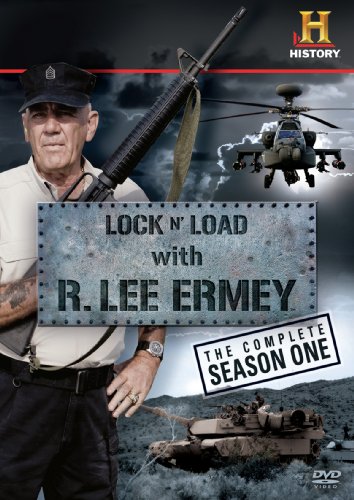
"Hoorah! Semper Fi! Do or die! Hold 'em high! Gunnery Sergeant R. Lee Ermey here. Listen up! Ever wonder how warriors on the battlefield went from throwing rocks to this? Then this is your lucky day."

You've seen R. Lee Ermey in several movies and television shows over the years. He pretty much plays the same character, most notably Gunnery Sergeant Hartman on Full Metal Jacket. He always does a fine job with these roles, but there's a good reason for that. Ermey was, in fact, a Gunnery Sergeant in the Vietnam War. Not much acting required out of the man. His authenticity has been what's made him such a dependable stalwart in these military films. You've got to give the guy some props. He is the real deal, and it has always shown in his roles.

They say that history is written by the winners. The winners are the ones who fought and the ones who conquered this great land of ours. In reality, history comes from all walks of life, it is unfortunate some are not able to write about it. But once in a while, you find people out there who are able to collect the ideas and tales and weave them into a book. That book will then sell many copies and influence a generation.

Howard Zinn was born in 1922 during the roaring twenties. His youth saw the Depression, the New Deal, and he even participated in World War II as a bombardier. In 1964, he accepted a position at Boston University to teach civil liberties and political science. For many years, he was asked to give advice on finding a history book that was fair and spoke the truth. He didn’t really have an answer until 1980 when he decided to write one.