Disney

"Sometimes you just gotta let a dog do his thing."

Hey everybody. Baby back again to bring you yet another dog movie from a dog's point of view, which is the floor, in case anybody out there really wants to know. You see, Gino won't let me on the furniture in the theater. He says that just because the seats look like chew toys, and smell like chew toys, doesn't mean they actually are chew toys. I mean, really, people. You wanna talk about your special effects, which reminds me of something else I'm not supposed to do in the theater, but let's not talk about that right now.

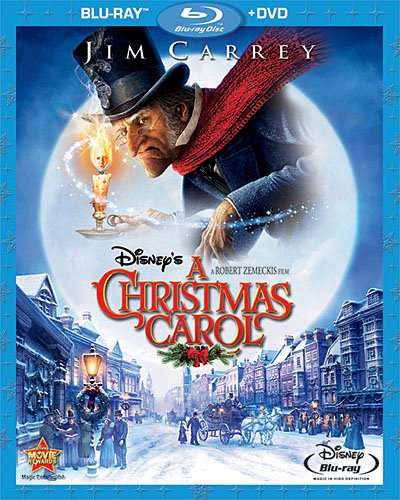
It was in 1843 that celebrated writer Charles Dickens created one of the most iconic symbols of Christmas with his publication of A Christmas Carol. It was a cautionary tale for an industrial revolution that was getting caught up in its material worship. Dickens intended the story both to entertain and to put the spotlight on what he considered already then was an over-commercialization of the Christmas season. Little did he know that his very story would become a huge part of that commercialization. While the writer gave us many memorable characters like Oliver Twist, David Copperfield, and Little Nell, perhaps none have become so well known as Scrooge and Tiny Tim. It's certainly true that no other story has been used as much in film, television and on the stage.

For most modern folks it all started in 1951, almost 100 years after the story's publication, with the definitive film staring Alastair Sim. That movie has captured the hearts of several generations. But it didn't begin nor did it stop there. The three Christmas ghosts have haunted over 100 film and television versions over the years. Even Fred Sanford was visited by the specters, resulting in at least a temporary temperance of his biting grouchiness. With such a classic tale, it was only a matter of time before the computer-animated genre and the motion-capture technology were used to deliver a new movie for the holiday masses. Thank our lucky stars, my gentle reader, that it was Walt Disney Studios that took up the task. The results could have been rather unfortunate.

"The Toys Are Back In Town"

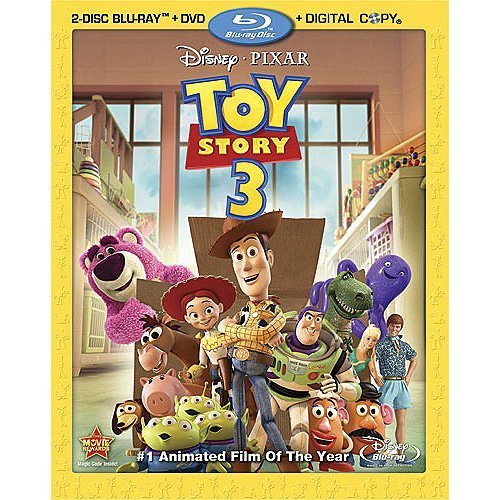
That's right. All of your favorite toys are back in Pixar's latest great film Toy Story 3. This time the toys are dealing with the inevitable. Andy (Morris) is about to go off to college. It's been a long time since he's played with his friends, and they are getting desperate and worried they will get tossed away. Although Andy bags them to be stored in the attic, a misunderstanding sends them to the curb and a date with the garbage truck. After that close call they decide to get themselves donated to Sunnyside Daycare, where they hope to live out their lives with tons of children to play with them. But things aren't all that sunny at Sunnyside. The place is ruled by the iron paw of Lotso Bear (Beatty) and his cronies. The bad guys include Big Baby. He and Big Baby once were accidentally abandoned by their owner and Lotso was replaced, making him bitter. Now the toys have to escape the armed camp of Sunnyside.

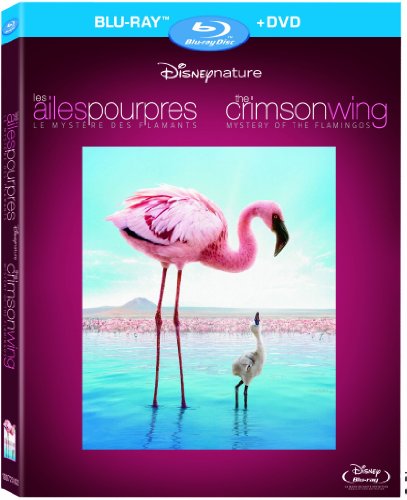
"The flamingo is said to be the inspiration for the crimson-winged Phoenix, the ancient symbol of transformation and rebirth. At the end of its life, the Phoenix is consumed by fire. It is then reborn from the ashes."

In one of the more specific full-length documentary features that I've seen in a long time comes Disney Nature's The Crimson Wing. Here the focus is on one species of bird. This is your all-flamingos all-the-time station. Have you ever thought to yourself, "You know, I just can't get enough flamingos"? Look no farther.

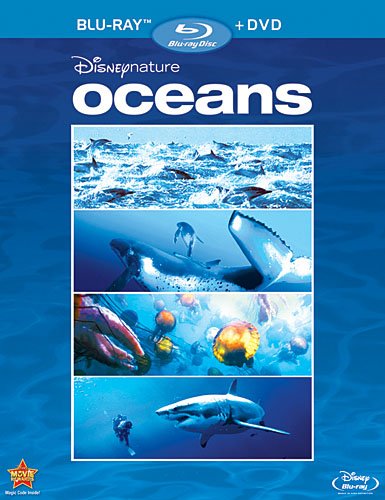
"A boy comes running up, and he asks: 'what exactly is the ocean?' 'What is the sea?' You could hit him with a lot of statistics and Latin names. But the answer isn't something you'll find in a book. To really know what the ocean is, you have to see it for yourself. You have to hear it. And taste it. You have to feel its power. To really know the ocean, you have to live it."

And live it you will with Disney Nature's latest entry into their award-winning series of natural documentaries. Walt Disney Studios is no stranger to the world of nature. While the brand is more quickly identified for its animation and other family fare, the tradition of nature specials goes back to the very roots of the company itself. For decades Disney provided some of the most exotic television documentaries on its many outlets that included The Wonderful World Of Disney. The studio was one of the first to take experienced camera crews and equipment out into some of the most remote places on Earth. And, while Disney had appeared to fall behind in the field for some decades, that all turned around with their groundbreaking Earth series. Suddenly Disney Nature was back in the forefront of frontier footage. The tradition is honored here with one of the latest entries in the family: Oceans.

The legacy of Walt Disney and the studio he created requires little explanation. The studio invented the idea of a feature-length cartoon and has been on the cutting edge of animation since the 1930’s. No other studio can claim ownership of as many animated classics as Disney. From Mickey Mouse to Pixar, the studio has churned out one masterpiece after another for over 60 years. What tends to get lost in this great body of feature-length classics is that the studio was also producing some very high-quality shorts over these years. Whether it’s Disney favorites like Mickey, Donald, Minnie, or Goofy or it’s strictly one-off characters gathered to tell a wonderfully animated story, Disney has a record that simply hasn’t been and likely will never be matched.

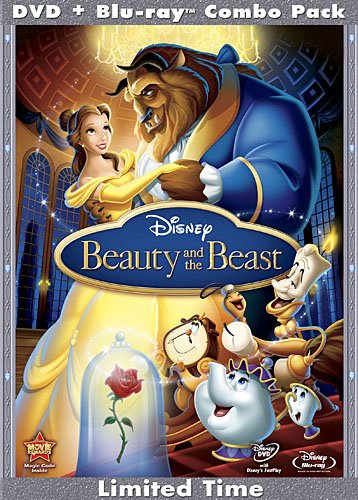
The Disney magic faded for a little while during the 1980's. There were still animated features, but they weren't the groundbreaking triumphs of the studio's golden age. All of that changed as we entered the 1990's. The Little Mermaid is considered the first of the new wave of Disney classics. It certainly signaled a change in the direction of animation at Disney. While the change may have begun there, I believe it was Beauty And The Beast that started a wave of productions that would peak with The Lion King. With Beauty And The Beast everything is cranked up a notch from the mediocre affairs the studio had been churning out for a time. Beauty And The Beast had the epic proportions, fluid animation, and bright colors that set the Disney Express back on track.

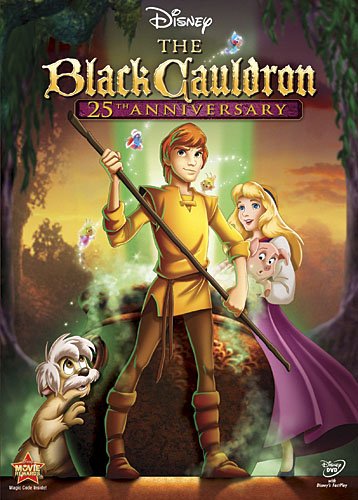
"Legend has it, in the mystic land of Prydain, there was once a king so cruel and so evil that even the gods feared him. Since no prison could hold him, he was thrown alive into a crucible of molten iron. There, his demonic spirit was captured in the form of a great Black Cauldron."

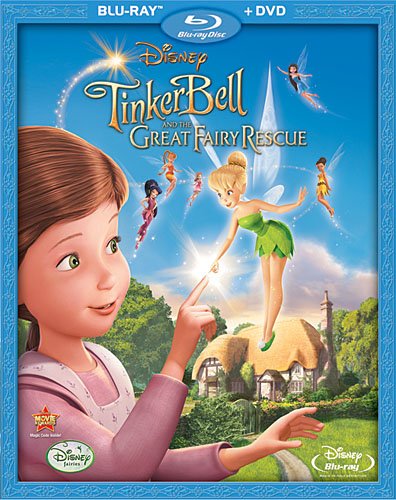
“Some people say that fairies are the stuff of fantasy. They think the world is just what you can touch and hear and see, while others say the tales and legends cannot be dismissed. They believe with all their hearts that fairies truly do exist. Through all of time, human beings and fairies never met, till one special summer that we shall not soon forget.”

Tinker Bell has been a Walt Disney icon almost since its inception. The character has gone way beyond her appearance in Peter Pan. In the decades since, she has come to represent the magic of Walt Disney and its many incarnations. Seen at the beginning of every Disney title, Tinkerbell is likely as recognizable as Mickey Mouse and his many friends. John Lassiter and the animators of Disney’s new CG animation studios take on this monumental character in the third of at least five announced films to feature the little fairy. Lassiter brings his best magic, learned developing Pixar over the years, to create a feature that rivals the Pixar brand in quality and technological presentation. The animation is incredible. The CG environments are absolutely beautiful. With the help of Pixar, Disney has made the same strides in computer animation that it once made in traditional hand drawn animation. This picture is light years ahead of almost anything else I’ve seen outside of Pixar itself. Understand that this is a direct-to-video production with far less of a budget than a theatrical release, and the look of this world is even more incredible. Characters interpret with effortless smoothness, and the result is a nearly 3D presentation. The result is a quite amazing to look at.

"It is said some lives are linked across time. Connected by an ancient calling that echoes through the ages. Destiny."

The Prince Of Persia is not some new phenomenon sweeping the country. The original video game goes back quite some time to the pre-high-definition consoles of the late 1980's. Over the years the title has had some major staying power and has continued to flourish across several platforms and generations of graphics and game play. Today video games are more and more like movies themselves. Many of these games carry budgets as high as blockbuster effects-laden tent-pole films. It's big business. The technology has nearly merged between film and video game. And while Prince Of Persia is not the first game to be turned into one of these mega-movies, it just might be the closest thing to bridging that gap yet.

"This is James Henry Trotter. He lived with his mother and father in a cozy little house by the sea. It was a wonderful life. They had each other, and they had their dreams. Then, one day a terrible thing happened. An angry rhinoceros appeared out of nowhere and gobbled up his poor mother and father..."