Posted in: Disc Reviews by Archive Authors on February 15th, 2007
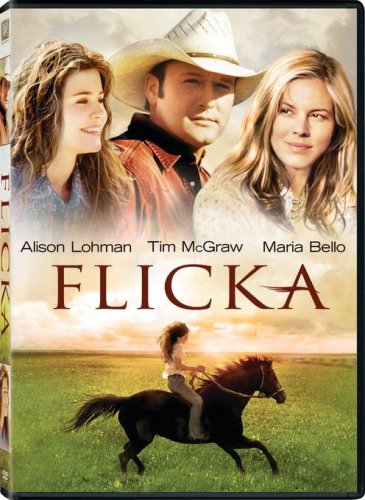
Maria Bello gives a wasted performance in the Tim McGraw vehicle Flicka, a by-the-numbers family film that is such a retread of other more competent efforts, one wonders, What is the point? Alison Lohman plays McGraw's teenage daughter and friend-to-Flicka, a role type that was much better utilized in classics, such as Old Yeller, Where the Red Fern Grows, and Summer of the Monkeys. Lohman is the precocious adolescent, who struggles through boarding school, and her relationship with gruf...-farmer daddy McGraw. McGraw is mis-cast in most everything he's in, being too hip, new-wave country sissified to qualify as a) a tough guy (in this film), and b) an ex-high school football star (see Friday Night Lights). In other words, his time would be better spent returning to Nashville for more of those inane little suck-tracks like "Don't Take the Girl." He's a poor actor with limited range, and his performance in Flicka confirms it.
An even more noteworthy problem the film suffers from is the same plot formula we've seen for over fifty years in novel and film. Teenager clashes with parent because they're just alike. Parent and teenager neither one realize, or admit to, the similarity. When they finally do, fences are mended, and the real healing begins, all so we can get that warm fuzzy the studio wants from us. End of story. Somewhere along the way, the dog or deer or buffalo or goat incurs some kind of tragedy, which may or may not result in death, depending on the sadism of the filmmakers. I won't tell you which way this ends up, but I will say Flicka follows the formula, and doesn't depart one inch from it.
Posted in: Disc Reviews by Archive Authors on February 15th, 2007
Certain aspects of Working Girl have not aged well, but the film remains a quality production that showcases Melanie Griffith in her best role, with Harrison Ford and Sigourney Weaver as superb, lightly humorous supporting characters.
Tess McGill (Griffith) is a secretary struggling to rise in the New York business world. After a series of bad experiences with chauvinistic managers, she's transferred to a new secretary role, this time under a female boss (Weaver). At first relieved to be working for someone who understands the female struggle, Tess is hurt when she learns that her new boss is a backstabbing cutthroat who only listens to her to steal ideas. When her boss is hospitalized after a vacation accident, Tess takes action - by taking control of her boss' office, title and even her wardrobe. In her new guise, Tess gets right to work on brokering a deal with an investment banker, Jack Trainer (Ford), risking her career on one hail-Mary play.
Posted in: Disc Reviews by Gino Sassani on February 12th, 2007
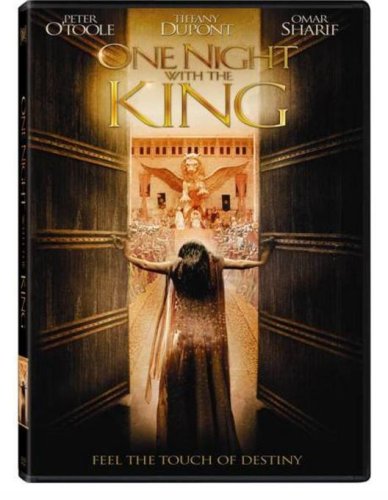
The Holy Bible has been the source for many incredible epics. One might argue that the Book itself is the first epic. From De Mille's Ten Commandments to Gibson's recent Passion of the Christ we have been enthralled by tales of faith and the divine since the very birth of the cinema. One Night With The King has all the essential elements to take its place with these classics. The cast includes some of the greatest actors alive in Omar Sharif, Peter O'Toole, and John Rys-Davies. The settings are some of the most beautiful desert lands on earth. Sadly, One Night With The King stands very small in the midst of such brilliance. The film means well, certainly. The story of Esther is not one that has been told on any scale before and is very much worthy of the effort. There appears to be an overwhelming lack of spirit throughout the overlong film. The film always feels staged and the dialogue often too modern sounding to create the necessary illusion. Sharif must have suffered immeasurably opposite a rather forced and dull Luke Goss. Unfortunately a great amount of talent and effort appears wasted on this sub-par film.The supporting cast is simply horrible. There is no dialog discipline at all. Phrases constantly move from modern to mock Shakespearean to gibberish. James Callis is reproducing his Baltar role here.
The story of Esther is actually a compelling one. Based more on the novel Hadassah than the Biblical account, the film has a story with enough potential. She was a young Jewish woman living in Persia. Jews have lost favor in the kingdom and are openly persecuted. Hadassah changes her name to Esther to avoid the ethnic liability. When the Queen defies a summons by her King, she is released from her royal position. Esther finds herself in competition to become the new Queen. It is from this position she hopes to better the plight of her people. The story soon descends into the clichéd plots of intrigue about the crown. Various plots are made and uncovered that put Esther in a vulnerable position. She must eventually reveal her true heritage and once again win over the King's heart. The script ventures down far too many side roads and soon becomes tedious to follow.
Posted in: Disc Reviews by Archive Authors on February 2nd, 2007
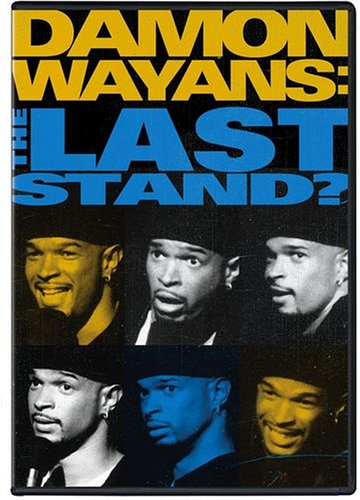
It’s a shame that there aren’t many stand-up comedians around anymore. And the ones that are still around (Chris Rock, Dane Cook) usually only use the medium as a launching pad into a flawed movie or television career that never equals the laugh factor and energy that exists in their stand-up comedy shows.
So along comes Damon Wayans’ Last Stand.
Posted in: Disc Reviews by Archive Authors on January 30th, 2007
Penelope Cruz and Salma Hayek are buddies in real life, so it makes sense for the two of them to show up in a film together. I was a little surprised to find this disc on my doorstep, however, having totally missed its existence during its theatrical release. It is a good reminder of how much a movie's success is driven by marketing. Clearly, this is one of those films that the studio wasn't happy with, so they cut their losses and quietly put the film into select theaters underneath the radar.
It's a shame, ...oo, because this is really not a bad little film. Certainly better than Wild Wild West, Salma's last western pic, which the studio threw a ton of money at. This is a western buddy picture in the vein of Butch Cassidy and the Sundance Kid, except for the obvious difference of two beautiful women in the leading roles.
Posted in: Disc Reviews by David Annandale on January 29th, 2007
John Cena is The Marine. Though, as matters develop, The Maroon might be a better handle. At any rate, after being discharged for having Disobeyed a Direct Order in Iraq (where, in a scene distinctly reminiscent of the opening of The Naked Gun, our boy shoots up one of those elusive Al-Qaeda training camps that nobody else seems to be able to find). Readjustment to civilian life is difficult, but then, while heading out for a little holiday with his wife (Kelly Carlson), an unfortunate stop at a gas station results in Carlson being abducted by a violent gang of jewel thieves headed up by Robert Patrick (who comes across, as was pointed out to me, like the love child of Martin Sheen and Chandler Bing). Cue the pursuit through the swamps.
So as we’re watching this, my girlfriend turns to me and says that there’s a problem with a movie when the hero could be removed from the picture to little discernible effect. And she’s right. In fact, Cena disappears completely once the action gets going (!!?!), leaving the field for Patrick to camp it up. What role he does play could have, for the most part, easily been filled by one of the alligators we are shown (but who are never seen again). Perhaps Gustave could have been imported from Primeval to take care of business. And while I love a good explosion as much as the next guy, the ones on display here are so over the top (my favourite is the coop car raised into the air on a pillow of fire) that they are hilarious. And trust me, we’re laughing AT the movie and the steroid freaks in it, not with it (or them).
Posted in: Disc Reviews by Archive Authors on January 21st, 2007
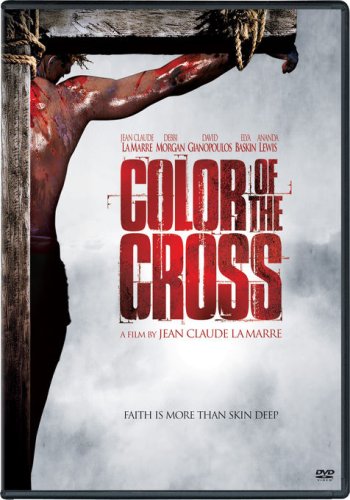
Back in late 2006 there was a minor to-do about a film depicting the last days of Jesus, except that Jesus was played by a black man. Written and directed by Jean-Claude La Marre, Color of the Cross tries to do what it can to tell the tale of this black Jesus, or be-jeezus if you will.
The film, like others covering the last two days of his life, follows Jesus as he performs the Last Supper, gets betrayed by Judas and the other stuff. While in town, many Jews are trying to celebrate Passover without being abused or persecuted by the Romans, so they celebrate in secret. In the meantime, what happens during a lot of other character thoughts is that they wonder about this so-called prophet, and because he's black AND jewish, whether that should diminish the message that he is trying to convey.

Posted in: Disc Reviews by Archive Authors on January 15th, 2007
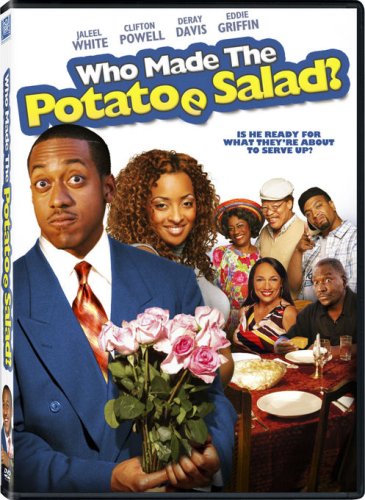
Jaleel White continues to flounder about aimlessly looking for a post-Family Matters career in Who Made the Potatoe Salad?, a mindless 90-minute excursion into the offensively cliched family comedy. Looking for laughs in all the wrong places, this effort from writer-director Damon "Coke" Daniels tries to cash in on every dirty race-driven joke it can think of without once pausing for a breath of originality. White plays, of all things, a police officer, who decides the time is right to move his relati...nship forward with the gorgeously awful Jennia Fredrique. That's where the film takes a turn from the familiar to the overdone. Of course, her family disapproves right away, led by her former Black Panther daddy, who believes all cops are pigs. Lucky for White, he picked the right profession to set Daddy Dearest up with every "been there, done that" joke in the book.
As for White's performance, I suppose he is a capable actor, but there are portions of this film where he disappears for what feels like an eternity, so the less than stellar cast can result to every outrageous gangland quip and situation to push the film along to its well-deserved R-rating they can think of. Of course, the real fault lies with Daniels' humorless script and direction. Family comedies, both dirty and clean, should connect with viewers on the grounds we can see our own lives reflected in the situations and character play that arise. All of this film seems as staged as a suspicious crime scene, where the characters react based on the needs of the script - and that, ladies and gentleman, is an ass-backwards way to write any work of fiction.
Posted in: Disc Reviews by Archive Authors on January 7th, 2007
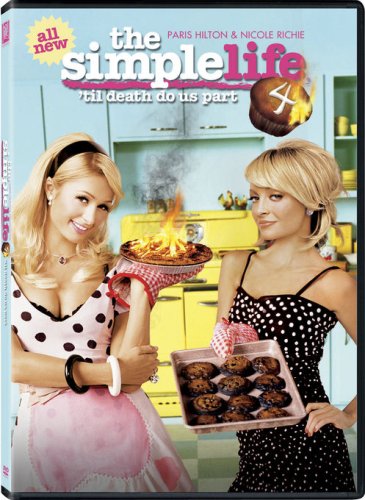
If you haven't heard of The Simple Life, the reality series starring celebrity debutantes Paris Hilton and Nicole Ritchie, you must not own a TV. If you just haven't ever watched the show, you're one lucky person. I used to be lucky, too, but now I've seen the show's fourth season on DVD.
The Simple Life features Hilton and Ritchie, spoiled rich and absolutely clueless, experiencing everyday American life. You know, like doing chores on a farm. What's new for this season? The girls have had a falling out, which I'm sure was covered in great detail in all of the tabloids and on all of the entertainment "news" programs. So this time Paris and Nicole are alternating days, so as not to cross paths and get in a catfight.
Posted in: Disc Reviews by Archive Authors on December 17th, 2006
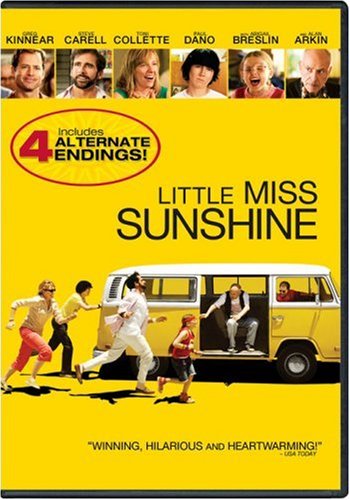
Little Miss Sunshine is a gem. With a quirky script, a great cast and interesting cinematography, there's plenty to appreciate as this ultimately uplifting film unfolds.
To make a great movie, they say you have to start with a great script. From there, your goal is just to not screw it up. Little Miss Sunshine's script laid just such a foundation for this film, as it's unique, funny and surprisingly heartwarming. The story is about a dysfunctional family. They've got a crude, drug-addicted grandpa; a suicidal, gay uncle; a mother "this close" to divorcing her husband, the struggling, aspiring motivational speaker; a son who has taken a vow of silence and only communicates via scribbling on a little notebook; and a slightly chubby little daughter who's working toward a goal of being a prepubescent beauty queen.