Kino Studio Classics

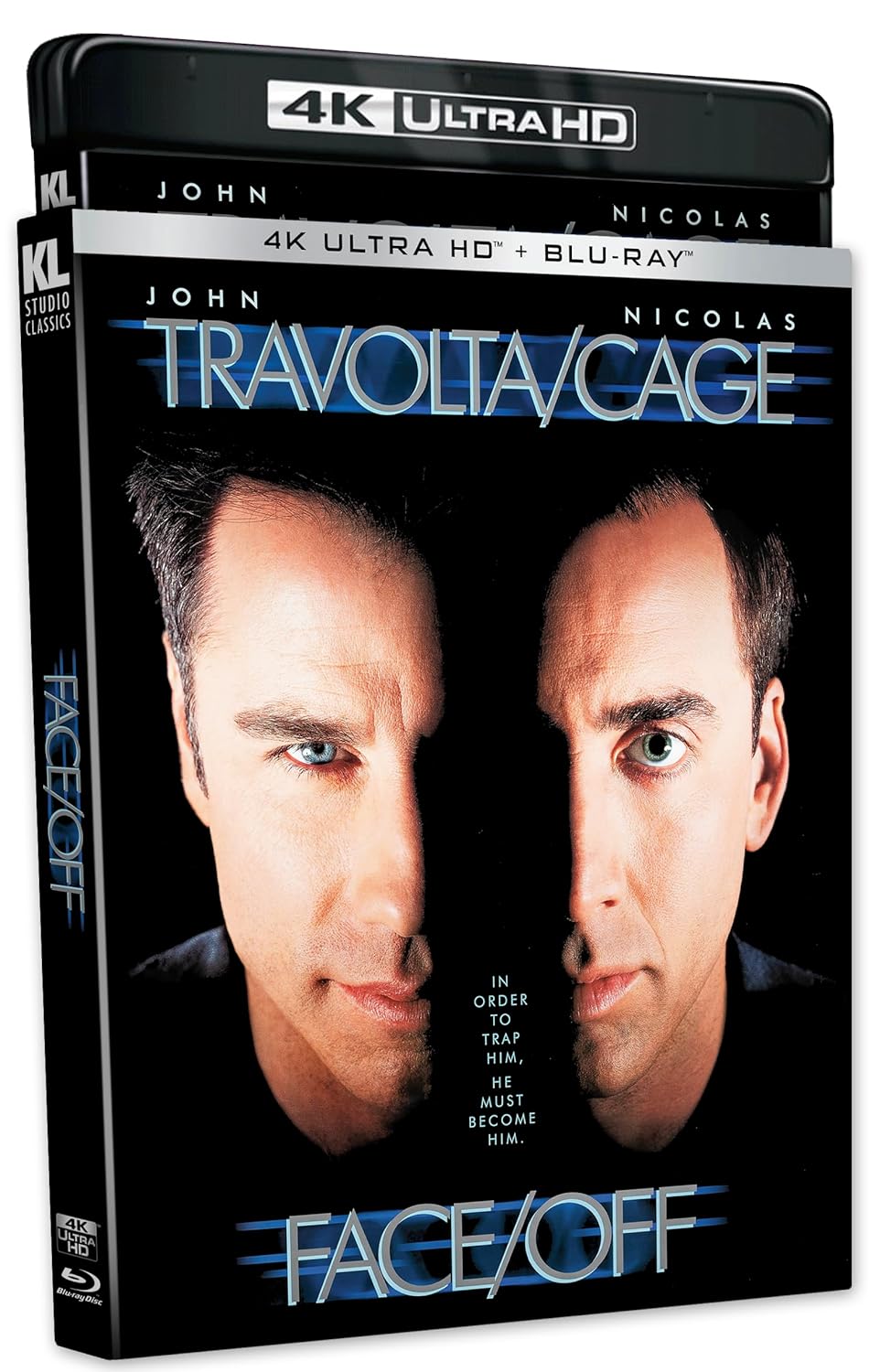
"You are now the property of Erewhon Prison. A citizen of nowhere. The Geneva Convention is void here; Amnesty International doesn't know we exist. When I say your ass belongs to me, I mean exactly that."

I am a huge John Woo fan, especially his earlier classics like Hard Boiled. I’ll admit it’s been several years since I last seen Face/Off, but I don’t have a reason why, as I remember really liking this movie then. At either rate now I have a copy of the movie to call my own, and a special two disc release at that. Let’s just hope that it is what I remember, but as a big fan of Nick Cage I don’t think I’ll be let down. In order to catch him, he must become him. I couldn’t put it any better myself, Face/Off tells quite the eccentric story of revenge, devotion, and of course crime. Sean Archer (John Travolta, Wild Hogs) is an extremely devoted FBI agent, obsessed with catching terrorist Castor Troy (Nicholas Cage, Ghost Rider). Several years earlier Troy killed Archer’s son, since then it’s been his goal in life to put Troy to justice. He gets the opportunity one day when Troy ends up in a coma after boasting about a massive terrorist attack he has planned on Los Angeles.

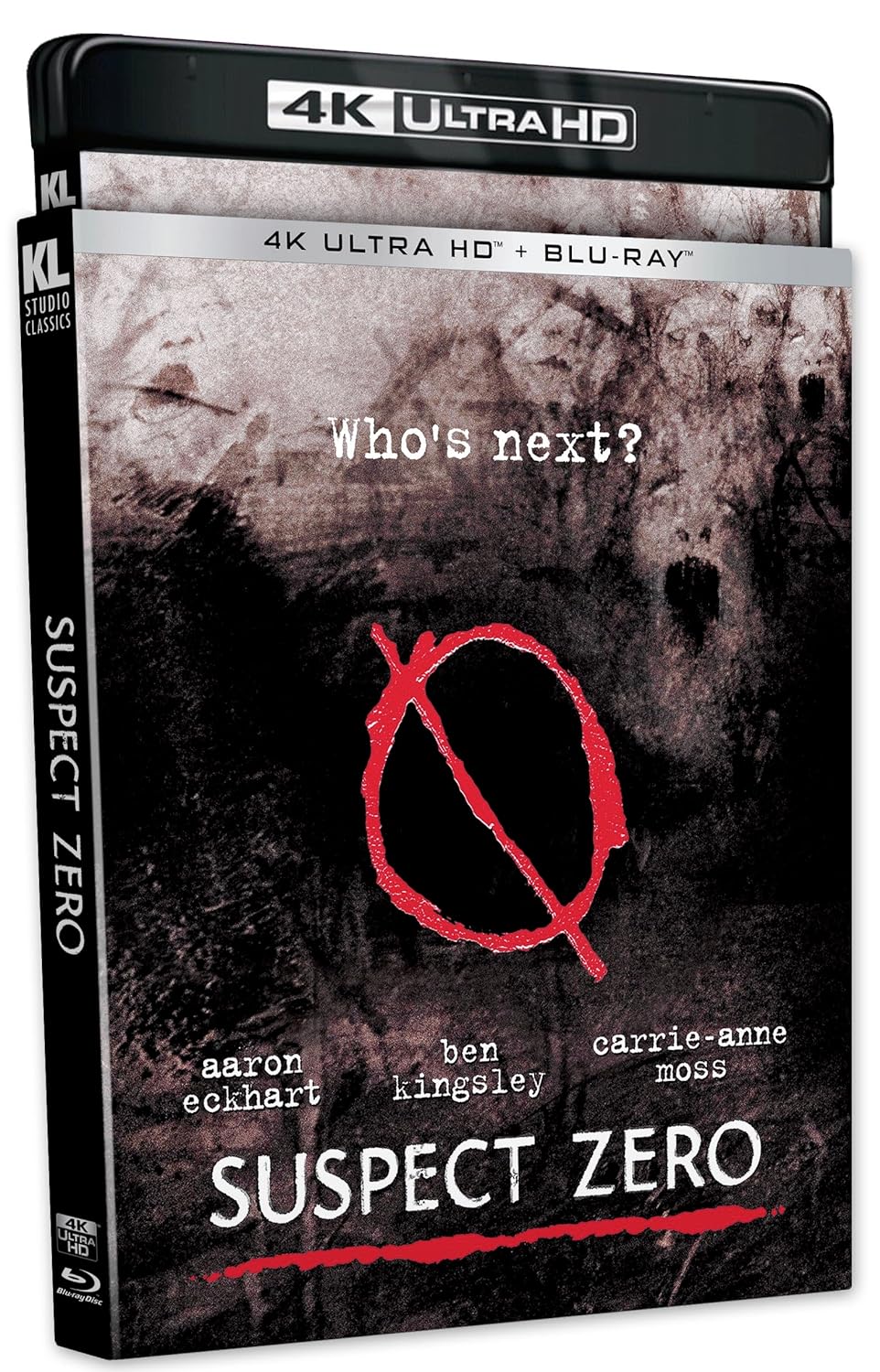
"I know what you're thinking. "Pain is coming. Will I take it like a man?" Well, let me put you at ease. You won't -- but none of them do. Men, women, children, they all weep, they all beg, they pass out, they piss themselves, they attempt negotiation. You wouldn't believe how many men I've seen lying right where you're lying right now, grown men with wives and children at home, offering all kinds of sexual gratification for a five-minute reprieve. It's pathetic."

Suspect Zero follows the contradictory teacher/student relationship between serial killer Benjamin O’Ryan (Ben Kingsley) and FBI Agent-in-Pursuit Tom Mackelway (Aaron Eckhart, sporting as much chin as Bruce Campbell). O’Ryan is a tormented refugee of a government program to tap psychic powers for military intelligence, and Mackelway is a borderline-rogue agent, tormented by visions and headaches. Without letting slip any spoilers, the movie sees O’Ryan draw their paths together in pursuit of justice for himself, his victims, and Mackelway.

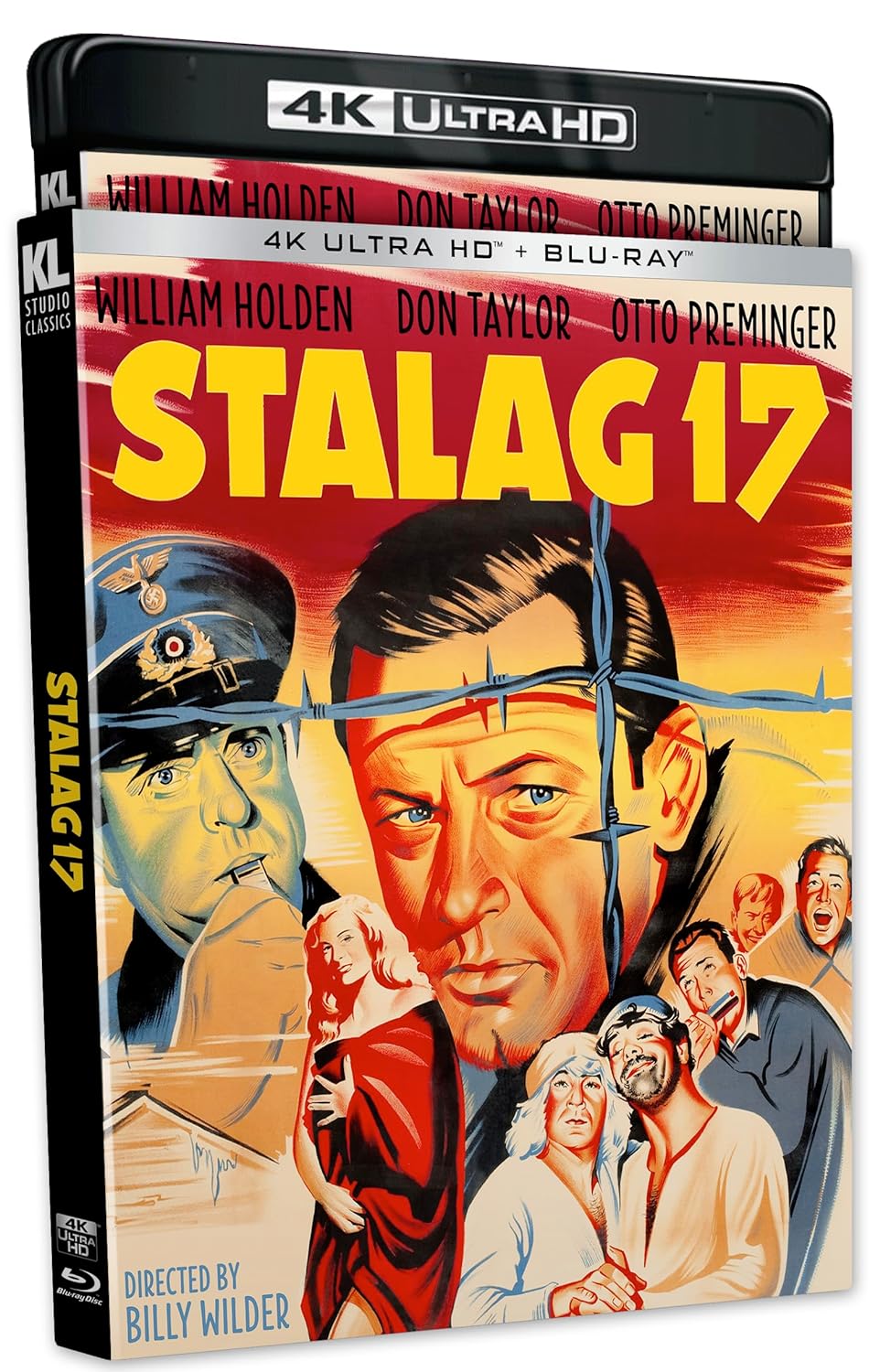
"I don't know about you, but it always makes me sore when I see those war pictures ... all about flying leathernecks and submarine patrols and frogmen and guerillas in the Philippines. What gets me is that there never w-was a movie about POWs - about prisoners of war. Now, my name is Clarence Harvey Cook; they call me Cookie. I was shot down over Magdeburg, Germany, back in '43; that's why I stammer a little once in a while, 'specially when I get excited. I spent two and a half years in Stalag 17. "Stalag" is the German word for prison camp, and Number 17 was somewhere on the Danube. There were about 40,000 POWs there, if you bothered to count the Russians, and the Poles, and the Czechs. In our compound there were about 630 of us, all American airmen: radio operators, gunners, and engineers. All sergeants. Now, you put 630 sergeants together, and, oh mother, you've got yourself a situation. There was more fireworks shooting off around that joint ... take for instance the story about the spy we had in our barracks ..." 

Stop me if you've heard this before. The premise is we're in World War II, but not where all of the action is. There aren't any big firefights, and you won't see or hear any of those big guns raining Armageddon down on some poor hapless pinned-down soldiers. Instead we're inside of a German POW camp, which they called Stalags. This one is run by a self-important commandant who takes pride in the fact that there has never been an escape from his Stalag. The prisoners themselves are always trying to find a way to outwit the camp Sergeant, a rather rotund officer named Shultz. Of course, I'm talking about Hogan's Heroes. But I'm not. 12 years before the CBS comedy would hit the airwaves, iconic film director Billy Wilder gave us a quasi-serious version of that particular scenario in the film Stalag 17. The film was based on a contemporary Broadway production written by Donald Bevan and Edmund Trzcinski based on their own actual experiences at the real Stalag 17. The film was originally planned as a vehicle for Charlton Heston, but when Wilder came on to direct, he immediately dismissed the idea, believing that it would become a Charlton Heston film more than a film about its own actual elements, and he was likely correct. Heston was big at the time, coming off larger-than-life parts like Moses and Ben Hur. The role went to William Holden, and the casting would become one of those lightning-in-a-bottle kind of things that can elevate a film from good to classic. And by the way, Wilder and gang sued Hogan's Heroes when it did arrive on the scene but were not successful.

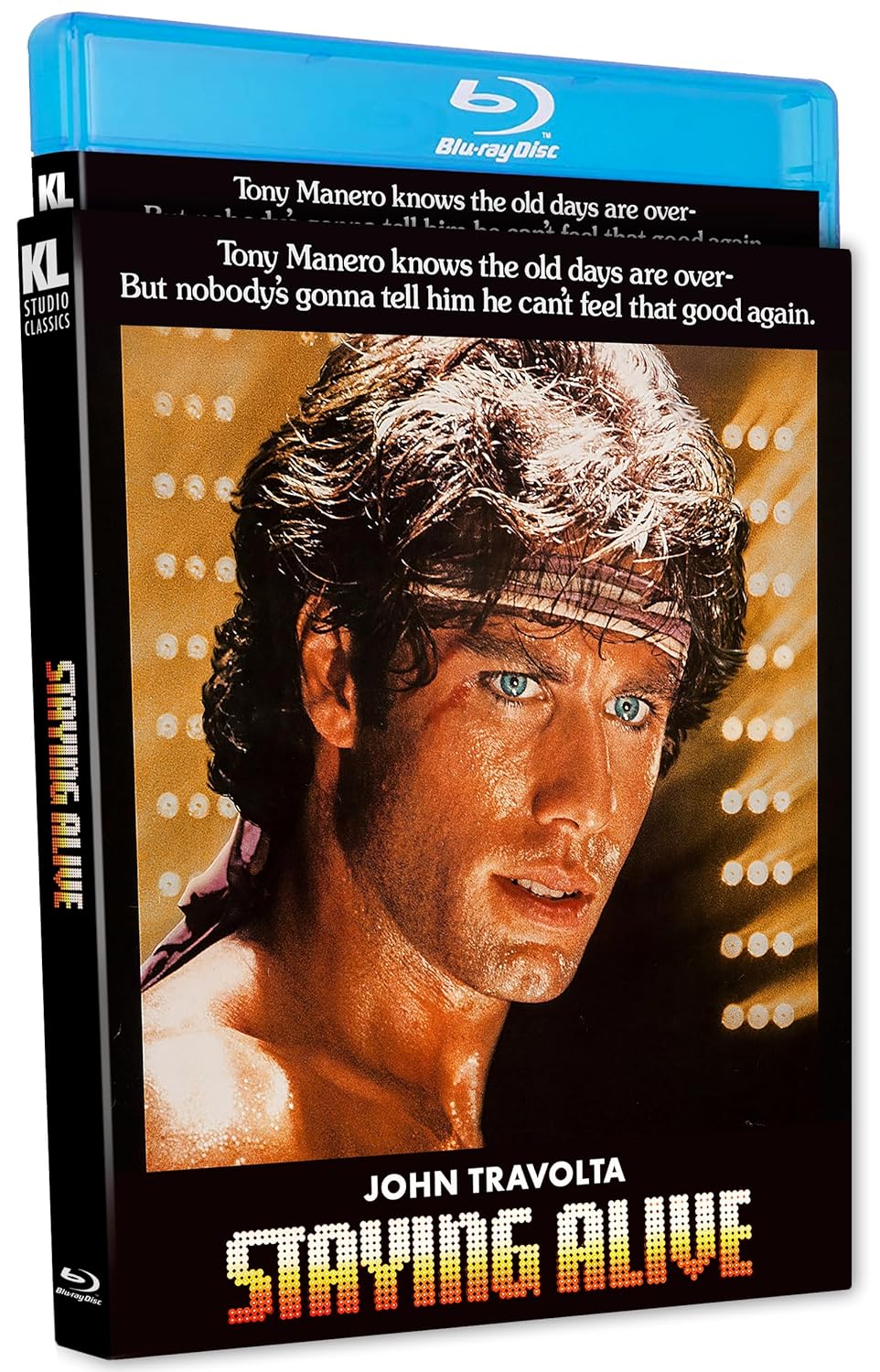
Coming up on its 40th anniversary, Staying Alive continues to be one of the most bizarre sequels to be made by a major studio, starring John Travolta and co-written and directed by Sylvester Stallone. The film was intended to be a sequel to the massively popular Saturday Night Fever, but when Staying Alive came out, disco was pretty much dead, and really there isn’t much that connects the films but for the character Tony Manero (John Travolta) and that there is dancing in the film. When the movie came out it was a financial success, but it was pretty well hated by critics of the time to the point that even one of the film’s stars, Finola Hughes, was awarded a Razzie for her performance. Apparently the film has a loyal cult following, but now after 40 years I’m here to give this film a fair shake and decide for myself: is it as bad as people say, or is it a gem from the 80s that will make us all nostalgic for when there were several movies with the cast in leotards, headbands, and over-the-top dance numbers?

It’s been a few years since Tony Manero (John Travolta) was dancing through the disco tournament, and now he is a dance instructor who is trying to make it to the next level of his dancing career to be a part of a Broadway stage production. The biggest change I feel we’ve seen in Tony is that he’s managed to become more arrogant and has coasted by on his good looks and dancing, though he’s pretty far from living the dream. He has a causal relationship with Jackie (Cynthia Rhodes), who is also a dance instructor, and the pair struggle together with auditions for various productions. For the viewers it is easy for us to want Tony to settle down with Jackie. She’s good for him, and in many ways too good for him, but Tony just always has his eyes on something bigger. He expects greatness for himself and will settle for nothing less. His opportunity comes along with the Broadway production of “Satan’s Alley”, where he lands a part and falls for the lead in the performance, Laura (Finola Hughes). She’s out of his league and is only using him for a good time, but Tony is blissfully ignorant, and this only creates drama for the production.

“Don’t expect too many mistakes from this man. After all, he does seem rather more interesting than just another reader researcher. For example; has he gone into business for himself? Was he turned around? Does someone operate him? Is he homosexual? Broke? Vulnerable? Could he be a soldier of fortune? Did he arrange the hit? Is that why he’s still in flight? Still, he may be innocent. But why didn’t he come in gently?”

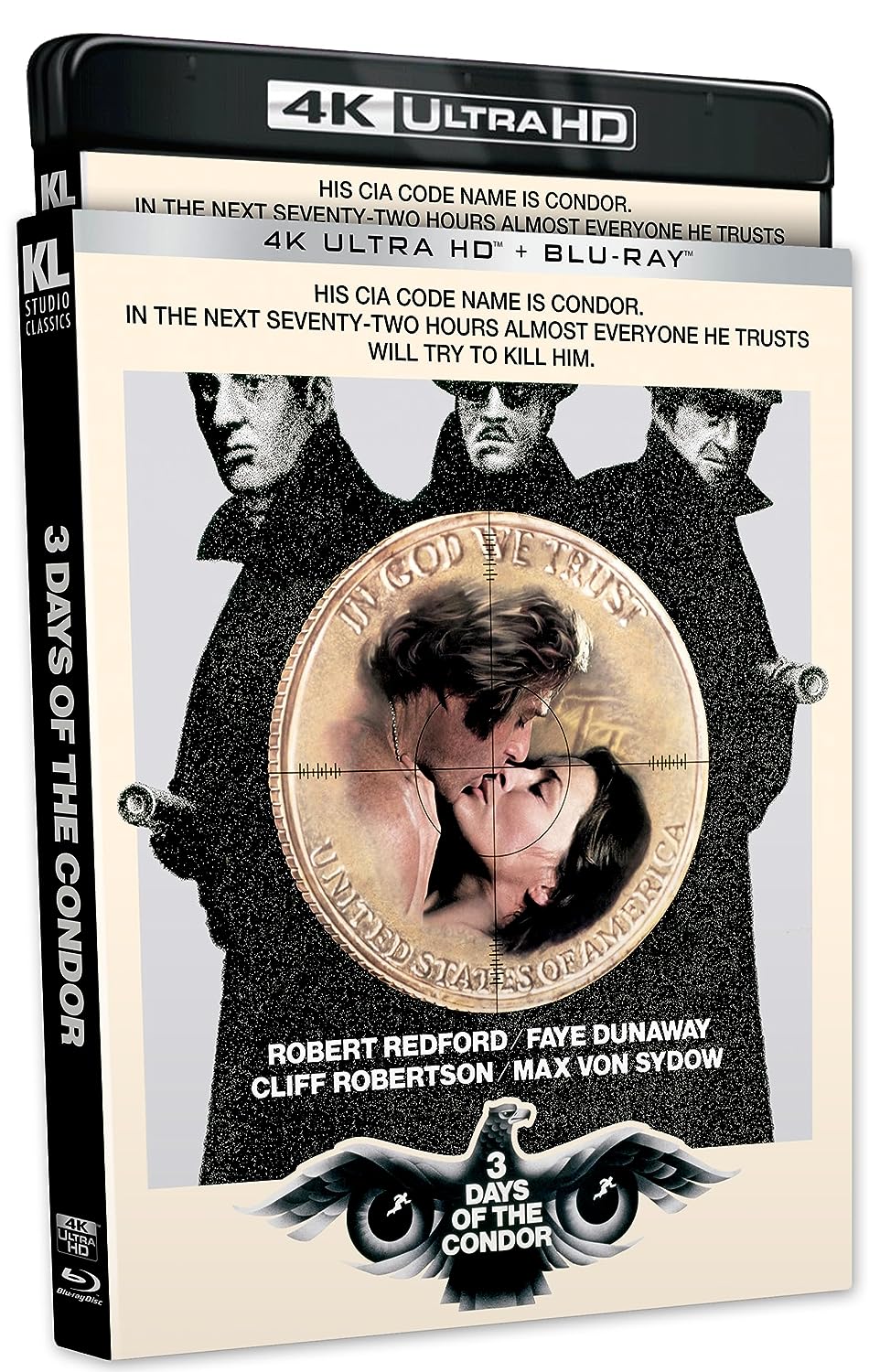
Sydney Pollack might have been channeling the essence of Alfred Hitchcock when he directed 3 Days Of The Condor. It’s hard not to see the similarities to some of Hitch’s work. But he might also have been having a bit of precognition at the same time. The later novels and films about Jason Bourne bear a striking resemblance to this 1975 thriller. Whatever connection Pollack might have been making, he managed to direct a film that was timeless while being very much a product of its time. We are reminded of that long-gone era of the 1970’s with generous shots of the just-built World Trade Center towers. Ads and shots of Eastern Airlines planes bring back some memories. These images securely place the action in a specific time. Still, it works maybe even more today than it did in 1975.

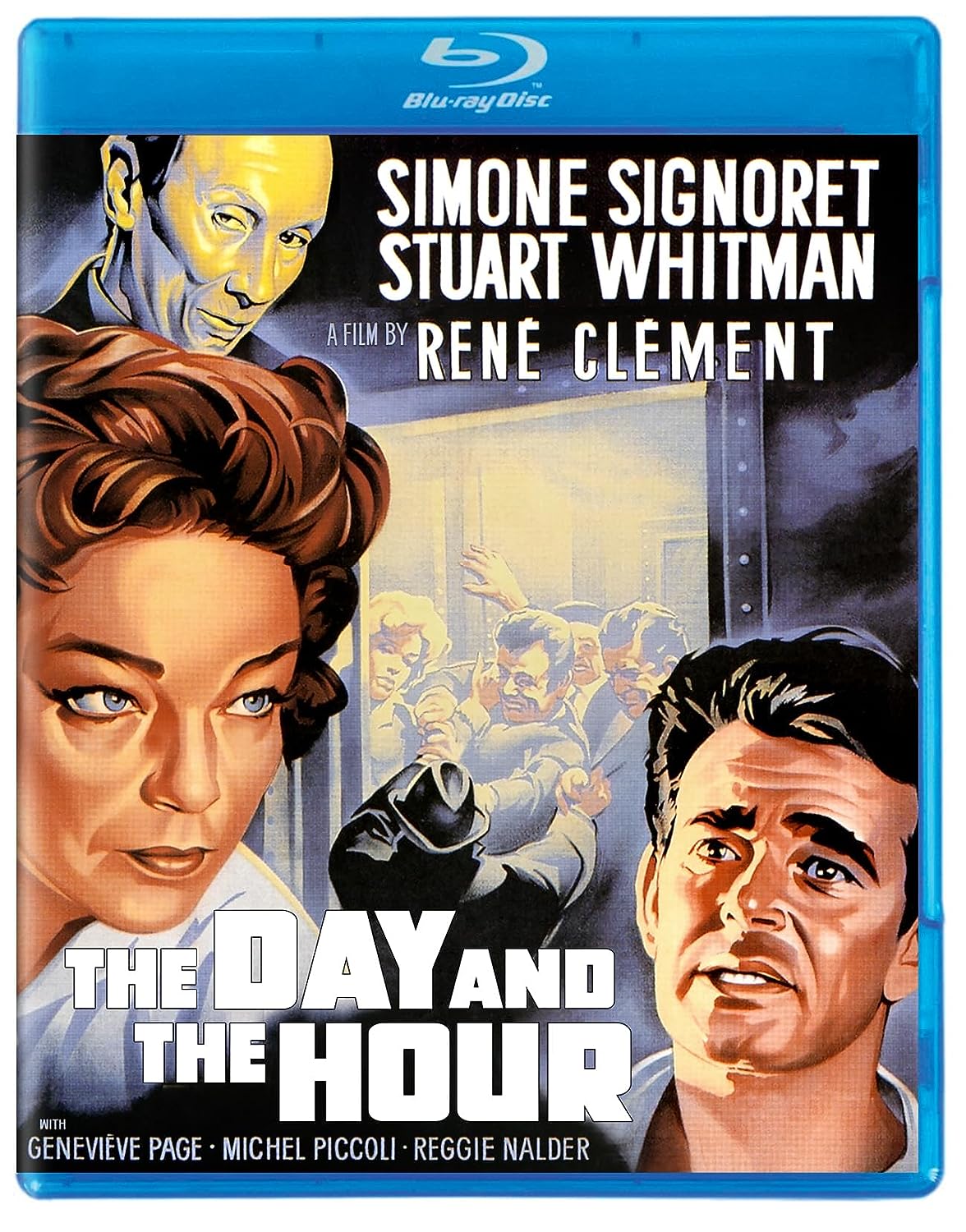
Typically, I avoid World War II period films like the plague.  I literally see the word Nazi or German occupation and usually find a reason not to see the movie.  I have nothing against the pictures; the problem is that so many of these films are surrounded in clichés that it feels like an old hat with nothing new to offer.  However, when I saw The Day and the Hour in my review pile, I was intrigued by the notion of it being in France with a female lead and something of a romance.  Far different from the usual pow pow, war is heck, or a film that's going to have buckets and buckets of tears and worrying about the human condition.  Though from the looks of things, this one might have some waterworks too.  Let's take a look.

1944, the Germans have occupied France. We open the film to a newspaper clipping. The German police have proof that three crew members on an enemy plane that was recently shot down are hiding in the Rethel commune region.  Their names are Allen Morley, Pat Riley, and Norman Thompson.  Anyone who is helping them is subject to punishment up to and including death.

"Beware of false prophets, which come to you in sheep's clothing, but inwardly they are ravening wolves. Ye shall know them by their fruits." 

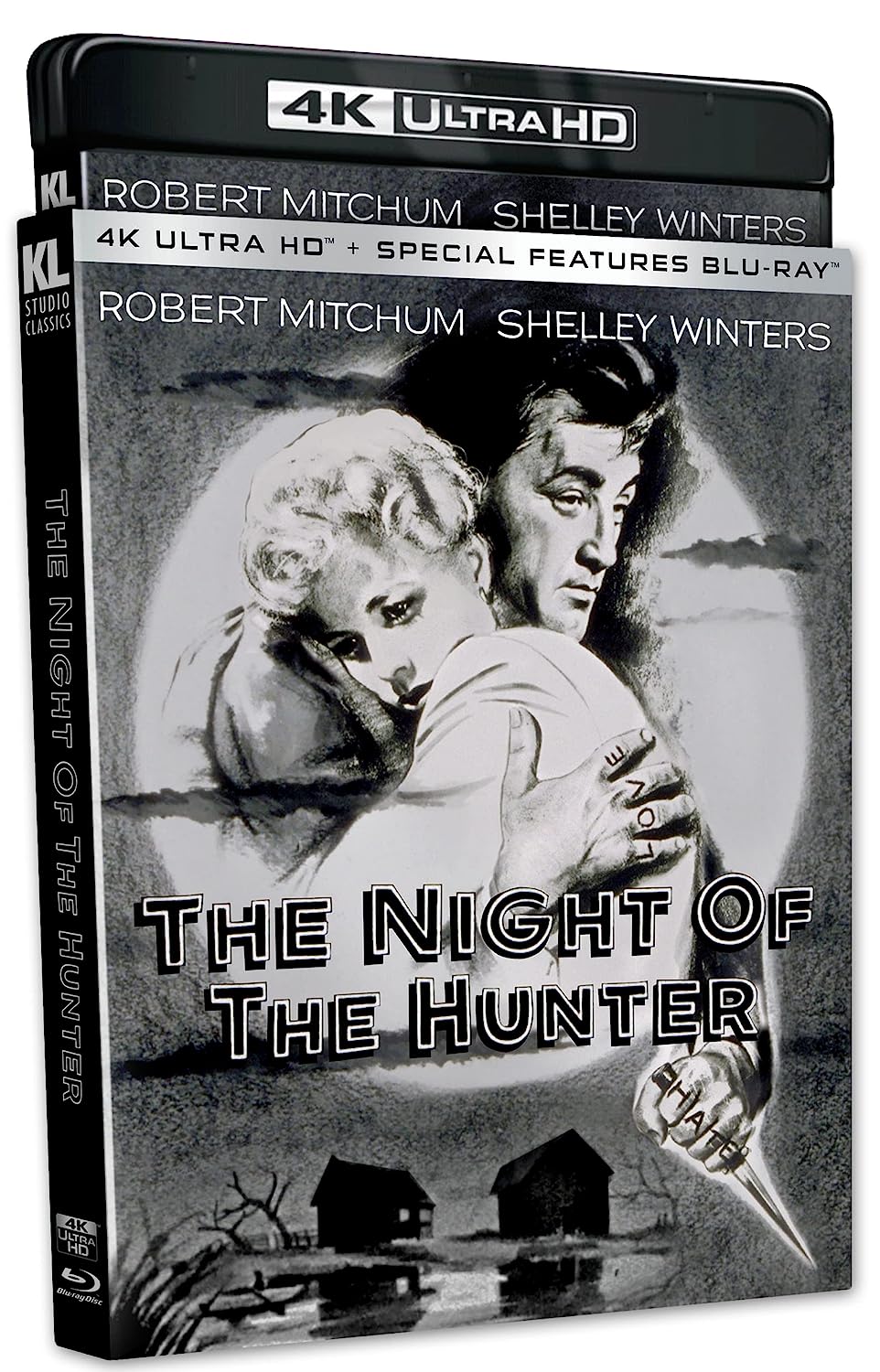
Charles  Laughton is known primarily as an actor. He starred in several classics such as Spartacus, Witness For The Prosecution, and the title role in I, Claudius. He was the titular character in a remake of Lon Chaney, Sr's The Hunchback Of Notre Dame. He was the cruel Captain Bligh in Mutiny On The Bounty and the evolutionary mad scientist in Island Of Lost Souls with Bela Lugosi which was based on the H.G. Wells novel The island Of Dr. Moreau and happens to be my favorite of his films. He married the Bride of Frankenstein herself, Elsa Lanchester, in one of those rare Hollywood pairings that lasted from 1929 until death did they part in 1962. They were a kind of royal couple for a while, giving some of the era's most iconic parties. He was quite an accomplished man when he died too soon at 63. The unfortunate story about his life has to be the fact that he directed only one film. It was a truly remarkable turn in the director's chair, but sadly in an industry that seeks instant gratification in terms of box office numbers, it was a commercial failure. But that film has stood the test of time, and is taught in film classes across the world, an appreciation that came far too late for any chance to see what else he could have done. But thanks to KL Classics, that film has been restored and delivered to our homes in glorious 4K via the UHD Blu-ray release of The Night Of The Hunter.

"All right, men, now here's the play we're gonna use. I don't think the guards know this formation. It's called 'incidental punishment after the ball is blown dead.' Remember, any man you tackle gets an elbow, knee, or kick in the mouth." 

In 1972 Albert S. Ruddy made motion picture history. He went from the writer of a television sit-com to landing a producer job at Paramount with almost no credentials but his nerve. Once there, this inexperienced producer delivered one of the most iconic films in history. That film was The Godfather, and it would shatter records at the Oscars and is considered one of the best films ever made. In my opinion it is the best film ever made. When the film was finished, it was a no-brainer that there would be a sequel. Sequels weren't quite so common then, but there was a lot of material in the best-selling novel to continue the story. Ruddy was offered the job of producer once again. He turned it down. He had another movie, one in which he wrote the story, that he wanted to do instead. Paramount gave him the nod, and The Godfather Part II. without Ruddy or Marlon Brando would go on to shatter records for sequels at all of the awards shows. But what happened to that passion project that Ruddy decided to do instead? That film never came close to hauling in the awards and cash that The Godfather Part II would rake in, but we do still remember that film today. You recall it, don't you? Well, in case it slipped your mind, it was a little football/prison hybrid called The Longest Yard, and while it can't compare to The Godfather in all of those mentioned metrics, it did accomplish something The Godfather never did, and never should do. It was remade twice since then. More on that later, and Kino Lorber has released it on UHD Blu-ray in 4K just in case you need a little help in remembering.

"He was here before Christ, before civilization. He was king here! Rawhead, that's what they called him! Rawhead!"

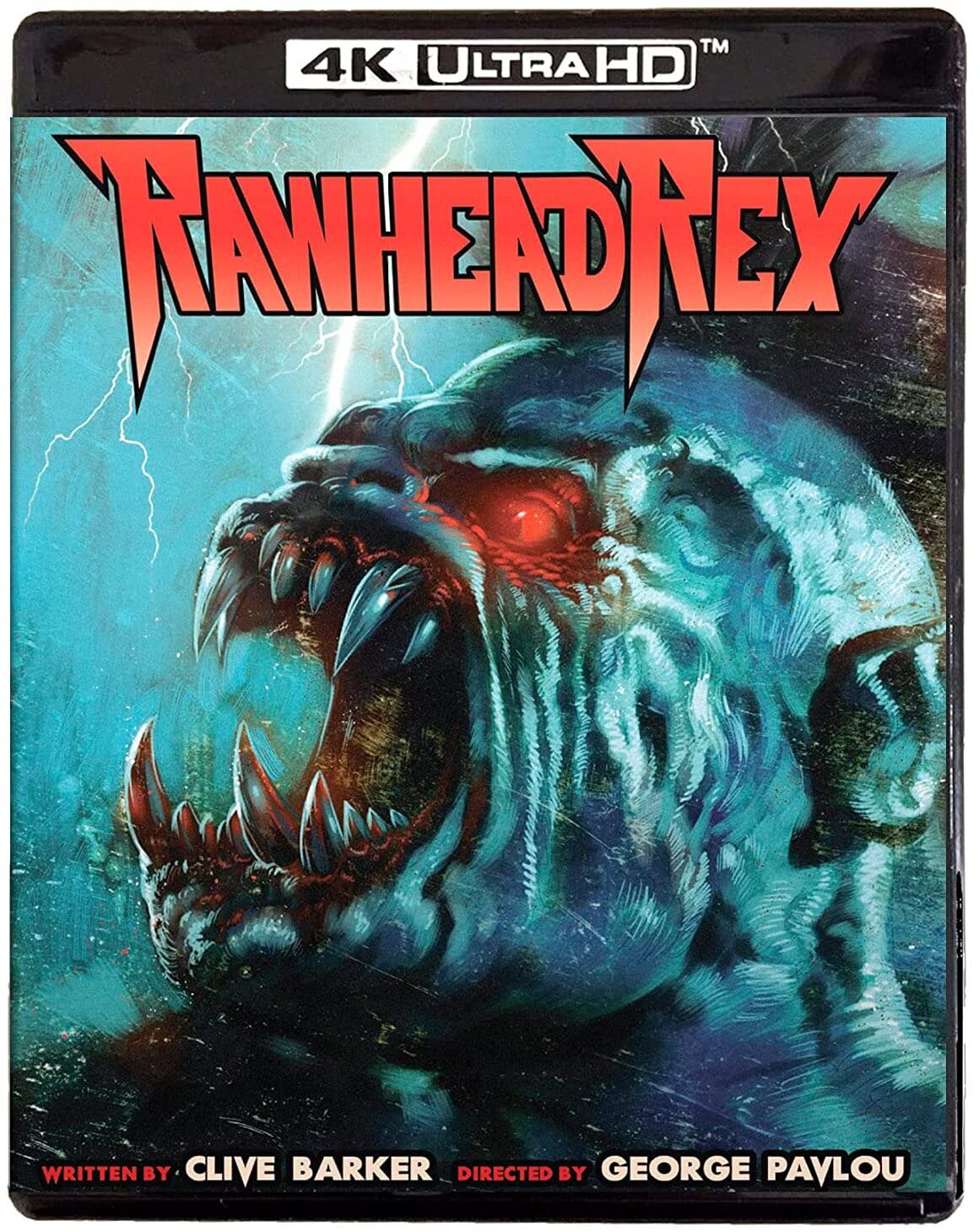
Rawhead Rex started life as one of many stories in a young Clive Barker’s published collection called The Books Of Blood. As a story it has been hailed by the likes of Stephen King as one of the best horror stories ever written. I'm not sure I would go anywhere near that far, but there's little doubt it's a well-crafted horror tale. I read it years ago and recall that I was quite impressed. The movie version of the story is something else entirely. It fails on really one important element, and that's the design of Rawhead himself. It's one of the worst-looking film monsters I've ever seen. It's a cross between an ape and a clown without the colorful make-up, and the young actor that brought him to life did anything but. Still, there's some atmosphere to be found here, and a few good performances. It's one of those films where it might be so bad that it will always find something of a cult following. That's exactly what Kino Lorber Studio Classics is counting on with a UHD Blu-ray release in 4K. You heard that correctly.

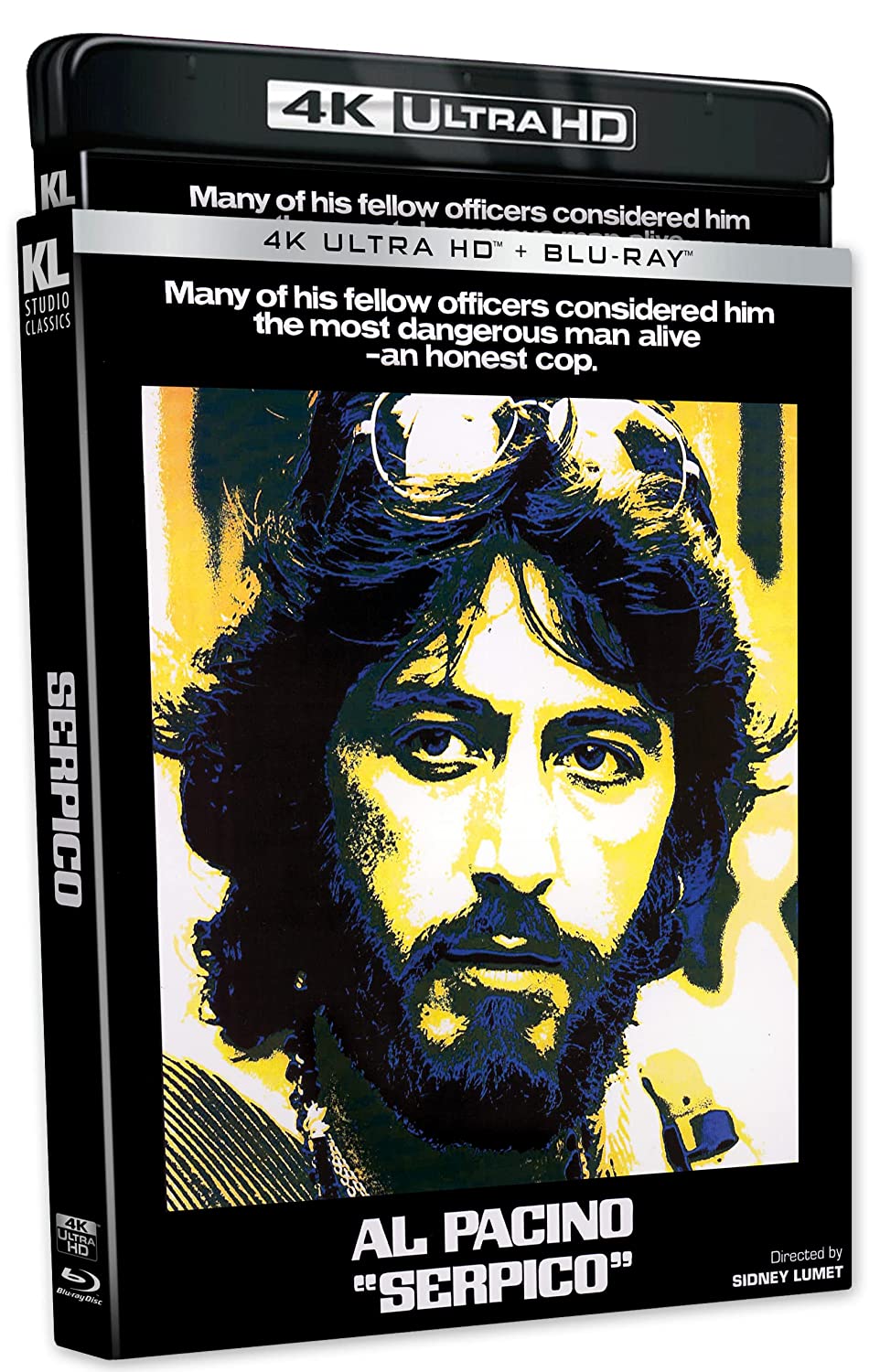
"All my life I wanted to be a cop, you know. It's like I can remember nothing else. I remember this one time  somethin' happened. A domestic argument or somethin'. Somebody stabbed somebody or somethin'. And -- there was this crowd around this tenement. I must have been nine, ten years old. I was this big. I went over to see what was going on. I noticed the red light -- goin' around and around, all these people, and I couldn't see. And I kept saying, ‘Do you know what's goin' on? Do you know?’ Nobody knew. It was like a big mystery behind that -- that crowd there. All of a sudden, the crowd just parted. Like the Red Sea, you see? And there were these guys in blue, and I said, ‘They know.’ What do they know? What do they know?” 

Frank Serpico was a New York City cop in the 1960's and early 1970's. Thanks to the film, everyone knows who he is, and they also know about his struggle as an honest man in a hornet's nest of corruption. His honest stand saw him a pariah and almost killed when his fellow officers stood by as he was shot in the face. He would eventually recover and testify before the famous Knapp Commission that investigated the systemic corruption inside the NYPD. If you know his story, it's because of this film, because that's the plot, pure and simple. What isn't so pure and simple is the inspired performance by Al Pacino, still a relative unknown, who had just finished The Godfather but hadn't really had a lead role up to this point. Serpico changed all of that. Pacino was on a rocket ship to stardom, and this film as much as The Godfather started the whole thing going.