Lionsgate / Maple Pictures

Lionsgate has as good a collection of catalog titles as any studio out there.  Many of these films have not yet been given the high definition Blu-ray treatment for one reason or another. So I'm sitting here trying to figure out how a trivial film like Ladybugs jumped the line and finds itself in a barebones release on Blu-ray this month. I'm sure that the movie has its fans. Of course, I've never met any of them, but I gotta believe that they're out there ... somewhere.

Don't get me wrong. I love Rodney Dangerfield. He's one of the few guests on Letterman who got me to be sure to schedule my DVR. I don't get to watch such things often, because I spend a large part of my entertainment time watching films for you guys. I know. It's a tough job, but somebody's got to do it. Yeah, I laugh about it all the time with my friends and family who have real jobs. Usually, they don't think that one's so funny. Except sometimes this really is a tough job. And, you want to know what else isn't so funny? Ladybugs. It's a bad sign when I find myself laughing hardest at a scene where Rodney's behind a dressing room curtain with Jonathan Brandis, and he's sounding like a pedophile to a shopper who misunderstands what she sees and hears. When that's the high point of any film, you've really gotta question the value of the kinds of things you're watching.

I get the impression that things didn't quite work out for Joe Pesci the way he might have originally intended. There's a heart of a serious actor buried somewhere deep under the makeup of a clown.  Who can forget the dead-eyed killer Tommy from Goodfellas? Most of us have that restaurant scene engraved in our heads where Tommy asked the immortal question "Do I amuse you?" Well ... Joe, actually, you do. And putting aside his initial role of Joey in Raging Bull and the aforementioned Tommy with its carbon-copied Casino character, Pesci has made the most noise by amusing us. Whether it was playing the title character in the hilarious My Cousin Vinny or the reluctant police snitch Leo Getz in the Lethal Weapon films, as much as he scared the crap out of us in Goodfellas, we've spent a lot more time laughing when Joe Pesci was up on the big screen. Jimmy Hollywood is certainly not the best of these funny roles, but it merits honorable mention.

Jimmy (Pesci) is one of the thousands of actor hopefuls that have come to Hollywood in search of stardom. It's all he thinks about. He even takes out an ad on a bus stop bench, expecting Hollywood big shots to be ringing his phone off the hook with starring roles. The truth is that Jimmy is more than a little naive. He's memorized the order of the stars on the Hollywood Walk Of Fame, and he can sit mesmerized by old Hollywood documentaries. Still, he's not recognized for whatever talent he believes he possesses. The truth is that Jimmy really pines for a Hollywood that doesn't even exist anymore. He's looking for that Golden Era with the likes of Cagney and Robinson. He's looking for streets that glitter like gold. Instead, he finds the streets are infested with criminals. His girlfriend Lorraine is robbed at gunpoint on her way home from the beauty parlor where she works. When his car is broken into and his stereo stolen, he decides to take drastic action. If the cops can't stop the criminals, then he will. Along with his best friend and cameraman William, who is somewhat mentally only half there, he stakes out the streets waiting for the serial stereo thief to try for another stereo. They record the crook in the act, tape a confession complete with the address of his fence and tie the guy up and leave him, the stereos, and the tape at the steps of the police department. William signs the label-maker note SOS, and before long the police believe a major vigilante group is at work in Hollywood.

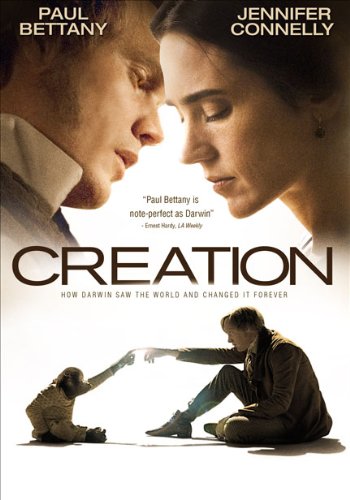
If one were to ask my theory on creation or what role God plays in this wonder we call life, I probably couldn't give you a definitive answer. Since I possess both a creative and analytical mind, I often find myself going back and forth on thoughts that for the most part have stuck me in the middle of the belief ideology. It was only fitting that I was able to review Creation, a movie where Darwin was having many of those same conflicts before he wrote his legendary book.

Charles Darwin (played by Paul Bettany) is a renowned English naturalist. He lives south of the small village of Downe in the parish of Kent in London. He is a devoted family man and is married to Emma (played by Jennifer Connelly) and has a loving daughter named Annie (played by Martha West) among many other fine children. In addition to developing his theory, he spends many of his days telling stories to his children of his travels.

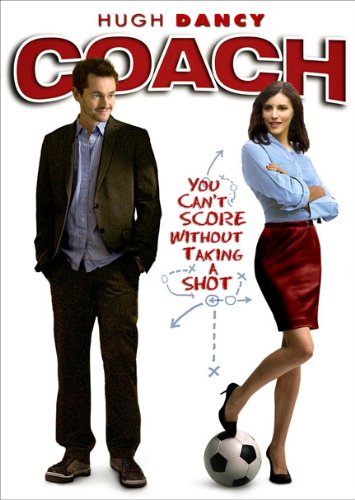
It's a story we have seen many times before. A man is down on his luck with love, largely due to his irresponsible ways, until he finds redemption by coaching a little league team. Sound familiar? Got a good idea of how this movie will progress? Good, that will save me some time.

"It doesn't look like they have chicken tenders here."

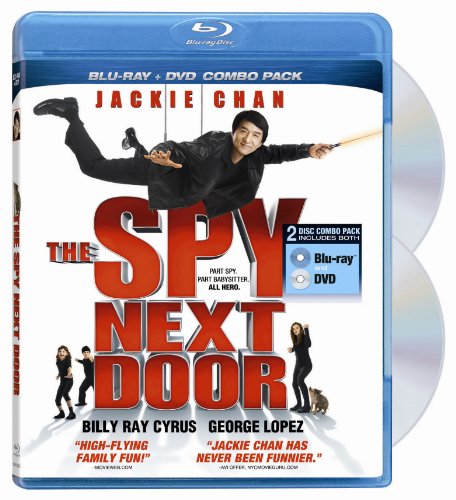
How can you not like Jackie Chan? If there has been a more versatile action or martial arts star, I haven't heard from him. The man made a name for himself in China's film industry as a remarkable martial arts performer. For decades he's been the closest thing the film industry has seen to Bruce Lee. But, unlike Lee, Chan wasn't content with being the best in a single genre. When he finally came to Hollywood, he decided it was a good idea to work a bit more lightheartedness into his films, something he had already begun to do in his homeland, China. The result made him a unique personality on film. It didn't matter if it was straight-out comedy like the Rush Hour or Shanghai films or more serious action adventures like his Police Story outings. Chan is first and foremost ... Chan, not just an action hero. Not afraid to poke fun at himself, he's become a reliable property at the box office.

A time of change is descending on the America and the men and women of the Sterling Cooper ad agency. The civil rights movement is underway, and (at the end of the season), President Kennedy is assassinated. Personal lives are also undergoing upheaval. Peggy is learning to express her sexuality, while the closeted Stan wrestles with some painful reckonings involving his own. And Don's marriage hits a crisis thanks to his serial philandering and a huge secret from his past.

Easily one of the most acclaimed shows of recent memory, Mad Men hardly needs me to point out how strong its performances are, how intelligent its scripting is, and how beautifully it's shot. But at the risk of being branded a heretic, I would point out a few gaps in the emperor's clothes. The series is highly inaccessible to new viewers, assuming as it seems to that everyone watching has been doing so from the first. I had only seen a couple of episodes prior to plunging into this set, and was often frustrated by the plethora of significant glances between characters that clearly spoke volumes about past events. Not only did I have trouble figuring out what was going on, I wasn't always certain that anything was. Yes, the writing is very smart, but it can, at times, wear that intelligence a little too ostentatiously – little bits of business involving a child reading Gibbons' Decline and Fall of the Roman Empire to her grandfather, or executives trading quips about Balzac feel show-offy to me. (And while we're on the topic, be wary of the knowledge you're going to parade. At one point in Episode 1, we are informed that London no longer has fogs. That is true now, but is a very anachronistic statement to be making in 1963, as my parents can attest to.) Finally, there is a certain coldness to the affair that I found made it hard to particularly care about any of the characters. Again, none of this is to deny the program's manifold and great qualities, but for my money, it isn't quite in the same stratospheric heights as something like The Wire.

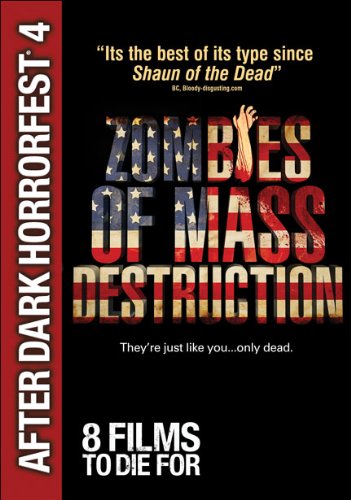
The year is 2003. The War in Iraq is just underway, and its ripples are felt even in the small town of Port Gamble, Washington. Take, for instance, Frida (Janette Armand). Her father is Iranian, which is the same thing as Iraqi as far as everyone else is concerned, and furthermore her skin tone and ethnic background mean she is not a “real American” (to quote her numbskulled boyfriend) even though she was born in Port Gamble. Tom (Doug Fahl), meanwhile, has concerns less related to world affairs: he has returned to his home town, in the company of his boyfriend Lance (Cooper Hopkins), to come out to his mother, a prospect that fills him with dread. Then, just to complicate everybody's life, a zombie plague breaks out, bringing out the best and worst of everyone in town.

Zombies have been fodder for socio-political allegory all the way back to their first cinematic appearance (in their pre-flesh-eating days) in White Zombie (1932), where they were the exploited workers of Bela Lugosi's sugar cane mill. Director Kevin Hamedani and his co-writer Ramon Isao go into satirical overdrive with this effort. There is some very funny stuff here, along with plenty of over-the-top gore FX and likable protagonists. Unlike Dawn of the Dead and Shaun of the Dead, however, whose commentary emerges naturally from the story and characters, here the personalities and story have clearly been designed to fit the political points being made. Thus, though Frida, Tom and Lance are very engaging characters (if almost entirely defined by their ethnic or sexual minority identities), their non-zombified opponents are caricatures of conservatism, as hissable as they are stupid. Now, satire is, by its very nature, a savage art, and I'm all for both savagery and movies that aren't afraid to take a stand, but Hamedani and Isao run the risk of preaching to the choir here. With almost every line of dialogue slaved to the film's political points, we are entering the realm of the editorial cartoon. And though there's nothing wrong with that, it does mean that there isn't much to the film beyond those political points. Thus, one faction of the audience will simply have its views confirmed, while the other will be completely alienated, and it is doubtful that much thought will be provoked. As well, some of the gags are arguably a bit misjudged. The scene where Tom's mother eats her own eye owes its funny/nauseating vibe to Peter Jackson's Dead/Alive, and works well enough, but the moment where a little girl Frida is trying to help is splattered by a car is more problematic, depending on your tolerance for extreme splatstick. All that said, there's still plenty of sharp work from all concerned here.

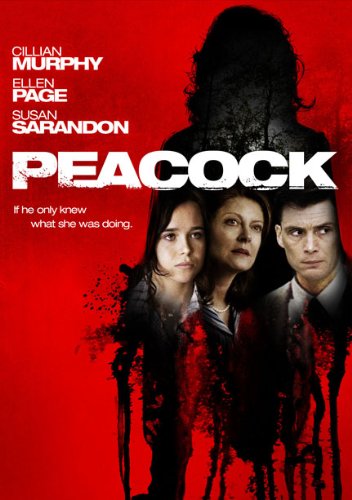
John Skillpa (Cillian Murphy) has been hopelessly damaged by the monstrous abuse his mother inflicted on him. As a result, he now has two separate personalities: John and Emma. John is a terminally shy bank clerk who exists as of 8:15 in the morning and for the duration of the work day. Emma takes care of the domestic chores and leave notes and meals for John. But one day, while Emma is doing the laundry, a derailed caboose blasts through the fence, revealing her existence to the town of Peacock. Everyone assumes she is John's wife. Coaxed out of her shell by Susan Sarandon, Emma gradually blossoms, much to the distress of John. When Ellen Page shows up with a young child and a dark revelation from John's past, the two personalities find themselves moving closer and closer towards a violent confrontation.

It is a testament to the work of director/co-writer Michael Lander and of Cillian Murphy (not for the first time making effective use of his androgynous looks) that one finds oneself increasingly viewing Skillpa as two entirely separate people as, bit by by, drop by drop, the suspense builds. Sympathy shifts back and forth between Emma and John, and by the end one can no more imagine Skillpa as a unified whole than one can decide which of the two halves is the “real” person. Touching and tense, this is a bizarre cross between Psycho and Our Town, and it somehow works very well indeed.

Flight Of The Intruder is one of those films that appears and disappears off of the film world radar about as quickly as a stealth bomber. It has had its share of accolades but often passes swiftly into that entertainment night of obscurity. While it is at its core a Vietnam War film, the movie never really appears to be about the war at all. It attempts to capture some of the sartorial wit of Catch 22 while still trying to pass itself off as a serious enough movie. Make no mistake. This film leaves no war cliché unused, particularly in the stilted, sometimes gung-ho dialog of its characters.

Jake "Cool Hand" (Johnson) is a bomber pilot during the Vietnam War. He's stationed on an aircraft carrier. He's growing a bit bored with the missions he's being ordered to fly. Instead of taking out the important military installations he's assigned to, the locations end up being just empty jungle, or worse. Some of them are simply civilian farms and villages. His morale is already pretty rock-bottom when one of these useless missions catches his plane some serious fire and kills his navigator. Now Jake wants to do something worthwhile, not to mention get a little payback on the enemy. Commander Camparelli (Glover) is growing concerned with the emotional state of his pilot. He tries to keep him reined in as best he can. Enter Jake's new navigator Lieutenant Commander Cole (Dafoe). This guy loves combat. He's just volunteered for his third tour of duty. Like Jake, he wants to make some kind of a real difference. Jake convinces him that they should fly an unauthorized mission straight to downtown Hanoi where it is believed there is a stockpile of SAMs (Surface to Air Missiles) that are responsible for bringing down a lot of American planes. They know it's likely a suicide mission and that even if they should survive, a court martial is about the best they can hope for from the service.

Nearly 10 years before Ben Stiller spent his first Night At The Museum with that eclectic cast of characters, The Relic brought us a much different kind of night at a museum. What comes to life here is anything but playful. There's nothing amusing about this nightmare in a museum. Peter Hyams might be more famous for several other action science fiction films, but none of his works before or since The Relic could claim to be quite so atmospheric. Together with the truly genius invention of creature creator extraordinaire Stan Winston, this is a movie that never quite took its earned spot in the tradition of effective horror or monster movies ... until now. For the first time in high definition thanks to this new Blu-ray release, I feel like I've seen The Relic for the first time. And, you know what? It's a pretty good film.

A cargo ship is found afloat in the middle of Lake Michigan shortly after a scientist has stowed aboard to prevent the delivery of a series of crates. The crates were the result of a Brazilian anthropology expedition for the Museum Of Natural History in Chicago. Now the ship appears deserted until Detective Vincent D'Agosta (Sizemore) boards her to investigate the disappearance of the crew and the bloody signs of a massacre throughout the ship. He makes a gruesome discovery. The crew was all mutilated by someone or something. D'Agosta believes this can only be the work of merciless drug cartel folks. That is, until a decapitation at the museum appears to have parallels to the attacks on the ship. His drug-smuggling theory will be put to the test in his search for the killer, apparently still trapped somewhere in the museum. The investigation is brought to a premature conclusion as city officials pressure him to allow a black tie fundraiser to go on that night. Anyone who's anyone will be there. He reluctantly agrees to green-light the affair, while he and his team attempt to find the killer and keep the patrons safe throughout the night.