Lionsgate / Maple Pictures

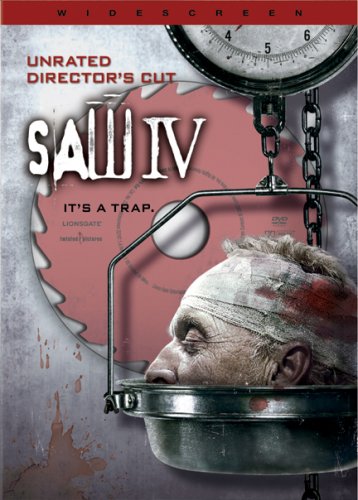
Despite being very thoroughly dead, Jigsaw is up to his old games again. This time, SWAT commander Rigg must race against time to rescue to kidnapped fellow officers. Jigsaw's messages send him all over town, to one gruesome event after another. Meanwhile, the FBI is also on the case, interrogating the killer's ex-wife, which means the audience finds out quite a bit more about Jigsaw's backstory.

The film gets right down to work with an extremely detailed autopsy of Jigsaw, so the target audience should feel well-served. The torture devices are as baroque as ever, and the deaths are elaborately gruesome. “Elaborate” and “baroque” are pretty good terms to describe the plot as well, only not necessarily in a good way. The main problem here is excessive flashbacking (rarely a good tactic in cinematic narrative) and equally excessive reliance on the audience remembering every detail of the previous entry. On the other hand, there are some very nifty transitions between scenes, and I confess to being rather more caught up in the story than I was expecting, this many episodes in. For the most part, this is actually an improvement over the third entry. Then there's the difficulty of the ending. The need to have each film end in a twist here results in a conclusion that's borderline incomprehensible rather than shocking.

Shattered, whose original (and more original) title was Butterfly on a Wheel, presents us with the household of Gerard Butler and Maria Bello. Life seems idyllic. They have a nice house, a lovely little girl, and the money is flooding in as Butler rises in his career (though his tactics don't always seem entirely fair). Into their lives erupts Pierce Brosnan, who kidnaps their daughter, then forces the couple to perform one strange act after another, each event destroying their lives further.

Butler's accent is erratic, but he does well as the rather too self-concerned husband. Bello turns in another performance that specializes in resiliance showing through extreme stress and distress, and Brosnan is clearly having a fine old time as an out-and-out villain. The scenario is, of course, utterly preposterous, but it trips along in a quick and entertainingly outlandish manner. Then the ending arrives, shattering the prepostero-meter with several twists that undermine much of came before. Oh well.

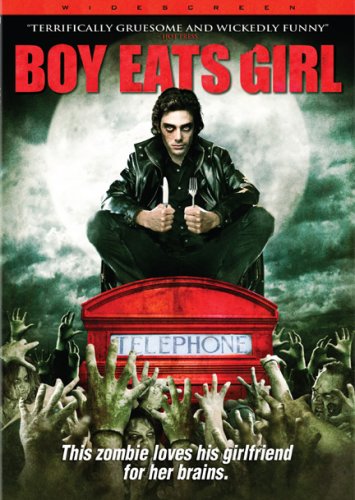
Nathan Maguire (David Leon) is having a very bad day. The boneheaded bully at school has it in for him. Jessica (Samantha Mumba), the girl he loves, doesn’t show up for their meeting where he was finally going to declare his feelings, and then he sees her in the car of one of the local studs. Plus he gets soaked in the rain. And just to cap things off, he is accidentally hanged, and his distraught mother performs a voodoo ritual to bring him back from the dead, only the manual was missing a page and he returns as an infectious zombie. Oops.

Thank you, Shaun of the Dead, for turning the zombie comedy into a veritable cottage industry. Boy Eats Girl certainly doesn’t have the brilliance of the former film or the likes of Fido. The characters are pretty generic (the Nice Girl, the Losers, the Jocks, the Slut, etc.) as well. But the film is efficiently paced (a mere 80 minutes), and the performances are engaging. We may have gone down these teen comedy paths before, but the conviction of the cast and script makes it all seem fresher than it should be. There are some very funny moments (as Nathan starts exhibiting superhuman strength and an alarming lack of pulse, for instance), and the gore, which is remarkably restrained for most of the film, explodes with would-be Dead/Alive enthusiasm at the climax.

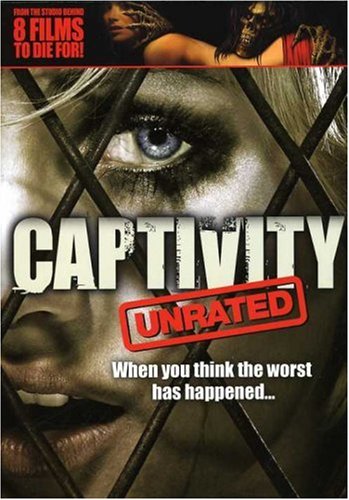
The big thing that gave Captivity the anticipation leading up to its release was a less than studio endorsed billboard showing its star Elisha Cuthbert (24) being tortured before getting killed. The main thing about the film was that Cuthbert had sunk so far downhill after renouncing her dad Jack Bauer. But holy crap, Roland Joffe directed this film! For those who don’t know, Joffe is a two time Oscar nominated director for The Killing Fields and The Mission. But since then, his success arc seemed to fall off the table completely since the mid ‘80s, with contributions like Super Mario Brothers and The Scarlet Letter, even directing an episode of an MTV sitcom. So I guess it’s only natural that he come into the torture horror genre much too late in the game with Captivity.

Written by Larry Cohen (Cellular) and Joseph Tura, Cuthbert plays Jennifer Tree, a successful model who finds herself captured by an unknown assailant, with no foreseeable hope for freedom. While in captivity (get it?), she meets Gary (Daniel Gillies, Spider-Man 2), and together they both try and find a way out of their hell. I wish I could give you more without diving into a spoiler or two, but that’s as far as I can get.

In the vein of Underworld, here is another tale of warring supernatural societies. In this case, both sides are werewolves (the “skinwalkers” of the title). The good guys seek to protect a 13-year-old boy who represents a cure for lycanthropy. The bad guys, who like turning into monsters, want to kill him to protect themselves. The weapons of choice in this battle? Fangs, you guess. Nuh-uh. Guns.

Yep, also in the vein of Underworld, gunplay is much more popular than monster mashes, but this effort makes its inspiration look like a masterpiece. The big showpiece gun battle (anatomized at length in one of the features) is a spectacular example of unintentional camp, whose highlight is the Sergio Leone-style drawdown between chief nasty Jason Behr and the boy’s grandmother. You read that right. In a stunning bit of blazing originality, the boy is also asthmatic. Sigh. Add in painfully expository dialogue and an almost total absence of transformed werewolves (who, when they do show up, are in no way worth the wait), and what you have here is a waste of time, which, fortunately, only robs you of just under 90 minutes, and not the 110 threatened on the case.

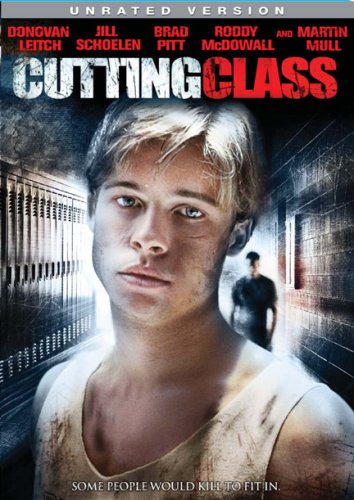
It’s probably a pretty bad sign when a film’s star makes a public apology to his fans for doing the film just when it is getting released on DVD. Brad Pitt did just that, and you know what? He should be sorry. This film is an absolute mess all the way around. I think it’s supposed to be a slasher film, but there are never any good 1980’s slasher moments to be found. It’s true that at this point in his career Pitt wasn’t exactly being offered the cream of the crop. He wasn’t paling around with George Clooney and friends just yet. So perhaps it’s not Pitt but the folks who made this film who should be apologizing. Cutting Class has no idea what it wants to be when it grows up. Is it a comedy or is it a drama? Ultimately it fails on both counts.


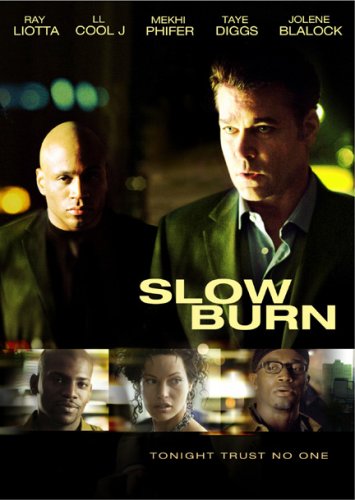
Slow Burn delivers exactly what the title suggests. A whole lotta slow and a little burn. District Attorney Ford Cole (Liotta) is running for Mayor. He’s got a no nonsense reputation for fighting crime. He’s been locked in a near mortal struggle with crime lord Danny Luden, an elusive criminal who has more than once humiliated Cole in the past. His ace assistant, Nora Timmer (Blalock) has just shot a man she claims attempted to rape her. The story begins to unravel when Luther Pinks (LL Cool J) arrives with an alternate story that paints Timmer in a very bad light. The two tales are told through flashbacks and narrative, and it’s left to the audience to come up with the truth. The only problem is the pacing is erratic and often confusing. After an hour and a half of clichés and snail’s pace plot movement, you find yourself too fatigued to give a crap who is playing who anymore.

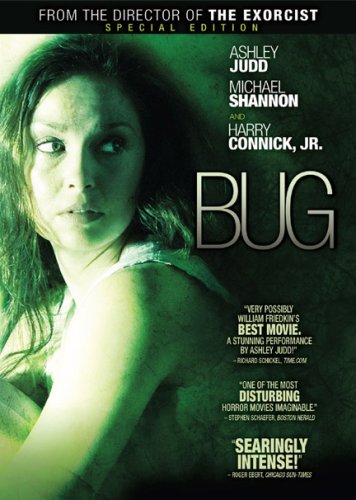
Director Peter Bogdanovich has a theory that you can make almost any movie better by cutting the first 20-minutes off of it. Exposition is intended to set-up the background of the characters for the audience, but it usually just ends up slowing things down until the conflict eventually arises. After watching Bug, I would be willing to accept Bogdanovich's argument, and double it.

Bug is the story of a down-on-her-luck waitress (Ashley Judd, doing her best impression of Charlize Theron from Monster) who lives in a cheap motel and works as a waitress in a honky tonk bar in Oklahoma. Her only friend comes by one night to party, and leaves a drifter behind when she leaves for the evening. The drifter turns out to be a pretty interesting character, though clearly of mysterious origins. The two form a quick bond, and as the drifter's pre-existing mental illness starts to present itself, the waitress buys in to his delusions, with disastrous results.

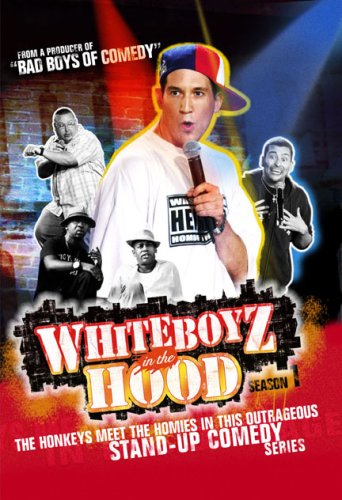
Over the course of all of the reality shows out there, someone decided to want to do one with the goal of finding the next big stand up comedian of North America. But with every comic remotely worth something having done at least a stand up special for a television show of some sort, the search to find a decent stand up was a long one, to say the least. And after several “winners”, are any one of them really top shelf material? Of course not.

So enter Showtime, home of such quality shows like Weeds, attempting to promote culturally aware entertainment down the collective premium cable buying throats of America, with their show White Boyz in the Hood. Simply put, the show pulls together some stand up talent of the caucasion persuasion and puts them on stage in front of a mostly African-American crowd. In the spirit of Def Comedy Jam and similar shows of that ilk, it’s an interesting idea.

One hundred years after Abraham Van Helsing and allies fail to annihilate Dracula, the vampire arrives in a small American town looking for an amulet that, if destroyed at the prescribed moment, will usher in a reign of darkness. Recruited to aid in this project are versions of the Wolfman, the Frankenstein Monster, the Mummy and the Creature from the Black Lagoon. Opposing Dracula is the titular Monster Squad, a group of monster-crazy boys and one very little (and very adorable) sister, who befriends the Monster.

I first caught this film during its original theatrical run, and enjoyed it then. Twenty years later, it looks even better. This is the kind of movie that Stephen Summers (The Mummy, Van Helsing) evidently thinks he is making, even though he is utterly unable to do so. Director Fred Dekker’s acknowledged model is Abbott and Costello Meet Frankenstein, and as in that film, the monsters are treated with respect, remaining figure of fear, not of fun. There is much humour in the film, but the stakes are real. There is a sense that the battles could have a real cost to them (and when the monsters attack, people do actually die). There are also enormously poignant, heartfelt moments (when was the last time you teared up at a Summers film?). The special effects have aged somewhat, but have accrued all the more charm for that. Dekker’s love of the classic Universal films imbues every frame, right down to replicating the out-of-place armadillos and phony-looking bats from the original Dracula. This is, from top to bottom, the dream of every classic monster fan made flesh.