MGM

Synopsis

The Ant and the Aardvark were regulars on the old Pink Panther show. They were the DePatie-Freeling equivalent of the Roadrunner and Wile E. Coyote. Every episode would see the Aardvark deploy one strategy after another to catch that Ant, and every attempt would blow up in his face (often quite literally). The animation, the invention and the energy are a long way from being up to the level of the Warner team. What is fun, though, is that both antagonists here are very loquacious (voiced by ...ohn Byner). Not all the lines are funny, but the characterizations are good fun, and all 17 of their adventures are present.

Synopsis

Well, time may not have been too kind to George Lazenby since he assumed the tailored suits of James Bond for On Her Majesty’s Secret Service, but considering how well Daniel Craig did in Casino Royale, and the basic storyline is the same for both films, why do people still want to bash Lazenby now? Is it because he wasn’t a carbon copy of his predecessor, Sean Connery? Who knows?

Synopsis

The first thing that surprised me when I did some minor research on The Addams Family was that as a show, it was barely on for a cup of coffee, lasting two seasons. Maybe because it was on around the same time as The Munsters shortened its shelf life. However three decades later, the film (and its sequel) helped propel it into fan appreciation.

Synopsis

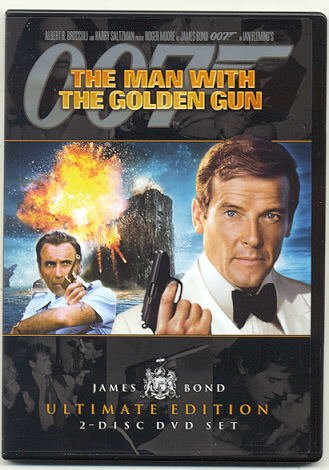
Ian Fleming’s The Man With the Golden Gun was the only posthumous release for the established actor, and the book was such a success that producers Albert Broccoli and Harry Saltzman decided to try and recruit Roger Moore for the role immediately after You Only Live Twice to capitalize on the success of Fleming’s book. However, it wasn’t meant to be, and the film’s production was delayed several years while the George Lazenby era came and went, not to mention the Sean Connery era leav...ng and returning, only to leave again. When Moore came on, Live and Let Die was the first book they adapted, and The Man With the Golden Gun finally came to fruition in 1974.

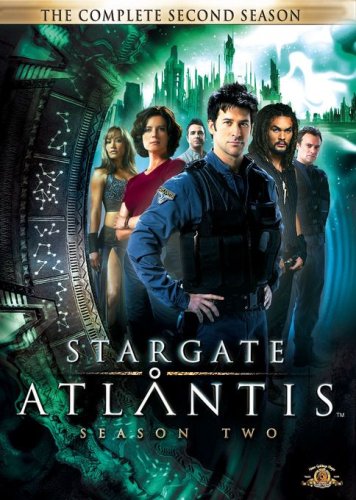
When last we saw our courageous Atlantis crew, they were in dire straights indeed. The series had just completed its first season, and not without at times relying on the mother series, SG-1, for help along the way. Would the show now find its own legs in its critical sophomore year? Would the Sci-Fi Channel continue to support it or take out its legs unrepentantly as they had done with Farscape not many years ago? Oh, and then there was that pesky Wraith problem we were left with in the season 1 ending cliffhanger... The Wraith are about to destroy the city when a wormhole from Earth delivers an SGC unit to assist.

Martin Wood asserts in one of his interviews that Atlantis and SG-1 were beginning to look too much the same on the surface of things. So, one of the mission statements for the second year was to give Atlantis its own look and identity. Without a doubt, Atlantis became darker, but without losing its humor or charm. A hard thing to pull off, indeed.Season 2 brings changes for Atlantis. Some I like. Some not so much. I’m not sure I’m happy with more permanent and reliable contact being restored with Earth. One of the show’s strengths was its isolation. Thus, the temptation to lean too heavily on its parent show would be minimal. I know there was the danger of the Deep Space Nine Syndrome, but I’d be willing to risk it. First off, these characters are far more interesting than those DS9 had, and while they might have been cut off from Earth, there was indeed an entire new galaxy to explore. One of the best moves was to take a rather mediocre character like Ford and turn him into a wonderfully complex villain, of sorts. With a greater range to draw from, we find out that Rainbow Sun Francks was a far better actor than season one would indicate. If you haven’t seen his new persona, you should get these DVD’s just for that experience. Another brilliant move was to use Paul McGillion more as Dr. Beckett. Once a throwaway character, he has blossomed this season into one of the better members of the team. The character chemistry between Beckett and McKay (Hewlett) is priceless. The most significant change for season 2 is the addition of Ronon Dex, played by newcomer Jason Mamoa. For me the jury is still out on Ronon. I understand that he brings a hyped up action persona to the mix, but I might have liked to have seen Teyla provide more of that in the future. The portrayal is quite good, but I’m not sold on the mix yet. The character reminds me somewhat of Vin Diesel’s Riddick.

Dances With Wolves has always been a bit of a conundrum for me. The story is simply a beautiful one. The cinematography is often nothing short of breathtaking. What causes my trouble is when we get down to its star. Kevin Costner is horrible in this film. I’m not a Costner hater. Untouchables and JFK are two of his best films, and in each he delivered exactly what was required. I’m beginning to think, however, that the G-Man persona is all he is capable of delivering with any consistency. What exactly is my problem... I’m glad someone asked. Dunbar needs to be a very complex character. We find him at first a very loyal American soldier dedicated to his duty. His transformation under the Indian influence should be a dramatic one and pivotal to the essence of this tale. Costner doesn’t show us this change. The writers do in his words and actions, but Costner hasn’t changed the very soul of his character. Example: In the Godfather Al Pacino plays Michael, who is the son of a crime lord. He despises what his father stands for and has vowed never to be involved. When Michael makes the decision to lash out at his father’s attackers, you can see the change before he speaks a word. Pacino played a different man then. It’s obvious he understood this man was different not because of how he was now behaving, but rather that he had changed somewhere in the core of his being. His voice and speech changed as did even the way he walked across a room. Where is the change Dunbar undergoes inside? It’s simply not there. Costner was also the director, and perhaps there lies the true flaw. Maybe if another perspective had been there to better guide the transformation, we might have been given that dramatic metamorphism so desperately required for this film to work. There’s a reason why given the film’s many Oscar wins one was not for Best Actor.

Video


Perhaps in an all too unsubtle move, the MGM/Fox contingent has released The Pebble and the Penguin on the same day as the recently released Happy Feet. The film chronicles the quest of Hubie (Martin Short, Innerspace), a penguin who is trying to win the love of Marina (Annie Golden, Twelve Monkeys) as a mate. But Marina is also eyed by Drake (Tim Curry, Clue), and knows that Hubie must not have her, so he throws Hubie into the ocean. Hubie meets Rocko (Jim Belushi, Return to Me), who helps him stand up to Drake while winning the love of Marina.

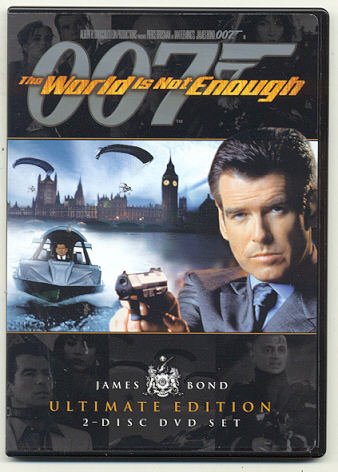
To the credit of James Bond film producers Michael G. Wilson and Barbara Broccoli, they realized that recycling a storyline with Russian antagonists or other satellites of communism, was stale even several years after the Berlin Wall fell. But in its place, the big Bond villain was a Serbian national of sorts named Renard, who was shot in the head, and the bullet, still lodged in his brain, made him magically impervious to pain.

When it comes to The World is Not Enough, the ideas and aspirations (the script was written by Neal Purvis and Robert Wade) were fairly lofty, and the directing choice (Michael Apted of Gorky Park fame) was interesting. In this installment, Pierce Brosnan reprises his role as 007, this time following the death of a wealthy English businessman whose daughter (played by Sophie Marceau, Braveheart) was kidnapped and held for ransom. How does Renard play into it? Well, he's holding the daughter for ransom, part of a larger plot to control the world's oil supply.

Once Roger Moore left the Bond franchise (some would say three or four films too late), quite a few things left with him. When Timothy Dalton, whose most well-known work before this was an excellent supporting turn in The Lion in Winter, was brought in, several things seemed to change. First and perhaps most notably, the return of a James Bond that smoked cigarettes was most startling. Second, supporting characters like Lois Maxwell (who played Miss Moneypenny) and Bernard Lee (M) were replaced with younger, fresher (?) perspectives. Was all this change in the perspective of "modernizing" Bond worth it? Well, Dalton's role in The Living Daylights was the first of two Bond films, so easy come, easy go I guess.

In this installment, based on an Ian Fleming story that was adapted to a screenplay by current Bond producer Michael Wilson and Richard Maibaum (Diamonds are Forever), James helps a Russian general (played by Jeroen Krabbe, The Fugitive) defect to England from Russia, but he is unfortunately reacquired by the KGB and kidnapped. James is dispatched to Russia to kill the Russian general that was presumably behind it (played by John Rhys-Davies, The Lord of the Rings), and along the way encounters a beautiful musician named Kara Milovy (Maryam D'Abo, White Nights), who is also reaching out to the defecting general.

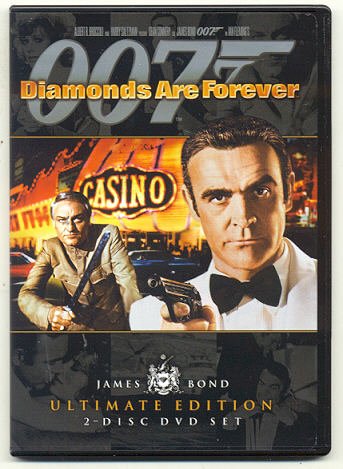
Admittedly after George Lazenby left the James Bond franchise when On Her Majesty's Secret Service was released, producers Harry Saltzman and Albert Broccoli wanted to go with a more American-based Bond in their seventh film, and were pretty serious in their intent. At one time, Adam West (yes, Batman) was even involved in negotiations to play the part. Actor John Gavin (Psycho) was signed and sealed for the role a week before principal photography started. But Sean Connery was pitched for it, a bunch of money was thrown at him, and he went upon his merry way to reprise the role that made him famous.

In this film, which was adapted from Ian Fleming's novel by Richard Maibaum (Goldfinger) and Tom Mankiewicz (Live and Let Die) and directed by Guy Hamilton (The Man with the Golden Gun), James finds himself at the beginning of the film thwarting yet another attempt at world domination, this time by Blofeld (Charles Gray, who ironically played a Bond ally in You Only Live Twice). SPECTRE does make a larger plan though, with the planned kidnapping and impersonation of a mysterious and reclusive Las Vegas-based millionaire, in order to proceed with nuclear testing with the goal of mutually based destruction.