MGM

SynopsisFive films here, making a very coherent package.Persona is probably the most famous of the bunch, and is arguably Bergman’s mosticonic film. The images are among the most famous in cinema, though they are slightly moredifficult to take seriously thanks to SCTV’s parody. The plot concerns Liv Ullmann as an actresswho has suddenly fallen silent, and Bibi Andersson as the nurse hired to look after her. In theface of Ullmann’s silence, Andersson talks and talks ...nd talks, and her identity is graduallystolen by Ullmann. But this is really a meditation on the nature of storytelling and filmmaking, asthe startlingly postmodern imagery constantly disrupts the narrative.If Persona can be considered a psychological thriller, then Hour of the Wolf isBergman’s gothic horror film. As Max Von Sydow succumbs to madness, tormented by spirits thatmay be imaginary (or may not), the film is very much in the spirit of the Italian gothic filmsbeing produced at the same time.Shame is Bergman’s take on the horrors of war. Ullmann and Von Sydow are the couple whose lives are destroyed by a conflict they do not understand. These are all dark films, and thisis one of the most uncompromisingly bleak.The Passion of Anna is more personality disintegration, and is the first of this set(chronologically) in colour. I’ll confess that I prefer the luminous black-and-white of the others,but the effect does humanize the movie somewhat. This time around, secrets from the pastdisrupt and destroy the lives of four people, including Kinski and Ullmann.Odd man out in this collection is The Serpent’s Egg. Shot much later (1977,compared to the late 60s for the others), and on a much bigger budget, this is the story ofUllmann and (wait for it) David Carradine encountering the nightmare of rising Nazism in 1920sBerlin. The genre Bergman is playing with here is film noir. Not as highly regarded as the otherfour (which are widely hailed as masterpieces), its inclusion in this set might lead to its re-evaluation.AudioAll the films are mono. There has been no messing around with stereo remixes, which is agood thing. Such treatment would be very inappropriate with these films, which have a verycarefully constructed aural environment. What is even better is the clarity and cleanliness of thesound. There is no hiss at all, and so we have beautifully rendered soundscapes where the totalsilence is as important is crashing cacophony. (Persona is a particularly good example ofthis principle in action.)VideoExcellent picture quality on all the prints. Sven Nykvist’s gorgeous cinematography isbeautifully rendered, and nowhere better than in the black and white films, where the grey tonesare jaw-dropping. The clarity is excellent, the tones luminous. There is no noticeable edgeenhancement (or not much, anyway), and the contrasts are beyond reproach. Now and again,there is a bit of grain, but very little, especially when the vintage of the movies is taken intoaccount. All the features are in their original aspect ratios, all of them in 1.66:1 (except forPersona in 1.33:1).Special FeaturesAll five films come with a commentary track. David Carradine does the honours on TheSerpent’s Egg, and has many behind-the-scenes anecdotes to recount. Bergmanbiographer/film professor Marc Gervais comments on the other four. Though he does sometimeslapse into unhelpful rhetorical questions about what’s on the screen, he is still an interestingspeaker, and provides a real sense of commentary from film to film, and so the set becomes an-in-depth course on Bergman. Gervais also turns up on all the featurettes (about a half-hour each)for each film, and Liv Ullmann is the other constant presence. Gervais goes solo on TheSerpent’s Egg short extra on the film’s relationship with German expressionism and filmnoir, and his recontextualization of the film is most helpful. The films are also accompanied by aphoto gallery and theatrical trailer, while The Passion of Anna has Bergman’s short story(which his uses instead of a screenplay) read by Elliott Gould.There is a sixth disc, and this one provides more general background to Bergman and hisfilmmaking. There are two (rare) interviews with the director: “Intermezzo” (a 40-minutedocumentary from 2002) and “An Interview with Ingmar Bergman” (from 1970). DP SvenNykvist’s contributions to the films can hardly be overstated, and he is given his due with “SvenNykvist: With One Eye He Cries.” “Fårö Island Mystique” explores the island which served assetting for many of Bergman’s films (and was also his home). A special issue of AmericanCinematographer (from April 1972) is reprinted, providing six articles on Bergman. Andthere’s another photo gallery.” The menus have scored main screens, but are otherwisebasic.Closing ThoughtsSome of the most important films from one of cinema’s most important directors.Essential.Special Features List

The times, they were a-changin’ during the mid-sixties in America. The Vietnam War was heating up, the civil rights movement was making major strides, and it seemed that the whole country would soon be vastly different than it was just a few short years earlier. It was in the midst of these turbulent times that the first episode of Green Acres hit the airwaves.

The idea of metaphorically moving the average American family from the madness of the modern urban landscape and returning them to the simpli...ity of a traditional rural locale was an inspired one. Loyal fans tuned in each week to see what inept farmer Oliver Wendall Douglas would do next, when confronted with the challenges presented by his wife, the local townspeople and even by the land itself. The citizens of Hooterville would never be the same, once the Douglas’s moved in to the old Hayney place. Similarly, for a half-hour each week, the citizens of the United States were also changed, and given a relaxing and comfortable setting in which to unwind from the stresses of their own tumultuous lives.

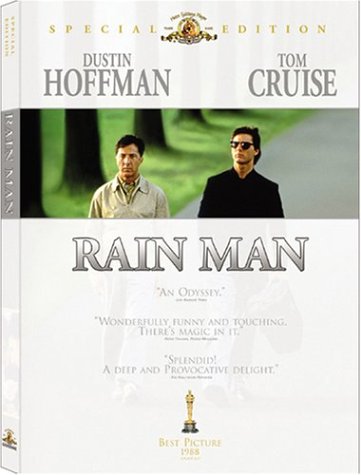
Fifteen years after it swept the 1989 Academy Awards show with Best Picture, Best Director, Best Original Screenplay, and Best Actor (Dustin Hoffman in his first win since 1979's Kramer vs. Kramer), MGM has finally released a Special Edition of Rain Man.

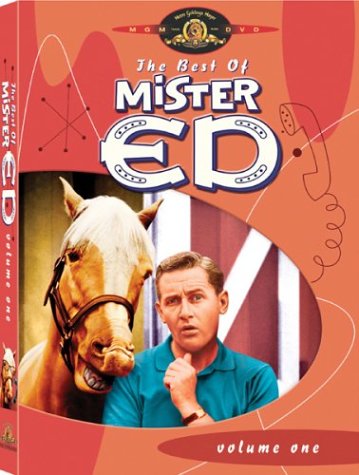
I am just old enough to remember when my favorite childhood television channel, Nickelodeon, took on a new evening persona called Nick at Night. “What were they doing to my beloved cartoons?”, I pondered. I still remember those first few weeks of the new format, tuning in during the evening hours after my father had returned home from a long day at work. I was amazed to see that not only were my parents interested in what I was watching, but they actually knew what it was before I did! How was this possible!?

...p>Of course, I came to love the new nighttime format, and I began to pick out my favorites of these classic shows, just as my parents had done a generation before. One of the best new programs, I felt, was Mister Ed, the story of a man and his talking horse. Every child enjoys silliness and fantasy, and this show had both.

The best sci-fi show on television keeps getting better. MGM has also shown an attempt to improve the DVD releases with each subsequent season. This was Showtime’s final year of hosting Stargate SG-1. I will be interested to see if the cinematic quality holds up with the release of season 6 which was taken over by the Sci-Fi Channel. The stories are bigger in season 5 and the f/x continue to amaze. With seasons 4 and 5 SG-1 had reached its peak.

Synopsis

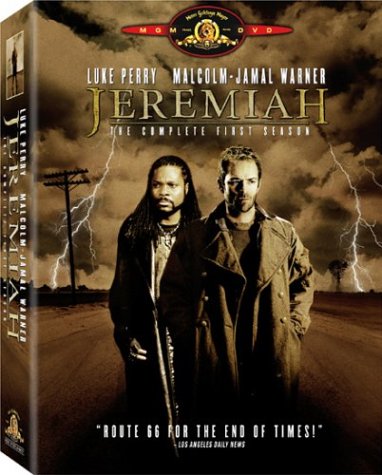
I had never seen, or even heard of this show until I received this complete first season to review. I was a little hesitant heading in to my first viewing… especially after seeing that the main characters are played by Luke Perry (of 90210 fame), and Malcolm Jamal Warner (of The Cosby Show fame). But after viewing a couple of episodes, I must confess that I was hooked. Sure, the story is full of holes, and the acting is suspect at times, but the overall show is quite gripping and entertaining.

...

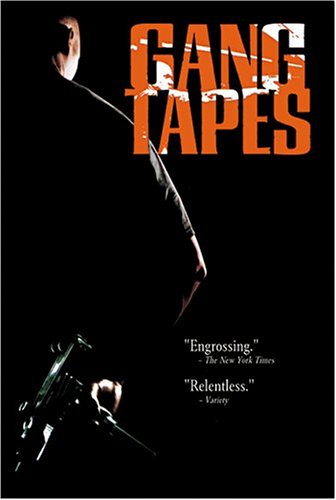
I have never really seen a movie like Gang Tapes, a sort-of urban mockumentary told in the first-person through a digital camcorder. The Blair Witch Project is all that really comes close, and even that is not exactly the same thing. The film begins with home video footage of a family on vacation in Hollywood, but once they are carjacked, the family video camera falls into the hands of a 14 year old kid in urban Los Angeles. With this camera, he chronicles his adventures with the other boys and young me... in the neighborhood, including going to parties, dealing drugs, hitting on women, committing crimes and even witnessing murder. The audience is treated to a view of this boy's life through his own eyes, and the result is a frightening look at the life of a child growing up in the ghetto.

While this is a gripping urban tale, the film is not without some problems. At first, the story is intriguing, shining a light in a corner of America that not many people are familiar with. After a while, however, the extreme use of language and constant arguing wears thin. While this may very well be the reality of the situation, it is not always entertaining faire. Likewise, the action begins to give way to a series of speeches by various members of the cast throughout the last part of the film. Many of these scenes feel forced and unnatural in the midst of the chaos around them. The result is a very good film that could have been even more powerful if it were edited down to a running time of about an hour.