Oscilloscope

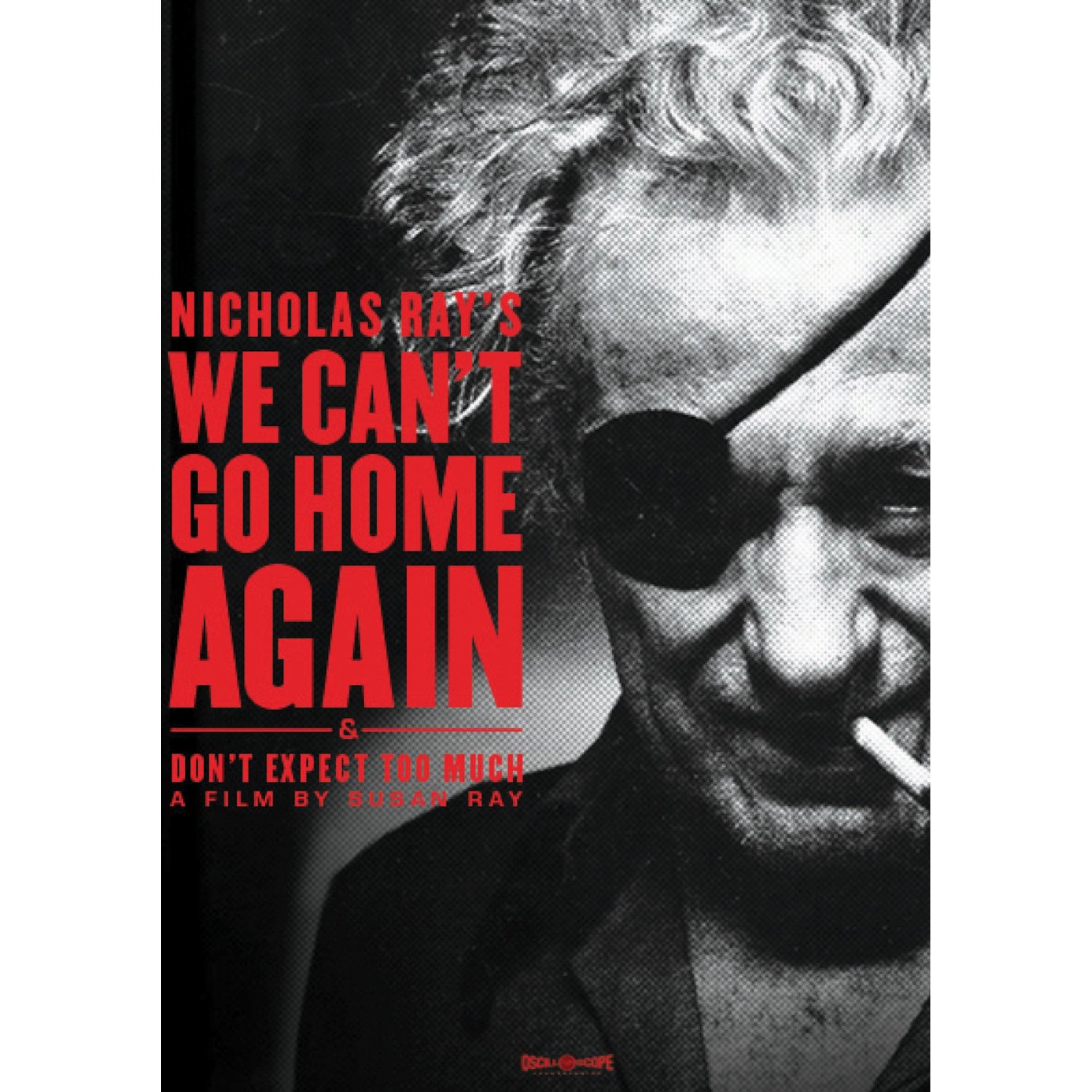
There are two films that are on the main disc; an experimental film by Nicholas Ray and a documentary by Susan Ray about the making of said film. They are perfect companions on this release and I feel one is crucial for the other, therefore I'm going to treat neither as simply a “Bonus.”

We Can't Go Home Again

People tend to place blame on the parents when their children do something wrong. Sometimes this practice is perfectly legit, especially when the behavior is a constant minor disruption or something that is obviously linked to bad parenting. But when the child creates a massive infraction which could include taking a life (or lives), it shouldn’t always fall back on the parents. But yet, the parent will almost always suffer as such the case here with We Need to Talk About Kevin.

Two years ago, Eva (played by Tilda Swinton) had a pretty decent life. She was a successful travel writer, had a loving husband, Franklin (played by John C. Reily) and a peppy daughter, Celia (played by Ashley Gerasimovich). Eva also had a son too named Kevin (played as an adult by Ezra Miller) but Eva’s tranquil life went away the day Kevin created a misdeed too gruesome to ever forget.

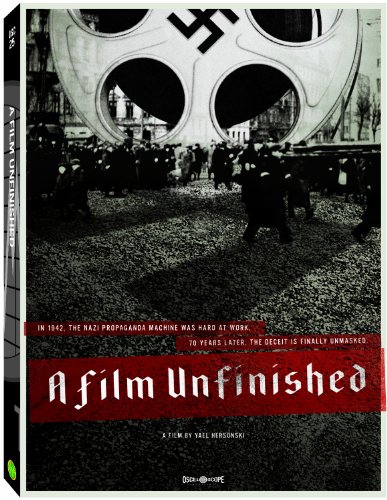
In 1954 several canisters of film were found in a German archive, simply entitled “Das Ghetto”. Inside were reels of film shot in the Warsaw ghetto in 1942, mere months before the zone was shut down and the people sent off to death camps. For years this footage was considered an important historical document, as its raw footage chronicled day-to-day life in the ghetto and was unlike any footage existing at that time.

Some forty-five years later, however, another reel was found that shed new light on the veracity of the original footage.This new reel contained what appeared to be outtakes from the other reels and clearly showed that much of the original footage had been carefully staged.

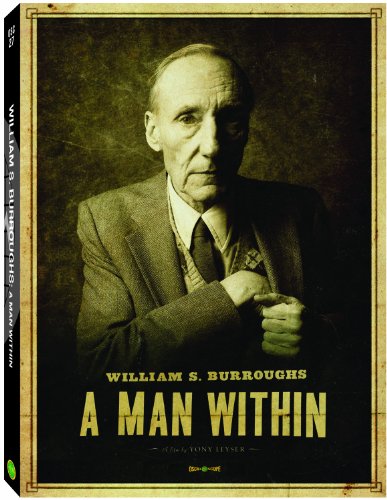
William S Burroughs was the third hit of the 1-2-3 combo of Alan Ginsberg's Howl, Jack Kerouac's On the Road, and Burroughs' Naked Lunch which closed out the 50s and defined the so-called “beat generation.” This film documents the significance of Burroughs work as a part of this scene, and the influence he had on artists, musicians, filmmakers, and countless others.

Ranging from his birth to his death, this film sets out to simultaneously ask questions and answer them with regards to the arguments about what made Burroughs who he was. It asks if he transgressed sexuality, whether we deserved the mantle of “Godfather of Punk,” would he be the sort of writer he is if he was not a drug addict or if he had not shot his wife dead? To answer, director Yony Leyser interviews his closest companions and sincerest fans.

Allen Ginsberg is often regarded as one of the most important poets of the 20th century. He is seen as a symbol of the Beat Generation and contributed to the San Francisco Renaissance. His most important work, Howl has created both worldwide controversy and praise. It escalated into a 1957 obscenity trial of the poet and Lawrence Ferlinghetti who had published Howl along with other selections from Ginsberg. The film is a celebration of Ginsberg’s life as well as the results of this trial.

In 1955, an unpublished 29 year old poet presented his vision of the world as a poem in four parts. His name was Allen Ginsberg (played by James Franco) and the poem was Howl. In 1957, Allen and his work would be put on trial for obscenity. The trial would be prosecuted by Ralph McIntosh (played by David Strathaim) and defended by the prominent Jake Ehrlich (played by Jon Hamm). Judge Clayton W. Horn (played by Bob Balaban) would preside over the proceedings and render judgment.

Thierry Guetta has the habit of filming everything he does in his entire life. This habit did not shake while filming the, technically illegal, work of his cousin 'Invader' who is a street artist that pastes up images from and inspired by the video game Space Invaders. Guetta quickly fell head over heals for this underground movement of creating street art and started documenting some of the most famous street artists in the entire world, including the ever (in)famous 'Banksy.' It was Banksy who questioned Guetta as to what his plans were for all of this footage, which was originally nothing, and encouraged him to make a documentary about street art as it is a temporary medium (since it is considered vandalism, all pieces are removed or destroyed soon after being created) and these pieces deserved to be recorded for history's sake in a formal film. Guetta's attempt at the film was deemed unwatchable and so Banksy took over the film and turned the camera on Guetta so that his personal story would be told along with displaying many artists' work.

Some speculations state that this film is an elaborate prank being pulled by Banksy. Remaining anonymous as he directs this film, who is to say that the art made by Guetta is not in fact created by Banksy as a way of demonstrating that pop art is the last vestige of the under-talented, and yet they can make millions if hyped just right. Indeed, the climax of the documentary is Guetta putting on an epic gallery opening in Los Angeles as his new moniker “Mr Brainwash” (a name that has been seen as evidence towards Bansky's message of how hype can brainwash the masses and disguise lack of depth or meaning). I do not subscribe to this theory, as this film seems more like a jab at those (Mr Brainwash being central) who use marketing and gimmicks to make money from something that should be about expression and not profits.

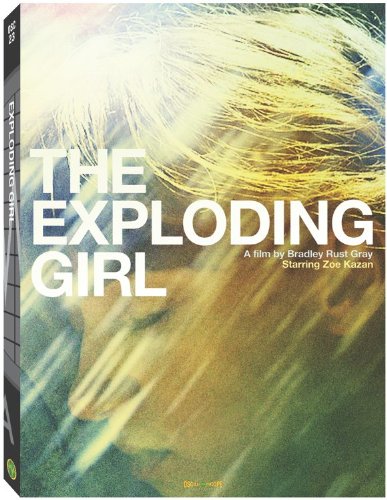
A young epileptic girl returns to her home in New York while on spring break. She stays with her mother and her best friend Al, whose room is now being rented out by his parents. While there she loses touch with her college boyfriend and reevaluates how she feels about her friend Al.

I wish I could say that opening paragraph was the launching point for the film's plot, when in fact it is a basically a summary of the entire film. This film is a very understated character study of our female lead and offers little by way of action or complex plot. Writer/Director Bradley Rust Gray's approach to this film is a sort-of casual, fly-on-the-wall approach to shooting the action (or lack thereof). Gray succeeds when using very long, uninterrupted shots, at very odd angles, as if the cameraman were spying on these these 20-somethings mumbling and fumbling through their awkward feelings and the lame parties they attend in order to capture their unadulterated actions. Whenever a typical shot-reverse-shot occurs (for those not up on film school lingo: an example is simply when the camera is watching one person speak, then cuts to a shot of the person they are speaking to and back again) it actually distracts from the moment for its artificiality removes us from the voyeuristic feel of the camera's positioning. The 'captured reality' approach to the presentation makes it so that I cannot tell if I should attribute the mishandling of situations (mainly some really lame and awkward dialogue) to the characters within the film, or to an awkward script. That is to say, I am able to buy into what is happening in such a way that I forget that there is a team of people working on this film that I cannot see and so I place all responsibility onto the characters.

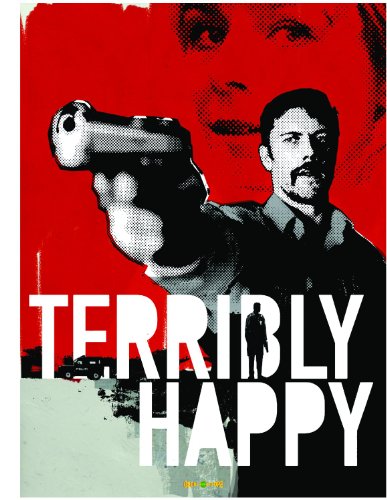
Robert (Jakob Cedergren) is a Copenhagen police officer exiled from the big city for a misdeed that is initially mysterious. His new position is as marshal in a small town in the marshlands. Though it seems at first as if he won't have much to do here, things are looking more than a little weird. The locals all have their assigned seats at the pub, and resent any deviation from the way things are done locally. Shoplifting kids are expected to be beaten. The bicycle merchant has disappeared, but no one seems interested. A little girl in a red coat pushes a squeaky pram through the streets at all hours of the night. Then there's the girl's mother, the extremely flirtatious wife of the local bully. Robert is attracted to her, wants to protect her from her husband's beatings, and one night succumbs to temptation. The consequences are deadly.

The jacket copy compares the film to the work of the Coen brothers and David Lynch, and rightly so. This would be Coen and Lynch at their darkest, though, and if there is some leavening humour here, it is low key and never breaks the mood of unease and imminent doom. The town and its flat, desolate, boggy countryside are uncanny: there is enough recognizable here to be familiar, and to connect (at some level) with the real world, but there is enough that is twisted out of true to make one very anxious indeed. An excellent noir.

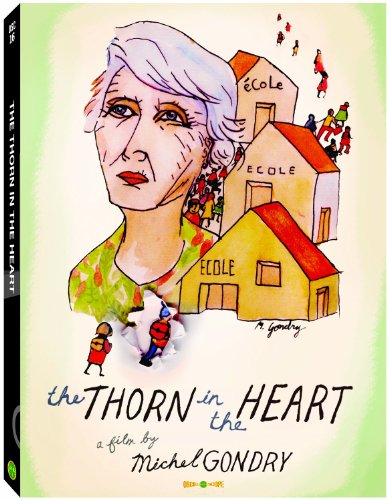
Michel Gondry is a director whose work has been characterized by its originality and personal vision. The likes of Eternal Sunshine of a Spotless Mind and The Science of Sleep have marked him as a filmmaker with a distinct vision. Here he makes what must be his most personal film yet, as it is a documentary about his family. More precisely, it is about his aunt Suzette, a strong-willed, redoubtable matriarch who worked as a schoolteacher in some of the most remote regions of France. Gondry and crew follow Suzette as she revisits her former schools, working her way through the decades and chronicling her life, that of her family, and, along the way, that of France.


As personal and culturally specific as the movie is, I fear that it might not translate very well for a North American audience. Some minimal familiarity with the context might be necessary to really get into the movie. Granting that, the film, with its mixture of new footage, model train transitions, and super-8 family movies, is fascinating and moving.

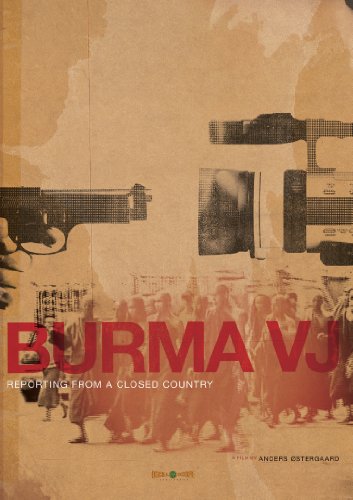
In 2007, nineteen years after a similar uprising was crushed by Burma’s military junta, frustrated citizens once again took to the streets. Led by troops of monks in peaceful demonstrations, they made their voices heard by the generals, demanding freedom and democracy. The reaction was swift and violent. Men with riot gear and guns descended on the demonstrators and after many clouds of tear gas, numerous beatings, and even some shootings, the government quickly broke the spirit of its people again.

These incidents, and the actions that led to them, were chronicled by a courageous group of video journalists called Democratic Voice of Burma. These men and women captured hours of footage, risking imprisonment and worse, and got that footage out to the world over the internet and through trusted couriers. The images they captured allowed the people of the world and, even more importantly, the people of Burma (to whom the footage was also broadcast), to see the truth behind the lies of the Burmese government.