Posted in: Disc Reviews by David Annandale on October 30th, 2011
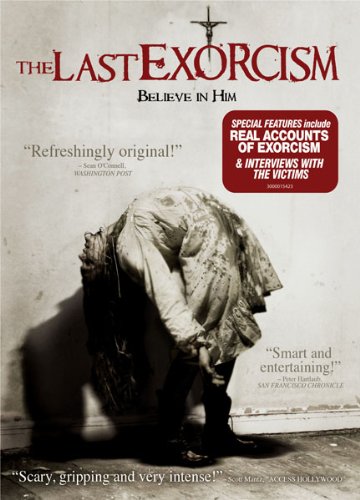
The Reverend Cotton Marcus (Patrick Fabian) has made a tidy living preaching the Gospel and working his specialty: exorcisms. But he has lost his faith and, along with it, his willingness to fleece the gullible. He does, however, acknowledge that an exorcism can prove psychologically beneficial if the recipient believes in the ceremony. All that said, Marcus wants out of the business, but he takes on One Last Case, and a film crew tags along with him to the backwoods (where else?), where the devout Louis Sweetzer (Louis Herthum) is convinced that his daughter Nell (Ashley Bell) is possessed. Marcus slips into his routine, but soon discovers that there is is much more afoot here than he could have imagined.

The first half or so of The Last Exorcism is not without interest. It does, in some ways, handle the faith-vs-reason question more interestingly than The Exorcism of Emily Rose, and it does a credible job of gradually building suspense. But as we approach the climax, the cracks in the found-footage conceit begin to show, and the resolution blasts straight past “frightening” and into “ridiculous” and makes nonsense of the entire mockumentary premise. Maybe it’s time to retire what is rapidly becoming a tiresome cliché. In the end, then, the film is a misfire, but kudos to Ashley Bell for her disturbing physical performance – she does all the back-breaking double-jointed shenanigans without the benefit of special effects.
Posted in: Disc Reviews by David Annandale on October 29th, 2011
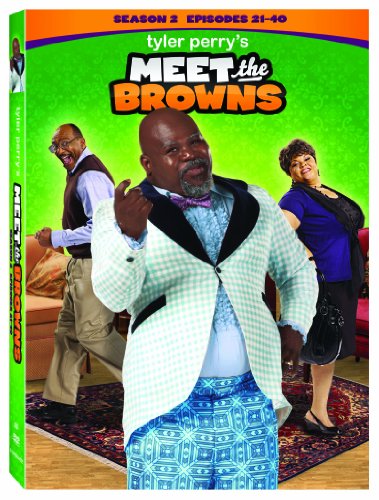
Season 2 of the Tyler Perry-created series continues misadventures of Leroy Brown (David Mann), who, last season, opened up a seniors’ residence. This season has all the characters firmly in place, and the stage is set for no end of misguided schemes and misunderstandings, all of which conclude with lessons learned and heartstrings tugged.
If the above sounds a little generic, that’s because so is the series, and furthermore, I’m referring to an archaic quality to this series’ generic nature. Put another way, this is an unapologetic (though it should be deeply ashamed) throwback to situation comedy’s dismal era of the 1980s. The performances broad, unfunny caricatures, all squealing yelps and bugging eyes. The laugh track comes in on every other line, underscoring just how desperately unfunny the dialogue is. As for the plots, I cry mercy. Brown hopes to get rich marketing his family’s barbecue sauce, Brown becomes an over-demanding patient after being grazed by a bullet, Brown wins twenty bucks in a lottery and becomes a gambling fiend, and so on and so on and so forth. Storylines that would creak even if the main character were named Ralph Kramden, overlaid with thudding sanctimony and Real Social Issues.
Posted in: Disc Reviews by Archive Authors on October 28th, 2011
Ken Burns has achieved a rare feat in the world of filmmaking: he makes clean, concise, uncontroversial documentaries and yet has somehow become a household name, or as close as any documentarian can get in this society. It also depends, I suppose, on the ratio your household's television is tuned in to PBS compared to, say, Spike TV. Burns has made his name making huge, sweeping films that take in gigantic aspects of American history and culture, like The Civil War, Jazz, and my personal favourite, Baseball. His latest documentary, which he co-directed with Lynn Novick, ranks right up there with his best work. Prohibition is vast, covering a huge time period in American history, contains tons of detail, and still manages to be focussed, concise, and tremendously entertaining.
The first part, A Nation of Drunkards, starts its story before the Civil War. It sets the scene by painting a picture of a nation obsessed with alcohol. Saloons are such an integral part of the landscape that huge numbers of the working class and immigrant labourers were giving up most of their pay buying liquor. Spousal and child abuse was rampant, and Temperance Unions grew out of the need to protect and shelter women and children from abuse and neglect as much (or more) than they did out of religious zealotry.
Posted in: Disc Reviews by Gino Sassani on October 28th, 2011
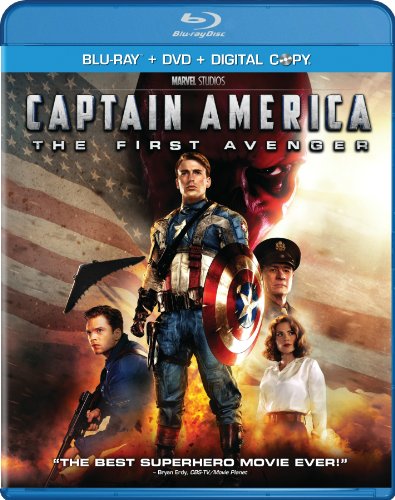
In the world of Marvel comics Captain America was indeed the first Avenger, and as the full title implies we're going quite a way into the past to create this hero. But the first shall be last, and it's certainly true on this long road to the May 2012 release of The Avengers on film. You see, this is the final piece to the puzzle for that great assembly of heroes. We've had two chances to witness both The Hulk and Iron Man and a recent film introduction to Thor. Other characters like Black Widow and Hawk Eye came as guests on the other films. But the introductions are now complete.
Steve Rogers (Evans) is a 98-pound weakling. He's the guy you see in the comics all right. The guy getting sand kicked in his face on those old Charles Atlas ads we used to read on the comic back pages. But he has a heart of solid gold, and he doesn't like bullies. So when Hitler and his boys begin to goosestep over Europe, he tries desperately to enlist. Each time he's shot down and denied his chance to contribute to the cause. That is, until he comes under the eye of Professor Abraham Erskin (Tucci). He has been tasked with reproducing a Nazi experiment to create a supersoldier. He admires Steve's heart and decides to make him the test subject. The experiment works, and Steve receives super strength and agility. But he can't seem to win the respect of Colonel Phillips (Jones). And when Erskin is killed in a Nazi invasion, not even a brave performance to get the bad guy convinces Phillips to give him a chance. He remarks: "I was promised an Army, and all I got is you". But the papers noticed his performance, and soon the country was shouting for Captain America.
Posted in: Disc Reviews by Gino Sassani on October 28th, 2011
"That be the cold hand of fate I feel down my nape."
With each of the previous Pirates Of Caribbean films pulling in over a billion dollars in total revenue, it was indeed the cold hand of fate that determined the franchise would not end. Like Captain Jack Sparrow himself, this franchise isn't going to be easy to kill. It's true that the last two films, the third in particular, were rather universally scorned by the critics. But they still pulled in a boatload of money and quite honestly weren't near as bad as all of that. Like the theme park attraction that the franchise was named after, you have to consider these movies as rides. The only intention is to entertain. And by all accounts they've been doing a pretty good job of that for several years now. Even when the rest of the supporting cast bowed out of the franchise, it isn't finished yet, and there's no indication that the voyage is nearing its end any time soon.
Posted in: Disc Reviews by Gino Sassani on October 28th, 2011
Italian writer and director Giuseppe Tornatore was born in the small village of Bagheria on the island of Sicily in 1956. The life and culture of his home village has had a tremendous influence on his work. Many of his films have an autobiographical nature to them that he takes no pains to disguise. Earlier we reviewed his love letter to movies with Cinema Paradiso, which also took place in Bagheria. This time we explore five decades of life in that same village, known here by its nickname and the title of the film: Baaria.
The journey begins in the 1920's Peppino ("Giuseppe") Tornatore is a young boy whose services have been sold to a local shepherd to feed the family. He learns the trade but discovers it's not what he wishes to make of his life. When the Communist Party begins to make inroads in his village, Peppino is attracted to the message and soon works his way to becoming an important leader of the party. He falls in love with Mannina (Made), and the two must elope because he has no personal fortune and her parents are against the relationship. It is up to Peppino's father to take the ostracized couple into his own home when her family rejects them both. While there is no real plot here, the film follows the young boy through 50 years of life in the village and beyond, taking in the various historical events that effected Sicily at the time. Fascism and eventual World War take their toll. Peppino has a front-row seat to the land riots that rocked the country. His party loyalties cause serious trouble for the man as he goes up against both the established government and even the Mafia.
Posted in: Disc Reviews by Michael Durr on October 28th, 2011
After reviewing the magical 2002 World Series of the Anaheim Angels, it was only appropriate to review a half century of highlights and lowlights from the team's history. The Angels are not a flashy team, they win with raw talent and a ton of heart. Their success in the 2000's only came after many years where they floundered and did not meet expectations. Let's explore the team the Autry's built. Here are the Los Angeles Angels, now known as the Anaheim Angels.
The Angels name was actually birthed in the late 1950’s when Walter O’Malley purchased the team from the Pacific Coast League. However, it was not until 1960 when it became the focus of a new expansion for the American League. Enter Gene Autry who in 1960 (owner of Golden West Broadcasters and the famous actor) was trying to seek broadcast rights to the team. But soon he would become persuaded by others to actually purchase the franchise. He did and named it the Los Angeles Angels.
Posted in: Disc Reviews by Gino Sassani on October 27th, 2011
"The punishment's gotta fit the crime."
Believe all of the hype and controversy. In the language of the day The Exterminator was one bad mother. And when I say one bad mother, we're not talking Casey Anthony. The Exterminator came at the tail end of the era of grindhouse, exploitation, and revenge films. So, how do you close out a memorable era like that? You do a movie with all three. You put the violence and the grit out there for all to see, and you don't make any apologies about any of it. That's exactly the attitude that writer/director James Glickenhaus plays it, and the result is... well... one bad mother.
Posted in: Disc Reviews by Gino Sassani on October 27th, 2011
"Boldly go where no man has gone before."
Is there anyone out there who hasn't noticed that William Shatner the actor has become William Shatner the character over the years? Give the man some credit for finding ways to reinvent himself. After Star Trek he was the only actor to find himself another regular television character and shakes the typecasting that most actors in the franchise have been victimized by. When TJ Hooker was gone he found a few other shows and ways to take advantage of what could have been fleeting fame. By the time he did Boston Legal he had completely reinvented himself as a somewhat humorous character and wonderful mate for James Spader. But all along there was and always will be more than a little Captain Kirk in the actor. And over time the two began to meld into a being that has been the fodder for jokes for most of the world. Shatner's laughing, too, but not in the way you might think. Shatner's been laughing all the way to the bank.
Posted in: Disc Reviews by Gino Sassani on October 27th, 2011
"I'm Rick Harrison, and this is my pawn shop. I work here with my old man and my son, Big Hoss. Everything in here has a story ... and a price. One thing I've learned after 21 years? You never know what is going to come through that door."