Studio

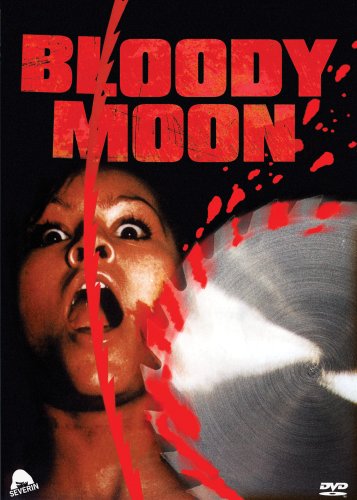
A disfigured young man with an unhealthy interest in his sister attacks and kills a woman. Five years later, he is released (by psychiatrist Jess Franco) into his sister’s care, who is helping organize a language school on property owned by her disagreeable, but very rich, aunt. In short order, the female students at the school (and there are ONLY female students, for reasons not explained) start being killed off. But no one other than heroine Olivia Pascal actually believes that anything is going on.

This was Jess Franco’s contribution to the slasher craze, though it demonstrates just how much that subgenre owes to the giallo by incorporating many of the elements of the latter (whodunit, unseen killer instead of hulking masked figure, etc). The production values are perhaps a bit higher than usual for Franco, and the gore effects are, all proportions maintained, quite good (and certainly very gruesome). But it’s obvious that this is work for hire, as the work lacks many of the more endearing eccentricities and personal obsessions that mark the films he’s more interested in. There is also some unnecessary animal cruelty involving the decapitation of a snake. The sharp-eyed will catch Lina Romay in the credits (as assistant director, under her real name of Rosa Amiral).

The giallo was never a genre that specialized in tight, coherent, logical storylines. But even by the bizarre standards of the form, In the Folds of the Flesh takes some kinda cake. Trying to summarize its plot is next to impossible, as the first two thirds of the plot are incomprehensible, and are cleared up only in the final third, which feels more like a play than a film, and where the revelations and twists pile up to such a degree that they don't induce whiplash – they torque your head clean off. So, for what it's worth, we have a castle (whose interiors look distinctly un-castle-like) where, thirteen years ago, a man was decapitated. His body was disposed of by the woman living there, and she and two children, now grown and thoroughly insane, dispose of anyone else foolish enough to come prying into their lives.

This is certainly no lost masterpiece. Its story is clumsily told, and would be offensive if it weren't so ridiculous. The murders vary from the delightfully cheesy (the decapitations) to the utterly WTF (death by cuckoo clock??  ). But the demented nature of the exercise makes it compelling in the nature of a train wreck (and speaking of trains, what's with the constant shots of one?). Lovers of the deranged will find much to feast upon here.

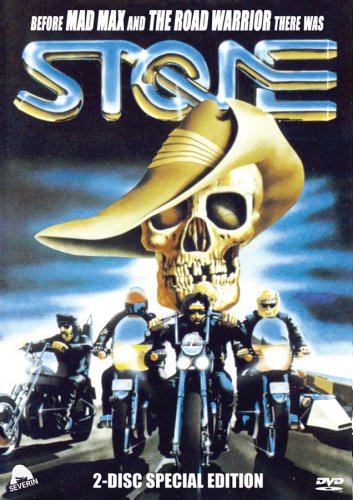
After having been present at a political assassination, the Grave Diggers biker gang starts being killed off one by one. Undercover cop Stone joins the gang (by basically saying, “Hi, I’m a cop. Can I hang out with you guys?”) in an effort to solve the murders. Plenty of shenanigans, riding around, and utterances of the word “man” ensue.

This 1974 Australian effort gets off to a bang of a start with the assassination, a scene that is largely witnessed through the eyes of a heavily stoned biker. The murders that follow are also nicely staged. But then we start getting many, many scenes of riding around and rather aimless hanging about. The eponymous hero doesn’t show up until a quarter of the way through the film, at which point he is able to find out, though his own experiences and the interviews he conducts, what a great bunch the bikers are. So there’s a fair bit of meandering about. But the action scenes are well done, and as a cultural artifact, the film is really quite fascinating.

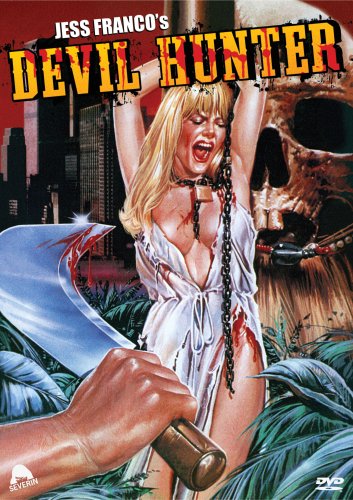
A group of low-life gangsters kidnap a starlet (Ursula Fellner) and hightail it off to a jungle island, where they subject their victim to endless indignities while waiting for the ransom money to arrive. Al Cliver is dispatched to rescue her, but his helicopter arrival draws the attention of a group of hostile natives and, more to the point, a red-eyed, cannibal zombie-god who holds them in a grip of fear.

It was 1980, and so the short-lived cannibal subgenre was in its heyday, so naturally Jess Franco was faced with directing his own contribution. Of course, he did so in his own peculiarly idiosyncratic way. Released the year prior to Severin's other recent cannibal release, Cannibal Terror, it shares that film's conceit of gangsters running afoul of dangerous locals. Also common to both films is some unintentional hilarity (“primitive” tribesmen sporting wedding rings and running shoes, a park bench visible in the background of the jungle around minute 93, or the hero climbing a “vertical” cliff face on his knees, thanks to the wonders of a tilted camera). The usual racism associated with the cannibal movie is somewhat problematized (deliberately or not) by the odd and obvious multiracial composition of the tribe. Where Franco's film steals the march on its poorer successor is a greater sense of expansiveness, even on what couldn't have been much greater means (we even get a helicopter crash), and a more lush, somewhat more convincing jungle (even though we are still pretty clearly in Spain). As well, Franco keeps the pace up with a wealth of incident, not to mention that strange mixture of elements (crime, action film, cannibal film, supernatural terror, even a little bit of King Kong). And the scenes of cannibalism, while far more simplistically mounted than in the likes of Cannibal Holocaust (an extreme close-up of a mouth showing meat and dribbling blood) are nonetheless suitably disgusting. The only shot of innards being yanked out is so brief, it feels like the contemptuous dismissal that it is. All in all, a sleazily entertaining mish-mash that could only have been made by one man, bless his twisted little heart.

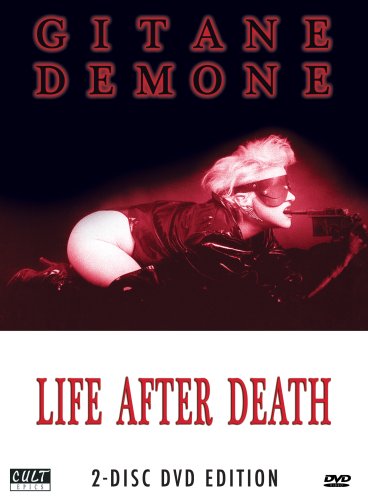
Gitane Demone was one of the lead singers for seminal deathrock band Christian Death before going solo in 1989.  This 2-DVD set is a record of her various solo efforts, tracking various incarnations, most notoriously (and most prominently featured in the release's packaging) being the fetish performances for the likes of the DeMask club and Skin Two magazine. Present here is a mix of television interviews, one video, and a raft of live footage.

Given the necessarily raw, semi-underground nature of the material (more one the picture and sound quality below), this is not really a release for the previously unconverted. The fuzzy picture and muzzy sound is not likely to draw in viewers who don't already have an investment in the subject. That said, the interviews are interesting, with Demone, in most articulate fashion, clearly situating herself within various scenes and phases of her life, and explaining how all this has affected her art. As for those who are fans, this is a very valuable record of a decade of performances.

Holly Golightly is perhaps the most tragic, depressing character in all of literature and film, especially to those of us who know (or have known) people just like her. As an example to aspire to, Golightly fails miserably. She is internally and externally destructive, intentionally so. Truman Capote, author of Breakfast at Tiffany’s, the novella in which she was formed, has created in her a realistic portrait of people that fear happiness, and so imprison themselves to lives of restless and reckless abandon. She is just charming enough to make us pull for her, but equally cruel and uncaring once we’re suckered in. It’s hard to like Holly, and it’s almost impossible not to love her, if that makes any sense whatsoever. I’m sure it doesn’t. But neither does she, and so goes life.

On the other hand, the film version of Capote’s iconic work gets bogged down in insulting ethnic portrayals (Mickey Rooney as Mr. Yunioshi); studio sanitization (after all, Golightly is a call girl, but we get very little indication of that from the film); and a tacked-on happy ending that in no way fits with what’s come before it. Feel-good entertainment? Not when the audience knows better than to think things could turn out so neatly, so quickly. Still, Audrey Hepburn was a perfect choice for Golightly, and she heaps additional charm atop what was already on the page. George Peppard has very little to do as her does-she-love-him-does-she-not play-toy, but his final indictment of Holly is a stirring piece of writing, effectively delivered, that would have been a great place to end. It would have at least rung emotionally true. Unfortunately, the exchange is quickly swept under the rug by an ending that comes as close to Deus Ex Machina as one can get without actually achieving it.

Every director has a style. Sometimes it can be a deliberate style, sometimes it can be more subtle. I received the movie Ring of Death and was a little worried since I had my fill of bad prison movies. After watching the movie, it seemed familiar but I couldn’t place why. The director’s name on the back was Bradford May. To most people, that probably does not ring a bell. To me, it was a different story: he was the director of Darkman 2 and Darkman 3. Then everything from that point became clear.

Burke Wyatt (played by Johnny Messner) is your average out of work cop. He has a loving but somewhat distrustful wife in Mary Wyatt (played by Charlotte Ross) and a son that he doesn’t get to hang out with enough in Tommy Wyatt (played by Uriah Shelton). However, Burke’s life is about to change when his former partner Steve James (played by Derek Webster) offers him an undercover gig to investigate a string of prison murders at the Cainesville State prison. The reward is simple: a large trust fund for his son and a full time job for Burke at the FBI.

David Koepp is one of Hollywood’s power screenwriters. His credits include Indiana Jones, Jurassic Park, and Spider-Man. As a director he has also had some limited success with films like Stir Of Echoes. It seems almost from left field that we end up with a romantic comedy both written and directed by the award winning writer. If Koepp is out of his element here, it really doesn’t show at all. Of course the entire idea is far from an original one, but he handles it with relative competency. All of the essential elements are in place, and he has managed to surround himself with a fairly good cast and crew. This is the first American star vehicle for British funny man Ricky Gervais. His style is definitely one of British humor, but it translates well for the character he’s been given here. It’s actually a very clever bit of casting. The end result isn’t going to add any additional statues to his mantle, but it does provide some harmless entertainment for that rainy, or snowy, depending upon where you happen to be, day.

Dentist Bertram Pincus (Gervais) is a perfect role model for Ebenezer Scrooge. He has little use for other people. He avoids contact whenever possible and takes a perverse pleasure in watching others struggle, doing what he can to perpetuate their discomfort. He’s the kind of guy that will offer to hold the elevator only to close the door in your face just as you reach it. One day he is having a routine examination under general anesthesia. He dies for 7 minutes and is brought back to life. Everything appears fine, except now he has this annoying ability to see dead people all around him. As soon as they catch on that there’s someone who can see and hear them, they gravitate to him, imploring him to help with their unfinished business. Of course, Pincus wants no part of that at all. One such spirit, however, is particularly persistent in annoying Pincus. Frank (Kinnear) has recently been hit by a bus and wants to break up his widow’s budding new romance. He was a cheater in life and now can’t stand to see her with someone he believes is too much like him. After constant harassment, Pincus agrees to take on the job, but not out of kindness for Frank. It seems Pincus has become smitten with Frank’s widow, Gwen (Leoni). She works at the local natural history museum, and Pincus offers his dental expertise to help her examine a new mummy that holds her interest. Before long the two are a couple, but that wasn’t exactly what Frank had in mind, either. He attempts, rather successfully, to derail Pincus from his courtship. Pincus pretty much has his epiphany and decides to try and care a bit more about others. He helps a few of the other spirits and starts to feel good about helping others. In the end, when Pincus himself is again teetering between life and death, he does get a second chance.

The Tudors returns for a rather triumphant second season. The series attempts to modernize the story more than a little. Henry’s attire is more akin to a rock star than a 16th century ruler. The language is also more updated, often filled with modern colloquialisms and the like. The story of Henry VIII is well known, but this is not the Henry your history teachers told you about. This Henry is a slim, energetic man. There are only hints in regard to his famous lust for food. His appetites for women are not so subtly portrayed. The series follows Henry’s alliances and break-ups with France and his growing disfavor of members of his own court. If the series is to be believed, Anne Boleyn was placed in his path by her scheming father. In any case, by the third episode his growing infatuation with Boleyn takes center stage in the series. Henry grows weary of the Church after he is constantly blocked from divorcing his Queen Catherine to marry Boleyn. This is also the story of his own rise and fall along with the Church’s influence on England’s culture. There is an almost soap opera aspect to the storytelling, which is admitted by the show’s writer, who credits shows like Dallas and Dynasty as well as Rome and The Sopranos as inspiration. Side stories like a gay musician’s coming of age populate the background, but serve merely as distractions. When The Tudors works best is when we are with Henry and his court engaging in matters of global importance.

Let’s talk about the cast. At first I must say I completely hated Jonathan Rhys Meyers as Henry. But that was last year, and by the third episode I absolutely loved his performance. He commands the screen whenever he is on it. Natalie Dormer is a relative newcomer, and she has wonderful skills. When we first meet her as Anne, she appears the naïve, lazy daughter of privilege. As her seduction of Henry takes its course, she develops many faces and emotions along the way. Now she is the doomed Queen, and she is extremely hard to read, and then all at once an open book. While she might not possess the beauty her character is said to inhabit, she more than makes up for it in a single stare. She acts wonderfully with her eyes, as so many of the great ones do. You will be seeing more from Dormer, I suspect, over the years. Nick Dunning is quite a surprise as Sir Thomas Boleyn. It is Sir Thomas who masterminds his daughter’s seduction of the King in order to destroy the influence of Cardinal Wolsey. His quiet yet assertive manner works perfectly for the character. Wolsey had his downfall in the first season, and Boleyn will show his true character in the end as well. Jeremy Northam was also a very bright spot in the second season. His character of Sir Thomas Moore has far more to do this time. Moore must consider the path of martyrdom as he finds himself in disagreement over his friend and King’s alienation of the Roman Church. His was a character I hardly noticed in the first year, but he really pops from the television screen this time around.

“Every story has a beginning. Every life has meaning and potential…”

Kyle doesn’t really know his story, and he’s beginning to understand his potential. But that was last year. This year things are about to change for our adolescent boy without a belly button. The series Kyle XY returned first to ABC Family and now returns to DVD.