Studio

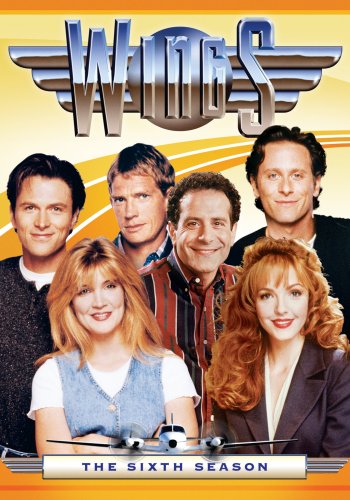
Wings was one of those unusual sitcoms that depended more on the characters than the situations they were in. While the setting was a small Nantucket airline owned by two brothers, most of the episodes had very little to do with flying. Rather, the writers populated this small airline with very distinctive personalities and let these interactions be fodder for the funny. The characters were played by more than competent actors, many of whom have proven themselves beyond this quaint sitcom. Timothy Daly played Joe Hackett, the older, more responsible brother who was often the show’s straight man. His rather adolescent sibling Brian was played by Steven Weber. I wouldn’t exactly say this was Oscar Madison and Felix Unger, but their conflicts over maturity fueled the characters. The airline’s love interest was Helen Chappel, played by Crystal Bernard. She was an aspiring symphony cellist who worked the airport’s lunch counter. For much of the show’s run she had an on again off again romance with Joe. By far the most animated character was mechanic Lowell Mather, played by Thomas Haden Church. It’s still amazing to me that this rather unintelligent character was played by the same guy who brought us Sandman in the latest Spider-Man film. Finally there was cabbie Antonio Scarpacci, played by the current Adrian Monk, Tony Shalhoub. Antonio is an Italian immigrant who has trouble understanding things most of the time, leading to some of the better moments in the series. Fay, played by Rebecca Shull, is the mothering member of the cast. And Roy Biggins (Schram) runs the rival airline and is often engaged in one underhanded scheme or another.


As we know by now, Dragon Dynasty is the Criterion of Kung Fu movies. They take any Kung Fu movie, clean up the audio and video where needed and provide a slew of extras for us to enjoy. From featurettes to commentaries with expert Bey Logan, it always provided the Hong Kong kung fu fans with a presentation second to none. However, as with Criterion classics, the movie isn't always second to none.

Kong Ko (played by Wu Jing (Jacky Wu))was a member of the National Kung Fu Team. He now spends his off time at an opera house performing for the folks a blend of descriptive dance and his fancy moves. A group of thugs come in one night and try to recruit the young warrior to fight in the underground fighting circuit they take care of. At first Kong doesn't wish to participate. However, his co-worker/love interest Siu Tin (played by Miki Yeung) convinces him otherwise after striking a deal with the circuit gang.

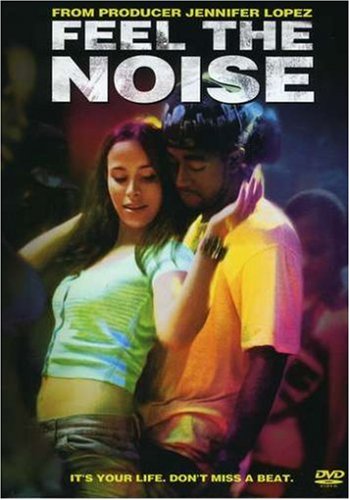
Dance movies can be interesting especially when it involves hot sweaty bodies and bodacious moves along a club floor. Did I just say bodacious? "Pauly Shore is on line one, please pick up the white courtesy phone". I'll ignore that for now. Dirty Dancing or Footloose are great examples. Some should be drag into the street and shot. I knew that Feel the Noise looked bad the minute I looked at the cover. What was that clue on the cover you might ask? Produced by Jennifer Lopez would be a very good start.

Rob Vega (played by Omarion Grandberry)is a straight up hip-hop rapper who gets shot at one night while he's trying to perform. His mother decides to send him off to Puerto Rico to live with his father Roberto (played by Giancarlo Espositio)and his family. There he meets his half brother Javi (played by Victor Rasuk) and is introduced to Reggaeton, music that blends Reggae and Hip-Hop. The two team up for a single and eventual album as Rob tries to peace back a normal life which eventually leads him back to his home in New York where he has to face his demons.

I couldn’t find her name anywhere on the credits, but I simply cannot believe that Rosie O’Donnell didn’t have anything at all to do with the film Conspiracy. The film is a thinly veiled pot shot at the current administration, or at least Dick Cheney. Gary Cole plays a guy named Rhodes, who is really intended to represent Cheney. Rhodes controls a multibillion dollar corporation that has managed to set itself up in Iraq making millions from the war thanks to corrupt government officials. His company, Halicorp, is obviously intended to be Haliburton. Rhodes has also taken control of a small Arizona border town. Here his vigilante friends patrol the border, turning back, and even killing, Mexicans attempting to enter the United States. He justifies his deeds in the name of counterterrorism, but the truth his he holds the entire town in fear. Enter MacPherson (Val Kilmer) who recently lost his leg in the Marines in Iraq. When he returns home he comes to Rhodes’s town looking for a Mexican comrade in arms. He finds that there’s no trace of his friend, and his questions have drawn all the wrong kind of attention. After some rather silly plot developments, MacPherson becomes a one man army to challenge Rhodes’s control. Apparently someone has watched Clint Eastwood’s Pale Rider one too many times here. Now Kilmer has grown old and rather obese in recent years, so the film needs to take that into account with his fighting style. After all, no one’s going to believe he’s got any real fight in that couch potato body. He wins his fights mostly by being able to duck really well. And returning a bowl of chili he recently ate on someone’s shoes. Figuring that Eastwood scowl was already done, Kilmer appears to be half asleep during each fight. I know I was. He does pack a mean nail gun, and you should just see what he can do with some rolled up paper. When they finally do put some real fire power in his hands, the rest just gets too comical.


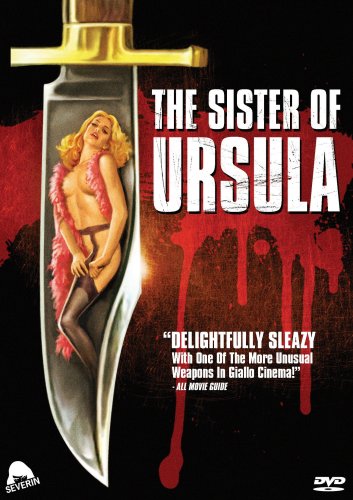
Still grieving over their father’s death, two sisters – the outgoing Dagmar (Stefania D’Amario) and the neurotic, antisocial Ursula (Barbara Magnolfi) – check into an out-of-season hotel. They are almost immediately immersed in a tangled web of relationships and betrayals involving the hotel manager, his estranged wife, a lounge singer and a drug-addicted patron. At the same time, a series of gruesome sex slayings gets underway.

Writer/director Enzo Milioni’s first film is a clumsy giallo. The elements are all there – psychosexual delerium, black-gloved killer, beautiful cast. So too is the aura of misogyny that haunts so much of the genre – the killings here all involve lethal penetration, and while the murders are generally dealt with relative restraint (a hilarious shadow of a looming erection followed by fade to black), there are, late in the film, a number of particularly tasteless shots of naked victims with bloody crotches. Charming. The ineptness of the filmmaking, however, robs these moments of much of their power: the sex scenes are dull and saddled with the same irritating score every time; the editing is rife with nonsensical cutaways (one of which unintentionally suggests that a dog has been masterminding a drug deal); and the story is so choppily told that characterization varies between the risible and the nonexistent. Add to this a resolution that even the most casual viewer of gialli will see coming a mile away, and you have a pretty weak entry. And yet, for all that, there is that delicious ineffable whiff of 70's Italian exploitation that makes even the weakest entries plenty of fun.

Anesthetic Awareness is a phenomenon where a surgical patient is completely aware and able to feel pain while under anesthesia. It occurs in about 5 out of every 1000 patients, with about half of those 5 aware enough to feel excruciating pain. Apparently the condition is not readily noticeable by the surgical team and is only discovered through recounts of the experience after the procedure. Patients are often able to tell doctors details of conversations they had while the patient was supposed to be completely out of it. Sounds like a creepy idea for a thriller, doesn’t it? It sure does.

If you are a regular reader here, you know how much I love Ray Harryhausen. Over the years I’ve had the chance to spend many casual hours with him and his wife. They are both extraordinary people, and I’m always amazed at how modest Ray always acts. After over a half century, he still acts surprised that so many people continue to be affected by his work. I was lucky enough to have been invited by Ray personally when he finally received his star on the Hollywood Walk Of Fame. With that said, I’m going to avoid repeating myself and spend less time here talking about Ray. You can see more details of my talks with him and just some great Ray Harryhausen information by looking at my previous reviews.

Sean Patrick Flanery is Harry Balbo, an introverted nobody at a nothing job where he constantly mocked by the unfunny office clown. One night, on his way home from the convenience store, he sees a female vampire rip off a homeless man's head. No one believes him, and his feelings move from frustration to terror when, a couple of nights later, he sees her at work again, and she scratches his face, marking him. He turns to crippled vampire investigator Michael Biehn for help, and eventually captures the vampire. Unable to bring himself to kill her, he is torn between sacrificing himself or others to her bloodlust.

This is a film that finds its strengths in its incidentals. Harry's depressing work environment, the tossed away dialogue from minor characters, the little humiliations of his life and his eccentric little obsessions all work well, and are very funny. The actual vampire storyline isn't quite as fresh and witty, though nestled in such an enjoyable context, it works well enough.

He might not have been “shootin’ at some food” but for Daniel Plainville it’s all about that “bubblin’ crude. Oil that is. Black Gold. Texas Tea”. Our story begins in 1898 before the world would really become so completely addicted to oil. Plainville is a miner looking for silver when an accident that nearly kills him leads to an even more valuable discovery. The film actually begins quite slowly, which doesn’t exactly bode well for a film over two and a half hours long. It will be 10 minutes and 4 years in film time before we witness the significance of Plainville’s chance discovery. It will be over 14 minutes before the first words of dialog are heard, a sales pitch by Plainville that serves as a near perfect prologue for the events to come.

Will Smith finds himself in a bit of a career quandary if you ask me. Sure, one of the good sides to being as as he is is that he’s quite the popular guy that nobody wants to see get killed. But the popularity has seemed to stymie him a little bit. When he does dramatic work, it’s clear that the push is for him to win an Oscar, like in Ali and The Pursuit of Happyness. So when people look past that intent, even when he might want to do dramatic work, he’s forced to take on slightly darker roles in action films, which I guess serves as his happy medium of branching out while still pleasing the people. I Am Legend is another one of those examples, very similar to another Smith sci-fi film named I, Robot.

I Am Legend is based on the Richard Matheson novel and is loosely inspired by Charlton Heston’s 1971 film The Omega Man. This version is adapted by Akiva Goldsman, who won a Screenplay Oscar for A Beautiful Mind, and directed by Francis Lawrence, whose first feature effort was the supernatural comic book film Constantine. But in case you don’t know much about the film or really had a concern to go see the Smith film, he plays Robert Neville, an Army virologist. Robert was responding to an effort of a virus that ironically was supposed to be a cure for cancer. But instead of ridding the body of cancer, it became a bug that infected humans, turning them into psychopathic, ultraviolent zombies, out to kill any members of the living. Neville continues to work on a cure for the virus, even after it has decimated the world’s population.